

 Vorschau anzeigen
 Versenden
 Teilen
 Details anzeigen
 Leitfaden

 Herunterladen
 Ähnliche Objekte
 Röntgenaufnahme
 Diashow
 Fragen & Antworten
 Statistiken
Suit - Kostüm

- 142.0 x 68.0 cm


Gianni Versace's opulent Suit (1991): A mesmerizing masterpiece featuring shimmering stones and geometric patterns—a bold statement of luxury and glamour from the iconic designer. #Versace #FashionHistory
 Weiterlesen
Entdecken Sie Gianni Versace (1946-1997), den italienischen Modegiganten! Erfahren Sie mehr über sein Vermächtnis, kühne Designs & die Marke Versace bei TopImpressionists.
Die auf dieser Seite dargestellten Kunstwerke sind urheberrechtlich geschützt, was bedeutet, dass wir keine identische Reproduktion rechtmäßig erstellen oder verkaufen dürfen. Dieser Schutz wird durch internationale Abkommen wie die Berner Übereinkunft und durch nationale Gesetze, einschließlich derer, die von den US-Urheberrecht – Titel 17.
Diese Methode entspricht vollumfänglich den Urheberrechtsbestimmungen, da sie keine Kopie oder Vervielfältigung des geschützten Kunstwerks darstellt. Stattdessen handelt es sich um eine kreative Neuinterpretation – ein neues Gemälde, das vom Original inspiriert, aber nicht identisch mit ihm ist.
Giclée / Kunstdruck
Giclée- oder Leinwanddruck in Museumsqualität mit schneller Produktion und flexiblen Veredelungsoptionen. ( Handgemalte Reproduktion bestellen Zum digitalen Bild wechseln)




P118B €10

P118H €10

P118W €10

P438Z €10

P508JH €12

P508YH €12

P805H €10

P805Z €10

P919BZ €10

P919G €10

P919XJ €10

P959ZH €10

P968JZ €12

W106C €8

W218G €10

W218JH €8

W218Y €10

W307PJ €10

W316G €10

W316PJ €8

W316Y €10

W398PJ €8

W4111J €10

W500HY €15

W500JH €15

W692G €12

W849H €8

W940BG €15

W953PJ €8




Standardformat
individuell anpassbar
CM
INCH
Wählen Sie aus unseren vordefinierten Formaten, die den ursprünglichen Proportionen des Kunstwerks entsprechen.
Loading sizes...

Breite
Höhe
Geben Sie die benötigte Breite und Höhe an, damit der Druck perfekt in Ihren Rahmen oder an Ihre Wand passt. Ein Druck kann nur beschnitten, aber niemals größer als das Originalbild angefertigt werden; daher verliert ein Format mit anderen Proportionen einen Teil des Bildes. Wir senden Ihnen ein digitales Mockup zur Freigabe, bevor wir den Druck ausführen. Das auf dieser Seite gezeigte Bild zeigt nicht den tatsächlichen Beschnitt – dies ist nur im Mockup ersichtlich.
Weltweiter Versand () innerhalb von 2 Wochen statt der üblichen 4/5 Wochen. (10 November)

Kostenloser weltweiter Expressversand

Hochwertige Leinenleinwand

Umfassender Versicherungsschutz beim Versand

Zollgebühren-Rückerstattungsgarantie

Garantie für exakte Farbtreue

100 Tage Rückgaberecht (nur bei Mängeln)

100% Geld-zurück-Garantie

Mengenrabatt verfügbar
 Die Glasoption ist nur für Größen unter 110 cm verfügbar.

Suit - Kostüm
Giclée / Kunstdruck
Format der Reproduktion
-


Endpreis
€ 63
Gianni Versace's Bold Vision: Decoding "Suit"
Gianni Versace’s “Suit,” created in 1991, isn’t merely a garment; it’s an embodiment of Versace’s gesamtkunstwerk – his holistic artistic vision. More than just fashion, it represents a defiant statement against conventional aesthetics and a masterful fusion of craftsmanship and opulent embellishment that continues to captivate collectors and inspire designers today.
- The Fabric & Form: Crafted from shimmering pink synthetic fiber, the jumpsuit prioritizes structure alongside sensual fluidity. Versace’s meticulous attention to silhouette—a tight bodice combined with ankle-length legs—immediately establishes a commanding presence, mirroring the confidence he projected throughout his career.
- A Cascade of Precious Stones: The suit's defining characteristic is its breathtaking decoration: pasta vitrea stones and synthetic gemstones meticulously arranged in geometric patterns. These shimmering beads – predominantly silver and pink – aren’t simply decorative; they symbolize Versace’s fascination with ancient Greek art and mythology, referencing the mosaics of Ravenna and embodying a timeless elegance.
- Technique & Craftsmanship: Versace's artisans employed advanced techniques to achieve this extraordinary effect. The pasta vitrea beads are strung on metal threads, creating intricate designs that draw inspiration from classical motifs. Furthermore, the use of plastic beads in complementary tones reinforces the visual harmony and contributes to the overall textural richness of the piece.
- Symbolism & Context: Produced during Versace’s peak creative period, “Suit” reflects his rebellious spirit and desire to challenge societal norms. It embodies a provocative juxtaposition between restraint and extravagance—a hallmark of Versace's style—demonstrating his belief that fashion should provoke emotion and inspire boldness.
- A Legacy of Glamour: Versace’s commitment to pushing boundaries is palpable in every detail, from the zipper closures to the golden thread finishing off the decoration. This jumpsuit stands as a testament to Versace's enduring influence on haute couture and continues to resonate with audiences who appreciate artistry and daring innovation.
The Artistic Influence of Ancient Greece
Versace’s artistic sensibilities extended far beyond mere fashion trends. His deep appreciation for classical art—particularly the mosaics of Ravenna—manifested itself in his meticulous attention to detail and his incorporation of geometric patterns into his designs. These motifs hark back to the grandeur and precision of ancient Greek civilization, reflecting Versace's conviction that beauty could be found in both tradition and innovation.
Versace’s Bold Aesthetic: Challenging Conventions
Gianni Versace deliberately defied conventional fashion sensibilities by prioritizing sensual form alongside luxurious embellishment. He famously declared, “I don’t believe in good taste,” encapsulating his refusal to adhere to established aesthetic standards. This rebellious stance is powerfully conveyed in "Suit," where the juxtaposition of tight structure and shimmering decoration serves as a deliberate provocation—a reflection of Versace's desire to inspire boldness and challenge societal expectations.
The Craftsmanship Behind the Illusion
The remarkable visual impact of “Suit” stems from Versace’s mastery of technique. Skilled artisans painstakingly arranged pasta vitrea stones and synthetic gemstones in geometric patterns, creating a mesmerizing spectacle of light and color. The use of metal threads to secure the beads adds another layer of sophistication, demonstrating Versace's unwavering dedication to excellence and elevating the garment beyond mere adornment.
A Timeless Icon: Versace’s Enduring Appeal
"Suit" remains an iconic representation of Gianni Versace’s artistic vision—a testament to his ability to fuse classical influences with contemporary style. Its opulent embellishment, meticulous craftsmanship, and provocative aesthetic continue to inspire designers and captivate collectors who recognize the enduring power of artful expression.
Fragen & Antworten
Welche Form und Maße hat "Suit - Kostüm" von Gianni Versace?
"Suit - Kostüm" von Gianni Versace ist eine Komposition im Format Hochformat, die im Original die Maße 142 x 68 cm aufweist.
Wie intensiv sind die Farben in "Suit - Kostüm" von Gianni Versace?
Die Farben in "Suit - Kostüm" von Gianni Versace besitzen eine Monochrom Intensität.
Kann ich eine Ölreproduktion von "Suit - Kostüm" bestellen?
Eine handgemalte Reproduktion von "Suit - Kostüm" von Gianni Versace können Sie direkt auf der entsprechenden Handgemalte Ölreproduktion-Seite bestellen: eine handgemalte Ölreproduktion auf Leinenleinwand, auf Bestellung angefertigt.
Künstlerbiografie
Gianni Versace: Ein Leben in der Mode
- Geboren: 2. Dezember 1946, Reggio Calabria, Italien
- Gestorben: 15. Juli 1997, Miami Beach, Florida
Gianni Versace war ein italienischer Modedesigner, der die globale Luxusmodebranche tiefgreifend beeinflusste. Als Gründer des ikonischen Hauses Versace revolutionierte er den Stil mit seinen kühnen Drucken, lebendigen Farben und einer einzigartigen Verschmelzung von Kunst und Musik. Sein vorzeitiger Tod im Jahr 1997 markierte ein tragisches Ende einer brillanten Karriere, aber sein Vermächtnis inspiriert weiterhin Designer auf der ganzen Welt.
Frühe Jahre und Karriere
- Giannis Reise in die Mode begann früh, beeinflusst von der Schneiderei seiner Mutter, wo er die Grundlagen des Designs lernte.
- Er studierte am Liceo Classico Tommaso Campanella, schloss den Kurs jedoch nicht ab und zeigte damit ein frühes Interesse an Kunst und Architektur.
- Die Arbeit für verschiedene italienische Labels wie Genny und Callaghan verfeinerte seine Fähigkeiten, bevor er 1978 seine eigene Marke mit seinem Namen gründete.
- Sein Bruder Santo und seine Schwester Donatella spielten eine entscheidende Rolle bei der Entwicklung des Geschäfts, wobei Donatella als wichtige Kreativberaterin fungierte.
Die Versace-Ästhetik: Kühnheit und Innovation
- Versaces charakteristischer Stil zeichnete sich durch den kühnen Einsatz von Farbe, auffälligen Drucken und provokanten Silhouetten aus. Er stellte herkömmliche Geschmacksrichtungen in Frage und erklärte berühmt, er glaube nicht daran.
- Er schöpfte Inspiration aus verschiedenen Quellen, darunter der griechischen Kunst des Altertums, dem byzantinischen Zeitalter und dem Glamour der 1920er und 30er Jahre. Der Medusen-Kopf wurde zu einem prägenden Symbol der Versace-Marke.
- Innovation war zentral für seinen Designprozess; er entwickelte Materialien wie 'Oroton'-Kettenhemd und integrierte modernste Techniken in seine Kreationen.
- Versaces Designs verwischten oft die Geschlechtergrenzen und schufen sowohl ermächtigende Damenmode als auch Anzüge, die die männliche Form betonten.
Wichtige Errungenschaften und kultureller Einfluss
- Die Versace-Marke erweiterte sich über Kleidung hinaus auf Accessoires, Parfüms, Wohneinrichtungen und Kosmetika und etablierte so ein umfassendes Luxus-Lifestyle-Imperium.
- Er war einer der ersten Designer, die aktiv Beziehungen zu Prominenten wie Prinzessin Diana, Madonna und Naomi Campbell pflegten und damit Mode mit der Populärkultur verbanden.
- Versaces Designs zierten häufig Theaterproduktionen und Filmkostüme und zeigten seine Vielseitigkeit als Künstler.
- Das 1994 getragene Elizabeth Hurley-Kleid, das mit Gold-Sicherheitsnadeln zusammengehalten wurde, wurde zu einem prägenden Moment in der Modegeschichte und katapultierte sowohl Versace als auch Hurley ins Rampenlicht.
Vermächtnis und historische Bedeutung
- Gianni Versaces Einfluss auf die zeitgenössische Mode ist unbestreitbar. Seine kühne Ästhetik inspiriert weiterhin Designer heute.
- Er wird für seinen innovativen Designansatz, seine Feier der Individualität und seine Fähigkeit erinnert, Kunst, Musik und Mode nahtlos zu verbinden.
- Sein tragischer Tod hinterließ ein unauslöschliches Zeichen in der Branche, aber die Versace-Marke wurde unter der Leitung von Donatella Versace fortgesetzt, ehrt Gianni's Vision und entwickelt sich gleichzeitig mit modernen Trends weiter.

Gianni Versace
1946 - 1997 , Italien
Kurzinfos
- Artistic Movement Or Style: Neobarock, Exzentrisch
- Date Of Birth: 2. Dezember 1946
- Date Of Death: 15. Juli 1997
- Full Name: Gianni Versace
- Nationality: Italienisch
- Notable Artworks:
- Die Töchter des Tespio
- La Ribambelle der Gobelins
- Die Geißelung Christi
- Place Of Birth (City And Country): Reggio Calabria, Italien
Ähnliche Artikel

The Lens of Luxury: A Visual Journey Through the Evolution and Artistry of Fashion Photography
Embark on a visual journey through the evolution of fashion photography. Discover how masters like Gianfranco Ferré blended geometry, surrealism, and texture to redefine high-fashion art for collectors and connoisseurs of luxury imagery.

Gianfranco Ferré: Deconstructing Haute Couture – A Legacy of Architectural Form
Explore the revolutionary world of Gianfranco Ferré, 'the architect of fashion.' Discover his architectural approach to haute couture, iconic Dior designs, and lasting influence on luxury style. A deep dive for collectors & enthusiasts.

Style on Canvas: The Timeless Allure of Fashion Illustration Artworks
Discover the exquisite world of fashion illustration art. From Art Deco elegance to bespoke oil reproductions, explore how timeless sartorial beauty transforms luxury interiors through masterfully crafted canvas works and curated historical masterpieces.
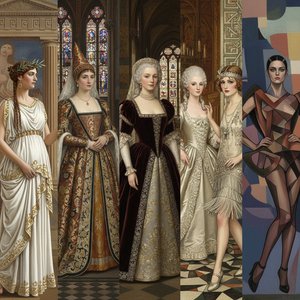
Style Through the Ages: Iconic Artworks That Defined the Evolution of Fashion Design
Explore the breathtaking intersection of fine art and high fashion. Discover how iconic masterpieces from Art Deco to Impressionism have shaped the world of luxury couture and timeless design in this curated visual journey.

Draped Narratives: Fashion as Symbol & Subject in Historical Art
Explore the fascinating history of fashion as a symbol of power & status in art! Discover masterpieces from Gainsborough to Tissot and learn how clothing shaped societal narratives. Find museum-quality reproductions at TopImpressionists.
Entdecken Sie Kunstwerke, die nach Themen, Stilen und Merkmalen sortiert sind.


