In echtem Maßstab anzeigen
 Versenden als Grußkarte
 Teilen
 Details anzeigen
 Leitfaden

 Herunterladen
 Ähnliche Objekte
 Röntgenaufnahme
 Diashow
 Besucherstatistiken
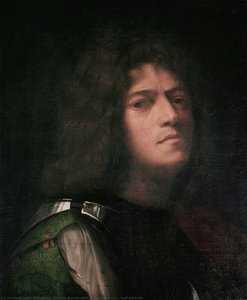
Ein junger Mann


Giorgione's "Ein junger Mann" faszinierendes Gemälde des italienischen Hochrenaissancekünstlers zeigt eine junge Frau mit langen Haaren und trägt ein rosa Hemd. Die Landschaft im Hintergrund ist düster und kontrastiert mit der Farbelemente des Bildes.
 Mehr anzeigen
Entdecken Sie Giorgione (1477/8-1510), einen Schlüsselkünstler der Hochrenaissance Venedigs. Erkunden Sie seine lyrischen, rätselhaften Werke, die Farbe und Atmosphäre betonen – wie 'Der Sturm' & 'Das Konzert der Hirten'. Ein Begründer der venetischen Schule, der Tizian und andere beeinflusste.
Handgefertigte Ölreproduktion
Handgemaltes Ölgemälde auf Leinwand in Ihrer Wunschgröße und mit Rahmen, auf Bestellung von unseren Künstlern angefertigt. ( Zum Druck wechseln Zum digitalen Bild wechseln)




P118B $10

P118H $10

P118W $10

P438Z $10

P508JH $12

P508YH $12

P805H $10

P805Z $10

P919BZ $10

P919G $10

P919XJ $10

P959ZH $10

P968JZ $12

W106C $8

W218G $10

W218JH $8

W218Y $10

W307PJ $10

W316G $10

W316PJ $8

W316Y $10

W398PJ $8

W4111J $10

W500HY $15

W500JH $15

W692G $12

W849H $8

W940BG $15

W953PJ $8




Standardformat
individuell anpassbar
CM
INCH
Wählen Sie aus unseren vordefinierten Formaten, die den ursprünglichen Proportionen des Kunstwerks entsprechen.
Loading sizes...

Breite
Höhe
Sie können Ihre eigenen Maße eingeben, um einen bestimmten Rahmen oder Platz auszufüllen. Wenn die gewählte Größe nicht den Proportionen des Originalbildes entspricht, werden wir das Kunstwerk entweder beschneiden oder das Gemälde durch zusätzliche, handgemalte Elemente erweitern. Ein digitales Mockup wird Ihnen zur Genehmigung zugesandt, bevor die Produktion beginnt.
Bitte beachten Sie, dass die Bildschirmvorschau nicht die tatsächliche Beschneidung oder Erweiterung widerspiegelt. Nur das Mockup zeigt die endgültige Komposition exakt an.
Obwohl Sondermaße verfügbar sind, empfehlen wir, eine Größe aus der vordefinierten Liste zu wählen, um die ursprünglichen Proportionen beizubehalten.
Beispiele für Anpassungsmöglichkeiten: Gesicht durch Kundenfoto ersetzen; Haustier hinzufügen (z. B. Katze durch Hund ersetzen); eine versteckte Nachricht im Hintergrund einfügen; Hintergrundlandschaft oder -elemente ändern.
Nach der Bestellung wird das TopImpressionists.com-Team dem Kunden Anweisungen per E-Mail zusenden und eine Mockup-Vorschau bereitstellen.
Nach der Bestellung wird das TopImpressionists.com-Team dem Kunden Anweisungen per E-Mail zusenden und eine Mockup-Vorschau bereitstellen.
Weltweiter Versand () in nur 3 bis 4 Wochen statt der üblichen 5 Wochen. (25 September). Keine Kompromisse bei der Qualität.

Kostenloser weltweiter Expressversand

Hochwertige Leinenleinwand

Vollständiger Versicherungsschutz beim Versand

Zollgebühren-Rückerstattungsgarantie

Garantie für exakte Farbtreue

100-tägiges Rückgaberecht (nur bei Mängeln)

100% Geld-zurück-Garantie

Angebot für Mengenrabatt
 Die Glasoption ist nur für Größen unter 110 cm verfügbar.

Ein junger Mann
Reproduktionsmedium
Format der Reproduktion
-


Gesamtpreis
$ 269
Introduction
Giorgione’s ‘A Young Man’, painted circa 1506–1508, stands as an enigmatic cornerstone of Venetian High Renaissance art—a painting that continues to fascinate scholars and connoisseurs alike. More than just a portrait, it embodies the artistic spirit of its time, reflecting Bellini's influence and foreshadowing Titian’s groundbreaking style. This article delves into the artwork’s multifaceted dimensions, exploring its artist, medium, stylistic innovations, historical significance, and enduring emotional resonance.The Artist: Giorgio Barbarelli Da Castelfranco
Giorgio Barbarelli da Castelfranco, known universally as Giorgione (1470s – 1510), remains one of the most elusive figures in Renaissance painting. Despite producing only a handful of confirmed works—a fact debated by historians—his paintings are celebrated for their lyrical beauty and profound psychological depth. Unlike many contemporaries whose lives unfold with relative clarity, Giorgione’s biography is shrouded in speculation, pieced together from fragmentary archival records and Vasari's romanticized accounts. Born in Castelfranco Veneto, he honed his craft under Giovanni Bellini, absorbing the established traditions of Venetian painting before forging a distinctive artistic path—one characterized by an unparalleled sensitivity to color and atmosphere. His premature death at thirty-two cemented his reputation as a visionary artist whose brief career nevertheless yielded masterpieces that continue to inspire awe.The Painting: A Young Man
‘A Young Man’ is an oil painting on canvas measuring 58 x 46 cm, currently housed in the Staatliche Museen Berlin. The artwork depicts a young man gazing intently at something held in his hand—perhaps a book or manuscript—creating an image of contemplative introspection. Giorgione employed a masterful technique that prioritized tonal modulation and atmospheric perspective. He began with a darker ground layer, gradually building up lighter tones to simulate the diffused light filtering through the landscape behind him. This approach—a hallmark of Venetian painting—generated a palpable sense of depth and luminosity, capturing not merely physical reality but also an elusive emotional state. The subtle interplay of color contributes significantly to this effect, creating a harmonious blend that evokes feelings of serenity and contemplation.Style and Technique
Giorgione’s stylistic innovations profoundly impacted the Venetian school and beyond. He rejected the rigid formalism prevalent in Florentine painting, favoring instead a looser brushwork—a technique termed “sfumato”—that blurred outlines and softened contours. This method, perfected by Leonardo da Vinci, achieved an unprecedented level of realism while simultaneously conveying mood and emotion. Giorgione’s use of sfumato is particularly evident in the depiction of the young man's face and torso, where subtle gradations of color create a velvety texture that captures the nuances of human expression. Furthermore, Giorgione’s compositional choices—the placement of the figure against the backdrop of a hazy landscape—were revolutionary for their time, anticipating developments in Northern European painting.Context
Giorgione was part of a vibrant artistic milieu centered on Venice during the High Renaissance. Alongside Titian, Tintoretto, Paolo Veronese and Jacopo Bassano, he represented the apex of Venetian art—a movement distinguished by its opulent patronage, humanist ideals, and fascination with classical antiquity. The Venetian painting tradition had begun with Giovanni Bellini and his workshop, establishing a distinctive aesthetic that prioritized color and emotional intensity. Giorgione’s work stands as a testament to this legacy, embodying the spirit of artistic experimentation and intellectual curiosity that defined the era—a period marked by groundbreaking discoveries in science and philosophy alongside unparalleled achievements in art and literature.Conclusion
‘A Young Man’ remains an enduring symbol of Venetian High Renaissance artistry—a painting whose enigmatic beauty continues to captivate viewers centuries after its creation. Giorgione's masterful technique, coupled with his profound understanding of human psychology, elevates the portrait beyond mere representation into a meditation on contemplation and inner life. It serves as an exemplar of Venetian artistic innovation and embodies the humanist values that underpinned the Renaissance’s transformative cultural landscape.Biografie des Künstlers
Ein kurzer, aber brillanter Werdegang im Hochrenaissance
Giorgio (1477/78 oder 1473/74 – 1510), ein illustrer Maler der Hochrenaissance aus der venezianischen Schule, hat trotz seiner kurzen Karriere und begrenzter bestätigter Werke einen unauslöschlichen Eindruck in der Kunstwelt hinterlassen. Seine Gemälde werden für ihre lyrischen und rätselhaften Qualitäten gelobt, wobei nur eine Handvoll zweifelsfrei ihm zugeschrieben werden können.Beitrag zum venezianischen Malstil
Giorgios Beitrag, zusammen mit dem legendären Tizian, legte die Grundlagen für den venezianischen Malstil, der sich durch seinen Schwerpunkt auf Farbe und Atmosphäre im Gegensatz zum linienorientierten Ansatz florentinischer Kunst auszeichnete. Dieser innovative Ansatz ebnete den Weg für zukünftige Generationen von Künstlern.Bekannte Werke und ihre Bedeutung
- Porträt eines venezianischen Herrn (76 x 64 cm, Hochrenaissance, Öl auf Leinwand): Ein Meisterwerk, das Giorgios Können bei der Erfassung der Essenz seiner Sujets demonstriert.
- Pastoraler Konzert (Fête Champêtre) (110 x 138 cm, Musée du Louvre, Paris, Frankreich, Hochrenaissance, Öl auf Leinwand): Demonstriert Giorgios Fähigkeit, Emotionen durch seine Arbeit hervorzurufen.
- Judith (1504) (Öl auf Leinwand, von einer Platte übertragen, 144 x 68 cm, Hermitage, St. Petersburg): Ein frühes Gemälde des Künstlers, das ursprünglich Raffael zugeschrieben wurde, und zeigt Giorgios Wachstum und Experimentierfreude.
Vermächtnis und Einfluss
Giorgio bleibt eine rätselhafte Figur in der Kunstgeschichte, wobei sein Leben und seine Werke im Dunkeln liegen, was die Faszination und Tiefe seines künstlerischen Erbes verstärkt. Sein Einfluss ist in den Werken nachfolgender Künstlerinnen und Künstler zu sehen, die auf den Grundstein aufbauten, den er in der venezianischen Schule legte. Erfahren Sie mehr über Giorgios Werke auf TopImpressionists: * Giorgio (Giorgio Barbarelli da Castelfranco) * Porträt eines venezianischen Herrn * Pastoraler Konzert (Fête Champêtre) Entdecken Sie die venezianische Malbewegung auf TopImpressionists: * Die venezianische Malbewegung
Giorgione
1477 - 1510 , Italien
Eckdaten zum Künstler
- Beeinflusste Künstler: ['Titian']
- Bemerkenswerte Werke:
- Der Sturm
- Landliches Konzert
- Schlafende Venus
- Judith
- Porträt eines Venezianers
- Geburtsdatum: 1477/78 oder 1473/74
- Geburtsort: Castel Franco Veneto, Italien
- Künstlerische Bewegung: Hochrenaissance, Venetianischer Stil
- Künstlerische Einflüsse:
- Giovanni Bellini
- Mantegna
- Nationalität: Italienisch
- Sterbedatum: 1510
- Vollständiger Name: Giorgione (Giorgio Barbarelli)
Verwandte Artikel

Golden Light & Rich Color: The Timeless Magic of Venetian Renaissance Art
Explore the luminous beauty of Venetian Renaissance art. Discover how masters like Titian used colorito and golden light to redefine painting through texture, emotion, and atmospheric brilliance in a masterclass of historical artistry.

The Soul of Impressionism: Why Oil on Canvas Captures Eternal Light and Timeless Emotion
Discover the enchanting alchemy of Impressionism. Explore how the mastery of oil on canvas, through glazing and impasto, captures eternal light and emotion. Perfect for lovers of Monet and Van Gogh seeking the profound depth of hand-painted fine art.

The Timeless Charm of Oil on Board: Reimagining Texture and Light through the Impressionist Lens
Discover the profound intimacy of oil on panel. Explore how Impressionist masters used rigid supports to capture light, texture, and impasto depth through exquisite, handmade oil reproductions for discerning collectors.
Entdecken Sie Kunstwerke, die nach Themen, Stilen und Merkmalen sortiert sind.