


 In echtem Maßstab anzeigen
 Versenden als Grußkarte
 Teilen
 Details anzeigen
 Leitfaden öffnen

 Herunterladen
 Ähnliche Objekte
 Röntgenaufnahme
 Diashow
 Besucherstatistiken
The Bride
 Oil
Oil- WallArt
- Academic Realism
 1881
1881- 19th Century
 82.0 x 66.0 cm
 Ateneum Kunstmuseum
A grand group portrait capturing the elegance of a fin-de-siècle banquet, this realistic masterpiece by Finnish artist Gunnar Berndtson invites you to bring the sophisticated charm of 1881 into your private collection.
 Mehr anzeigen
"meta_description": "Gunnar Berndtson (1854-1895) war ein finnischer Maler, bekannt für realistische Porträts im Stil des Salons. Seine Werke spiegeln das Ende des 19. Jahrhunderts wider und zeigen eine subtile finnische Identität."
Handgefertigte Ölreproduktion
Handgemaltes Ölgemälde auf Leinwand in Ihrer Wunschgröße und mit Rahmen, auf Bestellung von unseren Künstlern angefertigt. ( Zum Druck wechseln Zum digitalen Bild wechseln)




P118B €10

P118H €10

P118W €10

P438Z €10

P508JH €12

P508YH €12

P805H €10

P805Z €10

P919BZ €10

P919G €10

P919XJ €10

P959ZH €10

P968JZ €12

W106C €8

W218G €10

W218JH €8

W218Y €10

W307PJ €10

W316G €10

W316PJ €8

W316Y €10

W398PJ €8

W4111J €10

W500HY €15

W500JH €15

W692G €12

W849H €8

W940BG €15

W953PJ €8




Standardformat
individuell anpassbar
CM
INCH
Wählen Sie aus unseren vordefinierten Formaten, die den ursprünglichen Proportionen des Kunstwerks entsprechen.
Loading sizes...

Breite
Höhe
Geben Sie die Breite und die Höhe an, die Sie für Ihren Rahmen oder Ihre Wand benötigen. Da dieses Werk handgemalt ist, kann der Künstler bei einer anderen Form etwas mehr um das Bild herum malen oder etwas abschneiden – Sie entscheiden. Wir senden Ihnen ein digitales Mockup zur Freigabe, bevor mit dem Malen begonnen wird. Das auf dieser Seite gezeigte Bild stellt nicht das tatsächliche Ergebnis dar – dies tut nur das Mockup.
Beispiele für Anpassungsmöglichkeiten: Gesicht durch Kundenfoto ersetzen; Haustier hinzufügen (z. B. Katze durch Hund ersetzen); eine versteckte Nachricht im Hintergrund einfügen; Hintergrundlandschaft oder -elemente ändern.
Nach der Bestellung wird das TopImpressionists.com-Team dem Kunden Anweisungen per E-Mail zusenden und eine Mockup-Vorschau bereitstellen.
Nach der Bestellung wird das TopImpressionists.com-Team dem Kunden Anweisungen per E-Mail zusenden und eine Mockup-Vorschau bereitstellen.
Weltweiter Versand () in nur 3 bis 4 Wochen statt der üblichen 5 Wochen. (20 Oktober). Keine Kompromisse bei der Qualität.

Kostenloser weltweiter Expressversand

Hochwertige Leinenleinwand

Vollständiger Versicherungsschutz beim Versand

Zollgebühren-Rückerstattungsgarantie

Garantie für exakte Farbtreue

100-tägiges Rückgaberecht (nur bei Mängeln)

100% Geld-zurück-Garantie

Angebot für Mengenrabatt
 Die Glasoption ist nur für Größen unter 110 cm verfügbar.

The Bride
Reproduktionsmedium
Format der Reproduktion
-


Gesamtpreis
€ 234
A Grand Celebration Captured in Oil
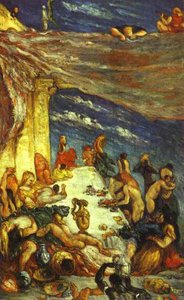
In the luminous masterpiece The Bride, created in 1881, Gunnar Berndtson invites us into a moment of profound social elegance and quiet intimacy. This large-scale group portrait serves as a window into the sophisticated world of the late nineteenth century, capturing a celebratory banquet that feels both monumental and deeply personal. At the heart of this composition stands the bride, a figure of striking presence whose poised stance—hand resting confidently on her hip—commands the attention of the viewer. She is surrounded by an assembly of guests, men and women captured in various states of conversation and repose, all gathered around a table laden with the symbols of a bountiful feast. The scene is a masterclass in narrative painting, where every wine glass, every bottle, and even the solitary orange placed near the crystal serves to ground the grandeur of the event in a tangible, sensory reality.
Berndtson’s technical prowess is on full display through his command of the Salon style, a technique he refined during his transformative years at the École des Beaux-Arts in Paris. The painting breathes with a remarkable sense of depth and texture; one can almost feel the weight of the fine fabrics, the cool smoothness of the glassware, and the warm glow of light reflecting off the polished surfaces of the dining hall. His ability to render realistic detail—from the subtle translucency of wine to the delicate interplay of shadow across the faces of his subjects—demonstrates a level of skill that elevates the work from a mere social document to a triumph of academic realism. For the discerning collector, this piece offers more than just visual beauty; it provides a sophisticated study in light and form that brings an air of historical prestige to any space.
The Intersection of Finnish Identity and Parisian Elegance
To understand the emotional resonance of The Bride, one must look toward the artist’s unique cultural position. As a Finnish master who found his voice in the heart of the French art scene, Berndtson bridged two worlds. His training under Jean-Léon Gérôme instilled in him a rigorous devotion to precision and classical composition, yet there remains an underlying warmth and narrative soul that speaks to the fin-de-siècle spirit. The painting captures the essence of an era defined by social ritual and the celebration of status, yet it avoids the coldness often found in purely academic works. Instead, there is a palpable sense of atmosphere—a lingering feeling of the laughter, the clinking of glasses, and the shared joy of a significant life milestone.
For interior designers and lovers of fine art, this reproduction offers an unparalleled opportunity to introduce a focal point of immense character and narrative depth. The composition’s balance of light and dark, combined with its rich, warm palette, makes it an ideal centerpiece for grand dining rooms, stately libraries, or sophisticated living areas. It is a work that does not merely decorate a wall but tells a story, inviting guests to linger and contemplate the elegance of a bygone era. Owning a piece of Berndtson’s legacy is an invitation to surround oneself with the timeless grace of nineteenth-century European high society, making it a profound choice for those seeking to curate a collection defined by historical significance and aesthetic excellence.
Fragen & Antworten
Welche emotionale Stimmung begleitet den Stil der Academic Realism-Epoche in „The Bride“?
Die Dramatic Emotion von „The Bride“ begleitet seinen Academic Realism-Stil.
Welches Format hat "The Bride"?
"The Bride" von Gunnar Berndtson hat ein Landscape-Format. Das Format beschreibt die Proportionen der Komposition.
Wer hat "The Bride" geschaffen und in welchem Stil ist es gehalten?
"The Bride" wurde von Gunnar Berndtson im Stil der Academic Realism geschaffen. Künstler und Epoche bestimmen die Tradition des Werkes.



Biografie des Künstlers
Gunnar Berndtson: Ein finnischer Meister des realistischen Porträts
Gunnar Fredrik Berndtson (1854-1895) steht als eine bedeutende, wenn auch oft übersehene Figur in der Geschichte der finnischen Kunst. Geboren in eine intellektuelle Familie – sein Vater war der renommierte Autor, Journalist und Dichter Fredrik Berndtson – begann Gunnars künstlerischer Weg mit formeller Ausbildung am Polytechnischen Institut in Helsinki, bevor er sich später als Zuhörer an der Universität Helsinki unter angesehenen Lehrern wie Erik Johan Löfgren einschrieb. Dennoch entschied er sich bereits 1876 für einen Künstlernachwuchs und begab sich auf eine transformative Periode nach Paris, wo er am École des Beaux-Arts eingeschrieben wurde und von dem einflussreichen Jean-Léon Gérôme unterrichtet wurde. Diese Pariser Auszeit erwies sich als entscheidend, indem sie ihn mit dem Salonstil der Malerei vertraut machte und Kontakte zu Künstlern wie Albert Edelfelt knüpfte, eine Beziehung, die seine künstlerischen Vorstellungen maßgeblich prägen sollte.Frühe Einflüsse und der Salonstil
Berndts frühes Werk zeigt eine klare Aufnahme des Salons’ Betons auf historische Themen und idealisierte Schönheit. Seine anfänglichen Ausstellungen im Salon im Jahr 1878 zeigten diesen Einfluss, der durch akribische Details und eine polierte Ästhetik gekennzeichnet war. Dennoch war er nicht nur ein Nachahmer; seine Zeit mit Edelfelt brachte ihn mit einem nuancierteren Ansatz – einem, der Realismus bewahrte, während er subtile Elemente finnischer Identität und ein aufkeimendes Bewusstsein für Modernismus integrierte. Der Popularität des Salons ermöglichte es Berndtson, eine entscheidende Präsenz zu erhalten und eine Grundlage für seine weitere Karriere zu legen.Ägypten und der Beginn einer neuen Vision
Ein prägendes Kapitel in Berndts künstlerischer Entwicklung spielte sich zwischen 1882 und 1883 ab, als er nach Ägypten reiste – als Gast von Alphonse, Baron Delort de Gléon, einem französischen Bergbauingenieur. Diese Erfahrung erwies sich als zutiefst einflussreich und verschob seinen Fokus auf Porträts und Dokumentationsillustrationen für *Le Monde Illustré*. Das scharfe Licht, die lebendigen Farben und die vielfältigen Motive Ägyptens entfachten eine neue Leidenschaft in ihm – weit über die formalen Beschränkungen des Salons hinaus und legten den Grundstein für einen persönlicheren und ausdrucksstärkeren Stil. Er erfasste die Essenz ägyptischen Lebens mit bemerkenswerter Genauigkeit und Sensibilität, indem er sowohl seine Pracht als auch seine alltäglichen Realitäten dokumentierte.Rückkehr nach Finnland und künstlerliche Anerkennung
Nach seiner Rückkehr nach Finnland im Jahr 1883 etablierte sich Berndtson als angesehener Porträtmaler und gewann schnell Anerkennung für seine Fähigkeit, den Charakter und die Würde seiner Sujets einzufangen. Er erfuhr beträchtlichen Beifall, der sich in einem Staatspreis für Porträtmalerei im Jahr 1889 manifestierte – ein Beweis für sein wachsendes Ansehen. Seine Porträts waren nicht nur Abbildungen; sie besaßen eine unauslöschliche psychologische Tiefe und enthüllten subtile emotionale Nuancen. Er beteiligte sich weiterhin an Ausstellungen im Salon in den 1890er Jahren und bewahrte so einen konstanten Erfolg und festigte seine Position als einer der führenden Künstler Finnlands.Vermächtnis und künstlerische Bedeutung
Berndts Vermächtnis erstreckt sich über seine individuellen Werke hinaus; er spielte eine Rolle bei der Gestaltung der Entwicklung der finnischen Kunst. Er lehrte von 1890 bis 1892 an der Kunstakademie in Helsinki und betreute talentierte Studenten wie Magnus Enckell und Ellen Thesleff, die zu bedeutenden Beiträgen zur künstlerischen Landschaft Finnlands beitrugen. Seine frühelebe Krankheit führte im April 1895 zum Tod des Künstlers. Sein unvorhergesehenes Ableben beendete eine vielversprechende Karriere, hinterließ aber ein Werk, das durch akribische Realismus, psychologische Einsicht und eine subtile, aber unverwechselbare finnische Sensibilität gekennzeichnet ist. Werke wie *The Bride’s Song* (1881), *Portrait of Dentistry Professor Matti Äyräpää* (1889), *His Name* (1890) und *Almée, an Egyptian Dancer* (1883) bieten eindringliche Einblicke in die fin-de-siècle Welt, in der er lebte – eine Welt, die mit Moderne konfrontiert war, während sie tief verwurzelt in Traditionen blieb. Berndtson’s Kunst wird weiterhin studiert und geschätzt für seine technische Meisterschaft, emotionale Resonanz und seinen Beitrag zur reichen Tapisserie finnischer Kunstgeschichte.
Gunnar Berndtson
1854 - 1895 , Finnland
Eckdaten zum Künstler
- Artistic Movement Or Style: Salon-Stil, Realismus
- Artists Or Movements Influenced By This Artist: ['Albert Edelfelt']
- Artists Who Influenced This Artist: ['Jean-Léon Gérôme']
- Date Of Birth: 24. Oktober 1854
- Date Of Death: 9. April 1895
- Full Name: Gunnar Fredrik Berndtson
- Nationality: Finnisch
- Notable Artworks:
- Die Braut
- Porträt M. Äyräpää
- Sein Name
- Almée
- Place Of Birth: Helsinki, Finnland
Verwandte Artikel

Maurice Quentin de La Tour: Licht, Schatten und die Intimität des Rokoko-Porträts
Entdecken Sie das Werk von Maurice Quentin de La Tour! Erfahren Sie mehr über seine innovative Pastelltechnik, die psychologische Tiefe seiner Porträts und seinen Einfluss auf die Rokoko-Malerei. Einblick in königliche Aufträge & sein Vermächtnis.

Goya: Die 25 Meisterwerke des spanischen Genies – Kunst für Ihr Zuhause | TopImpressionists
Entdecken Sie die 25 Meisterwerke von Francisco Goya! Tauchen Sie ein in die düstere Romantik spanischer Malerei, Porträts & Historienbilder. Hochwertige Kunstdrucke auf TopImpressionists.com – für Kunstliebhaber und stilvolles Wohnen.

The Enduring Legacy of Formal Portraiture: Power, Identity & Artistic Exploration
Explore the rich history of formal portraiture & its enduring power to capture identity and shape perception. Discover investment-worthy artworks, expert appraisals, and custom reproduction services at TopImpressionists.

Charles Haslewood Shannon: Ästhetizismus, Symbolismus und die Porträtkunst des Fin de Siècle
Entdecken Sie das faszinierende Werk von Charles Haslewood Shannon! Unsere Expertenanalyse beleuchtet den Ästhetizismus, Symbolismus und die Porträtkunst des Fin de Siècle. Erfahren Sie mehr über diesen vergessenen Meister.

Über uns
Entdecken Sie unsere Geschichte! Wir bringen Weltklasse-Kunst in Ihr Leben durch fachkundige Auswahl, individuelle Kreationen und kostenlose Vorschauen. Seit dem Jahr 2000 von Privatpersonen und Unternehmen geschätzt.