


 In echtem Maßstab anzeigen
 Versenden als Grußkarte
 Teilen
 Details anzeigen
 Leitfaden öffnen

 Herunterladen
 Ähnliche Objekte
 Röntgenaufnahme
 Diashow
 Besucherstatistiken
The Orange Trees


Delve into 10 iconic paintings dominated by 'anthracite' tones – from Rembrandt & Caravaggio to Goya. Explore the stories, techniques & dramatic beauty of these masterpieces. Find museum-quality reproductions for your home at !
 Mehr anzeigen
Gustave Caillebotte (1848-1894): Entdecken Sie den französischen Realisten & Impressionisten! Seine Werke zeigen modernes Pariser Leben & einzigartige Perspektiven. Meisterwerke wie 'Les Raboteurs de Parquet' entdecken!
Handgefertigte Ölreproduktion
Handgemaltes Ölgemälde auf Leinwand in Ihrer Wunschgröße und mit Rahmen, auf Bestellung von unseren Künstlern angefertigt. ( Zum Druck wechseln Zum digitalen Bild wechseln)




P118B €10

P118H €10

P118W €10

P438Z €10

P508JH €12

P508YH €12

P805H €10

P805Z €10

P919BZ €10

P919G €10

P919XJ €10

P959ZH €10

P968JZ €12

W106C €8

W218G €10

W218JH €8

W218Y €10

W307PJ €10

W316G €10

W316PJ €8

W316Y €10

W398PJ €8

W4111J €10

W500HY €15

W500JH €15

W692G €12

W849H €8

W940BG €15

W953PJ €8




Standardformat
individuell anpassbar
CM
INCH
Wählen Sie aus unseren vordefinierten Formaten, die den ursprünglichen Proportionen des Kunstwerks entsprechen.
Loading sizes...

Breite
Höhe
Geben Sie die Breite und die Höhe an, die Sie für Ihren Rahmen oder Ihre Wand benötigen. Da dieses Werk handgemalt ist, kann der Künstler bei einer anderen Form etwas mehr um das Bild herum malen oder etwas abschneiden – Sie entscheiden. Wir senden Ihnen ein digitales Mockup zur Freigabe, bevor mit dem Malen begonnen wird. Das auf dieser Seite gezeigte Bild stellt nicht das tatsächliche Ergebnis dar – dies tut nur das Mockup.
Beispiele für Anpassungsmöglichkeiten: Gesicht durch Kundenfoto ersetzen; Haustier hinzufügen (z. B. Katze durch Hund ersetzen); eine versteckte Nachricht im Hintergrund einfügen; Hintergrundlandschaft oder -elemente ändern.
Nach der Bestellung wird das TopImpressionists.com-Team dem Kunden Anweisungen per E-Mail zusenden und eine Mockup-Vorschau bereitstellen.
Nach der Bestellung wird das TopImpressionists.com-Team dem Kunden Anweisungen per E-Mail zusenden und eine Mockup-Vorschau bereitstellen.
Weltweiter Versand () in nur 3 bis 4 Wochen statt der üblichen 5 Wochen. (24 Oktober). Keine Kompromisse bei der Qualität.

Kostenloser weltweiter Expressversand

Hochwertige Leinenleinwand

Vollständiger Versicherungsschutz beim Versand

Zollgebühren-Rückerstattungsgarantie

Garantie für exakte Farbtreue

100-tägiges Rückgaberecht (nur bei Mängeln)

100% Geld-zurück-Garantie

Angebot für Mengenrabatt
 Die Glasoption ist nur für Größen unter 110 cm verfügbar.

The Orange Trees
Reproduktionsmedium
Format der Reproduktion
-


Gesamtpreis
€ 236
A Moment Frozen in Time: The Serenity of Caillebotte’s Garden
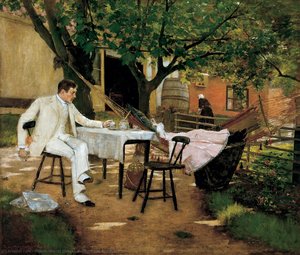
In the quietude of a Parisian afternoon, Gustave Caillebotte’s “The Orange Trees” (1878) invites the viewer into a sanctuary of light and leisure. This exquisite canvas is far more than a mere botanical study; it is an intimate window into the soul of the French bourgeoisie at the dawn of modernity. Painted en plein air at his family’s estate in Yerres, the work captures a fleeting instance of tranquility where time seems to suspend its forward march. Within the frame, we encounter the artist's brother, Martial, and their cousin, Zoé, nestled beneath the dappled shade of citrus trees. Their relaxed postures and contemplative gazes evoke a sense of intellectual repose, reflecting a period when the garden served as a vital stage for social connection and quiet reflection away from the burgeoning industrial bustle of Paris.
The technical mastery of Caillebotte lies in his ability to marry the precision of realism with the atmospheric soul of Impressionism. While he possessed a keen eye for detail—likely sharpened by his profound interest in the emerging medium of photography—he did not seek to replicate reality with clinical coldness. Instead, he employed loose, rhythmic brushstrokes to breathe life into the textures of the gravel path and the lush foliage. His palette is a masterclass in subtlety, dominated by soft lavenders, muted greys, and warm ochres that harmonize to create a serene, almost ethereal atmosphere. For the discerning collector or interior designer, this delicate balance of color and light offers a sophisticated aesthetic that brings a sense of calm and organic elegance to any curated space.
Symbolism and the Spirit of an Era
Beyond its surface beauty, “The Orange Trees” is rich with the symbolic language of the late 19th century. The orange trees themselves serve as potent emblems of resilience, fertility, and a deep-seated connection to the natural world—themes that resonated powerfully within the Impressionist movement. Even the inclusion of a fashionable garden tub acts as a subtle nod to the horticultural passions of the era, underscoring how even the most casual leisure activities were imbued with artistic expression. Caillebotte captures the tension of his time: the transition from the rigid academic traditions of the past toward a new, honest observation of everyday life.
To possess a reproduction of this masterpiece is to invite a piece of history into one's home. The emotional impact of the painting is profound; it evokes a nostalgic longing for a slower pace of life, making it an ideal centerpiece for those seeking to infuse their interiors with warmth, sophistication, and a touch of Parisian grace. Whether viewed as a study in light or a narrative of familial peace, Caillebotte’s work remains a timeless testament to the beauty found in life's most quiet, unscripted moments.
Fragen & Antworten
Aus welcher Epoche stammt "The Orange Trees" von Gustave Caillebotte?
"The Orange Trees" stammt aus der Epoche der 19th Century.
Welche Emotion vermittelt das Werk der Impressionist Realism „The Orange Trees“?
"The Orange Trees" vermittelt eine Calm emotionale Stimmung innerhalb der Impressionist Realism-Strömung.
Welche Phase in der Entwicklung von Gustave Caillebotte repräsentiert "The Orange Trees"?
„The Orange Trees“ entstammt der Mature Period von Gustave Caillebotte. Diese Einordnung setzt das Werk in Bezug zur künstlerischen Entwicklung des Künstlers.
Ähnliche Kunstwerke




Biografie des Künstlers
Frühes Leben und Ausbildung
Gustave Caillebotte, ein französischer Maler, wurde am 19. August 1848 in Paris aus einer wohlhabenden Familie geboren. Sein Vater, Martial Caillebotte, war Erbe der Familienfirma für Militärtuchstoffe und diente auch als Richter am Tribunal de Commerce des Départements Seine. Gustave’s frühes Interesse an Fotografie als Kunstform beeinflusste später seinen Malstil.Künstlerische Karriere
Gustave erwarb 1868 einen Jurabachelor und 1870 eine Zulassung zur Rechtsausübung, doch seine wahre Leidenschaft galt der Kunst. Er begann, das Atelier des Malers Léon Bonnat zu besuchen, wo er ernsthaft Malerei studierte. Caillebotte’s Stil, der durch seinen Realismus gekennzeichnet ist, wurde von seinen impressionistischen Kollegen beeinflusst, darunter Edgar Degas und Giuseppe de Nittis.Bemerkenswerte Werke und Stil
- Les Raboteurs de Parquet (Die Bodenabroller) (1875): Dieses frühe Meisterwerk, das sich heute im Musée d'Orsay befindet, zeigt Caillebotte’s einzigartige Mischung aus Realismus und impressionistischen Einflüssen.
- Vue de toits (Effet de neige) (Aussicht auf Dächer (Schneeeffekt)) (1878): Demonstriert seine Verwendung von erhöhten Perspektiven, eine Technik, die möglicherweise durch japanische Drucke und Fotografie beeinflusst wurde.
Vermächtnis und Einfluss
Caillebotte’s Stil, obwohl Teil der Schule des Realismus, wurde stark von seinen impressionistischen Kollegen beeinflusst. Seine Werke zeichnen sich durch eine präzise Beobachtungsgabe und eine detailgetreue Wiedergabe der Wirklichkeit aus. Er trug dazu bei, die Wahrnehmung des Alltagslebens in der Kunst zu verändern und neue Wege der Darstellung urbaner Szenen aufzuzeigen. Obwohl er zu Lebzeiten nicht immer Anerkennung fand, wird Caillebotte heute als ein bedeutender Vertreter des Impressionismus und Realismus gewürdigt.Weitere Werke
- Mann am Fenster (1875)
- Pink Villas at Trouville (1884)
- Pariser Straße, Regentag

Gustave Caillebotte
1848 - 1894 , Frankreich
Eckdaten zum Künstler
- Beeinflusste Künstler:
- Edgar Degas
- Giuseppe De Nittis
- Bemerkenswerte Werke:
- Les Raboteurs de Parquet
- Vue de toits (Effet de neige)
- Boulevard vu d'en haut
- Geburtsdatum: 19. August 1848
- Geburtsort: Paris, Frankreich
- Künstlerische Richtung: Realismus, Impressionismus
- Nationalität: Französisch
- Sterbedatum: 1894
- Vollständiger Name: Gustave Caillebotte
Verwandte Artikel

Capturing the Mist: The Timeless Beauty of British Landscape Impressionism
Explore the ethereal beauty of British Landscape Impressionism. Discover how masters captured light and mist through plein air techniques, offering a profound connection to the English countryside's timeless, atmospheric soul.

The Soul of Impressionism: Why Oil on Canvas Captures Eternal Light and Timeless Emotion
Discover the enchanting alchemy of Impressionism. Explore how the mastery of oil on canvas, through glazing and impasto, captures eternal light and emotion. Perfect for lovers of Monet and Van Gogh seeking the profound depth of hand-painted fine art.

Beyond the Light: Capturing Raw Emotion and Subjective Vision in Post-Impressionist Landscapes
Explore the profound emotional depth of Post-Impressionist landscapes. Discover how masters like Van Gogh moved beyond light to capture raw human feeling through vibrant color and expressive texture in this expert art history retrospective.
Entdecken Sie Kunstwerke, die nach Themen, Stilen und Merkmalen sortiert sind.


