

Shown: · With its frame:
 Vorschau anzeigen
 Versenden
 Teilen
 Details anzeigen
 Leitfaden

 Herunterladen
 Ähnliche Objekte
 Röntgenaufnahme
 Diashow
 Q&A
Q&A Statistiken
- 46.0 x 55.0 cm


€ 239
Handgefertigte Ölreproduktion
Handgemaltes Ölgemälde auf Leinwand in Ihrer Wunschgröße und mit Rahmen, auf Bestellung von unseren Künstlern angefertigt. ( Zum Druck wechseln Zum digitalen Bild wechseln)
Size
·Standardformat
individuell anpassbar
CM
INCH
Wählen Sie aus unseren vordefinierten Formaten, die den ursprünglichen Proportionen des Kunstwerks entsprechen.
Loading sizes...

Breite
Höhe
Geben Sie die Breite und die Höhe an, die Sie für Ihren Rahmen oder Ihre Wand benötigen. Da dieses Werk handgemalt ist, kann der Künstler bei einer anderen Form etwas mehr um das Bild herum malen oder etwas abschneiden – Sie entscheiden. Wir senden Ihnen ein digitales Mockup zur Freigabe, bevor mit dem Malen begonnen wird. Das auf dieser Seite gezeigte Bild stellt nicht das tatsächliche Ergebnis dar – dies tut nur das Mockup.
 Mehr erfahren
Finish
·
White €1

Blurside €1

Extended €1

P118B €10

P118H €10

P118W €10

P438Z €10

P508JH €12

P508YH €12

P805H €10

P805Z €10

P919BZ €10

P919G €10

P919XJ €10

P959ZH €10

P968JZ €12

W106C €8

W218G €10

W218JH €8

W218Y €10

W307PJ €10

W316G €10

W316PJ €8

W316Y €10

W398PJ €8

W4111J €10

W500HY €15

W500JH €15

W692G €12

W849H €8

W940BG €15

W953PJ €8

H24-GOLD €30

H24-SILVER €30

H36-GOLD €45

H36-SILVER €45
Shipped in a protective tube, ready for your own framer.
Above 105 cm the frame is shipped as a kit for a professional framer — read the details.
Extras
optionalWhat do the extras include?
Examples of what can be changed: Replace face with customer photo; Add pet (e.g., replace cat with dog); Include hidden message in background; Change background landscape or elements.
After order, TopImpressionists.com team will email client for instructions and provide a mockup preview
After order, TopImpressionists.com team will email client for instructions and provide a mockup preview
Weltweiter Versand () in nur 3 bis 4 Wochen statt der üblichen 5 Wochen. (31 Oktober). Keine Kompromisse bei der Qualität.
Schutzlackierung
Beschriftung
Details der gravierten Bronzetafel
This elegant plaque features the artist's name and the title of the artwork, finely engraved for a timeless presentation.
It is made from bronze with a refined, elegant finish. The text is precisely laser-engraved for a sharp and permanent result. Measuring 9x2 cm, the plaque is compact yet easy to read. It's built to be durable and scratch-resistant, offering a professional, museum-quality look. Mounting is simple thanks to the included adhesive backing.
Details zur Acrylglas-Plakette (transparent)
The plaque includes essential engraved details such as the artist's name, the title of the artwork, the date it was created, the type of media used-like oil on canvas or watercolor-a brief description of the piece, and a QR code that links to the complete artwork information.
It is crafted from clear acrylic, offering a sleek, modern appearance. The text is UV-engraved in black to ensure strong visual contrast. With a size of 10x15 cm, it ensures optimal readability. It comes equipped with two metal hooks for secure wall mounting. The plaque is designed to be weather-resistant, making it suitable for various environments, and it includes interactive features that work seamlessly with smartphone scanning.
Details zur schwarzen Acryltafel
This elegant plaque includes engraved information such as the artist's name, the title of the artwork, the date it was created, the type of media used (like oil on canvas or watercolor), a short description of the artwork, and a QR code for quick access to more information.
The plaque itself is made from refined black acrylic with a premium finish. The text is laser-engraved in white for high contrast and readability. Its size is 10x15 cm, designed to be easy to read. It comes with two metal hooks for professional mounting. The design is sleek and fits any interior style. It is also weather-resistant and durable, with built-in digital integration for mobile compatibility.
Die Glasoption ist nur für Größen unter 110 cm verfügbar.
 Die Glasoption ist nur für Größen unter 110 cm verfügbar.
- Kostenloser weltweiter Expressversand
- Hochwertige Leinenleinwand
- Umfassender Versicherungsschutz beim Versand
- Zollgebühren-Rückerstattungsgarantie
- Garantie für exakte Farbtreue
- 100 Tage Rückgaberecht (nur bei Mängeln)
- 100% Geld-zurück-Garantie
- Mengenrabatt verfügbar


Beschreibung des Sammlerstücks
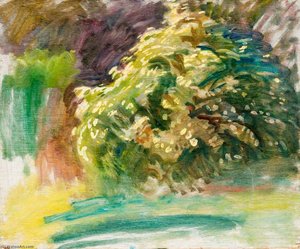
Ein beeindruckendes Gemälde von Henri Matisse: Luxembourg Gardens (1903) zeigt Fauvismus mit lebhaften Farben und einer einzigartigen Perspektive im Herzen von Paris.
Künstlerbiografie
Entdecken Sie Henri Matisse (1869-1954), einen Fauvismus-Meister! Erforschen Sie seine lebendige Farbgebung, innovative Zeichenkunst und ikonische Gemälde wie 'Die Kürbisse'. Eine führende Figur der modernen Kunst.
About the painting
Luxembourg Gardens: A Fauvist Vision of Parisian Tranquility
Henri Matisse, a French visual artist renowned for his innovative use of color and fluid draughtsmanship, left an indelible mark on modern art. Among his notable works is Luxembourg Gardens, a painting that encapsulates the essence of Fauvism, a style characterized by vivid colors and energetic brushstrokes.Background and Context
Painted in 1903, Luxembourg Gardens is a testament to Matisse’s early experimentation with color. The painting measures 46 x 55 cm and is executed in oil on canvas. It features a colorful landscape of trees with yellow leaves, bushes, flowers, and a person enjoying the surroundings. This work reflects Matisse's ability to capture the beauty of everyday life through his unique artistic lens. He was part of the Fauvist movement, which emphasized bold colors and spontaneous brushstrokes.Artistic Style and Influence
Matisse’s approach to color—a deliberate departure from Impressionism—was central to Fauvism’s aesthetic principles. Luxembourg Gardens exemplifies this style with its vibrant foliage and lively atmosphere. The painting's composition is characterized by flattened forms and decorative patterns, elements that would become hallmarks of Matisse’s later work. Matisse was a pioneer in simplifying shapes and reducing detail to convey emotion directly—a technique he perfected throughout his prolific career. Pablo Picasso, alongside Matisse, redefined the revolutionary developments in visual arts during the early 20th century. His mastery of color and drawing inspired many artists, including those associated with Cubism and Expressionism.Legacy and Recognition
Today, Matisse’s works are celebrated for their contribution to modern art. Luxembourg Gardens is a prime example of his early Fauvist period, showcasing his innovative approach to color and composition. The painting is part of the collection at the Musée National d'Art Moderne in Paris, France, a museum renowned for its extensive holdings of modern and contemporary art. For those interested in exploring more of Matisse’s works or learning about other influential artists, Henri Matisse: Luxembourg Gardens is available on TopImpressionists. Additionally, the museum's collection can be discovered through Discover the Masterpieces of Musée National d’Art Moderne (Paris, France).Conclusion
Luxembourg Gardens by Henri Matisse is a vibrant representation of Fauvism and an early example of his distinctive style. The painting’s colorful landscape and lively atmosphere make it a captivating piece that continues to inspire art lovers today. As part of the Musée National d'Art Moderne’s collection, it stands as a testament to Matisse’s enduring influence on modern art.- Artist: Henri Matisse
- Painting Title: Luxembourg Gardens
- Year: 1903
- Style: Fauvism
- Museum: Musée National d'Art Moderne, Paris, France
Fragen & Antworten
Gehört "Luxembourg Gardens" zu den beliebtesten Werken von Henri Matisse?
"Luxembourg Gardens" von Henri Matisse weist ein Ikonisch Popularitätsniveau auf. Diese Klassifizierung spiegelt die weite Verbreitung und Bekanntheit des Werkes wider.
Kann ich Augmented Reality nutzen, um "Luxembourg Gardens" von Henri Matisse in meinem Raum zu sehen?
„Luxembourg Gardens“ verfügt über eine Augmented-Reality-Vorschau: Die AR-Vorschau-Seite des Kunstwerks zeigt es auf einem kompatiblen Gerät in Ihrem eigenen Raum.
Aus welcher Schaffensperiode von Henri Matisse stammt "Luxembourg Gardens"?
„Luxembourg Gardens“ entstammt der Mature Period von Henri Matisse. Diese Einordnung setzt das Werk in Bezug zur künstlerischen Entwicklung des Künstlers.
Quick facts and art quiz
About Henri Matisse

Henri Matisse
1869 - 1954, Frankreich
Künstlerbiografie
Frühes Leben und Ausbildung
Henri Émile Benoît Matisse wurde am 31. Dezember 1869 in Le Cateau-Cambrésis, Nord Frankreich, in eine Familie von Getreidemesstern geboren. Seine prägenden Jahre verbrachte er in Bohain-en-Vermandois, Picardie. Nach dem Gymnasium begann er zunächst ein Jurastudium in Paris, doch sein Leben nahm 1889 einen unerwarteten Wendepunkt, nachdem er an einer Blinddarmentzündung erkrankt war. Während seiner Genesung begann er, mit Kunstatzlern unter der Anleitung seiner Mutter zu experimentieren und entdeckte eine tiefe Leidenschaft, die den Rest seines Lebens prägen sollte.
Frühe künstlerische Entwicklung & Einflüsse
Matisses frühe künstlerische Bemühungen waren in traditionellen Techniken verwurzelt. Er studierte an der Académie Julian unter William-Adolphe Bouguereau und später an der École Nationale des Beaux-Arts mit Gustave Moreau. Seine frühen Werke spiegelten einen klassischen Stil wider, beeinflusst von Meistern wie Jean-Baptiste-Siméon Chardin, Nicolas Poussin und Antoine Watteau. Diese frühen Einflüsse verliehen ihm eine solide Grundlage in Bezug auf Zeichnung und Komposition.
Ein entscheidender Moment ereignete sich 1896 während eines Besuchs auf Belle Île mit dem australischen Maler John Russell. Russell führte Matisse mit Impressionismus und den Werken von Vincent van Gogh bekannt, was seinen künstlerischen Laufbahn grundlegend veränderte. Dieser Kontakt führte zu einer dramatischen Verschiebung von Erdtönen hin zu einer lebendigen, ausdrucksstarken Verwendung von Farbe – ein Kennzeichen seines späteren Stils.
Die Fauvist-Periode & Mutige Farben
Matisse wurde eine führende Figur der Fauvismusbewegung (französisch für "Wildtiere"), die um 1905 entstand. Diese Periode war durch ihre radikale Abweichung von traditioneller Darstellung gekennzeichnet, wobei intensive Farbe und vereinfachte Formen gegenüber realistischer Wiedergabe priorisiert wurden. Gemälde wie Die Kürbisse veranschaulichen diesen Stil – kräftige, nicht-natürliche Farben werden verwendet, um Emotionen auszudrücken und ein dynamisches visuelles Erlebnis zu schaffen.
- Wichtige Merkmale des Fauvismus in Matisses Werk: Intensive Farbpaletten, vereinfachte Formen, ausdrucksstarke Pinselstriche, Ablehnung traditioneller Perspektive.
Reife Stil & Dekoratives Erkunden
Nach dem anfänglichen Enthusiasmus des Fauvismus entwickelte sich Matisses Stil hin zu einer raffinierten und dekorativen Ästhetik. Während er seine typische Verwendung von Farbe beibehielt, betonte er zunehmend flache Formen und komplizierte Muster. Diese Periode sah ihn in der Erforschung von Themen wie Freizeit, Häuslichkeit und der menschlichen Figur in ruhigen Umgebungen.
Seine Umsiedlung nach Nizza an der Côte d'Azur im Jahr 1917 markierte einen weiteren Wandel. Die entspannte Atmosphäre beeinflusste einen sereneneren und klassischen Stil, der ihm für die Bewahrung traditioneller Werte in der modernen Kunst Anerkennung einbrachte.
Späte Jahre & Papiercollagen
In seinen späten Jahren schränkte das nachlassende Gesundheitszustand seine Fähigkeit ein, konventionell zu malen. Diese Herausforderung führte jedoch zu bemerkenswerten Kreativitätsleistungen. Er entwickelte die Technik der Papiercollagen – lebendige Kompositionen durch Schneiden und Anordnen von farbigen Papierschnipseln. Diese Werke demonstrieren eine fortgesetzte Erkundung von Farbe, Form und Komposition und zeigen seine dauerhafte künstlerische Vision.
Wichtige Leistungen & Bemerkenswerte Werke
Matisses Karriere umspannte mehr als fünfzig Jahre und hinterließ ein umfangreiches Werk, das seinen Platz zu einem der wichtigsten Figuren der modernen Kunst festigte. Zu seinen bekanntesten Werken gehören:
- Die Kürbisse (1905) – Ein typisches Beispiel für den Fauvismus
- Laurette in einer weißen Turban (1906) - Zeigt innovative Drahtfertigkeit
- Zahlreiche Papiercollagen, die er in seinen späten Jahren schuf.
Historische Bedeutung & Vermächtnis
Matisses Einfluss auf die Kunstwelt ist unbestreitbar. Er stellte konventionelle Darstellungsweisen in Frage, förderte die ausdrucksstarke Kraft der Farbe und erkundete neue künstlerische Medien. Sein Werk beeinflusste Generationen von Künstlern und inspiriert weiterhin zeitgenössische Schöpfer. Er wird oft zusammen mit Pablo Picasso als eine der einflussreichsten Figuren des 20. Jahrhunderts angesehen, die den Verlauf der Moderne prägten und den Weg für zukünftige künstlerische Innovationen bereiteten.
Matisses Vermächtnis geht über seine Gemälde und Collagen hinaus; es umfasst eine Philosophie der Kunst, die Freude, Schönheit und die transformative Kraft der Farbe feiert. Sein Werk ist ein Beweis für das dauerhafte menschliche Verlangen zu schaffen und sich durch visuelle Mittel auszudrücken.
Quick facts about Henri Matisse
- Beeinflusste Künstler:
- Vincent van Gogh
- Jean-Baptiste Chardin
- Nicolas Poussin
- Bemerkenswerte Werke:
- Die Kürbisse
- Laurette im weißen Turban
- Madame Matisse: Grüner Streifen
- Geburtsdatum: 31. Dezember 1869
- Geburtsort: Le Cateau-Cambrésis, Frankreich
- Künstlerische Bewegung: Fauvismus
- Nationalität: Französisch
- Todatum: 1954
- Vollständiger Name: Henri Matisse
Ähnliche Kunstwerke




Entdecken Sie Kunstwerke, die nach Themen, Stilen und Merkmalen sortiert sind.


Henri Matisse
Luxembourg Gardens
() ·
With its frame: · Hand-painted in oil on linen
Total