Vorschau anzeigen
 Versenden
 Teilen
 Details anzeigen
 Leitfaden

 Herunterladen
 Ähnliche Objekte
 Röntgenaufnahme
 Diashow
 Q&A
Q&A Statistiken
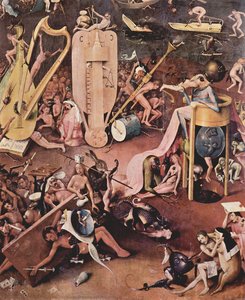
Paradies, Terrestrischer Paradise


Entdecken Sie Hieronymus Boschs 'Paradies, Terrestrischer Paradise' – Ein faszinierendes Werk voller Symbolik und biblischen Geschichten. Erleben Sie die Vision des Jenseits im Palazzo Ducale in Venedig.
 Weiterlesen
Erkunden Sie die surreale und symbolische Welt von Hieronymus Bosch (ca. 1450-1516), eines niederländischen Renaissance-Meisters. Entdecken Sie seine ikonischen Ölgemälde, beunruhigende Visionen der Hölle, religiöse Themen und seinen bleibenden Einfluss auf die Kunstgeschichte.
Giclée / Kunstdruck
Giclée- oder Leinwanddruck in Museumsqualität mit schneller Produktion und flexiblen Veredelungsoptionen. ( Handgemalte Reproduktion bestellen Zum digitalen Bild wechseln)




P118B €10

P118H €10

P118W €10

P438Z €10

P508JH €12

P508YH €12

P805H €10

P805Z €10

P919BZ €10

P919G €10

P919XJ €10

P959ZH €10

P968JZ €12

W106C €8

W218G €10

W218JH €8

W218Y €10

W307PJ €10

W316G €10

W316PJ €8

W316Y €10

W398PJ €8

W4111J €10

W500HY €15

W500JH €15

W692G €12

W849H €8

W940BG €15

W953PJ €8




Standardformat
individuell anpassbar
CM
INCH
Wählen Sie aus unseren vordefinierten Formaten, die den ursprünglichen Proportionen des Kunstwerks entsprechen.
Loading sizes...

Breite
Höhe
Geben Sie die benötigte Breite und Höhe an, damit der Druck perfekt in Ihren Rahmen oder an Ihre Wand passt. Ein Druck kann nur beschnitten, aber niemals größer als das Originalbild angefertigt werden; daher verliert ein Format mit anderen Proportionen einen Teil des Bildes. Wir senden Ihnen ein digitales Mockup zur Freigabe, bevor wir den Druck ausführen. Das auf dieser Seite gezeigte Bild zeigt nicht den tatsächlichen Beschnitt – dies ist nur im Mockup ersichtlich.
Weltweiter Versand () innerhalb von 2 Wochen statt der üblichen 4/5 Wochen. (28 Oktober)

Kostenloser weltweiter Expressversand

Hochwertige Leinenleinwand

Umfassender Versicherungsschutz beim Versand

Zollgebühren-Rückerstattungsgarantie

Garantie für exakte Farbtreue

100 Tage Rückgaberecht (nur bei Mängeln)

100% Geld-zurück-Garantie

Mengenrabatt verfügbar
 Die Glasoption ist nur für Größen unter 110 cm verfügbar.

Paradies, Terrestrischer Paradise
Giclée / Kunstdruck
Format der Reproduktion
-


Endpreis
€ 61
Hieronymus Bosch’s “Paradise, Terrestrial Paradise”: A Descent into Myth and Morality
The world of Hieronymus Bosch is one of unsettling beauty, a realm where the familiar landscapes of faith collide with fantastical creatures and deeply symbolic imagery. Among his most captivating works, "Paradise, Terrestrial Paradise" (c. 1490) stands as a monumental testament to his unique artistic vision – a complex allegory exploring themes of sin, redemption, and the precarious balance between earthly pleasure and divine judgment. Housed within the opulent Palazzo Ducale in Venice, this polyptych offers not merely a visual spectacle but an invitation into a meticulously constructed moral universe.
Bosch’s genius lay in his ability to seamlessly blend realism with surrealism, creating scenes that are both deeply unsettling and profoundly moving. “Paradise, Terrestrial Paradise” is no exception. The painting depicts Adam and Eve within a lush, almost overwhelming landscape – a carefully orchestrated tableau of earthly delights juxtaposed against the looming shadow of damnation. Note the abundance of animals, not simply as companions but often imbued with symbolic weight; they represent the temptations that lure humanity away from righteousness. The figures engaged in various activities—tending to livestock, working with hay—are not idyllic shepherds but rather embodiments of human desires and vanities.
Central to the composition is the Fountain of Life, a magnificent structure rising on a prominent hill. This isn’t merely a source of water; it represents divine grace – the very essence of purification necessary for achieving salvation. The placement of this fountain is deliberate, drawing the viewer's eye upwards and suggesting a pathway towards spiritual ascension. Observe also the two birds: one soaring to the left, symbolizing hope and aspiration, and another perched on the right, perhaps hinting at the consequences of straying from the righteous path. These subtle details elevate the painting beyond a simple depiction of Adam and Eve; it becomes a profound meditation on human nature and our relationship with God.
The “Visions of the Hereafter” Polyptych
“Paradise, Terrestrial Paradise” is part of a larger series known as "Visions of the Hereafter," consisting of four interconnected panels. This polyptych—a narrative cycle presented in multiple panels—was intended for private devotion, likely commissioned by a wealthy patron seeking guidance on the afterlife. The other panels depict “Ascent of the Blessed,” “Fall of the Damned,” and “Hell,” forming a complete journey through the stages of salvation and punishment. This interconnectedness is crucial to understanding Bosch’s intent; he wasn't simply illustrating individual scenes but constructing an entire cosmology, a visual roadmap for navigating the complexities of the soul.
The technical mastery evident in this work is remarkable. Bosch employed oil on panel—a technique that allowed him to achieve incredible detail and luminosity—to create a scene brimming with texture and depth. The meticulous rendering of each animal, each plant, each human figure speaks to his dedication and skill. Furthermore, the composition itself is remarkably balanced despite its apparent chaos; Bosch’s masterful use of perspective and spatial relationships creates a sense of order within the fantastical imagery.
Symbolism and Interpretation
Bosch's work is notoriously difficult to interpret, inviting endless scholarly debate. The painting is rife with symbolism—a deliberate strategy employed by the artist to convey complex moral messages. Many scholars believe that Bosch was reacting against the perceived corruption of the Catholic Church in his time, using his art to expose hypocrisy and warn viewers about the dangers of sin. The abundance of seemingly frivolous activities – the dancing figures, the playful animals – can be seen as representations of earthly pleasures that distract from spiritual pursuits.
The presence of numerous small details—a broken lute, a discarded apple, a grotesque creature lurking in the shadows—further enriches the painting’s symbolic complexity. These seemingly insignificant elements contribute to a larger narrative about temptation, judgment, and the ultimate fate of humanity. It's important to note that Bosch often employed multiple layers of meaning, allowing for diverse interpretations based on individual viewers’ perspectives.
A Timeless Masterpiece
"Paradise, Terrestrial Paradise" remains one of Hieronymus Bosch’s most enduring and enigmatic works. Its unsettling beauty, profound symbolism, and technical brilliance continue to captivate audiences centuries after its creation. Reproductions offer a remarkable opportunity to experience the depth and complexity of this extraordinary painting, bringing Bosch's visionary world into your own home. Consider commissioning a hand-painted reproduction from TopImpressionists.com – a faithful recreation that captures not only the visual details but also the emotional power of this timeless masterpiece.
Fragen & Antworten
Wie lassen sich die Farben von "Paradies, Terrestrischer Paradise" von Hieronymus Bosch mit dessen emotionaler Wirkung in Verbindung bringen?
"Paradies, Terrestrischer Paradise" von Hieronymus Bosch vereint eine Erdig Farbpalette mit einem Melancholisch Ton.
Woher kommen die Besucher von "Paradies, Terrestrischer Paradise" von Hieronymus Bosch?
Auf der Besucherzahlen-Seite des Kunstwerks finden Sie Statistiken zu "Paradies, Terrestrischer Paradise" von Hieronymus Bosch: monatliche Aufrufe des Kunstwerks, Aufrufe der Werke des Künstlers sowie eine Aufschlüsselung der jüngsten Besucher nach Land und Sprache.
Zu welcher Stilrichtung gehört "Paradies, Terrestrischer Paradise"?
„Paradies, Terrestrischer Paradise“ ist ein Werk der Northern Renaissance. Die Stilrichtung gibt die künstlerische Tradition an, der das Werk angehört.
Künstlerbiografie
Leben und Karriere
Hieronymus Bosch, ein bedeutender niederländischer/niederländischer Maler aus Brabant, wurde um 1450 in 's-Hertogenbosch, Niederlande, geboren. Sein Leben bleibt einem Mysterium geweiht, mit nur wenigen Aufzeichnungen über seine Existenz. Trotz des Mangels an biografischen Informationen hat sich Boschs Kunst einen tiefgreifenden Einfluss auf die nordeuropäische Kunst erarbeitet, insbesondere im 16. Jahrhundert.Künstlerischer Stil und Einflüsse
Boschs einzigartiger Stil, der durch **surreale und fantasievolle Darstellungen religiöser Themen** gekennzeichnet ist, hat weitreichende Einflüsse ausgeübt. Seine Ölgemälde auf Eichenholz, oft mit **düsteren und traumhaften Visionen der Hölle** ausgestattet, wurden zahlreichen Interpretationen unterzogen. Das Triptychon des letzten Gerichts (ca. 1480-1490) und das Garten der sinnlichen Freuden (ca. 1490-1510) sind zwei seiner bekanntesten Werke, die seine Meisterschaft in der Technik demonstrieren.Bekannte Werke und Sammlungen
* Aufstieg der Seligen (Nordische Renaissance, Öl auf Holzplatte): Ein seltenes Beispiel von Boschs Werk, das eine traumhafte, andereweltliche Szene zeigt. * Epifanie (ca. 1495, Prado Museum, Madrid): Ein Triptychon, das Boschs innovative Verwendung von Öl auf Holz demonstriert. * Kopf eines Halberdiers (Prado Museum, Madrid): Ein feines Beispiel für Boschs Porträtkunst, das seine Detailgenauigkeit zeigt.Museen und Sammlungen mit Boschs Werken
* Das Prado Museum, Madrid: Beherbergt einige seiner berühmtesten Werke, darunter Epifanie und das Triptychon des letzten Gerichts. * Das Philadelphia Museum of Art, Philadelphia: Präsentiert eine Version der Epifanie und bietet so einen einzigartigen Blick auf Boschs künstlerischen Stil.- Erfahren Sie mehr über die Werke von Hieronymus Bosch unter https://TopImpressionists.com/@/hieronymus-bosch
- Entdecken Sie die frühe niederländische Kunstbewegung und ihre wichtigsten Figuren, darunter Jan van Eyck und Pieter Bruegel der Ältere, unter https://TopImpressionists.com/@@/a@d3cpaf-the-erly-netherlandish-art-movement
- Erfahren Sie mehr über das Leben und Werk von Pieter Bruegel dem Älteren unter https://en.wikipedia.org/wiki/pieter_bruegel_the_elder
Vermächtnis
Hieronymus Boschs rätselhafter Stil hat Kunstliebhaber seit Jahrhunderten in seinen Bann gezogen, und sein Einfluss ist auch heute noch bei zahlreichen Künstlern zu sehen. Seine einzigartige Kombination aus **Surrealismus und tiefgründigen Einsichten in die menschliche Natur** hat seine Position als Meister der niederländischen Malerei gefestigt.
Hieronymus Bosch
1450 - 1516 , Niederlande
Kurzinfos
- Beeinflusste Künstler: ['Pieter Bruegel d.Ä.']
- Bemerkenswerte Werke:
- Garten der Lüste
- Letztes Gericht Triptychon
- Aufstieg der Seligen
- Epiphanias
- Geburtsdatum: ca. 1450
- Geburtsort: 's-Hertogenbosch, Niederlande
- Künstlerische Einflüsse:
- Jan van Eyck
- Pieter Bruegel d.Ä.
- Künstlerischer Stil: Frühflämische Malerei
- Nationalität: Niederländisch
- Sterbedatum: 1516
- Vollständiger Name: Hieronymus Bosch
Ähnliche Artikel

The Enduring Legacy of Oil on Canvas: Technique, History & Aesthetic Impact
Explore the rich history & techniques of oil painting – from Renaissance masters to Impressionism. Discover pigments, layering methods, and why this timeless medium endures. Expert insights for artists & art enthusiasts.

Hieronymus Bosch: Die Entschlüsselung einer visionären Meisterwerk und seiner tiefgründigen Symbolik
Entdecken Sie die faszinierende Welt des Hieronymus Bosch! Unsere Expertenanalyse enthüllt die tiefgründige Symbolik seiner Meisterwerke, von 'Der Garten der Lüste' bis zum Triptychon des Heiligen Antonius. Erfahren Sie mehr über Leben, Werk und bleibenden Einfluss dieses einzigartigen Künstlers.

Hieronymus Bosch: Die 25 Meisterwerke des düsteren Genies – Kunst für Ihr Zuhause | TopImpressionists
Entdecken Sie die 25 faszinierendsten Meisterwerke von Hieronymus Bosch! Tauchen Sie ein in die düstere Schönheit niederländischer Malerei, religiöse Symbolik und fantastische Welten. Hochwertige Kunstdrucke & Inspiration für Ihr Zuhause auf TopImpressionists.com.

Öl auf Leinwand: Eine historische und technische Erkundung eines zeitlosen künstlerischen Mediums
Entdecken Sie die faszinierende Welt der Ölmalerei! Von historischen Techniken bis zur modernen Anwendung – wir bieten Expertenwissen, Restaurierungstipps und hochwertige Reproduktionen. Jetzt informieren!

The Enduring Power of Painting: A Historical & Contemporary Exploration of Form and Emotion
Explore the rich history & enduring techniques of oil painting with TopImpressionists. Discover masterpieces, learn about art collecting, and find authentic handmade reproductions crafted by skilled artists.
Entdecken Sie Kunstwerke, die nach Themen, Stilen und Merkmalen sortiert sind.