


 In echtem Maßstab anzeigen
 Versenden als Grußkarte
 Teilen
 Details anzeigen
 Leitfaden öffnen

 Herunterladen
 Ähnliche Objekte
 Röntgenaufnahme
 Diashow
 Besucherstatistiken
Roman Ruins


Discover "Roman Ruins" by Hubert Robert (1760). A Romantic masterpiece showcasing crumbling architecture & pastoral life. Oil on canvas, dramatic lighting & serene beauty. Perfect for art lovers!
 Mehr anzeigen
Hubert Robert (1733-1808): Französischer Maler der Ruinen & Visionen! Entdecken Sie seine faszinierenden Landschaftsbilder & historischen Darstellungen.
Giclée / Kunstdruck
Giclée- oder Leinwanddruck in Museumsqualität mit schneller Produktion und flexiblen Veredelungsoptionen. ( Handgemalte Reproduktion kaufen Zum digitalen Bild wechseln)




P118B $10

P118H $10

P118W $10

P438Z $10

P508JH $12

P508YH $12

P805H $10

P805Z $10

P919BZ $10

P919G $10

P919XJ $10

P959ZH $10

P968JZ $12

W106C $8

W218G $10

W218JH $8

W218Y $10

W307PJ $10

W316G $10

W316PJ $8

W316Y $10

W398PJ $8

W4111J $10

W500HY $15

W500JH $15

W692G $12

W849H $8

W940BG $15

W953PJ $8




Standardformat
individuell anpassbar
CM
INCH
Wählen Sie aus unseren vordefinierten Formaten, die den ursprünglichen Proportionen des Kunstwerks entsprechen.
Loading sizes...

Breite
Höhe
Sie können Ihre eigenen Maße eingeben, um ein bestimmtes Format oder einen speziellen Platz einzupassen. Wenn das von Ihnen gewählte Format nicht den Proportionen des Originalbildes entspricht, werden wir das Kunstwerk entweder beschneiden oder das Bild mit einem gespiegelten oder einfarbigen Rand erweitern. Ein digitaler Entwurf wird Ihnen zur Genehmigung zugesandt, bevor die Produktion beginnt.
Bitte beachten Sie, dass die Vorschau auf dem Bildschirm nicht den tatsächlichen Zuschnitt oder die Erweiterung widerspiegelt. Nur der Entwurf zeigt die endgültige Komposition präzise an.
Obwohl Sondermaße verfügbar sind, empfehlen wir die Auswahl eines Maßes aus der vordefinierten Liste, um die ursprünglichen Proportionen zu bewahren.
Weltweiter Versand () innerhalb von 2 Wochen statt der üblichen 4/5 Wochen. (26 September)

Kostenloser weltweiter Expressversand

Hochwertige Leinenleinwand

Vollständiger Versicherungsschutz beim Versand

Zollgebühren-Rückerstattungsgarantie

Garantie für exakte Farbtreue

100-tägiges Rückgaberecht (nur bei Mängeln)

100% Geld-zurück-Garantie

Angebot für Mengenrabatt
 Die Glasoption ist nur für Größen unter 110 cm verfügbar.

Roman Ruins
Giclée / Kunstdruck
Format der Reproduktion
-


Gesamtpreis
$ 69
A Symphony of Decay and Eternal Beauty
In the quietude of Hubert Robert’s Roman Ruins, one finds more than a mere depiction of crumbling stone; one encounters a profound meditation on the relentless passage of time. Created around 1760, this masterpiece serves as a window into the heart of the Romantic imagination, where the grandeur of antiquity meets the soft, persistent embrace of nature. The canvas invites the viewer to wander through a landscape where monumental architecture—once the pride of an empire—now yields to the slow, rhythmic pulse of vegetation and light. It is a scene that captures a fleeting moment of ethereal beauty, frozen in the amber of oil on canvas, offering a sense of pastoral tranquility that resonates deeply with the modern soul seeking refuge from the frenetic pace of contemporary life.
The composition is masterfully orchestrated to draw the eye deep into a world of architectural wonder and quiet human drama. A majestic, weathered archway stands as the central protagonist, its heavy columns and fractured masonry framing a vista that stretches toward an infinite horizon. Through this portal, the viewer perceives a vast, open space where the boundaries between man-made structures and the wild landscape begin to blur. The foreground is alive with the gentle rhythms of everyday existence: figures engaged in quiet contemplation, a woman tending to livestock, and children playing amidst the rocky outcrops. This juxtaposition—the monumental scale of the ruins against the intimate, humble activities of life—establishes a poignant dialogue between historical glory and the enduring continuity of the human spirit.
The Artistry of the Romantic Capriccio
Robert’s technical prowess is most evident in his command of light and texture, elements that elevate this work from a topographical study to a capriccio—a genre of imaginative fantasy. Utilizing the rich, versatile medium of oil paint, the artist achieves a remarkable tonal range that breathes life into the scene. Warm ochres, deep browns, and radiant golds dominate the palette, bathing the ruins in a sun-drenched glow that evokes a sense of nostalgic warmth. His brushwork is both deliberate and expressive; while the architectural elements are defined by structured lines, the foliage and distant clouds are rendered with a looser, more spontaneous touch. This interplay of precision and fluidity creates a dynamic atmosphere, where the light seems to dance across the textured surfaces of stone and leaf alike.
For the discerning collector or interior designer, Roman Ruins offers an unparalleled emotional depth that transcends mere decoration. The painting functions as a symbolic vessel, carrying themes of memory, loss, and the sublime power of nature. It evokes a sense of "melancholic grandeur"—a feeling of being moved by the beauty of what has passed while finding peace in the persistence of life. Integrating such a high-quality reproduction into a curated space provides more than just a visual focal point; it introduces a narrative of timelessness and sophistication. Whether placed in a sunlit library or a grand salon, Robert’s vision of the Roman past serves as an enduring inspiration, reminding us that even amidst decay, there is a profound and lasting splendor to be found.
Biografie des Künstlers
Hubert Robert: Maler der Ruinen und Visionen
- Geboren: 22. Mai 1733, Paris, Frankreich
- Gestorben: 15. April 1808, Paris, Frankreich
Hubert Robert war ein französischer Maler, der für seine eindringlichen Landschaftsbilder und *Capriccio*-Gemälde – halbfiktive, malerische Darstellungen von Ruinen in Italien und Frankreich – gefeiert wurde. Er gilt als eine zentrale Figur, die die Epochen Rokoko und Neoklassizismus miteinander verbindet und mit seiner Faszination für Verfall, Geschichte und fantasievolle Rekonstruktionen Aspekte des Romantismus vorwegnimmt.
Frühes Leben und künstlerische Ausbildung
Nicolas Robert, Hubert’s Vater, diente François-Joseph de Choiseul, Marquis de Stainville. Robert erhielt eine Jesuitenbildung am Collège de Navarre im Jahr 1751. Anschließend studierte er Bildhauerei bei Michel-Ange Slodtz, der ihn ermutigte, das Malen zu verfolgen. Diese frühe Ausbildung vermittelte ihm ein starkes Fundament in Design und Perspektive, wesentliche Elemente, die später seinen künstlerischen Stil prägten.
Die römischen Jahre und künstlerische Entwicklung (1754-1765)
- Umzug nach Rom: Im Jahr 1754 reiste Robert mit Étienne-François de Choiseul, dem Sohn seines Arbeitgebers, nach Rom.
- Elf Jahre in Italien: Er verbrachte elf Jahre in Rom, eine prägende Zeit für seine künstlerische Entwicklung.
- Unterstützung und Förderung: Er finanzierte sich durch die Schaffung von Werken für reisende Kenner wie den Abbé de Saint-Non.
- Einfluss von Giovanni Paolo Panini: Robert arbeitete zusammen mit Giovanni Paolo Panini, dessen Einfluss in seinen frühen *Capriccio*-Kompositionen erkennbar ist.
- Skizzieren und Beobachten: Er skizzierte akribisch römische Ruinen und Landschaften und dokumentierte Stätten wie die Villa d'Este und Caprarola und demonstrierte damit ein scharfes Auge für Details und atmosphärische Perspektive.
Seine Zeit in Rom prägte Roberts künstlerische Vision tiefgreifend. Die Gegenüberstellung antiker römischer Ruinen mit dem zeitgenössischen Leben weckte sein Interesse daran, Verfall neben Vitalität darzustellen – ein wiederkehrendes Thema in seiner gesamten Karriere.
Rückkehr nach Paris und Anerkennung (1765-1790)
- Rascher Erfolg: Nach seiner Rückkehr nach Paris im Jahr 1765 erlangte Robert schnell Anerkennung.
- Aufnahme in die Académie Royale de Peinture et de Sculpture: Er wurde mit einem römischen *Capriccio*, „Der Hafen von Rom, geschmückt mit verschiedenen architektonischen Monumenten, antiken und modernen“, in die Académie Royale de Peinture et de Sculpture aufgenommen.
- Salonausstellungen: Seine Ausstellungen im Salon (beginnend 1767) erregten große Aufmerksamkeit. Denis Diderot bemerkte berühmt die von seinen Darstellungen von Ruinen hervorgerufene Erhabenheit.
- Bemerkenswerte Werke: Zu den wichtigsten Werken dieser Zeit gehört „Landschaft mit den Ruinen des Rundtempels, mit einer Statue der Venus und einem Denkmal für Marcus Aurelius“, das seine Meisterschaft in der *Capriccio*-Malerei demonstriert.
Roberts Pariser Erfolg beruhte auf seiner Fähigkeit, sowohl die Erhabenheit der klassischen Antike als auch die Lebendigkeit des zeitgenössischen Lebens einzufangen. Seine Werke fanden bei einem Publikum Anklang, das sich für Geschichte, Archäologie und das Beschauliche begeisterte.
Spätere Jahre, Revolution und Vermächtnis (1790-1808)
- Französische Revolution: Robert erlebte und dokumentierte die Französische Revolution, einschließlich der Zerstörung historischer Monumente.
- Kurator des Muséum Central des Arts: Er diente als Kurator des neu gegründeten Muséum Central des Arts (später das Louvre), was sein Engagement für den Schutz des kulturellen Erbes unterstreicht.
- Fortsetzung der künstlerischen Produktion: Trotz des turbulenten politischen Klimas malte und zeichnete Robert weiterhin produktiv.
- Reproduktion und Einfluss: Seine Werke wurden häufig von Künstlern wie dem Abbé de Saint-Non, Châtelain, Linard und Le Veau reproduziert, was auf seinen weitreichenden Einfluss hinweist.
Hubert Roberts Vermächtnis liegt in seiner einzigartigen Fähigkeit, historische Genauigkeit mit fantasievoller Vision zu verbinden. Er begründete ein Genre der Malerei, das sowohl die Schönheit des Verfalls als auch die bleibende Kraft menschlicher Kreativität feierte. Seine Arbeit inspiriert weiterhin Künstler und fesselt das Publikum und festigt damit seinen Platz als bedeutende Figur in der Kunst des 18. Jahrhunderts.

Hubert Robert
1733 - 1808 , Frankreich
Eckdaten zum Künstler
- Bemerkenswerte Werke:
- Innenraum des Dianatempels
- Le château de la Roche Guyon
- Der Künstler zeichnet in den
- Landschaft mit einer Terrasse
- Villa Sachetti
- Ruinen eines Stalls der Villa
- Einflüsse: ['Giovanni Paolo Panini']
- Geburtsdatum: 22. Mai 1733
- Geburtsort: Paris, Frankreich
- Künstlerische Richtung: Rokoko und Neoklassizismus
- Nationalität: Französisch
- Sterbedatum: 15. April 1808
- Vollständiger Name: Hubert Robert
Verwandte Artikel

Capturing Eternal Glory: Impressionist Visions of the Roman Empire's Timeless Grandeur
Explore the breathtaking intersection of Roman grandeur and Impressionist light. Discover how masters like Monet reimagined classical ruins through vibrant, emotive brushstrokes. A cultural journey for true art lovers seeking to bring eternal glory into their homes.
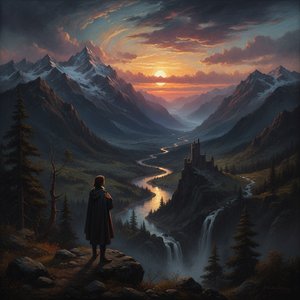
Capturing the Soul: The Emotional Majesty and Sublime Power of Romantic Landscape Painting
Explore the profound emotional depth of Romantic landscape painting. Discover how masters like Turner and Friedrich captured the sublime power of nature through intuition and imagination in this expert art history retrospective.

Capturing the Soul: The Emotional Magic and Sublime Grandeur of Romantic Landscape Painting
Explore the profound emotional depth of Romantic landscape painting. Discover how masters like Friedrich and Turner captured the sublime through light, shadow, and nature's power in this expert art history retrospective for discerning collectors.
Entdecken Sie Kunstwerke, die nach Themen, Stilen und Merkmalen sortiert sind.


