

 Vorschau anzeigen
 Versenden
 Teilen
 Details anzeigen
 Leitfaden

 Herunterladen
 Ähnliche Objekte
 Röntgenaufnahme
 Diashow
 Fragen & Antworten
 Statistiken
Beech Trees


A serene watercolor sketch of beech trees by J.M.W. Turner, capturing the essence of nature with delicate lines and subtle tones. A timeless study of tranquility.
 Weiterlesen
Entdecken Sie J.M.W. Turner (1775-1851), Pionier der Romantik! Erleben Sie seine Landschaftsbilder, stürmischen Meeresansichten & Einfluss auf den Impressionismus. Kunstwerke entdecken & mehr über diesen britischen Meister erfahren.
Giclée / Kunstdruck
Giclée- oder Leinwanddruck in Museumsqualität mit schneller Produktion und flexiblen Veredelungsoptionen. ( Handgemalte Reproduktion bestellen Zum digitalen Bild wechseln)




P118B €10

P118H €10

P118W €10

P438Z €10

P508JH €12

P508YH €12

P805H €10

P805Z €10

P919BZ €10

P919G €10

P919XJ €10

P959ZH €10

P968JZ €12

W106C €8

W218G €10

W218JH €8

W218Y €10

W307PJ €10

W316G €10

W316PJ €8

W316Y €10

W398PJ €8

W4111J €10

W500HY €15

W500JH €15

W692G €12

W849H €8

W940BG €15

W953PJ €8




Standardformat
individuell anpassbar
CM
INCH
Wählen Sie aus unseren vordefinierten Formaten, die den ursprünglichen Proportionen des Kunstwerks entsprechen.
Loading sizes...

Breite
Höhe
Geben Sie die benötigte Breite und Höhe an, damit der Druck perfekt in Ihren Rahmen oder an Ihre Wand passt. Ein Druck kann nur beschnitten, aber niemals größer als das Originalbild angefertigt werden; daher verliert ein Format mit anderen Proportionen einen Teil des Bildes. Wir senden Ihnen ein digitales Mockup zur Freigabe, bevor wir den Druck ausführen. Das auf dieser Seite gezeigte Bild zeigt nicht den tatsächlichen Beschnitt – dies ist nur im Mockup ersichtlich.
Weltweiter Versand () innerhalb von 2 Wochen statt der üblichen 4/5 Wochen. (8 November)

Kostenloser weltweiter Expressversand

Hochwertige Leinenleinwand

Umfassender Versicherungsschutz beim Versand

Zollgebühren-Rückerstattungsgarantie

Garantie für exakte Farbtreue

100 Tage Rückgaberecht (nur bei Mängeln)

100% Geld-zurück-Garantie

Mengenrabatt verfügbar
 Die Glasoption ist nur für Größen unter 110 cm verfügbar.

Beech Trees
Giclée / Kunstdruck
Format der Reproduktion
-


Endpreis
€ 62
A Moment Captured: The Essence of Beech Trees
Joseph Mallord William Turner’s “Beech Trees,” painted around 1797, isn't merely a depiction of trees; it’s an immersion into a fleeting moment of quietude. This remarkable work, rendered in delicate graphite and watercolor on paper, offers a profound glimpse into the Romantic sensibility – a fascination with nature’s power to evoke emotion and inspire contemplation. It’s a piece that whispers rather than shouts, inviting the viewer to lose themselves within its muted palette and intricate details.
The scene unfolds in what appears to be a park-like setting, perhaps a carefully cultivated corner of the English countryside. Turner doesn't strive for photographic realism; instead, he captures the *feeling* of being amongst these majestic beech trees – their imposing stature, the dappled light filtering through their branches, and the subtle shift in tone as shadows lengthen. The composition is deliberately understated, focusing on the interplay of form and texture rather than grand vistas or dramatic landscapes. The presence of a body of water in the background subtly anchors the scene, suggesting an endless expanse beyond the immediate focus.
Decoding the Language of Line and Tone
Turner’s technique is masterful in its restraint. The work is dominated by meticulously rendered lines – hatching and cross-hatching techniques employed with astonishing precision to build up tone and texture. These aren't bold, assertive strokes; they are subtle gradations of gray, white, and black that create a remarkable sense of volume and depth. The artist’s hand is visible in the delicate layering of washes, revealing the process of building up the image gradually, layer by layer. The bark of the trees is rendered with an almost tactile quality – you can practically feel the rough texture beneath your fingertips.
Crucially, Turner eschews bright colors, embracing a monochromatic palette that amplifies the emotional impact of the piece. This deliberate choice forces the viewer to focus on the nuances of light and shadow, creating a mood of serene contemplation. The diffused lighting suggests an overcast day, lending the scene a timeless quality – as if it could exist outside of any specific moment in time.
A Romantic Vision: Symbolism and Context
“Beech Trees” is deeply rooted in the artistic currents of the late 18th and early 19th centuries, particularly the burgeoning Romantic movement. Romantic artists sought to capture the sublime – that feeling of awe and wonder inspired by nature’s grandeur. Beech trees themselves held symbolic significance during this period; they were often associated with strength, resilience, and longevity—qualities highly valued in a society grappling with rapid change.
The work's date, 1797, places it within a pivotal moment of artistic and intellectual ferment. Turner’s early training at the Royal Academy instilled in him a rigorous approach to observation and representation, yet he quickly developed his own distinctive style—one that prioritized emotional expression over strict adherence to academic conventions. The piece reflects this tension between tradition and innovation, demonstrating Turner's ability to synthesize classical techniques with a deeply personal vision.
A Legacy of Light: Reproduction and Appreciation
Reproductions of “Beech Trees” offer a remarkable opportunity to experience the beauty and tranquility of Turner’s original work. The subtle nuances of tone, texture, and light—so painstakingly rendered by hand—are faithfully captured in high-quality reproductions. This piece is not just a depiction of trees; it's an invitation to slow down, breathe deeply, and connect with the natural world. It speaks to our enduring fascination with nature’s power to inspire awe and reflection – a timeless testament to the genius of J.M.W. Turner.
Fragen & Antworten
Wie kann ich "Beech Trees" von J.M.W. Turner als Diashow ansehen?
Eine Diashow ist verfügbar: die Seite Diashow von "Beech Trees" von J.M.W. Turner.
Wie harmonieren die Farben von "Beech Trees" miteinander?
Die Farben von "Beech Trees" von J.M.W. Turner weisen eine Unified Palette Harmonie auf. Harmonie beschreibt das Zusammenspiel der Farben untereinander.
Ist "Beech Trees" von J.M.W. Turner im Hoch-, Quer- oder Quadratformat angeordnet?
"Beech Trees" von J.M.W. Turner hat ein Portrait-Format. Das Format beschreibt die Proportionen der Komposition.


Künstlerbiografie
Frühes Leben und Karriere
Joseph Mallord William Turner, bekannt in seiner Zeit als William Turner, war ein renommierter englischer Maler der Romantik, Grafiker und Aquarellist. Er wurde am 23. April 1775 in Maiden Lane, Covent Garden, London, in einer bescheidenen Familie des unteren Mittelstandes geboren. Turners künstlerische Reise begann schon in jungen Jahren. * **Wunderkind:** Schon mit 14 Jahren schrieb sich Turner an der Royal Academy of Arts ein und stellte bereits im Alter von 15 Jahren seine erste Arbeit aus. * **Architekturzeichner:** Er arbeitete auch als Architekturzeichner und verbesserte dabei seine Fähigkeiten in Perspektive und Design.Künstlerischer Stil und Beiträge
Turners ausdrucksstarke Farbgebung, fantasievolle Landschaftsbilder und turbulente Meeresmalereien hinterließen einen bleibenden Eindruck auf die britische Kunst. Seine Werke umfassen: * **Von John Ruskin gefördert:** Ab 1840 wurde Turners Werk vom führenden englischen Kunstkritiker John Ruskin gewürdigt, der die Landschaftsmalerei in eine beispiellose Stufe der Bedeutung erhob.Persönliches Leben und späte Jahre
* **Intensiv privat und zurückgezogen:** Turners persönliches Leben war von Exzentrik und Rückzug geprägt. * **Vaterrolle:** Er zeugte zwei Töchter, Evelina (1801–1874) und Georgiana (1811–1843), mit der verwitweten Sarah Danby. * **Späteres Leben und Tod:** Turners Gemütszustand verschlechterte sich nach dem Tod seines Vaters im Jahr 1829. Er lebte ab 1845 in Elend und schlechter Gesundheit und verstarb am 19. Dezember 1851 in London im Alter von 76 Jahren.Vermächtnis und Erinnerung
* **Beerdigt in St. Paul’s Cathedral:** Turner wurde in der St. Paul's Cathedral, London beigeselt, ein Beweis für sein bleibendes Vermächtnis. * **Erkunden Sie mehr:** Tauchen Sie in Turners Welt ein über [https://TopImpressionists.com/@/j-m-william-turner](https://TopImpressionists.com/@/j-m-william-turner) und entdecken Sie die Meisterwerke, die Kunstliebhaber auf der ganzen Welt weiterhin inspirieren. Entdecken Sie das turbulente Genie von J.M. William Turner * **Sehen Sie sich seine Werke an:** /de/art/list/ * **Erfahren Sie mehr über die britische Kunst:** [https://en.wikipedia.org/wiki/category:british_art](https://en.wikipedia.org/wiki/category:british_art)
J.M.W. Turner
1775 - 1851 , Vereinigtes Königreich
Kurzinfos
- Bemerkenswerte Werke:
- Der Kampfschiff Temeraire
- Regen, Dampf und Geschwindigkeit
- Die Verbrennung des Parlamentsgebäudes
- Geburtsdatum: 23. April 1775
- Geburtsort: London, Vereinigtes Königreich
- Künstlerische Richtung: Romantik
- Nationalität: Britisch
- Sterbedatum: 19. Dezember 1851
- Vollständiger Name: J.M.W. Turner
Ähnliche Artikel
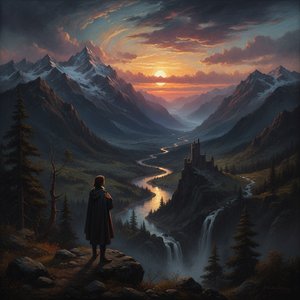
Capturing the Soul: The Emotional Majesty and Sublime Power of Romantic Landscape Painting
Explore the profound emotional depth of Romantic landscape painting. Discover how masters like Turner and Friedrich captured the sublime power of nature through intuition and imagination in this expert art history retrospective.
Entdecken Sie Kunstwerke, die nach Themen, Stilen und Merkmalen sortiert sind.


