


 In echtem Maßstab anzeigen
 Versenden als Grußkarte
 Teilen
 Details anzeigen
 Leitfaden öffnen

 Herunterladen
 Ähnliche Objekte
 Röntgenaufnahme
 Diashow
 Besucherstatistiken
Das Leid von Andromache
 Acryl auf Leinwand
- Wandkunst
- Neoclassical Sentimentality
 1782
1782 290.0 x 246.0 cm
 Musée du Petit Palais
Jacques-Louis David's 'Das Leid von Andromache' (1782) fängt tiefe Trauer ein. Ein bewegendes Gemälde, das den Verlust und die Verzweiflung einer Frau und ihres Kindes darstellt. Jetzt als hochwertige Handreproduktion.
 Mehr anzeigen
Jacques-Louis David (1748–1825): Bedeutender französischer Neoklassizist der Revolution & Napoleonzeit. Bekannt für 'Schwur der Horatii', seine Kunst verkörpert Heldentum, Drama und klassische Ideale. Entdecken Sie sein Erbe bei TopImpressionists!
Giclée / Kunstdruck
Giclée- oder Leinwanddruck in Museumsqualität mit schneller Produktion und flexiblen Veredelungsoptionen. ( Handgemalte Reproduktion kaufen Zum digitalen Bild wechseln)




P118B €10

P118H €10

P118W €10

P438Z €10

P508JH €12

P508YH €12

P805H €10

P805Z €10

P919BZ €10

P919G €10

P919XJ €10

P959ZH €10

P968JZ €12

W106C €8

W218G €10

W218JH €8

W218Y €10

W307PJ €10

W316G €10

W316PJ €8

W316Y €10

W398PJ €8

W4111J €10

W500HY €15

W500JH €15

W692G €12

W849H €8

W940BG €15

W953PJ €8




Standardformat
individuell anpassbar
CM
INCH
Wählen Sie aus unseren vordefinierten Formaten, die den ursprünglichen Proportionen des Kunstwerks entsprechen.
Loading sizes...

Breite
Höhe
Geben Sie die Breite und die Höhe an, die Sie benötigen, damit der Druck perfekt in Ihren Rahmen oder an Ihre Wand passt. Ein Druck kann nur beschnitten werden und niemals größer als das Originalbild gemacht werden; daher verliert ein Format mit einer anderen Proportion einen Teil des Bildes. Wir senden Ihnen ein digitales Mockup zur Freigabe, bevor wir den Druck ausführen. Das auf dieser Seite gezeigte Bild zeigt nicht den tatsächlichen Beschnitt – dies ist nur im Mockup ersichtlich.
Weltweiter Versand () innerhalb von 2 Wochen statt der üblichen 4/5 Wochen. (25 Oktober)

Kostenloser weltweiter Expressversand

Hochwertige Leinenleinwand

Vollständiger Versicherungsschutz beim Versand

Zollgebühren-Rückerstattungsgarantie

Garantie für exakte Farbtreue

100-tägiges Rückgaberecht (nur bei Mängeln)

100% Geld-zurück-Garantie

Angebot für Mengenrabatt
 Die Glasoption ist nur für Größen unter 110 cm verfügbar.

Das Leid von Andromache
Giclée / Kunstdruck
Format der Reproduktion
-


Gesamtpreis
€ 61
Das Leiden von Andromache – Ein Gemälde der Tragik und des Verlusts
Jacques-Louis David’s “The Grief of Andromache,” painted in 1782, is not merely a depiction of sorrow; it's a profound meditation on loss, duty, and the quiet dignity of suffering. The painting immediately draws the viewer into a scene of restrained emotion within a domestic setting – a room that speaks volumes about the precariousness of life and the weight of circumstance. David masterfully employs a muted palette dominated by somber browns, greys, and ochres, colors deliberately chosen to evoke a sense of melancholy and introspection. The lighting is carefully controlled, highlighting the central figures while casting the surrounding space into shadow, further emphasizing their isolation.
- Subject Matter: The scene centers on Andromache, wife of Hector in Virgil’s *Aeneid*, mourning the death of her beloved husband. She sits with her young son Astyanax, a poignant image of maternal grief and the continuation of lineage amidst devastation.
- Composition: David's composition is meticulously balanced, drawing the eye to Andromache as the focal point. The arrangement of figures – the mother, child, and two unseen observers – creates a sense of contained drama, suggesting both vulnerability and resilience.
Neoklassizismus und die Ideale der Moral
“The Grief of Andromache” is a quintessential example of Neoclassical painting, reflecting the artistic currents of the late 18th century in France. David, deeply influenced by Joseph-Marie Vien and the ideals of classical antiquity, sought to elevate art beyond mere ornamentation, imbuing it with moral purpose. Unlike the frivolous Rococo style that preceded it, Neoclassicism emphasized clarity, order, and a return to the principles of Greek and Roman art – particularly in terms of subject matter and representation. The figures are rendered with an almost sculptural quality, their bodies idealized and presented with a sense of timelessness, mirroring the heroic narratives of classical mythology.
Technique: David’s brushwork is remarkably smooth and controlled, characteristic of Neoclassical painting. He utilizes *sfumato* – a subtle blurring of edges – to create an atmosphere of softness and depth, particularly in the rendering of Andromache's face. The meticulous detail evident in the fabrics and furnishings speaks to his dedication to realism, albeit within the framework of idealized representation.Symbolik und emotionale Wirkung
Beyond its narrative content, “The Grief of Andromache” is rich in symbolic meaning. The veil worn by Andromache signifies her profound mourning, while the presence of the two unseen figures – often interpreted as messengers or attendants – suggests a broader context of loss and remembrance. The simple bed and dining table hint at a life disrupted, a world turned upside down by tragedy. Most powerfully, the image captures a universal human experience: the enduring pain of bereavement and the quiet strength required to face an uncertain future. The young Astyanax, despite his vulnerability, embodies hope – a testament to the continuity of family and the promise of new beginnings, even in the darkest of times.
Reproduktion und Interpretation
TopImpressionists offers exquisite hand-painted reproductions of “The Grief of Andromache,” meticulously crafted to capture the essence of David’s original masterpiece. Each reproduction is created by skilled artists using traditional techniques and archival-quality materials, ensuring that the colors and details remain true to the spirit of the painting. This artwork transcends mere decoration; it becomes a window into a pivotal moment in art history – a poignant reminder of human suffering and resilience. Consider this piece not just as an image, but as a conversation starter, a source of contemplation, and a testament to the enduring power of art to evoke profound emotion. The size of 290 x 246 cm provides ample opportunity for display, allowing the viewer to fully immerse themselves in the scene’s emotional depth.
Fragen & Antworten
Wie kann ich eine Reproduktion von "Das Leid von Andromache" von Jacques-Louis David in der Vorschau ansehen?
Um eine Reproduktion von "Das Leid von Andromache" von Jacques-Louis David in der Vorschau zu sehen, öffnen Sie die Vorschau-Seite des Kunstwerks.
Welche Farbpalette und welche Leitfarbe prägen "Das Leid von Andromache"?
Die Farbidentität von "Das Leid von Andromache" von Jacques-Louis David: eine Erdig-Palette, dominiert von Grau (#928481).
In welche Phase von Jacques-Louis Davids Schaffen lässt sich "Das Leid von Andromache" einordnen?
Innerhalb der Schaffensperiode von Jacques-Louis David lässt sich „Das Leid von Andromache“ der Revolutionary Phase zuordnen. Diese Phase ermöglicht einen Vergleich mit anderen Werken des Künstlers.
Biografie des Künstlers
Jacques-Louis David: Ein Leben in Kunst und Revolution
Frühes Leben und Ausbildung
Jacques-Louis David, geboren am 30. August 1748 in Paris, Frankreich, war eine zentrale Figur bei der Übergangs von Rokoko zu Neoklassizismus. Sein Vater, ebenfalls Jacques-Louis David, war Knopfmacher und starb, als junger David neun Jahre alt war. Er wurde von seinem Onkel, einem Kirchenkurat, aufgezogen, der sein künstlerisches Talent erkannte und förderte. David begann zunächst mit François Boucher, einem führenden Maler des Rokoko-Stils, aber fand Bouchers Arbeit lächerlich. Später studierte er bei Joseph-Marie Vien, dessen Betonung auf Historienmalerei und klassische Themen tiefer in Davids sich entwickelnde ästhetische Sensibilitäten resonierte. Er verfolgte unerbittlich Perfektion und versuchte (und scheiterte mehrmals) an der prestigeträchtigen Prix de Rome-Stipendienprüfung.Künstlerische Entwicklung & Neoklassischer Stil
Davids künstlerischer Stil entwickelte sich im Laufe seiner Karriere erheblich. Frühe Werke zeigten Spuren von Rokoko-Einflüssen, aber er übernahm allmählich einen strengeren und disziplinierteren Ansatz, inspiriert vom klassischen Altertum. Er lehnte die prunkvolle Dekoration und spielerischen Themen des Rokokos in Richtung Klarheit, Ordnung und moralische Ernsthaftigkeit ab. Sein Engagement für den Neoklassizismus wurde durch archäologische Entdeckungen in Pompeji und Herculaneum angeheizt, die Künstlern neue Einblicke in die römische Kunst und Architektur der Antike gaben. Zu seinen wichtigsten Merkmalen seines Stils gehören präzise Draftsmanship, dramatische Beleuchtung und ein Fokus auf historische oder mythologische Themen, die von bürgerlicher Tugend geprägt sind.Die Französische Revolution & Revolutionary Art
David wurde tief in das politische Umfeld der Französischen Revolution involviert. Er war ein glühender Unterstützer des revolutionären Ausrags und ein enger Mitarbeiter von Maximilien Robespierre. Diese Periode markierte einen Wendepunkt in seiner Karriere, als er begann, Gemälde zu schaffen, die republikanische Ideale feierten und revolutionäre Helden glorifizierten. “Das Eid der Horatii” (1784), obwohl vor der Revolution, deutete auf ihre Themen von Opferbereitschaft und bürgerlicher Pflicht hin. Während des Terrors diente David im Komitee für öffentliche Sicherheit und unterschrieb sogar das Todesurteil Robespierre. Seine Gemälde aus dieser Zeit, wie z. B. “Der Tod des Marat” (1793), wurden zu mächtigen Symbolen der revolutionären Märtyrertum.Das Napoleonische Zeitalter & Imperial Commissions
Nach dem Sturz Robespierres passte David geschickt an die neue politische Landschaft unter Napoleon Bonaparte an. Er wurde Napoleons offizieller Hofmaler und erhielt zahlreiche Aufträge, um Napoleons Siege und Errungenschaften zu würdigen. Seine Gemälde aus dieser Zeit, darunter “Napoleon überquert die Alpen” (1801-1805) und “Die Krönung Napoleons” (1807), sind in großem Maßstab und akribisch detailliert und zeigen Napoleon als einen heroischen Führer. Er integrierte wärmere venezianische Farben in seine Palette während dieser Zeit, die eine Verschiebung des Stils widerspiegelten, während er seine neoklassische Präzision beibehielt.Exil & Spätere Jahre
Nach der Restauration von 1814 wurde Davids Verbindung zum napoleonischen Regime zum Ziel der Verfolgung. Er entschied sich, sich 1816 in Brüssel zur Exil zu begeben, wo er bis zu seinem Tod am 29. Dezember 1825 weiter malte und unterrichtete. Trotz politischer Herausforderungen blieb er einflussreich und produzierte weiterhin bedeutende Werke wie “Mars wird von Venus und den drei Gräzen entwaffnet” (1824).Vermächtnis & Einfluss
Jacques-Louis Davids Vermächtnis reicht weit über seine eigene künstlerische Produktion hinaus. Er war ein hoch einflussreicher Lehrer, der zahlreiche Schüler ausbildete, darunter Jean-Auguste-Dominique Ingres, einen der wichtigsten neoklassischen Maler des 19. Jahrhunderts. Sein Fokus auf Draftsmanship, Komposition und historische Genauigkeit hatte nachhaltigen Einfluss auf die französische Kunst. Darüber hinaus beeinflussten seine ausdrucksstarken Verzerrungen von Form und Raum spätere Künstler wie Henri Matisse und Pablo Picasso. Davids Werk wird weiterhin für seine dramatische Kraft, intellektuelle Ernsthaftigkeit und zeitlose Relevanz gefeiert.Wichtige Errungenschaften & Historische Bedeutung
- Etablierte Neoklassizismus als den vorherrschenden Stil in der französischen Malerei.
- Schuf ikonische Bilder, die den Geist der Französischen Revolution und des Napoleonischen Zeitalters einfingen.
- Diente als mächtiger Propagandist für sowohl revolutionäre als auch kaiserliche Regime.
- Bildete eine Generation einflussreicher Künstler aus, die sein Erbe fortsetzte.
- Seine Werke sind Eckpfeiler von Museumssammlungen auf der ganzen Welt, darunter das Musée d'Art et d'Histoire und das Art Institute of Chicago.

Jacques-Louis David
1748 - 1800 , Frankreich
Eckdaten zum Künstler
- Beeinflusste Künstler:
- Jean-Auguste-Dominique Ingres
- Henri Matisse
- Pablo Picasso
- Bemerkenswerte Werke:
- Schwur der Horatier
- Marats Tod
- Napoleon am Alpenpass
- Die Krönung Napoleons
- Sabinenfrauen
- Geburtsdatum: 30. August 1748
- Geburtsort: Paris, Frankreich
- Künstlerische Bewegung: Neoklassizismus
- Künstlerische Einflüsse: ['Joseph-Marie Vien']
- Nationalität: Französisch
- Todatum: 29. Dezember 1825
- Vollständiger Name: Jacques-Louis David
Verwandte Artikel

Jacques-Louis David: Neoklassizistische Ideale und der Geist einer Revolution – Leben, Werk und Vermächtnis eines Meistermalers
Entdecken Sie das Leben und Werk von Jacques-Louis David, dem führenden Maler des Neoklassizismus! Erfahren Sie mehr über seine Rolle in der Französischen Revolution und sein bleibendes Vermächtnis für die Kunstgeschichte. Expertenwissen & detaillierte Analysen.

Klassizismus vs. Romantik: Der epische Kampf zwischen Vernunfmt und Gefühl in der Kunstgeschichte
Erleben Sie den tiefgreifenden Konflikt zwischen Vernunft und Gefühl in der Kunstgeschichte. Jetzt die Epochen entdecken!

Neoklassizismus: Die 10 Meisterwerke, die eine Epoche prägten – Kunst für Ihr Zuhause
Entdecken Sie die 10 prägendsten Meisterwerke des Neoklassizismus! Von David bis Canova – erfahren Sie die Geschichten hinter ikonischen Gemälden & Skulpturen. Finden Sie hochwertige Reproduktionen für Ihr Zuhause auf

Anne-Louis Girodet: Bridging Neoclassicism & Romanticism with Emotional Truth
Explore the captivating world of Anne-Louis Girodet, a pivotal figure bridging Neoclassicism & Romanticism. Discover his masterpieces and unique artistic vision with TopImpressionists.
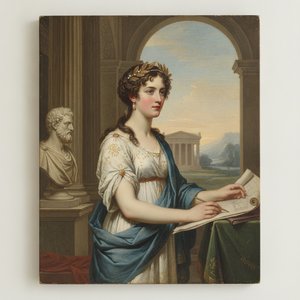
The Revival of Antiquity: Exploring Ideals of Beauty & Power in Neoclassical Portraiture
Explore the captivating world of Neoclassical portraiture! Discover the power & ideals behind masterpieces by David, Girodet & more. Expert analysis, custom reproductions & art appraisal at TopImpressionists.
Entdecken Sie Kunstwerke, die nach Themen, Stilen und Merkmalen sortiert sind.


