In echtem Maßstab anzeigen
 Versenden als Grußkarte
 Teilen
 Details anzeigen
 Leitfaden öffnen

 Herunterladen
 Ähnliche Objekte
 Röntgenaufnahme
 Diashow
 Besucherstatistiken
Eagle Wharf

Whistler’s artistic rebellion began early, fueled by his father's railroad engineering career and exposure to varied environments. He was a gifted draftsman and possessed an unwavering determination to forge a profession as an artist.
 Mehr anzeigen
Erkunden Sie James Abbott McNeill Whistler (1834-1903): Amerikanischen Künstler der Tonalismus & Ästhetizismus. Entdecken Sie 'Whistlers Mutter', Nachträge, Porträts und seine 'Kunst für Kunst's Sake'-Philosophie.
Giclée / Kunstdruck
Giclée- oder Leinwanddruck in Museumsqualität mit schneller Produktion und flexiblen Veredelungsoptionen. ( Handgemalte Reproduktion kaufen Zum digitalen Bild wechseln)




P118B €10

P118H €10

P118W €10

P438Z €10

P508JH €12

P508YH €12

P805H €10

P805Z €10

P919BZ €10

P919G €10

P919XJ €10

P959ZH €10

P968JZ €12

W106C €8

W218G €10

W218JH €8

W218Y €10

W307PJ €10

W316G €10

W316PJ €8

W316Y €10

W398PJ €8

W4111J €10

W500HY €15

W500JH €15

W692G €12

W849H €8

W940BG €15

W953PJ €8




Standardformat
individuell anpassbar
CM
INCH
Wählen Sie aus unseren vordefinierten Formaten, die den ursprünglichen Proportionen des Kunstwerks entsprechen.
Loading sizes...

Breite
Höhe
Geben Sie die Breite und die Höhe an, die Sie benötigen, damit der Druck perfekt in Ihren Rahmen oder an Ihre Wand passt. Ein Druck kann nur beschnitten werden und niemals größer als das Originalbild gemacht werden; daher verliert ein Format mit einer anderen Proportion einen Teil des Bildes. Wir senden Ihnen ein digitales Mockup zur Freigabe, bevor wir den Druck ausführen. Das auf dieser Seite gezeigte Bild zeigt nicht den tatsächlichen Beschnitt – dies ist nur im Mockup ersichtlich.
Weltweiter Versand () innerhalb von 2 Wochen statt der üblichen 4/5 Wochen. (22 Oktober)

Kostenloser weltweiter Expressversand

Hochwertige Leinenleinwand

Vollständiger Versicherungsschutz beim Versand

Zollgebühren-Rückerstattungsgarantie

Garantie für exakte Farbtreue

100-tägiges Rückgaberecht (nur bei Mängeln)

100% Geld-zurück-Garantie

Angebot für Mengenrabatt
 Die Glasoption ist nur für Größen unter 110 cm verfügbar.

Eagle Wharf
Giclée / Kunstdruck
Format der Reproduktion
-


Gesamtpreis
€ 60
James Abbott McNeill Whistler: A Pioneer of Aestheticism
James Abbott McNeill Whistler (1834–1903) stands as an emblem of artistic rebellion against Victorian convention—a painter who championed “art for art’s sake” during a period obsessed with didactic narratives. His formative years, marked by frequent relocations due to his father's railroad engineering career, instilled within him a profound adaptability and exposure to diverse environments. This restless spirit fueled his burgeoning passion for art, propelling him across the Atlantic into the vibrant heart of European avant-garde movements. Whistler’s artistic journey began with an innate talent for drawing—a skill nurtured by encouragement from his brother-in-law Sir William Allan—and solidified through rigorous training at the Imperial Academy of Arts in St. Petersburg. It was here that he honed his observational skills and developed a distinctive approach to capturing visual experience, rejecting sentimentalism in favor of pure tonal harmony as expressed in his celebrated nocturnes.The Thames Set: Exploring Light and Atmosphere
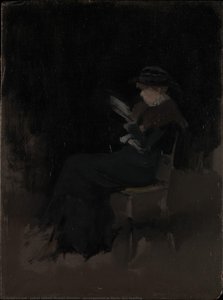
Whistler’s most enduring legacy resides in “A Series of Sixteen Etchings of Scenes on the Thames and Other Subjects,” commonly known as The Thames Set (1871). This ambitious project represents a pivotal moment in Whistler's artistic career, marking his decisive embrace of tonalism—a technique prioritizing subtle gradations of color to convey mood and atmosphere rather than detailed representation. Unlike Impressionists who sought to capture fleeting moments of light, Whistler aimed for a more contemplative engagement with the subject matter, believing that “art should be regarded as an independent pursuit.” The etching depicts a tranquil harbor scene at Eagle Wharf, capturing the diffused glow of twilight over the water—a masterful demonstration of Whistler’s ability to distill complex visual sensations into simplified forms.Eagle Wharf: Composition and Symbolism
The composition of Eagle Wharf is deceptively simple yet profoundly deliberate. Whistler meticulously arranges elements within the frame to create a harmonious balance between light and shadow, mirroring the principles of musical orchestration. The boats are positioned strategically—some prominent in the foreground, others receding into the distance—drawing the viewer’s eye across the canvas. A solitary dog adds an element of domestic tranquility to the scene, subtly reinforcing Whistler's fascination with capturing everyday life without resorting to moralizing commentary. Beyond its aesthetic beauty, Eagle Wharf embodies Whistler’s philosophical stance: it is not merely a depiction of a place but an exploration of sensory experience itself—a testament to “art for art’s sake.”Whistlerian Influence and Legacy
James Abbott McNeill Whistler's unwavering commitment to artistic autonomy profoundly impacted the course of modern art. He challenged prevailing aesthetic norms, advocating for a rejection of narrative storytelling in favor of pure visual expression. His influence extended beyond painting, inspiring writers and composers alike to prioritize form over content—a legacy that continues to resonate within contemporary artistic discourse. Whistler’s “Whistler's Mother,” arguably his most iconic portrait, exemplifies this ethos—a deceptively understated depiction of motherhood imbued with an emotional depth that transcends mere visual representation. It remains a beloved image, frequently reproduced and parodied, cementing Whistler’s place as one of the foremost figures in the history of aestheticism.Fragen & Antworten
Was stellt "Eagle Wharf" von James Abbott McNeill Whistler dar?
Die Motive von "Eagle Wharf" sind harbor scene, boats, dog, tranquility, nocturne, whistler, impressionism.
Welches Druckformat wird für "Eagle Wharf" von James Abbott McNeill Whistler empfohlen?
Für „Eagle Wharf“ wird ein Druckformat von Large in der Ausrichtung Landscape empfohlen.
Wie viel Licht scheinen die Farben von "Eagle Wharf" zu reflektieren?
"Eagle Wharf" von James Abbott McNeill Whistler weist eine Luminanz von Luminous auf. Die Luminanz beschreibt, wie viel Licht die Farben scheinbar reflektieren.
Ähnliche Kunstwerke



Biografie des Künstlers
James Abbott McNeill Whistler: Ein Leben in der Kunst
Frühes Leben und Einflüsse
- Geboren am 14. Juli 1834 in Lowell, Massachusetts, wurde James Abbotts McNeills frühes Leben von seiner Vaters Karriere als Eisenbahningenieur geprägt.
- Wiederholte Umzüge verliehen ihm Anpassungsfähigkeit und Einblicke in vielfältige Umgebungen.
- Er besuchte kurzzeitig die United States Military Academy in West Point, fand es aber nicht zu seinen künstlerischen Neigungen geeignet.
- Eine anschließende Tätigkeit für die U.S. Coast and Geodetic Survey verzögerte, aber auch nicht, seine Suche nach der Kunst.
- Seine prägenden Jahre waren von einem frühen Interesse am Zeichnen und dem Wunsch geprägt, ein professioneller Künstler zu werden.
Künstlerische Entwicklung & Pariser Anfänge
- Whistler zog 1855 nach Paris, ein Wendepunkt in seiner künstlerischen Reise.
- Er studierte unter der Anleitung von Sébastien Bouré und verfeinerte seine Fähigkeiten in Ölmalerei, Aquarell und Grafik.
- Frühe Werke spiegelten Einflüsse von französischen Realisten und Barbizon-Schule Malern wider.
- Whistler entwickelte schnell einen unverwechselbaren Stil, der durch tonale Harmonie und atmosphärische Effekte gekennzeichnet war.
Wichtige Themen & Künstlerischer Stil
- Whistler setzte sich für das Konzept „Kunst um ihrer selbst willen“ ein und lehnte didaktische oder moralisierende Erzählungen zugunsten ästhetischer Überlegungen ab.
- Seine Werke konzentrierten sich oft auf die Erfassung subtiler Nuancen von Licht, Farbe und Atmosphäre.
- Er setzte häufig begrenzte Farbpaletten und zarte Pinselstriche ein, um suggestive Stimmungen zu erzeugen.
- Nocturnes, atmosphärische Gemälde von Dämmerungslandschaften, wurden zu einem Markenzeichen seines Œuvres.
- Porträts waren ebenfalls zentral für seine Praxis und betonten oft formale Anordnungen und tonale Beziehungen gegenüber strikter Ähnlichkeit.
Bekannte Werke & Wichtige Errungenschaften
- The Forge (1861): Eine fesselnde Darstellung einer Schmiede, die Whistlers Meisterschaft im Licht und Schatten demonstriert.
- Portrait of Charles Lang Freer (1873): Zeigt seine Fähigkeit, die Essenz seiner Sujets durch subtile tonale Variationen einzufangen.
- Brown and Gold: The Gold Girl—Connie Gilchrist (1876-77): Ein typisches Beispiel für Tonalismus, das innovative Farb- und Kompositionsnutzung aufweist.
- Arrangement in Grey and Black No. 1 (Whistler’s Mother) (1871): Vielleicht sein berühmtestes Werk, ein ikonisches Bild der viktorianischen Mutterschaft und ein Beweis für seinen formalistischen Ansatz.
- Nocturne in Black and Gold – The Falling Rocket (1875): Ein umstrittenes Gemälde, das zu einer Verleumdungsklage gegen den Kunstkritiker John Ruskin führte und Whistlers Verteidigung der künstlerischen Autonomie hervorbrachte.
Einflüsse & Vermächtnis
- Whistler wurde von japanischen Holzschnitten (ukiyo-e) beeinflusst, die seine kompositorischen Prinzipien und seinen Schwerpunkt auf dekorative Muster informierten.
- Er bewunderte auch das Werk spanischer Maler wie Velázquez, insbesondere ihre Meisterschaft im Tonwert.
- Seine Forderung nach „Kunst um ihrer selbst willen“ hatte einen tiefgreifenden Einfluss auf die Ästhetikbewegung in England und Amerika.
- Whistlers Einfluss erstreckte sich auf nachfolgende Generationen von Künstlern, die formalistische Ansätze annahmen und das expressive Potenzial von Farbe und Komposition erforschten.
- Er hinterließ einen unauslöschlichen Eindruck in der amerikanischen Kunstgeschichte und stellte konventionelle Vorstellungen über künstlerischen Zweck in Frage und ebnete den Weg für den Modernismus.
Historische Bedeutung
- Whistlers Karrierezeitraum fiel mit einer bedeutenden sozialen und kulturellen Veränderung sowohl in Europa als auch in Amerika zusammen.
- Seine Werke stellten viktorianische Konventionen in Frage und trugen zu einem breiteren Wandel hin zur Ästhetik und Individualität bei.
- Die Verleumdungsklage gegen Ruskin erhöhte Whistlers Profil und löste wichtige Debatten über die Natur der Kunstkritik und künstlerischer Freiheit aus.
- Er bleibt eine zentrale Figur in der Geschichte der amerikanischen Kunst, gefeiert für seinen innovativen Stil, seine intellektuelle Strenge und sein unerschütterliches Engagement für künstlerische Prinzipien.

James Abbott McNeill Whistler
1834 - 1903 , Vereinigte Staaten von Amerika
Eckdaten zum Künstler
- Beeinflusste Künstler: ['Sébastien Bouré']
- Bemerkenswerte Werke:
- Die Schmiede
- Whistlers Mutter
- Nacht in Schwarz und Gold
- Anordnung in Gelb und Grau
- Geburtsdatum: 14. Juli 1834
- Geburtsort: Lowell, Vereinigte Staaten
- Künstlerische Richtung: Tonalismus, Ästhetizismus
- Nationalität: Amerikanisch
- Todatum: 1903
- Vollständiger Name: James Abbott McNeill Whistler
- Von Ihm Beeinflusste Künstler: ['Ästhetische Bewegung']
Verwandte Artikel

Die 10 legendärsten Radierungen: Meisterwerke, die Kunstgeschichte schrieben | TopImpressionists
Entdecken Sie die 10 legendärsten Radierungen von Rembrandt, Dürer & Goya! Erfahren Sie die Geschichten hinter diesen Meisterwerken der Kunstgeschichte und lassen Sie sich für Ihre Wohnräume inspirieren. Hochwertige Kunstdrucke auf TopImpressionists.com.

The Intricate World of Etching: A Historical Survey of Technique, Aesthetic Evolution, and Enduring Artistic Impact
Explore the rich history of etching, from its origins to modern practice. Discover techniques, key artists like Rembrandt, and insights for collectors. A comprehensive guide by TopImpressionists.

Etching: A Historical Survey of Technique, Aesthetic Qualities & Enduring Artistic Significance
Explore the rich history of etching, from its origins to Rembrandt's masterful innovations. Discover the technique, aesthetic qualities & enduring legacy of this captivating art form. Expert insights for collectors and enthusiasts.

James Abbott McNeill Whistler: Die 25 Meisterwerke für Ihr Zuhause | TopImpressionists
Entdecken Sie die 25 Meisterwerke von James Abbott McNeill Whistler! Von den berühmten Nocturnes bis zu ikonischen Porträts – erleben Sie Ästhetizismus, Impressionismus & Tonalismus. Hochwertige Reproduktionen auf TopImpressionists.com.

Sir Alfred James Munnings: Die 25 Meisterwerke des Pferdebildes | TopImpressionists
Entdecken Sie die 25 Meisterwerke von Sir Alfred James Munnings! Erleben Sie seine beeindruckenden Pferdebilder, geprägt vom Impressionismus und Realismus. Hochwertige Kunstdrucke & Reproduktionen auf TopImpressionists.com – für elegante Wandkunst & stilvolles Interieurdesign.
Entdecken Sie Kunstwerke, die nach Themen, Stilen und Merkmalen sortiert sind.