Vorschau anzeigen
 Versenden
 Teilen
 Details anzeigen
 Leitfaden

 Herunterladen
 Ähnliche Objekte
 Röntgenaufnahme
 Diashow
 Fragen & Antworten
 Statistiken
The Horse’s Bath


Experience the radiant beauty of Joaquín Sorolla's 'The Horse’s Bath'! A stunning 1909 Spanish painting capturing sunlight, beach life, and a timeless moment of serenity.
 Weiterlesen
Entdecken Sie Joaquín Sorolla (1863-1923), den Meister des spanischen Realismus & Luminismus! Erleben Sie seine lebendigen Gemälde, die mediterranes Licht einfangen.
Giclée / Kunstdruck
Giclée- oder Leinwanddruck in Museumsqualität mit schneller Produktion und flexiblen Veredelungsoptionen. ( Handgemalte Reproduktion bestellen Zum digitalen Bild wechseln)




P118B €10

P118H €10

P118W €10

P438Z €10

P508JH €12

P508YH €12

P805H €10

P805Z €10

P919BZ €10

P919G €10

P919XJ €10

P959ZH €10

P968JZ €12

W106C €8

W218G €10

W218JH €8

W218Y €10

W307PJ €10

W316G €10

W316PJ €8

W316Y €10

W398PJ €8

W4111J €10

W500HY €15

W500JH €15

W692G €12

W849H €8

W940BG €15

W953PJ €8




Standardformat
individuell anpassbar
CM
INCH
Wählen Sie aus unseren vordefinierten Formaten, die den ursprünglichen Proportionen des Kunstwerks entsprechen.
Loading sizes...

Breite
Höhe
Geben Sie die benötigte Breite und Höhe an, damit der Druck perfekt in Ihren Rahmen oder an Ihre Wand passt. Ein Druck kann nur beschnitten, aber niemals größer als das Originalbild angefertigt werden; daher verliert ein Format mit anderen Proportionen einen Teil des Bildes. Wir senden Ihnen ein digitales Mockup zur Freigabe, bevor wir den Druck ausführen. Das auf dieser Seite gezeigte Bild zeigt nicht den tatsächlichen Beschnitt – dies ist nur im Mockup ersichtlich.
Weltweiter Versand () innerhalb von 2 Wochen statt der üblichen 4/5 Wochen. (7 November)

Kostenloser weltweiter Expressversand

Hochwertige Leinenleinwand

Umfassender Versicherungsschutz beim Versand

Zollgebühren-Rückerstattungsgarantie

Garantie für exakte Farbtreue

100 Tage Rückgaberecht (nur bei Mängeln)

100% Geld-zurück-Garantie

Mengenrabatt verfügbar
 Die Glasoption ist nur für Größen unter 110 cm verfügbar.

The Horse’s Bath
Giclée / Kunstdruck
Format der Reproduktion
-


Endpreis
€ 62
A Moment of Tranquility: Unveiling Joaquín Sorolla's "The Horse’s Bath"
Joaquín Sorolla y Bastida, a name synonymous with the radiant light and vibrant energy of Spain at the turn of the 20th century, gifted us with an extraordinary body of work. Among his most beloved paintings, “The Horse’s Bath” (1909) stands as a testament to his mastery of capturing fleeting moments of beauty and the profound connection between humanity and nature. More than just a depiction of a horse drinking from the sea, it's a carefully constructed tableau brimming with symbolism and bathed in Sorolla’s signature luminous style – a visual poem that continues to resonate with viewers today.
The painting transports us to El Cabañal beach near Valencia, Spain. A young boy, rendered with remarkable detail and youthful exuberance, pulls on the bridle of a magnificent white horse. The horse itself is deeply immersed in the cool waters of the Mediterranean, its form dissolving into the shimmering blues and whites of the scene. A woman stands beside him, her presence serene and attentive, seemingly lost in the simple pleasure of this shared moment. In the background, a hazy coastline hints at the bustling life beyond the beach, yet here, within the frame, time seems to have suspended itself.
The Language of Light: Sorolla’s Impressionistic Technique
Sorolla's genius lay in his ability to translate light onto canvas with breathtaking accuracy. He employed a technique that can be described as intensely impressionistic, yet distinctly his own. Rather than meticulously rendering every detail, he focused on capturing the *effects* of light – its reflections, its diffusion, and its transformative power. Thick, broken brushstrokes create a sense of movement and vibrancy, particularly noticeable in the water, which seems to ripple and shimmer with an almost palpable energy. The use of complementary colors—the cool blues and greens against the warm whites and yellows—further intensifies this effect, creating a dazzling visual experience.
He utilized a high vantage point, placing the viewer at eye level with the boy pulling on the horse’s bridle. This perspective draws us into the scene, emphasizing the foreground elements – the figures and the water – while relegating the horizon to a distant, almost ethereal line. This compositional choice allows Sorolla to concentrate on the immediate sensory experience of light and color, creating an immersive atmosphere that invites the viewer to step into the painting.
Symbolism and Context: A Portrait of Spanish Life
“The Horse’s Bath” is more than just a pretty beach scene; it's imbued with layers of meaning. The horse itself has long been associated with strength, nobility, and freedom in European art and culture. Here, its relaxed posture and enjoyment of the water suggest a sense of contentment and harmony. The boy, likely representing childhood innocence and vitality, embodies a connection to nature and tradition. The woman’s presence adds an element of domesticity and care, highlighting the importance of family life within Spanish society.
Painted in 1909, during a period of significant social and artistic change in Spain, the painting reflects Sorolla's embrace of modernism while retaining a deep connection to his native land. It’s considered one of his most important works, exemplifying his ability to capture the essence of Spanish life – its light, its warmth, and its enduring spirit. The work was inspired by the artist’s own childhood memories of spending summers at the beach with his family.
A Legacy of Light: Reproductions and Beyond
Today, “The Horse’s Bath” is housed in the Museo Sorolla in Madrid, a testament to the artist's enduring legacy. High-quality reproductions offer art lovers around the world an opportunity to experience the beauty and tranquility of this iconic painting. Whether displayed as a statement piece in a contemporary interior or cherished as a nostalgic reminder of simpler times, a reproduction of “The Horse’s Bath” brings a touch of Spanish light and warmth into any space.
Fragen & Antworten
Welche Stimmung erzeugen die Farben von "The Horse’s Bath" von Joaquín Sorolla y Bastida?
In "The Horse’s Bath" begleiten Neutrale Töne-Farbtöne ein Beschaulich Gefühl.
Aus welchen Materialien besteht "The Horse’s Bath" und in welchem Stil ist es gehalten?
In "The Horse’s Bath" trifft die Öl auf Leinwand-Technik auf die Impressionist Painting-Strömung.
Ist "The Horse’s Bath" von Joaquín Sorolla y Bastida gemeinfrei?
Was das Urheberrecht betrifft, so ist "The Horse’s Bath" gemeinfrei – das Urheberrecht ist abgelaufen.
Ähnliche Kunstwerke


Künstlerbiografie
Frühes Leben und Ausbildung
Joaquín Sorolla y Bastida, ein renommierter spanischer Maler, wurde am 27. Februar 1863 in Valencia, Spanien, geboren. Er war der älteste Sohn von Joaquín Sorolla, einem Kaufmann, und Concepción Bastida. Nach dem frühen Verlust seiner Eltern im Alter von zwei Jahren wuchs er bei seiner Tante und ihrem Ehemann auf. Seine künstlerische Reise begann in seiner Heimatstadt, wo er bereits mit neun Jahren eine erste Kunstausbildung erhielt. Später studierte er unter der Leitung von Cayetano Capuz, Salustiano Asenjo und José Benlliure in Rom. Ein viereinhalbjähriges Stipendium ermöglichte ihm ein Studium des Malens in Rom, Italien, wo er stark von Francisco Pradilla beeinflusst wurde.Künstlerische Entwicklung und Stil
Sorollas Werk zeichnet sich durch einen einzigartigen Realismus aus, der Elemente des Impressionismus aufgreift. Er war bekannt für seine Fähigkeit, Licht und Farbe meisterhaft einzusetzen, um lebendige und atmosphärische Szenen zu schaffen. Seine frühen Werke zeigten Einflüsse des etablierten spanischen Malstils, während er später seinen eigenen unverwechselbaren Stil entwickelte, der sich durch eine lockere Pinselführung und eine strahlende Farbpalette auszeichnete. Er bevorzugte das Malen im Freien (plein air), um die natürlichen Lichtverhältnisse optimal zu nutzen. Sein Fokus lag oft auf Alltagsszenen, Porträts und insbesondere Strandbildern, die er mit großer Detailtreue und Lebendigkeit festhielt.Wichtige Werke und Errungenschaften
Sorolla schuf eine beeindruckende Anzahl von Werken, die seine künstlerische Meisterschaft demonstrieren. Zu seinen bekanntesten Gemälden gehören:- Italienisches Mädchen mit Blumen (Öl auf Leinwand), das Sorollas Fähigkeit zeigt, die Essenz seiner Motive einzufangen.
- Badezeit (Realismus, Öl), ein Beispiel für seine Balance aus Licht und Farbe.
- Der Sklavenhandel (Sorolla Museum, Madrid, Spanien, Öl auf Leinwand), ein seltenes Beispiel für sozialrealistische Kunst in Sorollas Werk.
Einfluss und Vermächtnis
Joaquín Sorolla gilt als einer der bedeutendsten spanischen Maler des 19. und frühen 20. Jahrhunderts. Sein Werk trug maßgeblich zur Entwicklung des spanischen Realismus und Impressionismus bei. Seine Fähigkeit, das Licht der mediterranen Sonne einzufangen und in seinen Gemälden wiederzugeben, machte ihn zu einem international gefeierten Künstler. Sorolla beeinflusste zahlreiche nachfolgende Maler und seine Werke werden heute in renommierten Museen auf der ganzen Welt ausgestellt. Das Sorolla Museum in Madrid, das sein ehemaliges Haus und Atelier beherbergt, ist ein zentraler Ort für die Bewahrung und Präsentation seines Werkes. Sein Vermächtnis lebt fort als Inspiration für Künstler und Kunstliebhaber gleichermaßen.Spätere Jahre und Tod
Obwohl Sorolla im Alter von 60 Jahren am 23. August 1923 in Cercedilla, Spanien, verstarb, hinterließ er ein beeindruckendes Œuvre und einen bleibenden Eindruck in der Kunstgeschichte. Seine Werke werden bis heute für ihre Lebendigkeit, Detailtreue und die meisterhafte Darstellung des Lichts geschätzt.
Joaquín Sorolla y Bastida
1863 - 1923 , Spanien
Kurzinfos
- Bemerkenswerte Werke:
- Italienisches Mädchen mit Blumen
- Badezeit (Realismus)
- Der weiße Sklavenhandel
- Strand bei Biarritz
- Das Gelbe Rosenbusch
- Einflussreiche Künstler: ['Francisco Pradilla']
- Geburtsdatum: 27. Februar 1863
- Geburtsort: Valencia, Spanien
- Künstlerische Richtung: Realismus, Luminismus
- Nationalität: Spanisch
- Sterbedatum: 1923
- Vollständiger Name: Joaquín Sorolla y Bastida
Ähnliche Artikel

Manuel Benedito Vives: A Study of Light, Color & Emotional Resonance in Contemporary Spanish Painting
Explore the captivating world of Manuel Benedito Vives, a celebrated Spanish painter influenced by Sorolla. Discover his masterful portraits, luminous landscapes & enduring legacy – a favorite of the Spanish Royal Family. Art collectors will appreciate this in-depth study.

Capturing Sunlight: The Radiant Magic and Impressionist Brilliance of Joaquín Sorolla's Masterpieces
Embark on a visual journey through the radiant sunlight of Joaquín Sorolla's masterpieces. Discover the brilliance of Spanish Impressionism and learn how to bring this luminous legacy into your home with museum-quality, hand-painted oil reproductions from TopImpressionists.

Impressionismus Meisterwerke: Die Top 10 Kunstwerke für Ihr Zuhause | TopImpressionists
Entdecken Sie die Top 10 Meisterwerke des Impressionismus! Von Monet bis Renoir – erfahren Sie die Geschichten hinter berühmten Gemälden, Techniken & Farben. Hochwertige Kunstdrucke auf TopImpressionists.com.

The Noble Steed on Canvas: A Historical & Artistic Exploration of Horse Painting Across Cultures
Explore the rich history of horse painting! Discover masterpieces from Stubbs to Munnings & learn about symbolism, techniques & artists. Find museum-quality reproductions at TopImpressionists.
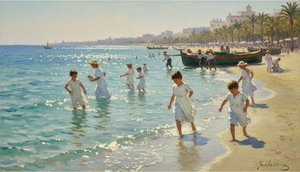
Joaquín Sorolla y Bastida: Meister des Lichts – Ein spanischer Impressionist im Fokus
Entdecken Sie das faszinierende Werk von Joaquín Sorolla y Bastida, dem Meister des spanischen Impressionismus! Erfahren Sie mehr über seine Technik, sein Leben und seine ikonischen Gemälde. Jetzt lesen!
Entdecken Sie Kunstwerke, die nach Themen, Stilen und Merkmalen sortiert sind.