Vorschau anzeigen
 Versenden
 Teilen
 Details anzeigen
 Leitfaden

 Herunterladen
 Ähnliche Objekte
 Röntgenaufnahme
 Diashow
 Q&A
Q&A Statistiken
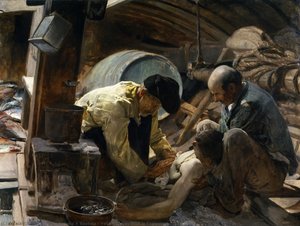
The Smugglers (study)

- 81.0 x 105.0 cm


Experience the radiant coastal scene in Joaquín Sorolla’s ‘The Smugglers (study)’ – a captivating oil painting from 1919 showcasing dynamic waves and serene figures. Discover this beautiful artwork and bring its light to your space.
 Weiterlesen
Entdecken Sie Joaquín Sorolla (1863-1923), den Meister des spanischen Realismus & Luminismus! Erleben Sie seine lebendigen Gemälde, die mediterranes Licht einfangen.
Giclée / Kunstdruck
Giclée- oder Leinwanddruck in Museumsqualität mit schneller Produktion und flexiblen Veredelungsoptionen. ( Handgemalte Reproduktion bestellen Zum digitalen Bild wechseln)




P118B €10

P118H €10

P118W €10

P438Z €10

P508JH €12

P508YH €12

P805H €10

P805Z €10

P919BZ €10

P919G €10

P919XJ €10

P959ZH €10

P968JZ €12

W106C €8

W218G €10

W218JH €8

W218Y €10

W307PJ €10

W316G €10

W316PJ €8

W316Y €10

W398PJ €8

W4111J €10

W500HY €15

W500JH €15

W692G €12

W849H €8

W940BG €15

W953PJ €8




Standardformat
individuell anpassbar
CM
INCH
Wählen Sie aus unseren vordefinierten Formaten, die den ursprünglichen Proportionen des Kunstwerks entsprechen.
Loading sizes...

Breite
Höhe
Geben Sie die benötigte Breite und Höhe an, damit der Druck perfekt in Ihren Rahmen oder an Ihre Wand passt. Ein Druck kann nur beschnitten, aber niemals größer als das Originalbild angefertigt werden; daher verliert ein Format mit anderen Proportionen einen Teil des Bildes. Wir senden Ihnen ein digitales Mockup zur Freigabe, bevor wir den Druck ausführen. Das auf dieser Seite gezeigte Bild zeigt nicht den tatsächlichen Beschnitt – dies ist nur im Mockup ersichtlich.
Weltweiter Versand () innerhalb von 2 Wochen statt der üblichen 4/5 Wochen. (31 Oktober)

Kostenloser weltweiter Expressversand

Hochwertige Leinenleinwand

Umfassender Versicherungsschutz beim Versand

Zollgebühren-Rückerstattungsgarantie

Garantie für exakte Farbtreue

100 Tage Rückgaberecht (nur bei Mängeln)

100% Geld-zurück-Garantie

Mengenrabatt verfügbar
 Die Glasoption ist nur für Größen unter 110 cm verfügbar.

The Smugglers (study)
Giclée / Kunstdruck
Format der Reproduktion
-


Endpreis
€ 61
A Moment Frozen in Light: Sorolla’s ‘The Smugglers (Study)’
Joaquín Sorolla y Bastida's “The Smugglers (study)” is more than just a depiction of a coastal scene; it’s an immersion into the very essence of Spanish light and life. Painted in 1919, this intimate study – measuring a modest 81 x 105 cm – reveals Sorolla’s masterful command of color and texture, capturing a fleeting moment of tranquility amidst the raw power of the sea. The painting immediately draws the viewer into a world where the rhythmic crash of waves against jagged rocks is both chaotic and profoundly serene. It's a scene that speaks to the enduring human fascination with the ocean – its beauty, its danger, and its capacity for both awe and reflection.
The Artist’s Vision: Sorolla and the Spanish Light
Sorolla, born in Valencia in 1863, was a pivotal figure in the Spanish *luminista* movement. His work is defined by an almost obsessive pursuit of capturing the effects of sunlight – particularly the way it dances on water and illuminates surfaces. This ‘light’ wasn't merely a technical skill; it represented a deeply held philosophical belief: that light was the very soul of Spain, a vibrant force connecting humanity to nature and divinity. “The Smugglers (study)” exemplifies this perfectly. The artist employs loose, expressive brushstrokes, layering color with remarkable speed to create an impressionistic effect – not a photographic representation, but rather a feeling, a memory evoked by the play of light on the water.
Composition and Narrative Detail
- Dynamic Landscape: The composition is dominated by a rugged shoreline, meticulously rendered with a series of rocks that create depth and lead the eye into the painting’s core. Sorolla skillfully uses foreshortening to enhance this sense of perspective, drawing us closer to the scene.
- Human Presence: Two figures are subtly integrated into the landscape – one near the center, seemingly engaged in a quiet observation, and another on the right side, perhaps enjoying the view. Their presence adds a layer of narrative, inviting speculation about their lives and connection to this wild place. They aren’t grand heroes or dramatic figures; they are simply people finding solace and beauty in nature's embrace.
- Color Palette: The dominant hues – blues, greens, and ochres – evoke the colors of the Mediterranean Sea and the surrounding cliffs. Sorolla’s use of warm tones creates a sense of warmth and invites the viewer to step into the scene.
Symbolism and Emotional Impact
“The Smugglers (study)” transcends a simple seascape; it speaks to themes of escape, solitude, and the relationship between humanity and nature. The ‘smugglers’ themselves – though not explicitly depicted – represent a hidden world, a defiance of societal norms, and perhaps a yearning for freedom. Sorolla's ability to convey such complex emotions through seemingly simple imagery is a testament to his artistic genius. The painting evokes a feeling of quiet contemplation, inviting the viewer to lose themselves in the beauty of the scene and reflect on their own place within the natural world. It’s a reminder that even amidst the chaos of life, moments of serenity can be found – if we only take the time to look.
Fragen & Antworten
Welche Bedeutung kommt "The Smugglers (study)" von Joaquín Sorolla y Bastida in der Kunstgeschichte zu?
"The Smugglers (study)" von Joaquín Sorolla y Bastida lässt sich kunsthistorisch der Late Impressionism zuordnen, die aus der Epoche der 19th Century stammt.
Welcher künstlerischen Strömung ist "The Smugglers (study)" von Joaquín Sorolla y Bastida zuzuordnen?
„The Smugglers (study)“ ist ein Werk der Late Impressionism. Die Stilrichtung gibt die künstlerische Tradition an, der das Werk angehört.
Welcher Künstler und welcher Stil stecken hinter "The Smugglers (study)"?
Joaquín Sorolla y Bastida schuf „The Smugglers (study)“ im Rahmen der Late Impressionism-Bewegung.
Ähnliche Kunstwerke



Künstlerbiografie
Frühes Leben und Ausbildung
Joaquín Sorolla y Bastida, ein renommierter spanischer Maler, wurde am 27. Februar 1863 in Valencia, Spanien, geboren. Er war der älteste Sohn von Joaquín Sorolla, einem Kaufmann, und Concepción Bastida. Nach dem frühen Verlust seiner Eltern im Alter von zwei Jahren wuchs er bei seiner Tante und ihrem Ehemann auf. Seine künstlerische Reise begann in seiner Heimatstadt, wo er bereits mit neun Jahren eine erste Kunstausbildung erhielt. Später studierte er unter der Leitung von Cayetano Capuz, Salustiano Asenjo und José Benlliure in Rom. Ein viereinhalbjähriges Stipendium ermöglichte ihm ein Studium des Malens in Rom, Italien, wo er stark von Francisco Pradilla beeinflusst wurde.Künstlerische Entwicklung und Stil
Sorollas Werk zeichnet sich durch einen einzigartigen Realismus aus, der Elemente des Impressionismus aufgreift. Er war bekannt für seine Fähigkeit, Licht und Farbe meisterhaft einzusetzen, um lebendige und atmosphärische Szenen zu schaffen. Seine frühen Werke zeigten Einflüsse des etablierten spanischen Malstils, während er später seinen eigenen unverwechselbaren Stil entwickelte, der sich durch eine lockere Pinselführung und eine strahlende Farbpalette auszeichnete. Er bevorzugte das Malen im Freien (plein air), um die natürlichen Lichtverhältnisse optimal zu nutzen. Sein Fokus lag oft auf Alltagsszenen, Porträts und insbesondere Strandbildern, die er mit großer Detailtreue und Lebendigkeit festhielt.Wichtige Werke und Errungenschaften
Sorolla schuf eine beeindruckende Anzahl von Werken, die seine künstlerische Meisterschaft demonstrieren. Zu seinen bekanntesten Gemälden gehören:- Italienisches Mädchen mit Blumen (Öl auf Leinwand), das Sorollas Fähigkeit zeigt, die Essenz seiner Motive einzufangen.
- Badezeit (Realismus, Öl), ein Beispiel für seine Balance aus Licht und Farbe.
- Der Sklavenhandel (Sorolla Museum, Madrid, Spanien, Öl auf Leinwand), ein seltenes Beispiel für sozialrealistische Kunst in Sorollas Werk.
Einfluss und Vermächtnis
Joaquín Sorolla gilt als einer der bedeutendsten spanischen Maler des 19. und frühen 20. Jahrhunderts. Sein Werk trug maßgeblich zur Entwicklung des spanischen Realismus und Impressionismus bei. Seine Fähigkeit, das Licht der mediterranen Sonne einzufangen und in seinen Gemälden wiederzugeben, machte ihn zu einem international gefeierten Künstler. Sorolla beeinflusste zahlreiche nachfolgende Maler und seine Werke werden heute in renommierten Museen auf der ganzen Welt ausgestellt. Das Sorolla Museum in Madrid, das sein ehemaliges Haus und Atelier beherbergt, ist ein zentraler Ort für die Bewahrung und Präsentation seines Werkes. Sein Vermächtnis lebt fort als Inspiration für Künstler und Kunstliebhaber gleichermaßen.Spätere Jahre und Tod
Obwohl Sorolla im Alter von 60 Jahren am 23. August 1923 in Cercedilla, Spanien, verstarb, hinterließ er ein beeindruckendes Œuvre und einen bleibenden Eindruck in der Kunstgeschichte. Seine Werke werden bis heute für ihre Lebendigkeit, Detailtreue und die meisterhafte Darstellung des Lichts geschätzt.
Joaquín Sorolla y Bastida
1863 - 1923 , Spanien
Kurzinfos
- Bemerkenswerte Werke:
- Italienisches Mädchen mit Blumen
- Badezeit (Realismus)
- Der weiße Sklavenhandel
- Strand bei Biarritz
- Das Gelbe Rosenbusch
- Einflussreiche Künstler: ['Francisco Pradilla']
- Geburtsdatum: 27. Februar 1863
- Geburtsort: Valencia, Spanien
- Künstlerische Richtung: Realismus, Luminismus
- Nationalität: Spanisch
- Sterbedatum: 1923
- Vollständiger Name: Joaquín Sorolla y Bastida
Ähnliche Artikel

TopImpressionists.com F.A.Q.: Brillante Poster-Prints mit höchster Farbtiefe & langlebiger Pigment-Technologie
Erfahren Sie alles über Pigmenttechnologie und Archivqualität für Impressionismus-Drucke. Jetzt Expertenberatung sichern!
Entdecken Sie Kunstwerke, die nach Themen, Stilen und Merkmalen sortiert sind.