

 In echtem Maßstab anzeigen
 Versenden als Grußkarte
 Teilen
 Details anzeigen
 Leitfaden öffnen

 Herunterladen
 Ähnliche Objekte
 Röntgenaufnahme
 Diashow
 Besucherstatistiken
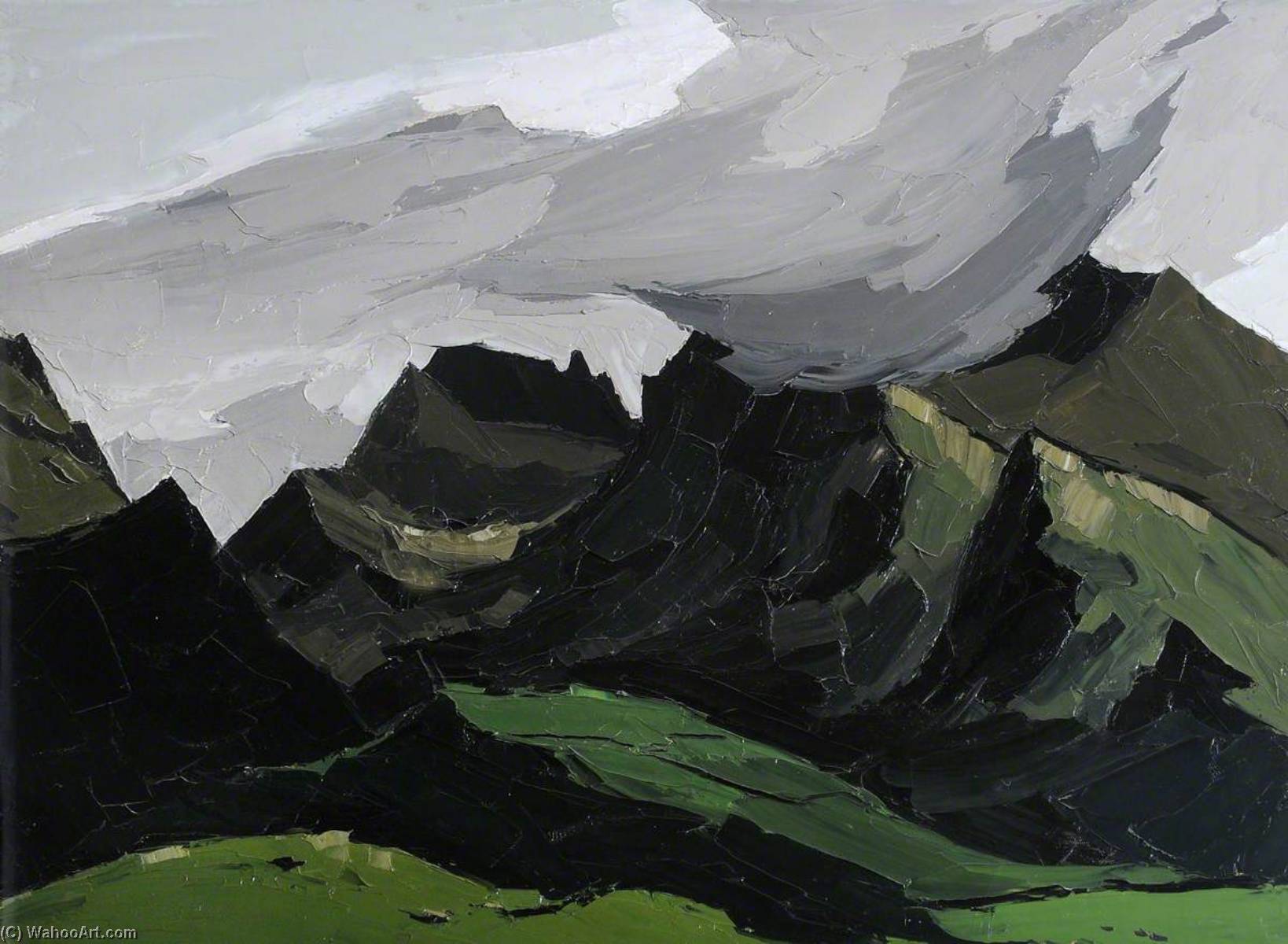
Clouds above Crib Goch
 Oil On Canvas
- WallArt
- Expressive Impressionism
 90.0 x 94.0 cm
 Bangor University
Experience the rugged beauty of Wales with 'Clouds above Crib Goch' by John Kyffin Williams. This evocative oil painting captures the dramatic mountain landscape with masterful impasto technique.
 Mehr anzeigen
Sir John Kyffin Williams (1918-2006): Walisischer Meister der Landschaftsmalerei, bekannt für seine eindringlichen Darstellungen von Wales, Patagonien & Venedig mit kräftiger Palette-Messer-Technik. RA, OBE, KBE.
Die auf dieser Seite dargestellten Kunstwerke sind urheberrechtlich geschützt, was bedeutet, dass wir keine identische Reproduktion rechtmäßig erstellen oder verkaufen dürfen. Dieser Schutz wird durch internationale Abkommen wie die Berner Übereinkunft und durch nationale Gesetze, einschließlich derer, die von den ... festgelegt wurden US-Urheberrecht – Titel 17.
Diese Methode entspricht vollumfänglich den Urheberrechtsbestimmungen, da sie keine Kopie oder Vervielfältigung des geschützten Kunstwerks darstellt. Stattdessen handelt es sich um eine kreative Neuinterpretation – ein neues Gemälde, das vom Original inspiriert, aber nicht identisch mit ihm ist.
Giclée / Kunstdruck
Giclée- oder Leinwanddruck in Museumsqualität mit schneller Produktion und flexiblen Veredelungsoptionen. ( Handgemalte Reproduktion kaufen Zum digitalen Bild wechseln)




P118B €10

P118H €10

P118W €10

P438Z €10

P508JH €12

P508YH €12

P805H €10

P805Z €10

P919BZ €10

P919G €10

P919XJ €10

P959ZH €10

P968JZ €12

W106C €8

W218G €10

W218JH €8

W218Y €10

W307PJ €10

W316G €10

W316PJ €8

W316Y €10

W398PJ €8

W4111J €10

W500HY €15

W500JH €15

W692G €12

W849H €8

W940BG €15

W953PJ €8




Standardformat
individuell anpassbar
CM
INCH
Wählen Sie aus unseren vordefinierten Formaten, die den ursprünglichen Proportionen des Kunstwerks entsprechen.
Loading sizes...

Breite
Höhe
Geben Sie die Breite und die Höhe an, die Sie benötigen, damit der Druck perfekt in Ihren Rahmen oder an Ihre Wand passt. Ein Druck kann nur beschnitten werden und niemals größer als das Originalbild gemacht werden; daher verliert ein Format mit einer anderen Proportion einen Teil des Bildes. Wir senden Ihnen ein digitales Mockup zur Freigabe, bevor wir den Druck ausführen. Das auf dieser Seite gezeigte Bild zeigt nicht den tatsächlichen Beschnitt – dies ist nur im Mockup ersichtlich.
Weltweiter Versand () innerhalb von 2 Wochen statt der üblichen 4/5 Wochen. (24 Oktober)

Kostenloser weltweiter Expressversand

Hochwertige Leinenleinwand

Vollständiger Versicherungsschutz beim Versand

Zollgebühren-Rückerstattungsgarantie

Garantie für exakte Farbtreue

100-tägiges Rückgaberecht (nur bei Mängeln)

100% Geld-zurück-Garantie

Angebot für Mengenrabatt
 Die Glasoption ist nur für Größen unter 110 cm verfügbar.

Clouds above Crib Goch
Giclée / Kunstdruck
Format der Reproduktion
-


Gesamtpreis
€ 61
A Vision of Welsh Majesty: John Kyffin Williams’s “Clouds Above Crib Goch”
Sir John “Kyffin” Williams, a name inextricably linked with the very soul of Wales, stands as one of the nation's most revered and enduring artistic voices. More than simply a painter, he was a chronicler of landscapes, a translator of mood, and an unwavering champion of Welsh identity. His masterpiece, "Clouds Above Crib Goch," offers a profound glimpse into this world – a dramatic, elemental depiction of Snowdonia’s iconic peak, rendered with the raw emotion and textured immediacy that defined his distinctive style.
The painting captures a moment suspended in time above the Crib Goch ridge, a notoriously challenging scramble on Mount Snowdon. Williams doesn't present a straightforward topographical view; instead, he delivers an experience of atmosphere and power. The jagged silhouette of the mountain dominates the midground, its dark, brooding form partially obscured by swirling, bruised-grey clouds that seem to press down upon the scene. A foreground of grassy land acts as a grounding element, drawing the eye into this dramatic vista and hinting at the rugged terrain below.
The Language of Impasto: Technique and Texture
Williams’s technique is immediately arresting – a bold embrace of impasto, where thick layers of oil paint are applied directly to the canvas with a palette knife. This isn't merely decorative; it’s fundamental to the painting’s impact. The raised surface creates an almost tactile quality, inviting the viewer to reach out and feel the texture of the mountains, the weight of the clouds. Notice how the brushstrokes aren’t blended or smoothed – they are deliberately visible, conveying a sense of energy and immediacy. This technique, coupled with his masterful use of tonal variation, allows Williams to capture not just the appearance of the landscape but also its inherent drama and emotional resonance.
A Welsh Narrative: Symbolism and Context
“Clouds Above Crib Goch” is deeply rooted in Welsh history and folklore. The Crib Goch itself holds a legendary status – a challenging route that has claimed lives, yet remains a symbol of adventure and resilience for those who dare to ascend it. Williams’s choice of subject matter speaks volumes about his connection to Wales; he wasn't simply painting a mountain range; he was capturing the spirit of a nation. The clouds themselves can be interpreted as symbols of change, uncertainty, or even the sublime – mirroring the unpredictable nature of both the landscape and Welsh life itself. The artist’s early experiences, marked by a complex relationship with his mother and her rejection of Welsh culture, undoubtedly fueled his desire to celebrate and preserve this heritage through his art.
A Legacy in Color: Palette and Light
The color palette is deliberately restrained – primarily consisting of deep greens, grays, blacks, and whites. These muted tones are punctuated by flashes of ochre and brown, reflecting the weathered rock of the mountain. The diffused lighting, characteristic of an overcast day, creates a sense of depth and atmosphere, emphasizing the dramatic interplay of light and shadow. Williams masterfully employs atmospheric perspective, with distant elements appearing lighter and less defined – a technique that further enhances the illusion of vastness and scale. The painting’s emotional impact is amplified by this careful orchestration of color and light.
Collecting a Masterpiece: Reproduction and Beyond
Reproductions of “Clouds Above Crib Goch” offer a remarkable opportunity to bring this iconic Welsh landscape into your home or office. TopImpressionists.com provides high-quality prints in various sizes, allowing you to select the perfect scale for your space. Consider the painting’s evocative power – its ability to transport you to the rugged beauty of Snowdonia and evoke a sense of both awe and tranquility. Owning a reproduction is more than just acquiring an image; it's embracing a piece of Welsh artistic heritage.
Fragen & Antworten
Kann ich Augmented Reality nutzen, um "Clouds above Crib Goch" von John Kyffin Williams in meinem Raum zu sehen?
„Clouds above Crib Goch“ verfügt über eine Augmented-Reality-Vorschau: Die AR-Vorschau-Seite des Kunstwerks zeigt es auf einem kompatiblen Gerät in Ihrem eigenen Raum.
In welcher Größe wird empfohlen, "Clouds above Crib Goch" zu drucken?
Für "Clouds above Crib Goch" von John Kyffin Williams wird eine Reproduktion im Format Large empfohlen. Die Größe kann angepasst werden, wobei die Proportionen erhalten bleiben.
Wie viel Licht scheinen die Farben von "Clouds above Crib Goch" zu reflektieren?
Die für "Clouds above Crib Goch" von John Kyffin Williams aufgezeichnete Luminanz beträgt Soft Shadow.
Ähnliche Kunstwerke


Biografie des Künstlers
John Kyffin Williams: Ein Wegbereiter der walisischen Landschaftsmalerei
- Geboren: Llangefni, Vereinigtes Königreich (1918)
- Gestorben: 2006
- Nationalität: Walisisch
Sir John "Kyffin" Williams, KBE, RA, gilt als eine monumentale Figur der walisischen Kunst des 20. Jahrhunderts. Weithin anerkannt als der definierende Künstler von Wales zu seinen Lebzeiten, fing Williams’s eindringliche Landschaften die Essenz der walisischen Landschaft mit einem unverwechselbaren Stil und tiefgründiger emotionaler Tiefe ein. Er lebte in Pwllfanogl, Llanfairpwll, auf der Isle of Anglesey und blieb sein Leben lang zutiefst mit seiner Heimat verbunden.
Frühes Leben und Einflüsse
- Familienhintergrund: Williams wurde in eine alte, landbesitzende Familie von Anglesey geboren. Sein Vater war Bankangestellter. Seine Mutter hatte jedoch eine emotional reservierte Natur und scheinbare Abneigung gegen die walisische Sprache, was seine frühen Jahre erheblich beeinflusste.
- Ausbildung: Er besuchte die Moreton Hall School und Shrewsbury School, wo er an polioenzephalitis erkrankte, was zu Epilepsie führte – einem Zustand, den er später als „mein größtes Glück“ bezeichnete, da er ihn zur Kunst trieb.
- Militärdienst & Künstlerisches Erwachen: Kurze Zeit diente er im 6. Bataillon des Royal Welch Fusiliers, bevor er aufgrund seines medizinischen Zustands entlassen wurde. Ein Scheitern bei einer medizinischen Untersuchung der britischen Armee führte zu dem Rat von seinem Arzt, aus gesundheitlichen Gründen Kunst zu betreiben.
- Frühe Inspiration: Er entdeckte eine tiefe Verbindung zur Kunst durch die Werke von Piero della Francesca, was eine emotionale Reaktion hervorrief und seine künstlerische Vision prägte.
- Formelle Ausbildung: Er schrieb sich an der Slade School of Fine Art (umgesiedelt nach Oxford) ein und schloss mit dem Slade Portrait Prize nach drei Jahren ab.
Karriere und Künstlerische Entwicklung
- Lehrtätigkeit: Williams widmete einen bedeutenden Teil seiner Karriere der Kunstlehrer, von 1944 bis 1973 als Senior Art Master an der Highgate School in London. Bemerkenswerte Schüler waren Sir Martin Gilbert, die Royal Academicians Anthony Green und Patrick Procktor sowie die Komponisten John Tavener und John Rutter.
- Patagonien-Erfahrung: Ein Winston Churchill Fellowship im Jahr 1968 ermöglichte es ihm, in Y Wladfa (der walisischen Siedlung in Patagonien) zu studieren und zu malen. Diese Erfahrung veränderte sein Farbschema dramatisch und führte zu einer beträchtlichen Anzahl von Werken, die die patagonische Landschaft darstellen.
- Unverwechselbare Technik: Williams entwickelte eine charakteristische Technik mit dicker Ölfarbe, die mit einem Spachtel aufgetragen wurde, wodurch strukturierte Oberflächen und kühne Impasto-Effekte entstanden, die die Rauheit und Atmosphäre der walisischen Landschaft vermittelten.
- Themenwahl: Er ist in erster Linie als Landschaftsmaler bekannt, zeichnete sich aber auch im Porträtmalerei aus und bewies ein Talent für Karikaturen. Seine Werke sind grob in drei Themen unterteilt: Venedig, Patagonien und Wales (der größte Abschnitt).
Wichtige Errungenschaften und Anerkennung
- Ausstellungen: Er hatte 1949 seine erste Einzelausstellung in einer privaten Galerie in London. Nachfolgende Ausstellungen umfassten die Howard Roberts Gallery in Cardiff und das National Museum of Wales.
- Mitgliedschaft bei der Royal Academy: Er wurde 1974 zum Mitglied der Royal Academy gewählt, was seine Position innerhalb des britischen Kunstestablishment festigte.
- Auszeichnungen & Ehrungen: Er erhielt im Laufe seiner Karriere zahlreiche Auszeichnungen, darunter ein OBE im Jahr 1982 und ein KBE im Jahr 1999 für Verdienste um die Künste in Wales. Er erhielt auch den Glyndŵr Award im Jahr 1995.
- Kyffin Williams Drawing Prize: Dieser Preis wurde 2009 eingerichtet, um weiterhin aufstrebende Talente im Zeichnen zu würdigen.
- Oriel Kyffin Williams Gallery: Eine permanente Ausstellung, die seinen Werken gewidmet ist, eröffnete 2008 in Oriel Ynys Môn in Llangefni, Anglesey.
Vermächtnis und Historische Bedeutung
- Definierender walisischer Künstler: Sir John Kyffin Williams gilt weithin als der definierende Künstler von Wales im 20. Jahrhundert, der seine Landschaften und seinen Geist mit unvergleichlicher Fähigkeit und Emotion einfing.
- Kulturem Botschafter: Bryn Terfel beschrieb ihn als „Waless’ ersten Botschafter in den bildenden Künsten“ und hob damit seinen bedeutenden Beitrag zur walisischen Kultur hervor.
- Einfluss auf nachfolgende Künstler: Seine Lehrtätigkeit förderte eine Generation talentierter Künstler, was sein Vermächtnis innerhalb der Kunstwelt weiter festigte.
- Sammlung des National Library of Wales: Die National Library of Wales beherbergt eine beträchtliche Sammlung seiner Werke und Papiere, um sicherzustellen, dass sein künstlerischer Beitrag für zukünftige Generationen bewahrt wird.
- Fortwährende Beliebtheit: Seine Gemälde sind nach wie vor bei Sammlern sehr gefragt und inspirieren weiterhin zur Wertschätzung der Schönheit und des Charakters der walisischen Landschaft.

John Kyffin Williams
1918 - 2006 , Vereinigtes Königreich
Eckdaten zum Künstler
- Artistic Movement Or Style: Landschaftsmalerei, Impasto
- Artists Who Influenced This Artist: ['Piero della Francesca']
- Date Of Birth: 9. Mai 1918
- Date Of Death: 1. September 2006
- Full Name: Sir John Kyffin Williams
- Nationality: Walisisch
- Notable Artworks: ['Gestalt und Berge (verso)']
- Place Of Birth: Llangefni, Vereinigtes Königreich
Verwandte Artikel

John Singer Sargent: Die 25 Meisterwerke des Porträts – Kunst für Ihr Zuhause | TopImpressionists
Entdecken Sie die 25 Meisterwerke von John Singer Sargent! Tauchen Sie ein in die Welt der Porträtmalerei, des Impressionismus & der Belle Époque. Hochwertige Kunstdrucke & Reproduktionen für Ihr Zuhause – jetzt auf TopImpressionists.com!

John Constable: Die 25 Meisterwerke des englischen Landschaftsgenies – TopImpressionists
Entdecken Sie die 25 Meisterwerke von John Constable! Erleben Sie englische Landschaftsmalerei vom Hay Wain bis zur Stour Valley. Hochwertige Reproduktionen & Kunst für Ihr Zuhause auf TopImpressionists.com.

Romantische Landschaften: Die 10 Meisterwerke, die eine Epoche prägten | TopImpressionists
Entdecken Sie die 10 Meisterwerke der Romantischen Landschaftsmalerei! Von Caspar David Friedrich bis Turner – erleben Sie die Kunst, Emotion & Natur. Hochwertige Reproduktionen auf TopImpressionists.com

Majestic Peaks: Curating Exquisite Mountain Oil Paintings & Masterpiece Reproductions for Luxury Interiors
Elevate luxury interiors with exquisite mountain oil painting reproductions. From Romanticism to the Hudson River School, TopImpressionists offers bespoke, hand-painted masterpieces and large-scale murals tailored for hotel designers and elite collectors worldwide.

Penry Williams: Evoking Welsh Nostalgia Through Impressionistic Landscapes
Explore the captivating world of Penry Williams (1802-1885), a Welsh artist renowned for his evocative Impressionistic landscapes and scenes of Italy. Discover his life, style & legacy with TopImpressionists.
Entdecken Sie Kunstwerke, die nach Themen, Stilen und Merkmalen sortiert sind.


