


 In echtem Maßstab anzeigen
 Versenden als Grußkarte
 Teilen
 Details anzeigen
 Leitfaden öffnen

 Herunterladen
 Ähnliche Objekte
 Röntgenaufnahme
 Diashow
 Besucherstatistiken
St. Sauveur
 Drawing
- WallArt
 1848
1848- 19th Century
 46.0 x 27.0 cm
A detailed black and white architectural study of the ornate St. Sauveur church by Victorian polymath John Ruskin captures intricate Gothic carvings and columns, offering a timeless glimpse into 1848 France for your collection.
 Mehr anzeigen
Entdecken Sie die Kunst & Schriften von John Ruskin (1819-1900), viktorianischem Universalgelehrten, Kunstkritiker und Sozialdenker! Landschaftsgemälde, Architekturanalysen & Essays über Natur, Schönheit & Gesellschaft.
Handgefertigte Ölreproduktion
Handgemaltes Ölgemälde auf Leinwand in Ihrer Wunschgröße und mit Rahmen, auf Bestellung von unseren Künstlern angefertigt. ( Zum Druck wechseln Zum digitalen Bild wechseln)




P118B €10

P118H €10

P118W €10

P438Z €10

P508JH €12

P508YH €12

P805H €10

P805Z €10

P919BZ €10

P919G €10

P919XJ €10

P959ZH €10

P968JZ €12

W106C €8

W218G €10

W218JH €8

W218Y €10

W307PJ €10

W316G €10

W316PJ €8

W316Y €10

W398PJ €8

W4111J €10

W500HY €15

W500JH €15

W692G €12

W849H €8

W940BG €15

W953PJ €8




Standardformat
individuell anpassbar
CM
INCH
Wählen Sie aus unseren vordefinierten Formaten, die den ursprünglichen Proportionen des Kunstwerks entsprechen.
Loading sizes...

Breite
Höhe
Sie können Ihre eigenen Maße eingeben, um einen bestimmten Rahmen oder Platz auszufüllen. Wenn die gewählte Größe nicht den Proportionen des Originalbildes entspricht, werden wir das Kunstwerk entweder beschneiden oder das Gemälde durch zusätzliche, handgemalte Elemente erweitern. Ein digitales Mockup wird Ihnen zur Genehmigung zugesandt, bevor die Produktion beginnt.
Bitte beachten Sie, dass die Bildschirmvorschau nicht die tatsächliche Beschneidung oder Erweiterung widerspiegelt. Nur das Mockup zeigt die endgültige Komposition exakt an.
Obwohl Sondermaße verfügbar sind, empfehlen wir, eine Größe aus der vordefinierten Liste zu wählen, um die ursprünglichen Proportionen beizubehalten.
Beispiele für Anpassungsmöglichkeiten: Gesicht durch Kundenfoto ersetzen; Haustier hinzufügen (z. B. Katze durch Hund ersetzen); eine versteckte Nachricht im Hintergrund einfügen; Hintergrundlandschaft oder -elemente ändern.
Nach der Bestellung wird das TopImpressionists.com-Team dem Kunden Anweisungen per E-Mail zusenden und eine Mockup-Vorschau bereitstellen.
Nach der Bestellung wird das TopImpressionists.com-Team dem Kunden Anweisungen per E-Mail zusenden und eine Mockup-Vorschau bereitstellen.
Weltweiter Versand () in nur 3 bis 4 Wochen statt der üblichen 5 Wochen. (11 Oktober). Keine Kompromisse bei der Qualität.

Kostenloser weltweiter Expressversand

Hochwertige Leinenleinwand

Vollständiger Versicherungsschutz beim Versand

Zollgebühren-Rückerstattungsgarantie

Garantie für exakte Farbtreue

100-tägiges Rückgaberecht (nur bei Mängeln)

100% Geld-zurück-Garantie

Angebot für Mengenrabatt
 Die Glasoption ist nur für Größen unter 110 cm verfügbar.

St. Sauveur
Reproduktionsmedium
Format der Reproduktion
-


Gesamtpreis
€ 232
A Moment Frozen in Graphite: The Vision of St. Sauveur
In the quiet, observant moments of 1848, amidst a journey through the heart of northern France, John Ruskin captured more than just architecture; he captured the very soul of Caen. As he sat by a window in an adjacent café, the world outside transformed into a delicate dance of light and shadow on paper. This exquisite black and white drawing of St. Sauveur serves as a profound testament to the artist's ability to translate the monumental weight of stone into the ethereal lightness of a sketch. The composition is a masterclass in architectural reverence, where every arch, column, and intricate carving is rendered with a precision that speaks to Ruskin’s legendary devotion to truth in art. There is a haunting beauty in how the structural elements emerge from the page, inviting the viewer to step into a bygone era of Victorian exploration and romantic discovery.
The technique employed in this study reveals the meticulous hand of a polymath who believed that seeing was an act of devotion. Through delicate linework and subtle tonal shifts, Ruskin breathes life into the facade of the church, creating a sense of depth that pulls the eye toward the ornate carvings and rhythmic columns. The presence of a solitary bird, perched subtly in the upper right corner, acts as a poetic counterpoint to the permanence of the stone, introducing a fleeting, organic element that softens the architectural rigor. This interplay between the enduring and the ephemeral is what makes the piece so captivating for the modern collector; it is not merely a technical study, but an emotional meditation on the passage of time and the preservation of beauty.
For the discerning interior designer or art enthusiast, a reproduction of St. Sauveur offers a sophisticated touch of historical elegance. The monochromatic palette allows this piece to integrate seamlessly into diverse decor styles, from the moody, academic atmosphere of a classic library to the clean, minimalist lines of a contemporary gallery space. It functions as a window into the nineteenth century, providing a focal point that sparks conversation and invites contemplation. Owning such a work is an opportunity to surround oneself with the intellectual legacy of one of Britain's greatest thinkers, bringing a sense of scholarly grace and timeless tranquility to any curated collection.
Fragen & Antworten
Welche Druckgröße von "St. Sauveur" von John Ruskin passt in den empfohlenen Raum?
Für einen Office wird für „St. Sauveur“ ein Druckformat von Small empfohlen.
Wie alt war John Ruskin, als „St. Sauveur“ im Jahr 1848 geschaffen wurde?
Als "St. Sauveur" im Jahr 1848 entstand, war John Ruskin – geboren 1819 – 29 Jahre alt.
In welchem Jahr wurde "St. Sauveur" geschaffen?
"St. Sauveur" stammt aus dem Jahr 1848. Dieses Datum ordnet das Werk in die Schaffensperiode von John Ruskin sowie in dessen Epoche ein.
Aus welcher Epoche stammt "St. Sauveur"?
"St. Sauveur" stammt aus der Epoche der 19th Century.
Gibt es eine Diashow für "St. Sauveur" von John Ruskin?
"St. Sauveur" von John Ruskin kann als Diashow auf der Diashow-Seite des Kunstwerks betrachtet werden.
Welchem Künstler wird "St. Sauveur" zugeschrieben?
Der Künstler hinter „St. Sauveur“ ist John Ruskin. Das Werk ist unter dem Namen von John Ruskin katalogisiert.
Was erklärt die urheberrechtliche Situation von "St. Sauveur" von John Ruskin?
"St. Sauveur" von John Ruskin ist gemeinfrei – das Urheberrecht ist abgelaufen. Die Dauer des Urheberrechts beginnt mit dem Tod des Künstlers, der im Jahr 1900 verstarb.
Biografie des Künstlers
Frühes Leben und Ausbildung
John Ruskin, ein renommierter englischer Universalgelehrter, wurde am 8. Februar 1819 in London, Großbritannien, geboren. Seine Kindheit war geprägt von den gegensätzlichen Einflüssen seines Vaters, John James Ruskin, und seiner Mutter, Margaret Cock. Diese Dualität spiegelte sich später in seinen vielfältigen Interessen und Schreibstilen wider. Ruskins frühe Ausbildung fand zu Hause statt, unter der Anleitung seiner Eltern und Privatlehrer. Später besuchte er das King's College in London, wo er sich auf die Universität Oxford vorbereitete. Dieses akademische Fundament legte den Grundstein für seine zukünftigen Unternehmungen.Künstlerische und Literarische Tätigkeiten
John Ruskins Schreibstile und literarische Formen waren so vielfältig wie seine Interessen. Er verfasste Essays, Abhandlungen, Gedichte, Vorträge, Reiseführer und sogar ein Märchen. Seine detaillierten Skizzen und Gemälde von Gesteinen, Pflanzen, Vögeln, Landschaften und architektonischen Strukturen zeigten sein künstlerisches Können. Ruskins erstes Hauptwerk, *Moderne Maler* (1843), verteidigte die Arbeit von J.M.W. Turner und betonte die Bedeutung der "Wahrheit zur Natur". Dies markierte den Beginn seiner weiten Anerkennung und seines Einflusses auf Kunst und Literatur des 19. Jahrhunderts.Bedeutende Werke und Vermächtnis
- Morgenröte, Coniston (Abbot Hall Art Gallery, Kendal, Großbritannien) – ein Aquarellgemälde, das Ruskins Fähigkeit zeigt, die Schönheit der Natur einzufangen.
- Fors Clavigera (1871-1884) – eine Reihe von Briefen an die Arbeiter und Tagelöhner Großbritanniens, die seine sozialen und politischen Anliegen hervorheben.
Entwicklung und Historische Bedeutung
Ruskin entwickelte seine Ideen im Laufe seines Lebens weiter. Anfangs konzentrierte er sich stark auf die Schönheit der Natur und die Bedeutung der Wahrheit in der Kunst. Später wandte er sich zunehmend sozialen und politischen Fragen zu, wobei er sich für eine gerechtere Gesellschaft einsetzte und die Auswirkungen der Industrialisierung kritisierte. Seine Schriften über Architektur, insbesondere *Die Steine von Venedig*, hatten einen tiefgreifenden Einfluss auf die Denkweise über den Erhalt historischer Gebäude und Stadtlandschaften. Ruskin gilt als einer der wichtigsten Kunstkritiker des 19. Jahrhunderts. Sein Werk trug dazu bei, das Verständnis von Kunstgeschichte zu prägen und neue Wege für die Kunstkritik zu eröffnen.Relevante Links
Schlussfolgerung
John Ruskins Leben war ein Beweis für seine facettenreiche Natur, die sich in seiner Kunst, seinen Schriften und seinen philanthropischen Unternehmungen widerspiegelte. Sein Einfluss auf das viktorianische Zeitalter und darüber hinaus ist unbestreitbar, was ihn zu einem Universalgelehrten von Weltrang macht.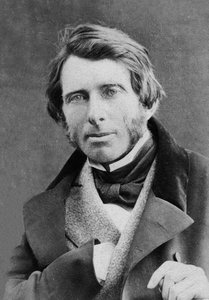
John Ruskin
1819 - 1900 , Vereinigtes Königreich
Eckdaten zum Künstler
- Bemerkenswerte Werke:
- Morgenröte, Coniston
- Fors Clavigera
- Geburtsdatum: 8. Februar 1819
- Geburtsort (Stadt Und Land): London, Vereinigtes Königreich
- Künstler Oder Bewegungen, Die Von Diesem Künstler Beeinflusst Wurden:
- Präraffaeliten
- Viktorianische Kunstkritik
- Künstler, Die Diesen Künstler Beeinflussten: ['J. M. W. Turner']
- Künstlerische Bewegung Oder Stil: Viktorianisch, Präraffaeliten
- Nationalität: Britisch
- Sterbedatum: 1900
- Vollständiger Name: John Ruskin
Verwandte Artikel

Shadows & Splendor: A Journey Through the Soul of Gothic Art and Architectural Grandeur
Embark on a profound journey through the spiritual intensity of Gothic art. Explore the architectural marvels, luminous stained glass, and sacred sculptures that define this era of grandeur and human devotion.