

Gezeigt: · Inklusive Rahmen:
 Vorschau anzeigen
 Versenden
 Teilen
 Details anzeigen
 Leitfaden

 Herunterladen
 Ähnliche Objekte
 Röntgenaufnahme
 Diashow
 Fragen & Antworten
 Statistiken

€ 240
Handgefertigte Ölreproduktion
Handgemaltes Ölgemälde auf Leinwand in Ihrer Wunschgröße und mit Rahmen, auf Bestellung von unseren Künstlern angefertigt. ( Zum Druck wechseln Zum digitalen Bild wechseln)
Größe
·Standardformat
individuell anpassbar
CM
INCH
Wählen Sie aus unseren vordefinierten Formaten, die den ursprünglichen Proportionen des Kunstwerks entsprechen.
Größen werden geladen...

Breite
Höhe
Geben Sie die Breite und die Höhe an, die Sie für Ihren Rahmen oder Ihre Wand benötigen. Da dieses Werk handgemalt ist, kann der Künstler bei einer anderen Form etwas mehr um das Bild herum malen oder etwas abschneiden – Sie entscheiden. Wir senden Ihnen ein digitales Mockup zur Freigabe, bevor mit dem Malen begonnen wird. Das auf dieser Seite gezeigte Bild stellt nicht das tatsächliche Ergebnis dar – dies tut nur das Mockup.
 Mehr erfahren
Abschließen
·
Weißer Rand €1

verlaufende Kanten €1

Umrandung €1

P118B €10

P118H €10

P118W €10

P438Z €10

P508JH €12

P508YH €12

P805H €10

P805Z €10

P919BZ €10

P919G €10

P919XJ €10

P959ZH €10

P968JZ €12

W106C €8

W218G €10

W218JH €8

W218Y €10

W307PJ €10

W316G €10

W316PJ €8

W316Y €10

W398PJ €8

W4111J €10

W500HY €15

W500JH €15

W692G €12

W849H €8

W940BG €15

W953PJ €8

H24-GOLD €30

H24-SILVER €30

H36-GOLD €45

H36-SILVER €45
Versand in einer Schutzröhre, bereit für die Rahmung durch Ihren Rahmenmacher.
Extras
optionalWas sind die Extras enthalten?
Beispiele für Anpassungsmöglichkeiten: Gesicht durch Kundenfoto ersetzen; Haustier hinzufügen (z. B. Katze durch Hund ersetzen); Versteckte Botschaft im Hintergrund einfügen; Hintergrundlandschaft oder Elemente ändern.
Nach der Bestellung wird das Team von TopImpressionists.com den Kunden per E-Mail kontaktieren, um Anweisungen einzuholen und eine Vorschau des Entwurfs bereitzustellen
Nach der Bestellung wird das Team von TopImpressionists.com den Kunden per E-Mail kontaktieren, um Anweisungen einzuholen und eine Vorschau des Entwurfs bereitzustellen
Weltweiter Versand () in nur 3 bis 4 Wochen statt der üblichen 5 Wochen. (7 November). Keine Kompromisse bei der Qualität.
Schutzlackierung
Beschriftung
Details der gravierten Bronzetafel
This elegant plaque features the artist's name and the title of the artwork, finely engraved for a timeless presentation.
It is made from bronze with a refined, elegant finish. The text is precisely laser-engraved for a sharp and permanent result. Measuring 9x2 cm, the plaque is compact yet easy to read. It's built to be durable and scratch-resistant, offering a professional, museum-quality look. Mounting is simple thanks to the included adhesive backing.
Details zur Acrylglas-Plakette (transparent)
The plaque includes essential engraved details such as the artist's name, the title of the artwork, the date it was created, the type of media used-like oil on canvas or watercolor-a brief description of the piece, and a QR code that links to the complete artwork information.
It is crafted from clear acrylic, offering a sleek, modern appearance. The text is UV-engraved in black to ensure strong visual contrast. With a size of 10x15 cm, it ensures optimal readability. It comes equipped with two metal hooks for secure wall mounting. The plaque is designed to be weather-resistant, making it suitable for various environments, and it includes interactive features that work seamlessly with smartphone scanning.
Details zur schwarzen Acryltafel
This elegant plaque includes engraved information such as the artist's name, the title of the artwork, the date it was created, the type of media used (like oil on canvas or watercolor), a short description of the artwork, and a QR code for quick access to more information.
The plaque itself is made from refined black acrylic with a premium finish. The text is laser-engraved in white for high contrast and readability. Its size is 10x15 cm, designed to be easy to read. It comes with two metal hooks for professional mounting. The design is sleek and fits any interior style. It is also weather-resistant and durable, with built-in digital integration for mobile compatibility.
Die Glasoption ist nur für Größen unter 110 cm verfügbar.
 Die Glasoption ist nur für Größen unter 110 cm verfügbar.
- Kostenloser weltweiter Expressversand
- Hochwertige Leinenleinwand
- Umfassender Versicherungsschutz beim Versand
- Zollgebühren-Rückerstattungsgarantie
- Garantie für exakte Farbtreue
- 100 Tage Rückgaberecht (nur bei Mängeln)
- 100% Geld-zurück-Garantie
- Mengenrabatt verfügbar


Beschreibung des Sammlerstücks
Michelangelo Merisi da Caravaggio's "David" – ein ikonisches Gemälde des Barock! Dramatische Lichtführung und tiefgreifende Emotionen prägen dieses Meisterwerk von 1600 und beeindrucken bis heute.
Künstlerbiografie
Erkunden Sie Karavaggio (1571-1610): Meister der Barockzeit und des Realismus & der Tenebrismus. Dramatische religiöse Szenen, intensive Chiaroscuro und ein revolutionärer Stil, der Rubens und Rembrandt beeinflusste.
Über das Gemälde
David, 1600
Michelangelo Merisi da Caravaggio’s *David* stands as an unparalleled testament to Baroque artistry—a painting that transcends mere depiction and plunges into the very heart of human emotion and spiritual contemplation. Created in Rome around 1600, this monumental oil on canvas captures a pivotal moment from biblical lore: David triumphantly holding aloft Goliath's severed head after defeating the Philistine giant. More than just a historical narrative, it’s an exploration of courage, humility, and divine providence—themes that resonate powerfully across centuries.Style and Technique – The Dramatic Power of Chiaroscuro
Caravaggio revolutionized painting with his masterful manipulation of *chiaroscuro*, a technique characterized by extreme contrasts between light and dark. Unlike the diffused illumination favored by Mannerism, Caravaggio employed dramatic spotlights to sculpt figures from shadow, creating an unsettling yet mesmerizing effect that draws the viewer’s eye directly into the scene. This method wasn't merely stylistic; it served as a conduit for conveying psychological intensity—the palpable fear of Goliath, David’s unwavering determination, and the profound stillness of victory. The artist meticulously built up layers of paint to achieve this illusionistic depth, utilizing impasto – thick brushstrokes that add textural richness and contribute to the overall dramatic impact. This technique distinguishes *David* from its contemporaries and firmly establishes Caravaggio as a pioneer of Baroque realism.Historical Context: Rome at the Height of Baroque Splendor
The painting emerged during Rome’s Golden Age—a period marked by papal patronage, artistic innovation, and fervent religious fervor. The Catholic Church commissioned countless artworks to inspire piety and reaffirm its authority following the Protestant Reformation. Caravaggio's *David* embodies this spirit perfectly, reflecting the Baroque preoccupation with grandeur, emotion, and theatrical presentation. It was housed in the Galleria Borghese—a testament to papal ambition and artistic taste—and alongside other masterpieces by Bernini and Raphael, it solidified Rome’s position as Europe’s cultural epicenter. The painting's commission underscores the importance of biblical narratives within the broader context of religious belief and artistic expression during this transformative era.Symbolism: Beyond Victory – Reflections on Humility and Divine Grace
The composition itself is laden with symbolic significance. David, depicted in a posture of quiet contemplation—almost kneeling—holds Goliath’s head aloft not as a symbol of triumphant conquest but rather as an emblem of humility before God. The artist deliberately eschewed heroic grandeur, opting instead for a portrayal that emphasizes inner resilience and spiritual fortitude. The severed head serves as a reminder of mortality and the futility of pride—a moral lesson conveyed through Caravaggio’s masterful use of visual language. Furthermore, the subtle illumination highlights David's face, emphasizing his vulnerability and conveying a sense of profound emotion—a deliberate departure from idealized depictions prevalent in earlier artistic traditions.Emotional Impact: A Portrait of Inner Resolve
*David* continues to captivate viewers today with its visceral emotional power. Caravaggio’s ability to convey psychological complexity—the terror of Goliath, the solemn dignity of David—remains astonishingly relevant. The painting's unsettling realism forces us to confront uncomfortable truths about human nature and the struggle between faith and doubt. It is a work that invites contemplation and rewards repeated viewing, prompting viewers to consider themes of courage, vulnerability, and the transformative influence of divine grace. Its enduring legacy testifies to Caravaggio’s genius—a genius who fundamentally altered the course of Western art history.Fragen & Antworten
Welche Farbpalette und welche Leitfarbe prägen "David"?
"David" zeichnet sich durch eine Erdig-Palette aus, die von Schwarz (#0d0a0b) dominiert wird.
Aus welcher historischen Epoche stammt "David" von Karavaggio?
"David" stammt aus der Epoche der Renaissance.
Aus welcher Schaffensperiode von Karavaggio stammt "David"?
Innerhalb der Schaffensperiode von Karavaggio lässt sich „David“ der Mature Period zuordnen. Diese Phase ermöglicht einen Vergleich mit anderen Werken des Künstlers.
Kurzinfos und Kunst-Quiz
Über Karavaggio

Karavaggio
1571 - 1610, Spanien
Künstlerbiografie
Michelangelo Merisi da Caravaggio: Leben und Vermächtnis
Frühes Leben und Ausbildung (1571-1592)
- Michelangelo Merisi da Caravaggio, bekannt als einfach nur Caravaggio, wurde 1571 in Mailand geboren.
- Seine Familie zog aufgrund einer verheerenden Pest, die Mailand heimsuchte, in die Stadt Caravaggio.
- Nach dem Tod seines Vaters und Großvaters im Jahr 1577 lebte Caravaggios Mutter mit ihren fünf Kindern in Armut.
- Im Jahr 1584 begann er eine vierjährige Lehre bei Simone Peterzano, einem Maler, der Schüler von Tizian gewesen war. Diese grundlegende Ausbildung vermittelte ihm die Techniken der Renaissance-Malerei.
Künstlerische Karriere und Stil (1592-1610)
- Caravaggios künstlerische Karriere blühte in Rom, wo er um 1592 eintraf. Zunächst hatte er Schwierigkeiten, Anerkennung zu finden, etablierte sich aber schnell mit seinem innovativen Stil.
- Seine herausragendste Eigenschaft war seine meisterhafte Verwendung von Chiaroscuro, dem dramatischen Kontrast zwischen Licht und Dunkelheit. Diese Technik, oft als Tenebrism bezeichnet, wurde zu einer Markenzeichen der Barockmalerei.
- Er lehnte idealisierte Formen ab und setzte stattdessen auf realistische Darstellungen, indem er oft gewöhnliche Menschen als Modelle für religiöse Figuren verwendete.
- Caravaggios Gemälde sind bekannt für ihre intensive emotionale Realität und dramatische Erzählweise.
Wichtige Werke
- Die Wahrsagerin (1594): Ein frühes Werk, das seinen realistischen Stil und seine Detailgenauigkeit zeigt.
- Das Abendmahl zu Emmaus (1601-1602): Eine kraftvolle Darstellung der biblischen Szene, die seine Meisterschaft im Chiaroscuro und seine emotionale Intensität demonstriert.
- Heiliger Franz von Assisi in Ekstase (1594): Veranschaulicht seine Fähigkeit, spirituelle Erfahrungen durch realistische Bilder auszudrücken.
- Die Absetzung Christi (ca. 1602): Eine dramatische Komposition, die Verrat und Gefangennahme Jesu hervorhebt.
- David mit dem Kopf des Goliath (ca. 1610): Ein psychologisch komplexes Porträt des biblischen Helden.
Einflüsse und künstlerische Entwicklung
- Caravaggio war von den Werken der Renaissance-Meister wie Tizian, Leonardo da Vinci und Michelangelo beeinflusst, die er während seiner Ausbildung studierte.
- Er ging vom vorherrschenden Manierismus ab und übernahm einen direkteren und naturalistischen Ansatz in der Malerei.
- Seine Verwendung von Licht und Schatten wurde von künstlerischen Traditionen sowie dem im römischen Theater üblichen Bühnenlicht inspiriert.
Wichtige Leistungen und historische Bedeutung
- Caravaggio revolutionierte die Barockmalerei mit seinem dramatischen Realismus, seiner innovativen Verwendung von Chiaroscuro und seinen emotional aufgeladenen Kompositionen.
- Er inspirierte eine Generation von Künstlern, die sogenannten “Caravaggisti” oder “Schattenmalern”, die seinen Stil in ganz Europa übernahmen. Bekannte Anhänger sind Peter Paul Rubens, Jusepe de Ribera und Gerrit van Honthorst.
- Sein Werk stellte künstlerische Konventionen in Frage und ebnete den Weg für einen moderneren Ansatz in der Malerei.
- Trotz eines turbulenten Privatlebens, das von Gewalt und rechtlichen Schwierigkeiten geprägt war, bleibt Caravaggios künstlerisches Vermächtnis tiefgreifend und dauerhaft.
Spätes Leben und Tod
- Im Jahr 1606 floh Caravaggio aus Rom, nachdem er in einer Schlägerei einen Mann getötet hatte. Er verbrachte die nächsten Jahre damit, zwischen Neapel, Malta und Sizilien zu wandern.
- Er suchte eine päpstliche Amnestie, wurde aber weiterhin mit rechtlichen Schwierigkeiten und persönlichen Konflikten konfrontiert.
- Caravaggio starb 1610 in Porto Ercole, Italien, unter mysteriösen Umständen. Der Todesursache ist bis heute umstritten, wobei Theorien von Fieber bis Vergiftung reichen.
Kurzinfos zu Karavaggio
- Beeinflusste Künstler:
- Peter Paul Rubens
- Jusepe de Ribera
- Gerrit van Honthorst
- Bemerkenswerte Werke:
- Die Wahrsagerin
- Das Abendmahl zu Emmaus
- Heiliger Franziskus in Ekstase
- Die Absetzung Christi
- David mit dem Kopf des Goliath
- Geburtsdatum: 1571
- Geburtsort: Mailand, Spanien
- Künstlerische Bewegung: Barockmalerei
- Künstlerische Einflüsse:
- Simone Peterzano
- Tizian
- Leonardo da Vinci
- Michelangelo
- Nationalität: Italienisch
- Todatum: 1610
- Vollständiger Name: Michelangelo Merisi da Caravaggio
Entdecken Sie Kunstwerke, die nach Themen, Stilen und Merkmalen sortiert sind.


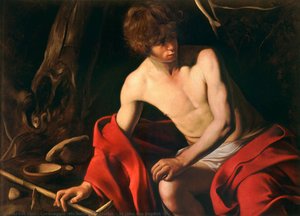


Karavaggio
David
() ·
Inklusive Rahmen: · Handgemalt mit Öl auf Leinen
Gesamtbetrag