

Shown: · With its frame:
 Vorschau anzeigen
 Versenden
 Teilen
 Details anzeigen
 Leitfaden

 Herunterladen
 Ähnliche Objekte
 Röntgenaufnahme
 Diashow
 Q&A
Q&A Statistiken
 Acryl auf Leinwand
- Wandkunst
- Suprematism
 1923
1923- Moderne
 106.0 x 106.0 cm
€ 239
Handgefertigte Ölreproduktion
Handgemaltes Ölgemälde auf Leinwand in Ihrer Wunschgröße und mit Rahmen, auf Bestellung von unseren Künstlern angefertigt. ( Zum Druck wechseln Zum digitalen Bild wechseln)
Size
·Standardformat
individuell anpassbar
CM
INCH
Wählen Sie aus unseren vordefinierten Formaten, die den ursprünglichen Proportionen des Kunstwerks entsprechen.
Loading sizes...

Breite
Höhe
Geben Sie die Breite und die Höhe an, die Sie für Ihren Rahmen oder Ihre Wand benötigen. Da dieses Werk handgemalt ist, kann der Künstler bei einer anderen Form etwas mehr um das Bild herum malen oder etwas abschneiden – Sie entscheiden. Wir senden Ihnen ein digitales Mockup zur Freigabe, bevor mit dem Malen begonnen wird. Das auf dieser Seite gezeigte Bild stellt nicht das tatsächliche Ergebnis dar – dies tut nur das Mockup.
 Mehr erfahren
Finish
·
White €1

Blurside €1

Extended €1

P118B €10

P118H €10

P118W €10

P438Z €10

P508JH €12

P508YH €12

P805H €10

P805Z €10

P919BZ €10

P919G €10

P919XJ €10

P959ZH €10

P968JZ €12

W106C €8

W218G €10

W218JH €8

W218Y €10

W307PJ €10

W316G €10

W316PJ €8

W316Y €10

W398PJ €8

W4111J €10

W500HY €15

W500JH €15

W692G €12

W849H €8

W940BG €15

W953PJ €8

H24-GOLD €30

H24-SILVER €30

H36-GOLD €45

H36-SILVER €45
Shipped in a protective tube, ready for your own framer.
Above 105 cm the frame is shipped as a kit for a professional framer — read the details.
Extras
optionalWhat do the extras include?
Examples of what can be changed: Replace face with customer photo; Add pet (e.g., replace cat with dog); Include hidden message in background; Change background landscape or elements.
After order, TopImpressionists.com team will email client for instructions and provide a mockup preview
After order, TopImpressionists.com team will email client for instructions and provide a mockup preview
Weltweiter Versand () in nur 3 bis 4 Wochen statt der üblichen 5 Wochen. (30 Oktober). Keine Kompromisse bei der Qualität.
Schutzlackierung
Beschriftung
Details der gravierten Bronzetafel
This elegant plaque features the artist's name and the title of the artwork, finely engraved for a timeless presentation.
It is made from bronze with a refined, elegant finish. The text is precisely laser-engraved for a sharp and permanent result. Measuring 9x2 cm, the plaque is compact yet easy to read. It's built to be durable and scratch-resistant, offering a professional, museum-quality look. Mounting is simple thanks to the included adhesive backing.
Details zur Acrylglas-Plakette (transparent)
The plaque includes essential engraved details such as the artist's name, the title of the artwork, the date it was created, the type of media used-like oil on canvas or watercolor-a brief description of the piece, and a QR code that links to the complete artwork information.
It is crafted from clear acrylic, offering a sleek, modern appearance. The text is UV-engraved in black to ensure strong visual contrast. With a size of 10x15 cm, it ensures optimal readability. It comes equipped with two metal hooks for secure wall mounting. The plaque is designed to be weather-resistant, making it suitable for various environments, and it includes interactive features that work seamlessly with smartphone scanning.
Details zur schwarzen Acryltafel
This elegant plaque includes engraved information such as the artist's name, the title of the artwork, the date it was created, the type of media used (like oil on canvas or watercolor), a short description of the artwork, and a QR code for quick access to more information.
The plaque itself is made from refined black acrylic with a premium finish. The text is laser-engraved in white for high contrast and readability. Its size is 10x15 cm, designed to be easy to read. It comes with two metal hooks for professional mounting. The design is sleek and fits any interior style. It is also weather-resistant and durable, with built-in digital integration for mobile compatibility.
Die Glasoption ist nur für Größen unter 110 cm verfügbar.
 Die Glasoption ist nur für Größen unter 110 cm verfügbar.
- Kostenloser weltweiter Expressversand
- Hochwertige Leinenleinwand
- Umfassender Versicherungsschutz beim Versand
- Zollgebühren-Rückerstattungsgarantie
- Garantie für exakte Farbtreue
- 100 Tage Rückgaberecht (nur bei Mängeln)
- 100% Geld-zurück-Garantie
- Mengenrabatt verfügbar


Beschreibung des Sammlerstücks
Ein Meisterwerk der russischen Avantgarde: Kazimir Malevichs *Черный крест* verkörpert Suprematismus und stellt die Essenz von Form und Farbe dar.
Künstlerbiografie
Kasimir Malewitsch (1878-1935): Begründer des Suprematismus & Pionier abstrakter Kunst. Entdecken Sie das "Schwarze Quadrat", geometrische Formen & den Einfluss reiner Gefühle auf die moderne Kunst!
About the painting
Black Cross (painting) - Kazimir Malevich
Kazimir Malevich’s *Black Cross*, painted in 1923, stands as an emblem of Suprematism—a radical artistic movement that sought to liberate art from the constraints of representational imagery and delve into pure feeling and spiritual experience. More than just a visual composition, it embodies Malevich's profound philosophical convictions about the role of art in elevating consciousness.
A Geometry of Spirit: Deconstructing the Composition
The painting’s simplicity is deceptive; its impact is immense. At first glance, it presents a stark white cross bisecting a field of absolute black—a visual paradox that immediately draws attention to its fundamental geometric principles. Malevich meticulously crafted this composition with unwavering precision, recognizing that form itself could convey meaning beyond mere depiction. The four quadrants created by the cross are equally balanced, fostering a sense of equilibrium while simultaneously hinting at an underlying tension. Thick lines define the cross’s contours, anchoring the image and asserting its resolute conviction—a deliberate rejection of subtlety in favor of forceful presence.
Beyond Representation: The Philosophical Undercurrents
Malevich's belief in Suprematism stemmed from a desire to transcend the material world and access a higher realm of spiritual awareness. He argued that art shouldn’t merely imitate nature but should instead serve as a catalyst for introspection, prompting viewers to confront their own perceptions and emotions. The black and white palette isn’t arbitrary; it represents, according to Malevich, the fundamental duality inherent in existence—the interplay between darkness and light, nothingness and being. This conceptual framework informs every aspect of the painting's execution.
Technique & Materials: Flatness as Intentional Choice
Malevich’s technique is deliberately unembellished. The paint application appears smooth, almost flat—a conscious decision to eschew illusionistic depth or textural complexity. This flatness isn’t a sign of carelessness but rather an affirmation of Suprematism's core tenets: the prioritization of pure form over realistic representation. Malevich utilized oil on canvas, applying pigment in thin layers with meticulous care, creating a surface that resists traditional glazing techniques.
A Lasting Legacy: *Black Cross* in the Modern Dialogue
*Black Cross* continues to resonate powerfully within the artistic landscape of the 20th century. It serves as a testament to Malevich’s unwavering commitment to abstraction and his conviction that art could achieve spiritual transcendence. Its influence extends beyond Suprematism itself, informing Minimalism and Conceptual Art—demonstrating the enduring power of geometric simplicity to provoke contemplation and inspire aesthetic appreciation.
The painting's impact transcends mere visual beauty; it compels us to reconsider our assumptions about what constitutes meaningful artistic expression. By stripping away extraneous detail and focusing solely on fundamental shapes, Malevich invites viewers into a dialogue with their own inner selves—a challenge that remains relevant today.
Fragen & Antworten
Kann man "Черный крест" von Kasimir Sewerinowitsch Malewitsch als Diashow ansehen?
Das Diaporama zu „Черный крест“ finden Sie auf der Diashow-Seite des Kunstwerks.
Ist "Черный крест" insgesamt eher hell oder eher dunkel?
"Черный крест" weist eine Gesamthelligkeit von ausgewogen auf, und die Luminanz beträgt Mittlere Leuchtkraft.
Gibt es ein Factsheet zu "Черный крест" von Kasimir Sewerinowitsch Malewitsch für Studierende?
Die Leitfaden-Seite von "Черный крест" von Kasimir Sewerinowitsch Malewitsch bietet ein druckbares, zweiseitiges Infoblatt: das Kunstwerk mit seiner Identifikationstabelle, eine zeitliche Einordnung in die Lebensspanne des Künstlers, weitere Werke des Künstlers, die gemessene Farbpalette sowie kopierfertige Zitate in vier verschiedenen Stilen.
Quick facts and art quiz
About Kasimir Sewerinowitsch Malewitsch

Kasimir Sewerinowitsch Malewitsch
1878 - 1935, Ukraine
Künstlerbiografie
Kazimir Malevich: Ein Pionier der abstrakten Kunst
Kazimir Severinovich Malevich, geboren 1878 in der ukrainischen Oblast Kiew, war eine Schlüsselfigur der russischen Avantgarde und gilt als einer der Begründer der abstrakten Malerei. Sein Leben und Werk spiegeln eine tiefgreifende Auseinandersetzung mit Traditionen, dem Wunsch nachlicher moderner Ausdrucksweise und einer radikalen Neudefinition dessen, was Kunst sein kann. Seine frühen Jahre in der ländlichen Ukraine prägten seine künstlerische Sensibilität, während seine Reisen nach Europa ihn mit den neuesten Strömungen des internationalen Kunstbetriebs vertraut machten.
Malevichs Ausbildung begann in Kiew, wo er die Grundlagen der Malerei lernte. Doch schon früh suchte er nach neuen Wegen und zog nach Moskau, um sich den aufkommenden avantgardistischen Bewegungen zuzuschliessen. Diese Phase war entscheidend für seine Entwicklung, da er mit Künstlern wie Wassili Kandinsky und Michail Larionow in Kontakt kam und von deren Ideen inspiriert wurde. Ein bedeutender Wendepunkt in seinem Leben war die Reise nach Paris im Jahr 1912, wo er die Werke von Pablo Picasso, Henri Matisse und anderen modernen Künstlern kennenlernte. Diese Begegnungen erweiterten seinen Horizont und trugen dazu bei, dass er sich zunehmend von traditionellen Maltechniken distanzierte.
Frühes Leben und künstlerische Einflüsse
Malevichs Kindheit in der ländlichen Ukraine war geprägt von den Traditionen des ukrainischen Volkes. Er wuchs in einer polnisch-ukrainischen Familie auf, die eine reiche kulturelle Geschichte hatte. Diese Erfahrung beeinflusste sein späteres Werk, das oft Elemente der Volkskunst und Folklore aufweist. Gleichzeitig war er jedoch auch von der Moderne fasziniert und suchte nach neuen Wegen, um seine künstlerische Vision auszudrücken. Seine frühe Ausbildung in Kiew vermittelte ihm die Grundlagen der Malerei, während seine Reisen nach Europa ihn mit den neuesten Entwicklungen in der Kunstwelt vertraut machten.
Zu seinen wichtigsten Einflüssen gehörten die Werke von Vincent van Gogh, Paul Cézanne und Wassily Kandinsky. Van Goghs expressive Farben und Pinselstriche inspirierten ihn zu einer neuen Art, mit Farbe umzugehen, während Cézannes geometrische Reduktion der Natur ihm half, die Welt in ihre grundlegenden Formen zu zerlegen. Kandinskys abstrakte Gemälde zeigten ihm, dass Kunst nicht unbedingt eine Abbildung der Realität sein muss, sondern auch eine Ausdrucksform für innere Gefühle und Ideen.
Die Entwicklung des Suprematismus
Um 1915 entwickelte Malevich den Begriff "Suprematismus", der die Vorherrschaft der reinen Empfindung in der Kunst betonte. Der Suprematismus lehnte jede Darstellung von Objekten aus der sichtbaren Welt ab und konzentrierte sich stattdessen auf grundlegende geometrische Formen wie Quadrate, Kreise und Rechtecke. Diese Formen sollten nicht als Symbole für etwas anderes verstanden werden, sondern als reine Ausdrucksmittel. Malevichs bekanntestes Werk, "Schwarzes Quadrat auf weißem Grund" (1915), verkörperte diese Idee auf eindrückliche Weise. Das Bild besteht aus einem schwarzen Quadrat, das auf einem weißen Hintergrund steht und somit die Grenzen der traditionellen Malerei sprengt.
In den folgenden Jahren experimentierte Malevich mit verschiedenen Formen und Farben und entwickelte neue Stile innerhalb des Suprematismus. Er schuf Werke wie "Weiß auf Weiß" (1918), eine Reihe von Gemälden, in denen weiße geometrische Formen gegen eine weiße Wand dargestellt werden, und "Haus unter Bau" (1916), das die ukrainische Kultur durch abstrakte Formen darstellt. Diese Werke zeigten seine Fähigkeit, komplexe Ideen auf minimalistische Weise zu vermitteln.
Wichtige Leistungen und historischer Einfluss
Malevichs Werk hatte einen tiefgreifenden Einfluss auf die Entwicklung der abstrakten Kunst des 20. Jahrhunderts. Seine Ideen über reine Empfindung und geometrische Abstraktion inspirierten Künstler wie El Lissitzky, Piet Mondrian und Kazimir Malevich. Der Suprematismus beeinflusste Bewegungen wie Minimalismus und Konstruktivismus und trug dazu bei, die Grenzen der künstlerischen Ausdrucksweise zu erweitern. Trotz politischer Verfolgung unter Stalin – zunächst unterstützt, dann unterdrückt – blieb Malevich in seiner Praxis und Lehre bestehen.
Sein Werk wurde lange Zeit übersehen, erlebte aber in den 1960er Jahren eine Wiederentdeckung und festigte seinen Platz als eine der wichtigsten Figuren der modernen Kunstgeschichte. Heute werden seine Gemälde in Museen auf der ganzen Welt ausgestellt und sind ein wichtiger Bestandteil des internationalen Kunstbetriebs.
Spätes Leben und Tod
In seinen späteren Jahren kehrte Malevich zu figurativer Malerei zurück, versuchte jedoch, seine abstrakten Prinzipien mit repräsentativen Formen zu synthetisieren. Er lehrte und schrieb über Kunst bis zu seinem Tod in Leningrad (heute St. Petersburg) im Jahr 1935. Sein Werk blieb jahrzehntelang nach seinem Tod verkümmert, erlebte aber in der zweiten Hälfte des 20. Jahrhunderts eine Wiederentdeckung und festigte seinen Platz als eine der wichtigsten Figuren der modernen Kunstgeschichte.
Quick facts about Kasimir Sewerinowitsch Malewitsch
- Beeinflusste Künstler: ['El Lissitzky']
- Bemerkenswerte Werke:
- Schwarzes Quadrat
- Weiß auf Weiß
- Haus unter Bau
- Geburtsdatum: 1878-02-23
- Geburtsort: Kiew Oblast, Ukraine
- Künstlerische Bewegung: Suprematismus, abstrakte Kunst
- Nationalität: Ukrainisch, Russisch
- Todatum: 1935-05-15
- Vollständiger Name: Kasimir Sewerinowitsch Malewitsch
- Von Künstlern Beeinflusst:
- Impressionismus
- Symbolismus
- Fauvismus
- Kubismus
Entdecken Sie Kunstwerke, die nach Themen, Stilen und Merkmalen sortiert sind.


![Schwarzkreis [1913]](/media/artworks/images-thumb/62/67/6267e452b0c8476772a6511e19ce1616.jpg)


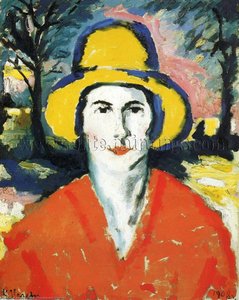


Kasimir Sewerinowitsch Malewitsch
Черный крест
() ·
With its frame: · Hand-painted in oil on linen
Total