In echtem Maßstab anzeigen
 Versenden als Grußkarte
 Teilen
 Details anzeigen
 Leitfaden öffnen

 Herunterladen
 Ähnliche Objekte
 Röntgenaufnahme
 Diashow
 Besucherstatistiken
Antiphonar (Cod. Cor. 1, folio 63)
 Acryl auf Leinwand
- Wandkunst
- International Gothic
 1396
1396 223.0 x 204.0 cm
 Staatliche Museen zu Berlin
Lorenzo Monacos 'Antiphonar Folio 63' (1396) zeigt eine königliche Figur in einer goldverzierten Handschrift und verkörpert spätgotische Spiritualität sowie künstlerische Innovation.
 Mehr anzeigen
Entdecken Sie Lorenzo Monaco (1370-1425), einen Sieneser Maler, der gotische Eleganz mit frührenaissance Innovation verbindet. Erleben Sie illuminierten Handschriften & spirituelle Kunst!
Giclée / Kunstdruck
Giclée- oder Leinwanddruck in Museumsqualität mit schneller Produktion und flexiblen Veredelungsoptionen. ( Handgemalte Reproduktion kaufen Zum digitalen Bild wechseln)




P118B €10

P118H €10

P118W €10

P438Z €10

P508JH €12

P508YH €12

P805H €10

P805Z €10

P919BZ €10

P919G €10

P919XJ €10

P959ZH €10

P968JZ €12

W106C €8

W218G €10

W218JH €8

W218Y €10

W307PJ €10

W316G €10

W316PJ €8

W316Y €10

W398PJ €8

W4111J €10

W500HY €15

W500JH €15

W692G €12

W849H €8

W940BG €15

W953PJ €8




Standardformat
individuell anpassbar
CM
INCH
Wählen Sie aus unseren vordefinierten Formaten, die den ursprünglichen Proportionen des Kunstwerks entsprechen.
Loading sizes...

Breite
Höhe
Geben Sie die Breite und die Höhe an, die Sie benötigen, damit der Druck perfekt in Ihren Rahmen oder an Ihre Wand passt. Ein Druck kann nur beschnitten werden und niemals größer als das Originalbild gemacht werden; daher verliert ein Format mit einer anderen Proportion einen Teil des Bildes. Wir senden Ihnen ein digitales Mockup zur Freigabe, bevor wir den Druck ausführen. Das auf dieser Seite gezeigte Bild zeigt nicht den tatsächlichen Beschnitt – dies ist nur im Mockup ersichtlich.
Weltweiter Versand () innerhalb von 2 Wochen statt der üblichen 4/5 Wochen. (24 Oktober)

Kostenloser weltweiter Expressversand

Hochwertige Leinenleinwand

Vollständiger Versicherungsschutz beim Versand

Zollgebühren-Rückerstattungsgarantie

Garantie für exakte Farbtreue

100-tägiges Rückgaberecht (nur bei Mängeln)

100% Geld-zurück-Garantie

Angebot für Mengenrabatt
 Die Glasoption ist nur für Größen unter 110 cm verfügbar.

Antiphonar (Cod. Cor. 1, folio 63)
Giclée / Kunstdruck
Format der Reproduktion
-


Gesamtpreis
€ 61
A Monk’s Vision: Unveiling Lorenzo Monaco's Antiphonary
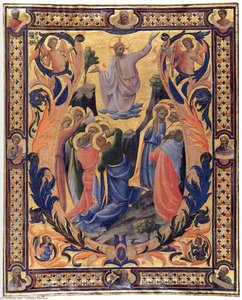
Lorenzo Monaco’s “Antiphonary (Cod. Cor. 1, folio 63)” – a remarkable panel painted in 1396 – offers a captivating glimpse into the artistic and spiritual landscape of late medieval Florence. More than just a page from a liturgical book, this work embodies the culmination of years spent within the Camaldolese monastery of Santa Maria degli Angeli, profoundly shaping Monaco’s distinctive style and worldview. It's a testament to the power of monastic life to nurture both artistic skill and contemplative depth, a quality rarely found in secular art of the period.
The image itself depicts King David, rendered with an arresting blend of formality and emotional intensity. He stands within a richly ornamented initial ‘S’, a hallmark of illuminated manuscripts, commanding attention with his crowned head and regal bearing. Monaco’s technique is characterized by a deliberate restraint – a controlled use of color, a preference for sharp lines, and a subtle shading that lends depth to the figure without resorting to dramatic chiaroscuro. The gold background isn't merely decorative; it evokes the divine light associated with royalty and spiritual authority, elevating David to a position of sacred importance.
The Illuminated Manuscript: A Window into Medieval Ritual
This particular page originates from the Antiphonary, a vital liturgical text used in religious services. These books were far more than simple prayer books; they were elaborate works of art, meticulously crafted and richly decorated to enhance the solemnity of worship. The “Antiphonary (Cod. Cor. 1)” represents one of the most significant collections of illuminated manuscripts produced during this era, showcasing the skill and dedication of a team of artists working under the guidance of Don Silvestro dei Gherarducci and later, Lorenzo Monaco himself. The inclusion of details like the clock – a relatively uncommon element in manuscript illumination – suggests an awareness of time and its connection to religious observance.
Monaco’s role as illuminator was central to his monastic life. He wasn't simply a painter; he was a craftsman deeply invested in the spiritual significance of his work. The meticulous detail, the careful rendering of textures – from the velvet of David’s robe to the diamond-shaped lozenges adorning the border – all speak to a profound respect for the sacred text and its intended audience.
Symbolism and Artistic Influence
The composition is rich in symbolic meaning. King David, traditionally associated with righteousness and divine authority, represents the ideal ruler and embodies the values of justice and piety. The crown signifies his kingship, while the scepter and orb symbolize his power. The scattered birds throughout the painting add a layer of dynamism and perhaps represent the fleeting nature of earthly life contrasted against the enduring presence of faith. Monaco’s style, influenced by Giotto but forging its own path, is often described as “Gothic-Renaissance,” blending the emotional intensity of the Gothic with the emerging realism of the Renaissance.
Notably, this piece reflects a shift in artistic sensibilities. While earlier works might have emphasized elaborate detail and vibrant color, Monaco favored a more restrained palette and a focus on line and form. This approach, combined with his monastic devotion, resulted in an art that is both visually stunning and deeply contemplative – a powerful testament to the enduring legacy of Lorenzo Monaco.
A Reproduction for Your Space
TopImpressionists offers meticulously hand-painted reproductions of “Antiphonary (Cod. Cor. 1, folio 63),” capturing the essence of this extraordinary artwork with unparalleled fidelity. Each reproduction is created by skilled artists using traditional techniques and archival-quality materials, ensuring that it will endure for generations to come. Whether you’re seeking a striking statement piece for your study or a beautiful addition to your chapel, our reproductions provide an authentic connection to this remarkable work of art – a window into the spiritual world of a 14th-century monk.
Fragen & Antworten
Welches Gefühl vermittelt "Antiphonar (Cod. Cor. 1, folio 63)" von Lorenzo Monaco?
Die festgehaltene Stimmung von "Antiphonar (Cod. Cor. 1, folio 63)" von Lorenzo Monaco ist Elegant, und ihr emotionaler Tonfall ist Spirituell.
Welche Farbpalette und welche Leitfarbe prägen "Antiphonar (Cod. Cor. 1, folio 63)"?
Die Farbidentität von "Antiphonar (Cod. Cor. 1, folio 63)" von Lorenzo Monaco: eine Erdig-Palette, dominiert von Spachtelgrau (#e2d7c2).
Wer ist der Urheber von "Antiphonar (Cod. Cor. 1, folio 63)" und welcher Stilrichtung ist das Werk zuzuordnen?
Lorenzo Monaco schuf „Antiphonar (Cod. Cor. 1, folio 63)“ im Rahmen der International Gothic-Bewegung.
Biografie des Künstlers
Frühes Leben und Ausbildung
- Geboren: Siena, Italien (ca. 1370)
- Gestorben: ca. 1425
- Über Lorenzo Monacos frühes Leben ist wenig bekannt, außer dass er in Florenz eine Lehre absolvierte.
- Er wurde von den Werken Giottos und seinen Anhängern Spinello Aretino und Agnolo Gaddi beeinflusst. Diese Erfahrungen prägten seine künstlerische Entwicklung.
Künstlerisches Schaffen und Stil
- Im Jahr 1390 trat Lorenzo dem Camaldenserkloster Santa Maria degli Angeli bei und wurde als "Laurentius der Mönch" bekannt.
- Seine frühen Werke (1390er Jahre) zeigen einen starken Einfluss des Internationalen Gotischen Stils, zusammen mit Einflüssen von Lorenzo Ghiberti und Gherardo Starnina.
- Monacos Stil ist gekennzeichnet durch:
- Spannte Linearität
- Anfänglich eine kalte Farbpalette
- Später die Übernahme von Elementen des Internationalen Gotischen Stils
- Lange Figuren mit geschwungenen Gewändern
- Scharfe Kanten und leuchtende Farben (Gold und Lapislazuli)
- Angedeutete Gesten und ein minimiertes Raumgefühl
- Er stellte konsequent Bilder mit starkem spirituellen Wert dar, oft losgelöst vom Realismus.
Hauptwerke
- Pietà: Im Galleria dell'Accademia in Florenz ausgestellt – Zeigt nervöse Linien und emotionale Spannung.
- Krönung der Jungfrau: Jetzt im Uffizien – Enthält eine große Anzahl von Heiligen mit geschwungenen Formen und leuchtenden Farben.
- Monteoliveto-Altarbild: In der Galleria dell'Accademia – Zeigt eine Spiritualität, die an Fra Angelico erinnert.
- Anbetung der Könige (1420–1422): Die Vereinfachungen wirken surreal aufgrund des Fehlens geometrischer Perspektive, behalten aber eine hohe bildliche Qualität bei.
- Geschichten der Jungfrau in der Bartolini Salimbeni Kapelle: Eines seiner wenigen Fresken.
Einflüsse und Vermächtnis
- Monacos Werk wurde von Giotto, Spinello Aretino, Agnolo Gaddi, Lorenzo Ghiberti und Gherardo Starnina beeinflusst.
- Er blieb weitgehend unbeeinflusst von den Innovationen Masacios und Filippos Brunelleschis und behielt seinen unverwechselbaren Stil bei.
- Giorgio Vasari nahm eine Biographie Monacos in seine "Leben" auf und erwähnte seinen Tod an einer nicht identifizierten Infektion.
- Trotz begrenzter biographischer Informationen sind Lorenzo Monacos Beiträge zur spätgotischen-frühen Renaissancekunst bedeutend. Seine einzigartige Mischung aus Stilen und sein spiritueller Fokus hinterließen einen bleibenden Eindruck auf nachfolgende Künstler.
Historische Bedeutung
- Gilt als der letzte wichtige Vertreter des Giotto-Stils vor der Renaissance-Revolution.
- Überbrückte die Kluft zwischen den spätgotischen Traditionen und den aufkommenden künstlerischen Prinzipien der Renaissance.
- Sein Schwerpunkt auf Spiritualität und stilisierte Formen stellen eine besondere Ästhetik innerhalb der florentinischen Malerei dar.

Lorenzo Monaco
1370 - 1425 , Italien
Eckdaten zum Künstler
- Beeinflusste Künstler:
- Giotto
- Spinello Aretino
- Bemerkenswerte Werke:
- Pietà
- Verkündigung Mariä
- Anbetung der Könige
- Geburtsdatum: ca. 1370
- Geburtsort: Siena, Italien
- Künstlerischer Stil: Spätgotik-Frührenaissance
- Nationalität: Italiener
- Sterbedatum: ca. 1425
- Vollständiger Name: Lorenzo Monaco
- Von Künstlern Beeinflusst:
- Masaccio
- Brunelleschi
Verwandte Artikel

The Timeless Glow of Tempera: Discovering the Sacred Art of Egg Yolk Painting
Step into the luminous world of egg tempera painting. Explore the sacred history, meticulous techniques, and enduring glow of this medieval masterpiece medium, from illuminated manuscripts to the timeless legacy of the Old Masters.

Divine Light & Golden Splendor: A Journey Through the Sacred Grandeur of High Medieval Art
Embark on a soulful journey through High Medieval art. Explore the divine light of Gothic cathedrals, Byzantine splendor, and sacred masterpieces that shaped Western history with our expert-led cultural reflections.

Whispers of the Soul: Discovering the Sacred Beauty and Intricate Devotion of Early Medieval Art
Embark on a soulful journey through Early Medieval art. Explore the sacred beauty of illuminated manuscripts, Byzantine gold leaf, and the profound spiritual symbolism that shaped history. Discover the timeless devotion captured in every intricate detail.
Entdecken Sie Kunstwerke, die nach Themen, Stilen und Merkmalen sortiert sind.