

 Vorschau anzeigen
 Versenden
 Teilen
 Details anzeigen
 Leitfaden

 Herunterladen
 Ähnliche Objekte
 Röntgenaufnahme
 Diashow
 Fragen & Antworten
 Statistiken
Zur Ehre Rubens'


Entdecken Sie Louis Berouds barockes Meisterwerk! Dieses Ölgemälde bietet einen faszinierenden Einblick in die Pariser Kunst des 19. Jahrhunderts.
 Weiterlesen
Louis Beroud: Ein Meister der französischen Innenraummalerei und Architekturdarstellung – Entdecken Sie seine beeindruckenden Werke und die Atmosphäre des Belle Époque! Kunstgeschichte erleben!
Giclée / Kunstdruck
Giclée- oder Leinwanddruck in Museumsqualität mit schneller Produktion und flexiblen Veredelungsoptionen. ( Handgemalte Reproduktion bestellen Zum digitalen Bild wechseln)




P118B €10

P118H €10

P118W €10

P438Z €10

P508JH €12

P508YH €12

P805H €10

P805Z €10

P919BZ €10

P919G €10

P919XJ €10

P959ZH €10

P968JZ €12

W106C €8

W218G €10

W218JH €8

W218Y €10

W307PJ €10

W316G €10

W316PJ €8

W316Y €10

W398PJ €8

W4111J €10

W500HY €15

W500JH €15

W692G €12

W849H €8

W940BG €15

W953PJ €8




Standardformat
individuell anpassbar
CM
INCH
Wählen Sie aus unseren vordefinierten Formaten, die den ursprünglichen Proportionen des Kunstwerks entsprechen.
Loading sizes...

Breite
Höhe
Geben Sie die benötigte Breite und Höhe an, damit der Druck perfekt in Ihren Rahmen oder an Ihre Wand passt. Ein Druck kann nur beschnitten, aber niemals größer als das Originalbild angefertigt werden; daher verliert ein Format mit anderen Proportionen einen Teil des Bildes. Wir senden Ihnen ein digitales Mockup zur Freigabe, bevor wir den Druck ausführen. Das auf dieser Seite gezeigte Bild zeigt nicht den tatsächlichen Beschnitt – dies ist nur im Mockup ersichtlich.
Weltweiter Versand () innerhalb von 2 Wochen statt der üblichen 4/5 Wochen. (6 November)

Kostenloser weltweiter Expressversand

Hochwertige Leinenleinwand

Umfassender Versicherungsschutz beim Versand

Zollgebühren-Rückerstattungsgarantie

Garantie für exakte Farbtreue

100 Tage Rückgaberecht (nur bei Mängeln)

100% Geld-zurück-Garantie

Mengenrabatt verfügbar
 Die Glasoption ist nur für Größen unter 110 cm verfügbar.

Zur Ehre Rubens'
Giclée / Kunstdruck
Format der Reproduktion
-


Endpreis
€ 62
À la gloire de Rubens – A Celebration of Baroque Grandeur
Louis Béroud’s “À la gloire de Rubens” is more than just a depiction of a painting; it's an embodiment of the artistic spirit of its time—the fervent embrace of academic tradition alongside a keen observation of modern life that characterized Parisian art in the early 20th century. Painted in 1905, this monumental canvas captures the atmosphere of the Louvre Museum during a period marked by significant cultural renewal and intellectual curiosity. The artwork’s subject matter is deceptively simple: a young woman diligently sketching “The Coronation” by Peter Paul Rubens from his celebrated Marie de Medici cycle—a masterpiece that embodies the Baroque ideal of dramatic grandeur and emotional intensity.- Composition & Style: Béroud adheres to the stylistic conventions of the École de Beaux-Arts, prioritizing clarity of form and meticulous detail. The scene unfolds within a richly ornamented interior space reminiscent of Rubens’s own studio, emphasizing architectural perspective and creating a sense of spatial depth. However, unlike Rubens's canvases which aim for idealized beauty, Béroud presents a realistic portrayal of artistic practice—a testament to the artist’s commitment to capturing the essence of his subject matter.
- Technique: Employing oil paint on canvas with visible brushstrokes, Béroud utilizes impasto – thick application of pigment – particularly noticeable in areas depicting drapery and skin tones. This technique lends texture and luminosity to the painting, mirroring the dramatic chiaroscuro employed by Rubens himself. The artist’s careful attention to light and shadow contributes significantly to the overall theatrical quality of the composition.
- Historical Context: Béroud's work emerged during a period of artistic debate following Impressionism’s dominance. Artists like Béroud sought to reaffirm classical principles while acknowledging the influence of contemporary life—a dynamic tension that reflects broader cultural shifts occurring in France at the time. The painting’s inclusion within the Louvre’s collection underscores its significance as an exemplar of academic art and a celebration of Rubens's legacy.
- Symbolism: The central figure, sketching “The Coronation,” symbolizes the dedication to artistic craft and the pursuit of excellence—values deeply ingrained in the Beaux-Arts tradition. The inclusion of Rubens’s monumental painting serves as a visual reminder of the Baroque aesthetic’s ambition to inspire awe and convey profound emotion.
- Emotional Impact: “À la gloire de Rubens” evokes a feeling of reverence for artistic heritage combined with an appreciation for meticulous observation. It invites viewers to contemplate the role of art in capturing beauty, conveying emotion, and preserving cultural memory—themes that resonate powerfully across generations.
Detailed Description & Artistic Considerations
The painting’s palette is dominated by muted earth tones – ochre, umber, Sienna – reflecting the subdued lighting of the Louvre’s galleries. Béroud skillfully renders textures with remarkable precision, capturing the folds of fabric and the subtle nuances of skin tone. The artist's meticulous brushwork contributes to a palpable sense of movement—suggesting the dynamism inherent in artistic creation itself. Careful attention is paid to architectural elements – moldings, arches – reinforcing the spatial illusion and enhancing the grandeur of the setting. Béroud’s masterful technique elevates the depiction beyond mere representation, transforming it into an evocative meditation on art history and artistic practice.Provenance & Acquisition
“À la gloire de Rubens” entered the Louvre's collection in 1993 as a bequest from Micheline Héblot (1930-1990), honoring her parents’ memory. The painting was originally exhibited at the Salon of Société des Artistes français in 1905 and subsequently reproduced as prints during that era. Its inclusion in Musée Carnavalet's permanent collection provides invaluable insight into Parisian artistic culture at the turn of the century.Further Research & Artistic Influences
Louis Béroud’s artistic trajectory was profoundly shaped by his training at the École Supérieure des Beaux-Arts, where he absorbed the precepts of classical art and technique. His unwavering devotion to realism combined with an artist's sensitivity distinguishes him as a pivotal figure in late 19th-century French painting—a legacy that continues to inspire artists today. References: Musée Carnavalet; Louvre éditions / Somogy, 2008, p. 149, coul. n°178; Bresc-Bautier, Geneviève ; Foucart, Jacques, « Le tableau du mois n° 9 : trois nouveaux tableaux pour l’histoire du Louvre : Louis Béroud, Henri Coroënne », Tableau du mois, 9, du 7 septembre au 3 octobre 1994, 1994, 1-4, p. 1-4, n&b, p. 1, B; Musée du Louvre, Département des Peintures; Bresc-Bautier, Geneviève ; Foucart, Jacques, « Le tableau du mois n° 9 : trois nouveaux tableaux pour l’histoire du Louvre : Louis Béroud, Henri Coroënne », Tableau du mois, 9, du 7 septembre au 3 octobre 1994, 1994, 1-4, p. 1-4, n&b, p. 1, B; Musée Carnavalet; Louvre éditions / Somogy, 2008, p. 149, coul. n°178; Musée du Louvre, Département des Peintures; Bresc-Bautier, Geneviève ; Foucart, Jacques, « Le tableau du mois n° 9 : trois nouveaux tableaux pour l’histoire du Louvre : Louis Béroud, Henri Coroënne », Tableau du mois, 9, du 7 septembre au 3 octobre 1994, 1994, 1-4, p. 1-4, n&b, p. 1, B; Musée Carnavalet; Louvre éditions / Somogy, 2008, p. 149, coul. n°178Fragen & Antworten
Wie finde ich Kunstwerke, die "Zur Ehre Rubens'" von Louis Beroud ähneln?
Ähnliche Werke zu „Zur Ehre Rubens'“ finden Sie auf der Seite Ähnliche Werke des Kunstwerks.
Wie intensiv sind die Farben von "Zur Ehre Rubens'"?
Die Farben von "Zur Ehre Rubens'" von Louis Beroud bestechen durch eine Mäßig sanfte Sättigung Sättigung und eine Ausgewogen Intensität.
Was stellt "Zur Ehre Rubens'" von Louis Beroud dar?
"Zur Ehre Rubens'" von Louis Beroud zeigt: mythologisches fest, aktfiguren, barockes gelage, sinnliche feier, opulentes interieur, venus-mythologie, dynamische komposition.
Künstlerbiografie
Louis Beroud: Ein Pariser Visionär, der den Geist seiner Zeit einfing
Louis Beroud (1852–1930) gilt als eine herausragende Gestalt der französischen Kunst des späten 19. und frühen 20. Jahrhunderts, gefeiert für seine akribischen Darstellungen Pariser Innenräume und Wahrzeichen – insbesondere des Louvre und der Opéra Garnier. Geboren in Lyon, Frankreich, entfaltete sich Berouds künstlerischer Weg vor dem Hintergrund des schwindenden Einflusses des Impressionismus, was ihn fest in der akademischen Tradition verankerte und ihm gleichzeitig ein nuanciertes Verständnis des modernen Lebens ermöglichte. Seine Leinwände bieten Einblicke in eine Welt voller Pracht, Detailreichtum und psychologischer Beobachtung – ein Zeugnis seines unerschütterlichen Engagements für den Realismus, kombiniert mit der Sensibilität eines wahren Künstlers.- Frühes Leben & künstlerische Ausbildung: Beroud erhielt seine erste künstlerische Ausbildung an der École Supérieure des Beaux-Arts in Paris, wo er seine Fähigkeiten unter einflussreichen Lehrern verfeinerte, die klassische Prinzipien der Komposition und Technik vertraten. Diese prägende Zeit vermittelte ihm einen tiefen Respekt vor der Tradition und förderte zugleich einen Forschergeist, der ihn dazu antrieb, vielfältige Themen und Stile zu erkunden.
- Bedeutende Werke & künstlerischer Stil: Berouds Œuvre umfasst ein bemerkenswertes Spektrum an Motiven, von monumentalen Architekturdarstellungen – wie seinen gefeierten Abbildungen des Louvre und der Opéra Garnier – bis hin zu intimen Porträts, die das Wesen des Pariser Lebens einfangen. Seine Gemälde zeichnen sich durch akribische Detailgenauigkeit, meisterhaften Einsatz von Licht und Schatten sowie die Fähigkeit aus, Atmosphäre mit außergewöhnlicher Präzision zu vermitteln. Er verband geschickt akademischen Realismus mit expressivem Pinselstrich und schuf Bilder, die sowohl intellektuelle Strenge als auch emotionale Tiefe besitzen.
Der Louvre-Vorfall: Ein Moment surrealen Humors
Berouds vielleicht bleibendster Ruhm rührt von einer unvergesslichen Episode während seines Besuchs im Louvre im August 1911 her. Auf der Suche nach Inspiration für ein Gemälde anlässlich des hundertjährigen Bestehens des Museums, traf Beroud an, um die „Mona Lisa im Louvre“ zu skizzieren, nur um festzustellen, dass Leonardo da Vincis ikonisches Porträt fehlte – ersetzt durch vier Eisenbolzen, die die Stelle an der Wand markierten. Diese bizarre Situation löste eine Untersuchung des Diebstahls des Meisterwerks aus und fesselte die öffentliche Meinung in Paris. Der Vorfall wurde zu einem Symbol für die Ängste um künstlerische Authentizität und das Eindringen der Moderne in ehrwürdige Institutionen.- Museumsaufträge & künstlerische Anerkennung: Berouds Ruf als Maler gewann durch zahlreiche Aufträge bedeutender Kulturorganisationen, einschließlich des Louvre selbst, erheblich an Bedeutung. Diese Projekte ermöglichten es ihm, sein Talent in großem Maßstab zu präsentieren, und festigten seine Position als einer der führenden Künstler seiner Ära in Frankreich.
- Einfluss & Vermächtnis: Berouds künstlerischer Stil – geprägt durch akribischen Realismus und psychologische Einsicht – beeinflusste nachfolgende Generationen von Malern, insbesondere jene, die sich mit der Komplexität des städtischen Lebens beschäftigten. Seine Werke werden bis heute für ihre technische Brillanz und ihre evokative Darstellung der Pariser Gesellschaft während der Belle Époque bewundert, was sein Vermächtnis als zentrale Figur der französischen Kunstgeschichte festigt.
Erkundung Pariser Räume: Von prächtigen Hallen bis zu stillen Ecken
Berouds künstlerischer Fokus lag auf der akribischen Dokumentation Pariser Umgebungen – sowohl monumentaler als auch häuslicher Natur. Er fing die Pracht architektonischer Räume wie der Opéra Garnier und des Louvre mit atemberaubender Präzision ein, wobei er Techniken anwandte, die jenen der akademischen Maler seiner Zeit entsprachen. Gleichzeitig erkundete er die Subtilitäten des Alltags durch intime Porträts und Szenen, die gewöhnliche Pariser in ihren täglichen Routinen zeigen. Diese Leinwände bieten unschätzbare Einblicke in die soziale und kulturelle Landschaft der Belle Époque – eine Epoche, die durch rasche Industrialisierung, künstlerische Innovation und eine wachsende Faszination für die Moderne gekennzeichnet war.Bedeutende Gemälde & Museumsausstellungen
Zu Berouds am meisten gefeierten Werken gehören „Avenue de la Gare in Nizza“ und „Le dôme central de la galerie des machines à l'exposition universelle de 1889“, die sein Bestreben exemplarisch verdeutlichen, den Geist seiner Zeit einzufangen. Seine Gemälde sind in angesehenen Museen in ganz Frankreich zu finden, darunter das Louvre-Museum und das Saint Louis Art Museum, wo sie die Betrachter auch heute noch durch ihren künstlerischen Wert und ihre historische Bedeutung inspirieren.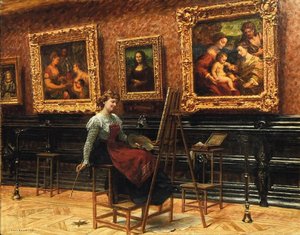
Louis Beroud
1852 - 1930 , Frankreich
Kurzinfos
- Artistic Movement Or Style: Akademische Realismus
- Artists Or Movements Influenced By This Artist: ['Art Deco']
- Artists Who Influenced This Artist: ['Gustave Moreau']
- Date Of Birth: Lyon Frankreich 1852
- Date Of Death: Frankreich 1930
- Full Name: Louis Beroud
- Nationality: Französisch
- Notable Artworks:
- Avenue de la Gare Nice
- Louvre Galerie Zentraldom
- Schlichting Ausstellung
- Place Of Birth: Lyon Frankreich
Ähnliche Artikel

Drama and Light: Discover the Captivating Grandeur of Baroque Art
Immerse yourself in the dramatic splendor of Baroque art. Explore the profound impact of light, shadow, and the Counter-Reformation through an expert historical lens, celebrating the masters who defined an era of unparalleled grandeur and emotional intensity.

The Drama of Light: Capturing the Grandeur and Emotional Intensity of Baroque Art
Explore the breathtaking drama of Baroque art. Discover how masters like Rubens and Caravaggio used chiaroscuro to evoke profound emotion, faith, and grandeur through the masterful interplay of light and shadow in this expert art history guide.

Drama in Nature: The Captivating Grandeur of Baroque Landscapes and the Art of Emotional Spectacle
Explore the breathtaking drama of Baroque landscapes. From Rubens's grand vistas to the mastery of chiaroscuro, discover how 17th-century artists transformed nature into a theatrical stage of emotion and light. A deep dive for true art enthusiasts.
Entdecken Sie Kunstwerke, die nach Themen, Stilen und Merkmalen sortiert sind.


