


 In echtem Maßstab anzeigen
 Versenden als Grußkarte
 Teilen
 Details anzeigen
 Leitfaden öffnen

 Herunterladen
 Ähnliche Objekte
 Röntgenaufnahme
 Diashow
 Besucherstatistiken
Luneberger Heide
 Oil On Canvas
- WallArt
- Impressionism
 1908
1908- 19th Century
 84.0 x 99.0 cm
Discover 'Luneberger Heide' by Lovis Corinth (1908). An atmospheric Impressionist landscape featuring a dominant tree & muted tones. Explore this German masterpiece!
 Mehr anzeigen
Entdecken Sie Lovis Corinth (1858-1925), den deutschen Maler zwischen Impressionismus & Expressionismus! Berühmt für Porträts, Landschaften u. kraftvolle Darstellungen – inkl. 'In der Schlachthofszene'. Sein Vermächtnis als Präsident der Berliner Sezession.
Giclée / Kunstdruck
Giclée- oder Leinwanddruck in Museumsqualität mit schneller Produktion und flexiblen Veredelungsoptionen. ( Handgemalte Reproduktion kaufen Zum digitalen Bild wechseln)




P118B €10

P118H €10

P118W €10

P438Z €10

P508JH €12

P508YH €12

P805H €10

P805Z €10

P919BZ €10

P919G €10

P919XJ €10

P959ZH €10

P968JZ €12

W106C €8

W218G €10

W218JH €8

W218Y €10

W307PJ €10

W316G €10

W316PJ €8

W316Y €10

W398PJ €8

W4111J €10

W500HY €15

W500JH €15

W692G €12

W849H €8

W940BG €15

W953PJ €8




Standardformat
individuell anpassbar
CM
INCH
Wählen Sie aus unseren vordefinierten Formaten, die den ursprünglichen Proportionen des Kunstwerks entsprechen.
Loading sizes...

Breite
Höhe
Geben Sie die Breite und die Höhe an, die Sie benötigen, damit der Druck perfekt in Ihren Rahmen oder an Ihre Wand passt. Ein Druck kann nur beschnitten werden und niemals größer als das Originalbild gemacht werden; daher verliert ein Format mit einer anderen Proportion einen Teil des Bildes. Wir senden Ihnen ein digitales Mockup zur Freigabe, bevor wir den Druck ausführen. Das auf dieser Seite gezeigte Bild zeigt nicht den tatsächlichen Beschnitt – dies ist nur im Mockup ersichtlich.
Weltweiter Versand () innerhalb von 2 Wochen statt der üblichen 4/5 Wochen. (24 Oktober)

Kostenloser weltweiter Expressversand

Hochwertige Leinenleinwand

Vollständiger Versicherungsschutz beim Versand

Zollgebühren-Rückerstattungsgarantie

Garantie für exakte Farbtreue

100-tägiges Rückgaberecht (nur bei Mängeln)

100% Geld-zurück-Garantie

Angebot für Mengenrabatt
 Die Glasoption ist nur für Größen unter 110 cm verfügbar.

Luneberger Heide
Giclée / Kunstdruck
Format der Reproduktion
-


Gesamtpreis
€ 61
A Symphony of Earth and Atmosphere
In the quietude of 1908, Lovis Corinth captured a moment of profound stillness in his masterpiece, Luneberger Heide. This evocative landscape serves as a window into a world where the boundaries between earth, water, and sky dissolve into a singular, atmospheric experience. At first glance, the viewer is drawn to the commanding presence of a central tree, a sentinel of the German heath that anchors the composition with its rugged strength. Yet, as one lingers before the canvas, the true magic reveals itself in the subtle interplay of light and shadow. The painting does not merely depict a forest; it captures the very breath of the landscape, inviting the observer to step into a realm of soft, diffused light and muted natural tones that suggest a cool, overcast afternoon.
The technique employed by Corinth is a masterclass in late Impressionism, where the physical presence of the paint becomes as much a part of the story as the subject itself. Using oil on canvas, the artist utilized loose, visible brushstrokes that lend a tactile, rhythmic quality to the foliage and bark. This impasto-like texture creates a sense of movement within the stillness, as if the wind is perpetually rustling through the leaves. The perspective is intentionally flattened, eschewing rigid spatial accuracy in favor of an emotional depth. By focusing on the organic flow of branches and the hazy, amorphous shapes of the surrounding vegetation, Corinth achieves a dreamlike quality that prioritizes mood over meticulous detail, making the piece feel less like a photograph and more like a memory.
The Intersection of Impressionism and Expressionism
To understand Luneberger Heide, one must consider the pivotal role Lovis Corinth played in the evolution of modern art. As a bridge between the fleeting light of Impressionism and the raw, emotive power of Expressionism, Corinth’s work embodies a unique vitality. In this particular landscape, we see the remnants of his academic training blended with a burgeoning desire to express the internal spirit of nature. The color palette—a sophisticated arrangement of earthy greens, deep browns, and whispers of slate gray and blue—reflects a restrained elegance. There is no jarring brightness here; instead, there is a harmonious, subdued tonality that speaks to the resilience of the natural world.
Symbolically, the painting offers a profound meditation on continuity and solitude. The prominent tree stands as a symbol of endurance, rooted deeply in the soil while reaching toward an ephemeral sky, much like the human condition itself. The presence of water within the forest scene introduces an element of reflection, both literal and metaphorical, suggesting a sense of peace and eternal recurrence. For the collector or interior designer, this artwork offers more than mere decoration; it provides a focal point of tranquility. Its ability to evoke a feeling of peaceful solitude makes it an ideal centerpiece for spaces designed for contemplation, adding a layer of sophisticated, organic warmth to any curated environment.
Fragen & Antworten
Unter welchen Pseudonymen oder Alternativnamen ist Lovis Corinth bekannt?
Lovis Corinth erscheint unter den Alternativnamen Franz Heinrich Louis Corinth.
Für welchen Raum wird "Luneberger Heide" von Lovis Corinth empfohlen?
Der empfohlene Raum für "Luneberger Heide" von Lovis Corinth ist ein Wellness Center. Dieser Vorschlag kann natürlich an Ihr Interieur angepasst werden.
In welche Farbtönung tendiert "Luneberger Heide"?
"Luneberger Heide" tendiert zu einem Ochre to Sepia Farbton.
Ähnliche Kunstwerke


Biografie des Künstlers
Frühes Leben und Ausbildung
Lovis Corinth, geboren Franz Heinrich Louis am 21. Juli 1858 in Tapiau, Preußen, war ein deutscher Künstler und Schriftsteller, dessen reifes Werk als Maler und Grafiker eine Synthese aus Impressionismus und Expressionismus realisierte. Corinthians frühes Leben war geprägt von seinem Talent zum Zeichnen, das ihn dazu veranlasste, ab 1876 an der Akademie Königsbergs Malerei zu studieren.Künstlerische Entwicklung
Corinthians künstlerische Entwicklung wurde von mehreren Schlüsselfiguren und Bewegungen beeinflusst:- Lovis Corinth's frühe Arbeit war naturalistisch geprägt, was durch seinen Lehrer Otto Günther gefördert wurde.
- Er studierte unter Ludwig von Löfftz an der Akademie der Bildenden Künste München, die eine sorgfältige Beobachtung von Farben und Werten betonte.
- Corinth wurde auch von Courbet und der Barbizon-Schule sowie von den Werken Rubes während seiner Zeit in Antwerpen beeinflusst.
Wichtige Werke und Stil
Zu Corinthians bemerkenswertesten Werken gehören:- In der Schlachthof-Szene (78 x 89 cm, Staatsgalerie Stuttgart, Deutschland), das seine Verwendung von Öl auf Leinwand zeigt.
- Selbstbildnis (47 x 53 cm, Kunsthalle Bremen, Deutschland), das sein Können im Zeichnen demonstriert.
- weibliche Halbnackte mit Hut (283 x 383 cm, Kunstpalast Düsseldorf, Deutschland), das seine Verwendung von Bleistift hervorhebt.
Späteres Leben und Vermächtnis
Corinthians späteres Leben war geprägt von seiner Präsidentschaft der Berliner Sezession von 1915 bis 1925. Er veröffentlichte auch zahlreiche Essays über Kunstgeschichte, darunter "Das Erlernen der Malerei" im Jahr 1908. Corinth starb am 17. Juli 1925 nach einem Schlaganfall im Jahr 1911, der ihn teilweise gelähmt hatte. Wichtige Links:- Besuchen Sie die Künstlerseite von Lovis Corinth auf TopImpressionists
- Lesen Sie mehr über Lovis Corinth auf Wikipedia
- Sehen Sie "In der Schlachthof-Szene" von Lovis Corinth auf TopImpressionists
Bedeutung und Einfluss
Corinth gilt als einer der wichtigsten Künstler des deutschen Modernismus. Seine Werke verbinden impressionistische Elemente mit expressionistischen Tendenzen, was ihm eine einzigartige Position in der Kunstgeschichte einbrachte. Er beeinflusste nachfolgende Generationen von Künstlern und trug maßgeblich zur Entwicklung der modernen Kunst in Deutschland bei. Sein Einfluss ist bis heute spürbar.
Lovis Corinth
1858 - 1925 , Niederlande
Eckdaten zum Künstler
- Beeinflusste Künstler:
- Kirchner
- Beckmann
- Baselitz
- Bemerkenswerte Werke:
- In der Schlachthof-Szene
- Selbstbildnis
- Female Semi-Nude with Hat
- Einflüsse:
- Courbet
- Barbizon Schule
- Rubens
- Geburtsdatum: 21. Juli 1858
- Geburtsort: Tauwade, Niederlande
- Künstlerische Richtung: Impressionismus & Expressionismus
- Nationalität: Deutsch
- Sterbedatum: 17. Juli 1925
- Vollständiger Name: Lovis Corinth (Franz Heinrich Louis)
Verwandte Artikel
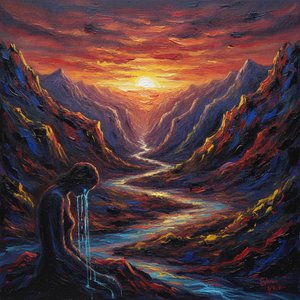
Capturing Emotion: A Journey Through the Soul of Expressionist Landscapes
Explore the profound emotional depth of Expressionist landscapes. Discover how Post-Impressionist masters moved beyond light to capture the soul through vibrant color and form. A curated journey for true art lovers seeking the beauty of expressive mastery.
Entdecken Sie Kunstwerke, die nach Themen, Stilen und Merkmalen sortiert sind.


