

 Vorschau anzeigen
 Versenden
 Teilen
 Details anzeigen
 Leitfaden

 Herunterladen
 Ähnliche Objekte
 Röntgenaufnahme
 Diashow
 Fragen & Antworten
 Statistiken
Portrait von Dr. R. Dumouchel


Ein außergewöhnliches Gemälde von Marcel Duchamp aus dem Jahr 1910! Dieses Werk zeigt Raymond Dumouchel und nutzt X-Ray-Konnotationen sowie eine beeindruckende Farbgebung für ein einzigartiges Kunstwerk.
 Weiterlesen
Marcel Duchamp (1887-1968): Pionier französischer und amerikanischer Künstler der Kubismus, Dada und Konzeptkunst. Revolutionierte die Skulptur mit 'Readymades' wie Fountain. Entdecken Sie sein einflussreiches Werk und sein Erbe.
Die auf dieser Seite dargestellten Kunstwerke sind urheberrechtlich geschützt, was bedeutet, dass wir keine identische Reproduktion rechtmäßig erstellen oder verkaufen dürfen. Dieser Schutz wird durch internationale Abkommen wie die Berner Übereinkunft und durch nationale Gesetze, einschließlich derer, die von den US-Urheberrecht – Titel 17.
Diese Methode entspricht vollumfänglich den Urheberrechtsbestimmungen, da sie keine Kopie oder Vervielfältigung des geschützten Kunstwerks darstellt. Stattdessen handelt es sich um eine kreative Neuinterpretation – ein neues Gemälde, das vom Original inspiriert, aber nicht identisch mit ihm ist.
Giclée / Kunstdruck
Giclée- oder Leinwanddruck in Museumsqualität mit schneller Produktion und flexiblen Veredelungsoptionen. ( Handgemalte Reproduktion bestellen Zum digitalen Bild wechseln)




P118B €10

P118H €10

P118W €10

P438Z €10

P508JH €12

P508YH €12

P805H €10

P805Z €10

P919BZ €10

P919G €10

P919XJ €10

P959ZH €10

P968JZ €12

W106C €8

W218G €10

W218JH €8

W218Y €10

W307PJ €10

W316G €10

W316PJ €8

W316Y €10

W398PJ €8

W4111J €10

W500HY €15

W500JH €15

W692G €12

W849H €8

W940BG €15

W953PJ €8




Standardformat
individuell anpassbar
CM
INCH
Wählen Sie aus unseren vordefinierten Formaten, die den ursprünglichen Proportionen des Kunstwerks entsprechen.
Loading sizes...

Breite
Höhe
Geben Sie die benötigte Breite und Höhe an, damit der Druck perfekt in Ihren Rahmen oder an Ihre Wand passt. Ein Druck kann nur beschnitten, aber niemals größer als das Originalbild angefertigt werden; daher verliert ein Format mit anderen Proportionen einen Teil des Bildes. Wir senden Ihnen ein digitales Mockup zur Freigabe, bevor wir den Druck ausführen. Das auf dieser Seite gezeigte Bild zeigt nicht den tatsächlichen Beschnitt – dies ist nur im Mockup ersichtlich.
Weltweiter Versand () innerhalb von 2 Wochen statt der üblichen 4/5 Wochen. (5 November)

Kostenloser weltweiter Expressversand

Hochwertige Leinenleinwand

Umfassender Versicherungsschutz beim Versand

Zollgebühren-Rückerstattungsgarantie

Garantie für exakte Farbtreue

100 Tage Rückgaberecht (nur bei Mängeln)

100% Geld-zurück-Garantie

Mengenrabatt verfügbar
 Die Glasoption ist nur für Größen unter 110 cm verfügbar.

Portrait von Dr. R. Dumouchel
Giclée / Kunstdruck
Format der Reproduktion
-


Endpreis
€ 62
Introduction to the Painting and Artist
Marcel Duchamp’s Portrait of Dr. R. Dumouchel, painted in 1910, is a remarkable example of Post-Impressionism (learn more about this art movement at TopImpressionists). The painting features Raymond Dumouchel, a childhood friend of Duchamp who was studying medicine at the time. This three-quarter-length portrait is well-known for its non-naturalistic colors and strong contrasts between pink and green tones. It’s a deceptively simple composition that belies a profound intellectual engagement with emerging scientific ideas.
Interpreting the Painting
The vivid pink halo surrounding Dr. Dumouchel's hand and upper body in Portrait of Dr. R. Dumouchel is particularly striking. This element can be interpreted as a reference to X-rays, which had fascinated the public since their discovery a quarter-century earlier. Duchamp was likely aware of the occult interpretation of modern science that viewed X-rays as a means of registering supernatural forces beyond the boundaries of the knowable. Critics and scholars have noted parallels between this halo’s luminescence and depictions of angelic figures—a deliberate nod to spiritual iconography.
Furthermore, Duchamp's conceptual approach extends beyond mere visual allusion. He questioned whether art should strive for accurate representation or instead explore psychological dimensions. The artist deliberately avoided traditional techniques of color blending, favoring bold hues that convey emotion rather than objective observation. This stylistic choice underscores Duchamp’s belief in challenging conventions and pushing the boundaries of artistic expression.
The Significance of the Painting
Portrait of Dr. R. Dumouchel stands as an early manifesto of Duchamp’s lifelong commitment to questioning artistic dogma. It exemplifies his desire to engage with intellectual currents—particularly the burgeoning field of radiology—and to consider how art could communicate ideas beyond purely visual stimuli. The painting's subdued palette—dominated by muted greens and earthy browns—contrasts sharply with the radiant pink, creating a tension that mirrors Duchamp’s own artistic explorations.
Considered alongside his later works, such as *Fountain*, Portrait of Dr. R. Dumouchel reveals Duchamp’s unwavering conviction that art should transcend mimetic representation and delve into the realm of thought—a cornerstone of Conceptual Art.
Availability of the Painting
The original Portrait of Dr. R. Dumouchel by Marcel Duchamp is housed in the Philadelphia Museum of Art (visit the museum's website for more information). However, you can own a high-quality reproduction of this masterpiece through TopImpressionists’s handmade oil painting service (learn how TopImpressionists preserves classic beauty through its reproductions).
This meticulously crafted reproduction captures the essence of Duchamp's artistic vision—a testament to his pioneering spirit and a captivating addition to any discerning collection.
Fragen & Antworten
Kann ich "Portrait von Dr. R. Dumouchel" als Vollbild-Diashow ansehen?
Das Diaporama zu „Portrait von Dr. R. Dumouchel“ finden Sie auf der Diashow-Seite des Kunstwerks.
Für welche Verwendung wird ein Druck von "Portrait von Dr. R. Dumouchel" empfohlen?
Eine Reproduktion von "Portrait von Dr. R. Dumouchel" von Marcel Duchamp wird für Akzentuierung empfohlen. Dieser Vorschlag ergibt sich aus dem Motiv, der Stimmung und den Farben des Werkes.
Wie harmonisch ist die Farbgestaltung von "Portrait von Dr. R. Dumouchel" von Marcel Duchamp?
"Portrait von Dr. R. Dumouchel" von Marcel Duchamp besticht durch eine Hohe farbliche Harmonie Farbharmonie.
Ähnliche Kunstwerke


Künstlerbiografie
frühes Leben und künstlerische Anfänge
Marcel Duchamp, ein französischer-amerikanischer Maler, Bildhauer, Schachspieler und Schriftsteller, wurde am 28. Juli 1887 in Blainville-Crevon, Normandie, Frankreich, geboren. Seine Familie, die für ihre kulturellen Neigungen bekannt war, förderte sein frühes Interesse an der Kunst. Duchamps künstlerischer Weg begann mit postimpressionistischen Stilen und experimentierte er mit klassischen Techniken und Themen.Künstlerische Entwicklung und bedeutende Werke
- Duchamps Werk ist mit Kubismus, Konzeptkunst und Dada verbunden, obwohl er vorsichtig mit dem Begriff „Dada“ umging.
- Eines seiner bekanntesten Werke, Fountain (1917), ein Urinal mit der Unterschrift „r. mutt“, ist ein Beispiel für seine Readymades und stellt die Vorstellung in Frage, was Kunst ausmacht.
- Portrait of Chess Players (1911), ein kubistisches Werk, zeigt sein Interesse am Spiel und seinen strategischen Aspekten.
- To Be Looked At (From the Other Side of the Glass) With One Eye, Close To, For Almost an Hour (1945) ist ein weiteres bemerkenswertes Werk, das seine dadaistischen Neigungen widerspiegelt.
Einfluss und Vermächtnis
Duchamps Einfluss auf die Kunst des 20. Jahrhunderts ist immens. Zusammen mit Pablo Picasso und Henri Matisse definierten er die bildenden Künste im frühen 20. Jahrhundert. Sein konzeptueller Ansatz zur Kunst hat Generationen von Künstlern beeinflusst.- Entdecken Sie mehr von Duchamps Werken auf TopImpressionists: Marcel Duchamp | Werke
- Besuchen Sie das Ohara Museum of Art in Japan, das westliche Kunstsammlungen umfasst, darunter einige, die vom Stil von Duchamp beeinflusst sind: Ohara Museum of Art, Japan
- Erfahren Sie mehr über Lettrismus, eine Bewegung, die von Dada und Surrealismus beeinflusst wurde, der Duchamp angehörte: Lettrismus Kunstbewegung
Fazit
Marcel Duchamps rätselhafter Ansatz zur Kunst, der konzeptuelle und dadaistische Elemente verbindet, hat einen unauslöschlichen Eindruck in der Kunstwelt hinterlassen. Sein Vermächtnis inspiriert weiterhin Künstler und beeinflusst die Entwicklung moderner und zeitgenössischer Kunst. Franck Scurti, ein französischer Künstler, der für seine Konzeptkunst bekannt ist, geht in den Fußstapfen von Duchamp und trägt so zum Vermächtnis dieses Pioniers weiter.
Marcel Duchamp
1887 - 1968 , Frankreich
Kurzinfos
- Bemerkenswerte Werke:
- Fountain
- Porträt der Schachspieler
- Das große Glas
- L.H.O.O.Q.
- Boîte-en-valise
- Geburtsdatum: 28. Juli 1887
- Geburtsort: Blainville-sur-Mer, Frankreich
- Künstler Oder Bewegungen, Von Denen Dieser Künstler Beeinflusst Wurde: ['Franck Scurti']
- Künstlerische Bewegung:
- Kubismus
- Dadaismus
- Konzeptkunst
- Nationalität: Französisch-Amerikanisch
- Todatum: 1968
- Vollständiger Name: Marcel Duchamp
Ähnliche Artikel

Capturing the Light: A Journey Through the Ethereal Magic of Impressionism and Post-Impressionism
Embark on a cultural journey through the luminous world of Impressionism. Discover the profound beauty of Monet, Van Gogh, and Cézanne through expert art history insights and explore how to bring these timeless masterpieces into your home with museum-quality hand-painted reproductions.
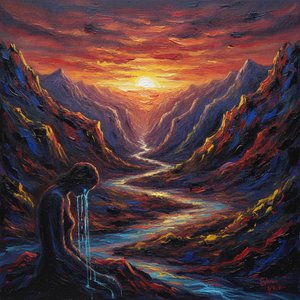
Capturing Emotion: A Journey Through the Soul of Expressionist Landscapes
Explore the profound emotional depth of Expressionist landscapes. Discover how Post-Impressionist masters moved beyond light to capture the soul through vibrant color and form. A curated journey for true art lovers seeking the beauty of expressive mastery.

Beyond the Light: Discovering the Soul and Emotional Depth of Post-Impressionism
Embark on a cultural journey through Post-Impressionism. Discover the profound emotional depth of masters like Van Gogh and Cézanne, exploring how they moved beyond light to capture the very soul of human experience through vibrant color and symbolic form.

Beyond the Light: Capturing Raw Emotion and Subjective Vision in Post-Impressionist Landscapes
Explore the profound emotional depth of Post-Impressionist landscapes. Discover how masters like Van Gogh moved beyond light to capture raw human feeling through vibrant color and expressive texture in this expert art history retrospective.

Capturing the Soul: The Ethereal Magic and Timeless Technique of Impressionist Portraiture
Discover the ethereal beauty of Impressionist portraiture. Explore how masters like Monet and Renoir captured light and soul through brushwork, and learn how to bring this timeless magic into your home with exquisite, hand-painted oil reproductions from TopImpressionists.com.
Entdecken Sie Kunstwerke, die nach Themen, Stilen und Merkmalen sortiert sind.


