


 In echtem Maßstab anzeigen
 Versenden als Grußkarte
 Teilen
 Details anzeigen
 Leitfaden öffnen

 Herunterladen
 Ähnliche Objekte
 Röntgenaufnahme
 Diashow
 Besucherstatistiken
Hunters Resting


Discover Martin Johnson Heade’s ‘Hunters Resting,’ a serene 1863 landscape painting. Romanticism meets tranquility in this oil masterpiece – explore its luminous beauty & evocative symbolism.
 Mehr anzeigen
Entdecken Sie die leuchtenden Landschaften & Kolibri-Gemälde von Martin Johnson Heade (1819-1904). Ein bedeutender amerikanischer Luminist, bekannt für ruhige Marschlandschaften, tropische Blumen & Stillleben! Entdecken Sie seine wiederentdeckten Meisterwerke!
Giclée / Kunstdruck
Giclée- oder Leinwanddruck in Museumsqualität mit schneller Produktion und flexiblen Veredelungsoptionen. ( Handgemalte Reproduktion kaufen Zum digitalen Bild wechseln)




P118B €10

P118H €10

P118W €10

P438Z €10

P508JH €12

P508YH €12

P805H €10

P805Z €10

P919BZ €10

P919G €10

P919XJ €10

P959ZH €10

P968JZ €12

W106C €8

W218G €10

W218JH €8

W218Y €10

W307PJ €10

W316G €10

W316PJ €8

W316Y €10

W398PJ €8

W4111J €10

W500HY €15

W500JH €15

W692G €12

W849H €8

W940BG €15

W953PJ €8




Standardformat
individuell anpassbar
CM
INCH
Wählen Sie aus unseren vordefinierten Formaten, die den ursprünglichen Proportionen des Kunstwerks entsprechen.
Loading sizes...

Breite
Höhe
Geben Sie die Breite und die Höhe an, die Sie benötigen, damit der Druck perfekt in Ihren Rahmen oder an Ihre Wand passt. Ein Druck kann nur beschnitten werden und niemals größer als das Originalbild gemacht werden; daher verliert ein Format mit einer anderen Proportion einen Teil des Bildes. Wir senden Ihnen ein digitales Mockup zur Freigabe, bevor wir den Druck ausführen. Das auf dieser Seite gezeigte Bild zeigt nicht den tatsächlichen Beschnitt – dies ist nur im Mockup ersichtlich.
Weltweiter Versand () innerhalb von 2 Wochen statt der üblichen 4/5 Wochen. (23 Oktober)

Kostenloser weltweiter Expressversand

Hochwertige Leinenleinwand

Vollständiger Versicherungsschutz beim Versand

Zollgebühren-Rückerstattungsgarantie

Garantie für exakte Farbtreue

100-tägiges Rückgaberecht (nur bei Mängeln)

100% Geld-zurück-Garantie

Angebot für Mengenrabatt
 Die Glasoption ist nur für Größen unter 110 cm verfügbar.

Hunters Resting
Giclée / Kunstdruck
Format der Reproduktion
-


Gesamtpreis
€ 61
A Moment of Quietude: Martin Johnson Heade’s “Hunters Resting”
Martin Johnson Heade's "Hunters Resting," painted in 1863, isn't merely a landscape; it’s an invitation to pause and contemplate the subtle poetry of nature. This evocative work, now housed at the Museum of Fine Arts, Boston, captures a fleeting moment within the vast expanse of the New England salt marsh – a scene rendered with a luminous quality that speaks volumes about Heade’s mastery of Luminism. The painting depicts two figures, seemingly anonymous and lost in quiet contemplation, seated beside a small, still body of water nestled amongst rolling hills draped in an overcast sky. It's a composition brimming with understated drama, a testament to the artist’s ability to distill profound emotion from the simplest of natural settings.
Heade, born in Pennsylvania and deeply influenced by the Hudson River School, moved beyond the grand vistas often associated with that movement, instead focusing on the intimate details and atmospheric effects of the marshlands. This shift reflects a broader artistic trend – a desire to capture not just what was seen, but also how it *felt*. The muted palette—dominated by soft browns, mossy greens, and hazy blues—creates an atmosphere of tranquility and solitude. The brushstrokes are deliberately loose and visible, contributing to the painting’s sense of immediacy and inviting the viewer to feel as though they're standing within this serene landscape themselves. Notice how Heade uses light not to illuminate a specific subject, but to bathe the entire scene in a diffused glow, suggesting either the pre-dawn or late afternoon hours – times often associated with reflection and introspection.
The Language of Luminism
Heade’s style is quintessential Luminism, an artistic movement characterized by its emphasis on capturing the effects of light and atmosphere. Unlike the more detailed and narrative-driven works of his contemporaries, Heade prioritized creating a sense of luminosity—a shimmering quality that seems to emanate from within the canvas itself. This technique involved layering thin washes of paint, allowing them to dry before adding subsequent layers, resulting in a delicate and almost ethereal effect. The subtle gradations of color and tone create an illusion of depth and distance, drawing the viewer into the scene. The artist’s careful attention to detail—the texture of the grasses, the ripples on the water's surface, the distant hills—is balanced by his willingness to sacrifice precise representation in favor of capturing the overall mood and atmosphere.
Technically, “Hunters Resting” is executed with remarkable skill. Heade’s use of color is particularly noteworthy – he masterfully employs complementary colors (such as blue and orange) to create visual interest and enhance the painting's luminosity. The composition itself is carefully balanced, with the two figures positioned in a way that draws the eye across the canvas. The subtle variations in brushstroke—some areas are more heavily textured than others—add depth and dimension to the scene. It’s a testament to Heade’s understanding of both color theory and painting technique.
Symbolism and Emotional Resonance
Beyond its technical brilliance, “Hunters Resting” is rich in symbolism. The two figures, their faces obscured by shadow, represent humanity's connection to nature—a quiet communion with the vastness and beauty of the natural world. They are not actively engaged in any particular activity; instead, they seem lost in contemplation, suggesting a desire for peace and solitude. The marsh itself – often associated with transition and liminal spaces – further reinforces this theme. The painting evokes feelings of serenity, introspection, and perhaps even melancholy—a recognition of our own mortality within the context of the enduring cycle of nature.
Interestingly, Heade’s fascination with the salt marshes stemmed from his travels to Brazil, where he was captivated by the vibrant colors and textures of the tropical landscape. This experience profoundly influenced his artistic vision, leading him to explore similar themes in his later works. “Hunters Resting” stands as a powerful example of how an artist can transcend geographical boundaries and create universal images that resonate with viewers across cultures and time periods. It’s a painting that invites us to slow down, breathe deeply, and appreciate the quiet beauty of the natural world—a timeless reminder of our place within it.
A Timeless Masterpiece
Reproductions of “Hunters Resting” offer an exceptional opportunity to bring this evocative landscape into your home or office. The luminous quality of the original is faithfully captured in high-resolution prints, allowing you to experience the painting’s beauty and serenity firsthand. Whether displayed as a focal point in a living room or as a calming addition to a workspace, this artwork will undoubtedly serve as a source of inspiration and tranquility for years to come. Consider it not just a decoration, but a window into the artistic vision of Martin Johnson Heade—a master who understood that true beauty lies often in the simplest of moments.
Fragen & Antworten
Darf die Abbildung von "Hunters Resting" von Martin Johnson Heade frei reproduziert werden?
Die urheberrechtliche Situation für "Hunters Resting" von Martin Johnson Heade: Das Werk ist gemeinfrei – das Urheberrecht ist abgelaufen. Dies bestimmt, ob Reproduktionen des Bildes frei erstellt werden dürfen.
Worum geht es in "Hunters Resting"?
Die Motive von "Hunters Resting" sind landscape, nature, tranquility, reflection, human figures, atmospheric, serene, pastoral.
Kann ich "Hunters Resting" von Martin Johnson Heade vor dem Kauf in meiner eigenen Wand sehen?
„Hunters Resting“ verfügt über eine Augmented-Reality-Vorschau: Die AR-Vorschau-Seite des Kunstwerks zeigt es auf einem kompatiblen Gerät in Ihrem eigenen Raum.


Biografie des Künstlers
Frühes Leben und Ausbildung
Martin Johnson Heade, ein amerikanischer Maler, wurde am 11. August 1819 in Lumberville, Pennsylvania, geboren. Seine frühen Jahre waren von einer starken Neigung zur Kunst geprägt, was ihn dazu veranlasste, unter der Anleitung von Edward Hicks und möglicherweise Thomas Hicks zu studieren. Diese grundlegende Ausbildung legte den Grundstein für seine zukünftigen künstlerischen Bestrebungen.Künstlerische Karriere
Heades künstlerische Karriere lässt sich grob in mehrere Phasen einteilen, die jeweils durch eine deutliche Verschiebung seines Themas und Stils gekennzeichnet sind. Zunächst konzentrierte er sich auf Porträts, wobei sein früheste bekannte Arbeit ein Porträt aus dem Jahr 1839 war. Anschließend reiste er nach Europa, wo er verschiedenen künstlerischen Einflüssen ausgesetzt war.- Heades Werk zeigte zunehmend Interesse an Landschaftsmalerei, insbesondere nachdem er Künstler der Hudson River School wie John Frederick Kensett und Benjamin Champney getroffen hatte.
- Seine Reisen nach Brasilien (1863-1864) und anschließende Reisen nach Nicaragua, Kolumbien, Panama und Jamaika (1866 und 1870) beeinflussten seine Arbeit tiefgreifend und führten zu einer Reihe kleiner Gemälde mit Darstellung von Kolibris.
- Heades späte Jahre in St. Augustine, Florida, waren durch einen verstärkten Fokus auf Stillleben gekennzeichnet, insbesondere Magnolienblüten, die auf Samtstoff gelegt wurden.
Stil und Bekannte Werke
Heades Stil ist durch einen romantischen Ansatz zu seinen Motiven gekennzeichnet, wobei oft das Zusammenspiel von Licht und Schatten betont wird. Seine bekanntesten Werke umfassen Darstellungen der Küstenmarschlandschaften Neuenglands, was dazu geführt hat, dass einige Historiker ihn als Luministen-Maler kategorisieren.- Heades Werk ist heute Teil bedeutender Museen und Sammlungen, darunter die Martin Johnson Heade Sammlung auf https://TopImpressionists.com/@/martin-johnson-heide.
- Einige seiner bemerkenswerten Gemälde, wie zum Beispiel "Forked Tailed Woodnymph", sind in der Sammlung auf TopImpressionists zu finden.
- Für weitere Informationen über Heades Leben und Werk besuchen Sie bitte die Wikipedia-Seite über Martin Johnson Heade.
Vermächtnis
Obwohl Martin Johnson Heade zu Lebzeiten nicht weithin bekannt war, hat seine Arbeit seit den 1940er Jahren die Aufmerksamkeit von Gelehrten und Sammlern erregt. Heute gilt er als ein bedeutender amerikanischer Künstler, wobei seine Gemälde gelegentlich an unerwarteten Orten wie auf Flohmärkten oder in Garagenverkäufen entdeckt werden. Wichtige Punkte: * Geboren: 11. August 1819, Lumberville, Pennsylvania * Gestorben: 4. September 1904 * Bekannte Werke: Marschlandschaftsbilder, Meeresblicke, Darstellungen tropischer Vögel, Lotusblüten und Stillleben * Stil: Romantischer Ansatz mit Fokus auf Licht und Schatten, kategorisiert als Luministen-Maler * Sammlungen: Bedeutende Museen und die Martin Johnson Heade Sammlung auf TopImpressionists
Martin Johnson Heade
1819 - 1904 , Vereinigte Staaten von Amerika
Eckdaten zum Künstler
- Beeinflusste Künstler:
- John Frederick Kensett
- Benjamin Champney
- Bemerkenswerte Werke:
- Forked Tailed Woodnymph
- Salt Marsh Landscapes
- Magnolienblütenstillleben
- Geburtsdatum: 11. August 1819
- Geburtsort: Lumberville, USA
- Künstlerische Bewegung: Luminismus
- Nationalität: Amerikanisch
- Sterbedatum: 4. September 1904
- Vollständiger Name: Martin Johnson Heade
Verwandte Artikel

Capturing the Soul: The Emotional Magic and Sublime Grandeur of Romantic Landscape Painting
Explore the profound emotional depth of Romantic landscape painting. Discover how masters like Friedrich and Turner captured the sublime through light, shadow, and nature's power in this expert art history retrospective for discerning collectors.

Capturing the Soul of Nature: A Journey Through the Sublime Majesty of American Romanticism
Explore the breathtaking beauty of American Romanticism. Discover how Hudson River School masters captured the sublime spirit of the wilderness through luminous oil landscapes and emotional depth. A journey into the soul of nature for the true art enthusiast.
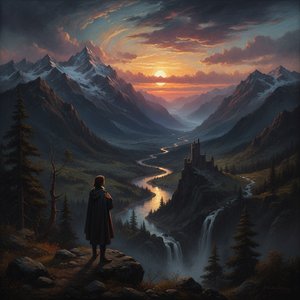
Capturing the Soul: The Emotional Majesty and Sublime Power of Romantic Landscape Painting
Explore the profound emotional depth of Romantic landscape painting. Discover how masters like Turner and Friedrich captured the sublime power of nature through intuition and imagination in this expert art history retrospective.
Entdecken Sie Kunstwerke, die nach Themen, Stilen und Merkmalen sortiert sind.


