


 In echtem Maßstab anzeigen
 Versenden als Grußkarte
 Teilen
 Details anzeigen
 Leitfaden öffnen

 Herunterladen
 Ähnliche Objekte
 Röntgenaufnahme
 Diashow
 Besucherstatistiken
Untitled--Flower Study
 Watercolor
- WallArt
- Botanical Illustration
 1939
1939 25.0 x 18.0 cm
 Smithsonian American Art Museum
Experience the delicate watercolor realism of Mary Vaux Walcott's 1939 flower study, capturing botanical beauty with luminous precision; discover this natural masterpiece today.
 Mehr anzeigen
Mary Vaux Walcott (1860-1940): Amerikanische Künstlerin & Naturforscherin, berühmt für ihre Aquarellstudien von Wildblumen – die "Audubon der Botanik"! Entdecken Sie ihre Werke.
Handgefertigte Ölreproduktion
Handgemaltes Ölgemälde auf Leinwand in Ihrer Wunschgröße und mit Rahmen, auf Bestellung von unseren Künstlern angefertigt. ( Zum Druck wechseln Zum digitalen Bild wechseln)




P118B €10

P118H €10

P118W €10

P438Z €10

P508JH €12

P508YH €12

P805H €10

P805Z €10

P919BZ €10

P919G €10

P919XJ €10

P959ZH €10

P968JZ €12

W106C €8

W218G €10

W218JH €8

W218Y €10

W307PJ €10

W316G €10

W316PJ €8

W316Y €10

W398PJ €8

W4111J €10

W500HY €15

W500JH €15

W692G €12

W849H €8

W940BG €15

W953PJ €8




Standardformat
individuell anpassbar
CM
INCH
Wählen Sie aus unseren vordefinierten Formaten, die den ursprünglichen Proportionen des Kunstwerks entsprechen.
Loading sizes...

Breite
Höhe
Geben Sie die Breite und die Höhe an, die Sie für Ihren Rahmen oder Ihre Wand benötigen. Da dieses Werk handgemalt ist, kann der Künstler bei einer anderen Form etwas mehr um das Bild herum malen oder etwas abschneiden – Sie entscheiden. Wir senden Ihnen ein digitales Mockup zur Freigabe, bevor mit dem Malen begonnen wird. Das auf dieser Seite gezeigte Bild stellt nicht das tatsächliche Ergebnis dar – dies tut nur das Mockup.
Beispiele für Anpassungsmöglichkeiten: Gesicht durch Kundenfoto ersetzen; Haustier hinzufügen (z. B. Katze durch Hund ersetzen); eine versteckte Nachricht im Hintergrund einfügen; Hintergrundlandschaft oder -elemente ändern.
Nach der Bestellung wird das TopImpressionists.com-Team dem Kunden Anweisungen per E-Mail zusenden und eine Mockup-Vorschau bereitstellen.
Nach der Bestellung wird das TopImpressionists.com-Team dem Kunden Anweisungen per E-Mail zusenden und eine Mockup-Vorschau bereitstellen.
Weltweiter Versand () in nur 3 bis 4 Wochen statt der üblichen 5 Wochen. (25 Oktober). Keine Kompromisse bei der Qualität.

Kostenloser weltweiter Expressversand

Hochwertige Leinenleinwand

Vollständiger Versicherungsschutz beim Versand

Zollgebühren-Rückerstattungsgarantie

Garantie für exakte Farbtreue

100-tägiges Rückgaberecht (nur bei Mängeln)

100% Geld-zurück-Garantie

Angebot für Mengenrabatt
 Die Glasoption ist nur für Größen unter 110 cm verfügbar.

Untitled--Flower Study
Reproduktionsmedium
Format der Reproduktion
-


Gesamtpreis
€ 236
A Delicate Echo of Botany’s Beauty: Exploring Mary Vaux Walcott's “Untitled--Flower Study”
Mary Vaux Walcott, born in Philadelphia in 1860 amidst the Quaker traditions of her upbringing, possessed a remarkable destiny – one that defied societal expectations and blossomed into an extraordinary artistic journey. From childhood, she exhibited an innate fascination with capturing the subtle elegance of wildflowers, fueled by a simple gift: a set of watercolor paints at eight years old. This early passion wouldn’t merely indulge in leisure; it would propel her toward becoming “the Audubon of Botany,” cementing her legacy as one of America's foremost botanical illustrators and artists. Her life story is a testament to perseverance, intellectual curiosity, and an unwavering commitment to translating the natural world onto canvas with breathtaking precision.- Subject Matter: The artwork focuses on two blossoms—likely clover—presented in a vase or similar container. Walcott’s meticulous attention to detail captures the essence of these flowers, prioritizing their form and texture above all else.
- Style & Technique: Executed entirely in watercolor, “Untitled--Flower Study” exemplifies the naturalist style prevalent during its creation in 1939. Watercolor lends itself beautifully to capturing nuanced tonal variations and delicate washes—a technique perfectly suited for conveying the ethereal quality of botanical specimens. The artist’s brushstrokes are subtle yet purposeful, creating an impression of luminous realism.
- Historical Context: Created during the early 20th century, this piece reflects the broader artistic movement celebrating scientific observation and artistic representation. It aligns with the burgeoning interest in botany and natural history fostered by figures like John Audubon, whose detailed illustrations revolutionized ornithological study. Walcott’s work stands as a poignant reminder of a time when art served as both documentation and inspiration.
- Symbolism: Flowers have long held symbolic significance across cultures—representing purity, beauty, and rebirth. In “Untitled--Flower Study,” the blossoms embody these ideals, inviting contemplation on themes of fragility and resilience. Walcott’s deliberate choice of subject matter underscores her dedication to portraying the natural world with reverence and accuracy.
- Emotional Impact: Viewing this watercolor study evokes a feeling of serene tranquility. The delicate colors and meticulous rendering convey an appreciation for understated beauty—a celebration of nature's subtle grandeur that resonates deeply with viewers seeking solace or artistic inspiration.
Fragen & Antworten
Welche Proportionen hat "Untitled--Flower Study" von Mary Vaux Walcott und wie groß ist es?
Das Format von „Untitled--Flower Study“ ist Portrait und das Original hat die Maße 25 x 18 cm. Beides ist bei der Planung einer Reproduktion hilfreich.
Was sind die Technik und das Entstehungsdatum von "Untitled--Flower Study" von Mary Vaux Walcott?
"Untitled--Flower Study" entstand im Jahr 1939 mit der Technik Watercolor. Material und Datum beschreiben, wie und wann das Original geschaffen wurde.
Wie kann ich eine Reproduktion von "Untitled--Flower Study" von Mary Vaux Walcott in der Vorschau ansehen?
Eine Vorschau von "Untitled--Flower Study" von Mary Vaux Walcott ist auf der Vorschau-Seite des Kunstwerks verfügbar.
Biografie des Künstlers
Frühes Leben und Ausbildung
Mary Morris Vaux Walcott, eine amerikanische Künstlerin und Naturforscherin, wurde am 31. Juli 1860 in Philadelphia, Pennsylvania, in einer wohlhabenden quakerischen Familie geboren. Nach ihrem Abschluss von der Friends Select School in Philadelphia im Jahr 1879 entwickelte sie ein Interesse an Aquarellmalerei. Sie erhielt keine formale künstlerische Ausbildung, sondern lernte hauptsächlich durch Selbststudium und Beobachtung der Natur.Künstlerisches Schaffen und Beiträge
Mary Vaux Walcott ist vor allem für ihre Aquarellgemälde von Wildblumen bekannt, was ihr den Beinamen „die Audubon der Botanik“ einbrachte. Ihr Werk zeichnet sich durch eine außergewöhnliche Detailgenauigkeit und eine liebevolle Darstellung der Pflanzenwelt aus. Sie widmete sich hauptsächlich der botanischen Illustration und dokumentierte die Schönheit und Vielfalt nordamerikanischer Flora. Zu ihren bemerkenswertesten Werken gehören:- Untitled (Herbstblätter), ein Aquarellgemälde, das ihre Fähigkeit zeigt, die Essenz der Natur einzufangen, und das sich derzeit im Smithsonian American Art Museum befindet.
- Perennial Gaillardia (Gaillardia aristata), eine weitere Illustration, die ebenfalls im Smithsonian American Art Museum zu finden ist.
- Bourgeau Rose (Rosa bourgeauiana), ein Aquarellgemälde, das ihre Liebe zum Detail demonstriert und ebenfalls im Smithsonian American Art Museum ausgestellt ist.
- Bushpoppy (Dendromecon rigidum), ein Beispiel für ihre Arbeit bei der Darstellung der Schönheit von Flora, auch im Smithsonian American Art Museum zu sehen.
- Mexican Fremontia (Fremontodendron mexicanum), ein Aquarellgemälde, das ihr Engagement für die botanische Kunst unterstreicht und ebenfalls im Smithsonian American Art Museum aufbewahrt wird.
Persönliches Leben und Spätere Jahre
Im Jahr 1914 heiratete Mary Vaux Walcott Charles Doolittle Walcott, den Sekretär des Smithsonian Institution. Nach ihrer Heirat setzte sie ihre künstlerische Tätigkeit fort und unterstützte ihren Mann bei seinen Projekten bis zu seinem Tod im Jahr 1927. Ihre Ehe mit einem bedeutenden Wissenschaftler ermöglichte ihr einen direkten Zugang zu wissenschaftlichen Kreisen und förderte ihr Interesse an der botanischen Forschung.Vermächtnis und Bedeutung
Mary Vaux Walcotts Beiträge zur botanischen Kunst sind unbestreitbar. Ihr Werk findet sich in verschiedenen Sammlungen, darunter im Smithsonian American Art Museum. Sie gilt als eine Pionierin der botanischen Illustration und hat mit ihrer detailgetreuen Darstellung die Schönheit und Vielfalt der Pflanzenwelt für kommende Generationen bewahrt. Ihre Arbeit inspiriert weiterhin Künstler und Naturforscher gleichermaßen. Ihr Fokus auf wissenschaftliche Genauigkeit in Kombination mit künstlerischer Sensibilität macht sie zu einer einzigartigen Figur in der Geschichte der amerikanischen Kunst. Sie trug dazu bei, die Wertschätzung für die natürliche Welt durch ihre Gemälde zu fördern und das Verständnis für die Bedeutung botanischer Forschung zu vertiefen.
Mary Vaux Walcott
1860 - 1940 , Vereinigte Staaten von Amerika
Eckdaten zum Künstler
- Bemerkenswerte Werke:
- Untitled (Herbstblätter)
- Perennial Gaillardia
- Bourgeau Rose
- Bushpoppy
- Mexican Fremontia
- Geburtsdatum: 31. Juli 1860
- Geburtsort: Philadelphia, USA
- Künstlerische Richtung: Botanische Illustration
- Nationalität: Amerikanerin
- Sterbedatum: 1940
- Vollständiger Name: Mary Vaux Walcott
Verwandte Artikel
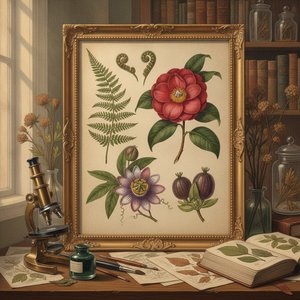
The Timeless Elegance of Victorian Botanical Painting: A Journey Through Nature's Intricate Detail and Scientific Artistry
Discover the exquisite world of Victorian botanical painting, where scientific precision meets profound aesthetic grace. Explore a journey through nature's intricate details, from legendary illustrators to the untamed beauty of Marianne North’s vibrant floral masterpieces.
Entdecken Sie Kunstwerke, die nach Themen, Stilen und Merkmalen sortiert sind.


