

Shown: · With its frame:
 Vorschau anzeigen
 Versenden
 Teilen
 Details anzeigen
 Leitfaden

 Herunterladen
 Ähnliche Objekte
 Röntgenaufnahme
 Diashow
 Q&A
Q&A Statistiken
- 237.0 x 189.0 cm


€ 239
Handgefertigte Ölreproduktion
Handgemaltes Ölgemälde auf Leinwand in Ihrer Wunschgröße und mit Rahmen, auf Bestellung von unseren Künstlern angefertigt. ( Zum Druck wechseln Zum digitalen Bild wechseln)
Size
·Standardformat
individuell anpassbar
CM
INCH
Wählen Sie aus unseren vordefinierten Formaten, die den ursprünglichen Proportionen des Kunstwerks entsprechen.
Loading sizes...

Breite
Höhe
Geben Sie die Breite und die Höhe an, die Sie für Ihren Rahmen oder Ihre Wand benötigen. Da dieses Werk handgemalt ist, kann der Künstler bei einer anderen Form etwas mehr um das Bild herum malen oder etwas abschneiden – Sie entscheiden. Wir senden Ihnen ein digitales Mockup zur Freigabe, bevor mit dem Malen begonnen wird. Das auf dieser Seite gezeigte Bild stellt nicht das tatsächliche Ergebnis dar – dies tut nur das Mockup.
 Mehr erfahren
Finish
·
White €1

Blurside €1

Extended €1

P118B €10

P118H €10

P118W €10

P438Z €10

P508JH €12

P508YH €12

P805H €10

P805Z €10

P919BZ €10

P919G €10

P919XJ €10

P959ZH €10

P968JZ €12

W106C €8

W218G €10

W218JH €8

W218Y €10

W307PJ €10

W316G €10

W316PJ €8

W316Y €10

W398PJ €8

W4111J €10

W500HY €15

W500JH €15

W692G €12

W849H €8

W940BG €15

W953PJ €8

H24-GOLD €30

H24-SILVER €30

H36-GOLD €45

H36-SILVER €45
Shipped in a protective tube, ready for your own framer.
Above 105 cm the frame is shipped as a kit for a professional framer — read the details.
Extras
optionalWhat do the extras include?
Examples of what can be changed: Replace face with customer photo; Add pet (e.g., replace cat with dog); Include hidden message in background; Change background landscape or elements.
After order, TopImpressionists.com team will email client for instructions and provide a mockup preview
After order, TopImpressionists.com team will email client for instructions and provide a mockup preview
Weltweiter Versand () in nur 3 bis 4 Wochen statt der üblichen 5 Wochen. (1 November). Keine Kompromisse bei der Qualität.
Schutzlackierung
Beschriftung
Details der gravierten Bronzetafel
This elegant plaque features the artist's name and the title of the artwork, finely engraved for a timeless presentation.
It is made from bronze with a refined, elegant finish. The text is precisely laser-engraved for a sharp and permanent result. Measuring 9x2 cm, the plaque is compact yet easy to read. It's built to be durable and scratch-resistant, offering a professional, museum-quality look. Mounting is simple thanks to the included adhesive backing.
Details zur Acrylglas-Plakette (transparent)
The plaque includes essential engraved details such as the artist's name, the title of the artwork, the date it was created, the type of media used-like oil on canvas or watercolor-a brief description of the piece, and a QR code that links to the complete artwork information.
It is crafted from clear acrylic, offering a sleek, modern appearance. The text is UV-engraved in black to ensure strong visual contrast. With a size of 10x15 cm, it ensures optimal readability. It comes equipped with two metal hooks for secure wall mounting. The plaque is designed to be weather-resistant, making it suitable for various environments, and it includes interactive features that work seamlessly with smartphone scanning.
Details zur schwarzen Acryltafel
This elegant plaque includes engraved information such as the artist's name, the title of the artwork, the date it was created, the type of media used (like oil on canvas or watercolor), a short description of the artwork, and a QR code for quick access to more information.
The plaque itself is made from refined black acrylic with a premium finish. The text is laser-engraved in white for high contrast and readability. Its size is 10x15 cm, designed to be easy to read. It comes with two metal hooks for professional mounting. The design is sleek and fits any interior style. It is also weather-resistant and durable, with built-in digital integration for mobile compatibility.
Die Glasoption ist nur für Größen unter 110 cm verfügbar.
 Die Glasoption ist nur für Größen unter 110 cm verfügbar.
- Kostenloser weltweiter Expressversand
- Hochwertige Leinenleinwand
- Umfassender Versicherungsschutz beim Versand
- Zollgebühren-Rückerstattungsgarantie
- Garantie für exakte Farbtreue
- 100 Tage Rückgaberecht (nur bei Mängeln)
- 100% Geld-zurück-Garantie
- Mengenrabatt verfügbar


Beschreibung des Sammlerstücks
Explore Matthias Grünewald’s ‘Forearm Study’ (1512): A stunning black & white pencil drawing showcasing incredible anatomical detail & Renaissance realism. Discover this unique artwork's texture, depth, and historical significance.
Künstlerbiografie
Erkunden Sie die dramatische deutsche Renaissancekunst von Matthias Grünewald! Bekannt für das Isenheim Altarbild und emotional aufgeladene religiöse Gemälde. Entdecken Sie seinen einzigartigen Stil bei TopImpressionists.
About the painting
Forearm Study: A Renaissance Anatomical Masterpiece
Matthias Grünewald’s “Forearm Study,” created in 1512, is more than just a meticulously rendered drawing; it's a profound meditation on the human form and a testament to the artist’s dedication to anatomical precision. This remarkable piece, currently housed at the Staatliche Kunsthalle Karlsruhe, offers a rare glimpse into the mind of a pivotal figure bridging the late medieval and early Renaissance artistic traditions. It’s a study in quiet intensity, capturing not just muscle and bone, but also an underlying sense of observation and reverence for the intricacies of human anatomy – a fascination that would profoundly influence his later work, most notably on the Isenheim Altarpiece.
Born around 1470-1475 in Würzburg, Grünewald’s artistic journey was shaped by the prevailing Northern European aesthetic. He inherited a tradition of realism and emotional depth from artists like Albrecht Dürer and Martin Schongauer, yet he forged his own distinctive path, prioritizing direct observation and scientific accuracy. Unlike the humanist circles flourishing in Italy, Grünewald's art remained firmly rooted in religious devotion, serving as a powerful visual language for conveying spiritual truths. The drawing itself is a study – a preliminary sketch intended to inform a larger work, likely part of the Isenheim Altarpiece, where the figure of Saint Sebastian would be depicted with similar anatomical detail.
The Language of Line and Shadow
What immediately strikes the viewer is Grünewald’s masterful command of line. The drawing is executed entirely in black chalk on brown-yellowish paper, utilizing an extensive vocabulary of hatching, cross-hatching, and stippling to build up tonal values with astonishing subtlety. These techniques aren't merely decorative; they are integral to creating the illusion of volume and texture. The artist meticulously layered these lines, mimicking the feel of skin and muscle – you can almost sense the tautness of tendons beneath the surface. The composition is predominantly vertical, focusing intensely on the subject’s limb, drawing the eye into a detailed exploration of form.
Lighting plays a crucial role in defining the three-dimensional structure. Subtle shadows are carefully rendered to suggest depth and recession, while highlights accentuate the contours of muscle fibers. The perspective is implied rather than explicitly defined; Grünewald prioritized anatomical accuracy over spatial realism, creating a close-up study that invites intimate examination. This deliberate choice underscores his commitment to scientific observation – he was less interested in depicting a scene realistically and more focused on accurately representing the underlying structure of the human body.
Symbolism and Spiritual Resonance
While seemingly devoid of overt symbolism, “Forearm Study” carries a quiet spiritual resonance. The intense focus on anatomical detail can be interpreted as an act of reverence – Grünewald was clearly captivated by the beauty and complexity of the human form. The drawing’s meticulousness suggests a deep respect for God's creation, reflecting a core tenet of Renaissance religious art. It’s a reminder that even in seemingly technical studies, there exists a profound appreciation for the divine order inherent within nature.
Furthermore, considering its potential connection to the Isenheim Altarpiece, this study hints at a broader narrative – the suffering and sacrifice of Saint Sebastian, a martyr revered for his endurance. The anatomical precision with which Grünewald renders the muscle structure serves not only as a demonstration of artistic skill but also as a visual representation of the saint’s physical ordeal.
A Reproduction Worth Admiring
TopImpressionists offers meticulously hand-painted reproductions of “Forearm Study,” capturing the essence of Grünewald's artistry with unparalleled fidelity. Each reproduction faithfully recreates the drawing’s rich texture, subtle tonal variations, and dynamic interplay of light and shadow. Whether you are an art enthusiast, a collector seeking to expand your collection, or simply someone drawn to the beauty of Renaissance anatomical studies, a TopImpressionists reproduction provides a stunning window into this remarkable work – a timeless testament to Grünewald’s skill and his profound understanding of the human form.
Fragen & Antworten
In welchem Jahr wurde "Forearm Study" von Matthias Grünewald geschaffen?
"Forearm Study" von Matthias Grünewald entstand im Jahr 1512.
Wo kann ich eine handgemalte Reproduktion von "Forearm Study" von Matthias Grünewald kaufen?
Eine handgemalte Reproduktion von "Forearm Study" von Matthias Grünewald können Sie direkt auf der entsprechenden Handgemalte Ölreproduktion-Seite bestellen: eine handgemalte Ölreproduktion auf Leinenleinwand, auf Bestellung angefertigt.
Aus welchen Materialien besteht "Forearm Study" und in welchem Stil ist es gehalten?
"Forearm Study" von Matthias Grünewald verbindet die Technik der Graphite mit dem Stil der Renaissance. Technik und Epoche beschreiben die Herstellung sowie die künstlerische Ausrichtung des Werkes.
Quick facts and art quiz
About Matthias Grünewald

Matthias Grünewald
1480 - 1528, Deutschland
Künstlerbiografie
Matthias Grünewald: Leben und Vermächtnis
Frühes Leben und künstlerische Anfänge
Matthias Grünewald, geboren Mathis Gothart Neithardt um 1470-1475 in Würzburg, Deutschland, war eine zentrale Figur der deutschen Renaissance. Obwohl er in einer Zeit lebte, die zunehmend von italienischen Renaissance-Idealen beeinflusst wurde, blieb Grünewald tief in den künstlerischen Traditionen des späten Mittelalters Mitteleuropas verwurzelt. Es gibt nur wenige Details über sein frühes Leben, aber es ist bekannt, dass er als Künstler ausgebildet wurde, wahrscheinlich in lokalen Werkstätten.
Künstlerische Entwicklung und Einflüsse
Grünewalds künstlerische Entwicklung wurde durch die vorherrschenden nordeuropäischen Traditionen von Realismus, emotionaler Intensität und detaillierter Beobachtung geprägt. Seine Werke zeigen Einflüsse von Künstlern wie Albrecht Dürer und Martin Schongauer, aber er schlug einen einzigartigen Weg ein, der durch dramatische Ausdruckskraft und leuchtende Farben gekennzeichnet ist. Er war nicht direkt an den humanistischen Kreisen beteiligt, die in Italien vorherrschten; stattdessen diente seine Kunst hauptsächlich religiösen Zwecken und spiegelte die spirituellen Ängste seiner Zeit wider.
Wichtige Werke und künstlerischer Stil
- Das Isenheim Altarbild (1512-1516): Dieses Meisterwerk, das im Musée d'Unterlinden in Colmar ausgestellt ist, gilt als Grünewalds Hauptwerk. Es stellt Szenen aus dem Leben Christi mit erschreckender Realität dar, insbesondere mit Schwerpunkt auf Leid und Erlösung.
- Die Kreuzigung (ca. 1502-1503): Ein frühes Werk, das seinen sich entwickelnden Stil demonstriert und intensive Emotionen sowie anatomische Details zeigt.
- Jungfrau der Verkündigung (1512-14): Eine Studie für das Isenheim Altarbild, die seinen sorgfältigen Planungsprozess offenbart.
- Moses (1511): Ein Zeichnung, die Grünewalds Können bei der Darstellung ausdrucksstarker Figuren und dramatischer Posen hervorhebt.
Grünewalds Stil ist durch folgende Merkmale gekennzeichnet:
- Dramatische Komposition: Er setzte dynamische Anordnungen ein, um den emotionalen Eindruck zu verstärken.
- Leuchtende Farbpalette: Seine Verwendung intensiver, oft kontrastierender Farben schuf ein kraftvolles visuelles Erlebnis.
- Realistische Darstellung von Leid: Grünewald scheute sich nicht, die physischen und emotionalen Schmerzen zu zeigen, die mit religiösen Erzählungen verbunden sind.
- Ausdrucksstarke Figuren: Seine Figuren waren mit starken Emotionen und psychologischer Tiefe durchdrungen.
Historische Bedeutung und Vermächtnis
Grünewalds Werk ist ein Beweis für die dauernde Kraft mittelalterlicher künstlerischer Traditionen in Deutschland während der Renaissance. Er schloss die Lücke zwischen dem späten Gotik-Stil und der aufkommenden Renaissance, indem er eine einzigartige visuelle Sprache schuf, die bei seinen Zeitgenossen Anklang fand. Sein Einfluss ist in späteren deutschen Künstlern zu sehen, die weiterhin Themen religiöser Hingabe und emotionaler Intensität erforschten. Obwohl er nach seinem Tod im Jahr 1528 weitgehend vergessen wurde, erlebte Grünewald im 19. Jahrhundert eine Wiederentdeckung, und heute wird er als einer der wichtigsten Maler der deutschen Renaissance anerkannt. Seine Kunst fesselt bis heute die Betrachter mit ihrer rohen Emotion, ihrem technischen Brillanz und ihrer tiefen spirituellen Tiefe.
Weitere Erkundung
Erfahren Sie mehr über das Leben und Werk von Matthias Grünewald auf: TopImpressionists
Quick facts about Matthias Grünewald
- Artistic Movement Or Style: Späte Gotik / Renaissance
- Artists Or Movements Influenced By This Artist: ['Deutsche Renaissance']
- Artists Who Influenced This Artist:
- Albrecht Dürer
- Martin Schongauer
- Date Of Birth: Um 1480 vielleicht Würzburg
- Date Of Death: Vor 1528 Halle (Saale)
- Full Name: Matthias Grünewald
- Nationality: Deutsch
- Notable Artworks:
- Isenheim Altarbild
- Kreuzigung
- Jungfrau der Verkündigung
- Place Of Birth: Würzburg, Deutschland
Entdecken Sie Kunstwerke, die nach Themen, Stilen und Merkmalen sortiert sind.



Matthias Grünewald
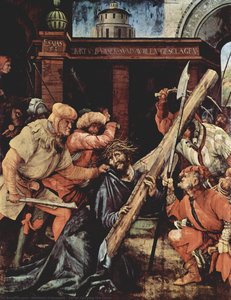
Forearm Study
() ·
With its frame: · Hand-painted in oil on linen
Total