In echtem Maßstab anzeigen
 Versenden als Grußkarte
 Teilen
 Details anzeigen
 Leitfaden öffnen

 Herunterladen
 Ähnliche Objekte
 Röntgenaufnahme
 Diashow
 Besucherstatistiken
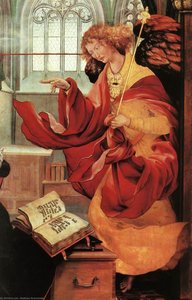
The Annunciation
 Öl auf Tafel
- Northern Renaissance
 1515
1515 269.0 x 141.0 cm
 Musée d’Unterlinden
Witness the profound Annunciation by Matthias Grünewald! This Renaissance masterpiece, housed in Colmar's Musée d’Unterlinden, showcases stunning detail & symbolism. Explore its rich history and artistic legacy.
 Mehr anzeigen
Erkunden Sie die dramatische deutsche Renaissancekunst von Matthias Grünewald! Bekannt für das Isenheim Altarbild und emotional aufgeladene religiöse Gemälde. Entdecken Sie seinen einzigartigen Stil bei TopImpressionists.
Handgefertigte Ölreproduktion
Handgemaltes Ölgemälde auf Leinwand in Ihrer Wunschgröße und mit Rahmen, auf Bestellung von unseren Künstlern angefertigt. ( Zum Druck wechseln Zum digitalen Bild wechseln)




P118B €10

P118H €10

P118W €10

P438Z €10

P508JH €12

P508YH €12

P805H €10

P805Z €10

P919BZ €10

P919G €10

P919XJ €10

P959ZH €10

P968JZ €12

W106C €8

W218G €10

W218JH €8

W218Y €10

W307PJ €10

W316G €10

W316PJ €8

W316Y €10

W398PJ €8

W4111J €10

W500HY €15

W500JH €15

W692G €12

W849H €8

W940BG €15

W953PJ €8




Standardformat
individuell anpassbar
CM
INCH
Wählen Sie aus unseren vordefinierten Formaten, die den ursprünglichen Proportionen des Kunstwerks entsprechen.
Loading sizes...

Breite
Höhe
Geben Sie die Breite und die Höhe an, die Sie für Ihren Rahmen oder Ihre Wand benötigen. Da dieses Werk handgemalt ist, kann der Künstler bei einer anderen Form etwas mehr um das Bild herum malen oder etwas abschneiden – Sie entscheiden. Wir senden Ihnen ein digitales Mockup zur Freigabe, bevor mit dem Malen begonnen wird. Das auf dieser Seite gezeigte Bild stellt nicht das tatsächliche Ergebnis dar – dies tut nur das Mockup.
Beispiele für Anpassungsmöglichkeiten: Gesicht durch Kundenfoto ersetzen; Haustier hinzufügen (z. B. Katze durch Hund ersetzen); eine versteckte Nachricht im Hintergrund einfügen; Hintergrundlandschaft oder -elemente ändern.
Nach der Bestellung wird das TopImpressionists.com-Team dem Kunden Anweisungen per E-Mail zusenden und eine Mockup-Vorschau bereitstellen.
Nach der Bestellung wird das TopImpressionists.com-Team dem Kunden Anweisungen per E-Mail zusenden und eine Mockup-Vorschau bereitstellen.
Weltweiter Versand () in nur 3 bis 4 Wochen statt der üblichen 5 Wochen. (24 Oktober). Keine Kompromisse bei der Qualität.

Kostenloser weltweiter Expressversand

Hochwertige Leinenleinwand

Vollständiger Versicherungsschutz beim Versand

Zollgebühren-Rückerstattungsgarantie

Garantie für exakte Farbtreue

100-tägiges Rückgaberecht (nur bei Mängeln)

100% Geld-zurück-Garantie

Angebot für Mengenrabatt
 Die Glasoption ist nur für Größen unter 110 cm verfügbar.

The Annunciation
Reproduktionsmedium
Format der Reproduktion
-


Gesamtpreis
€ 236
The Annunciation: A Renaissance Echo of Divine Grace
Matthias Grünewald’s “The Annunciation,” painted in 1515, isn't merely a depiction of a biblical moment; it’s a profound meditation on faith, humility, and the unfolding mystery of God’s plan. Housed within the Musée d’Unterlinden in Colmar, France, this masterpiece transcends its historical context to resonate powerfully with viewers centuries later. Grünewald, a pivotal figure bridging the late medieval and early Renaissance periods, deliberately eschewed the prevailing Italian humanist style, instead drawing upon the rich traditions of Northern European art—a lineage characterized by intense emotionality, meticulous detail, and an unwavering focus on religious narrative.
The scene itself is deceptively simple: the Archangel Gabriel stands to Mary’s right, his flowing robes a vibrant crimson that speaks both of divine authority and passionate urgency. He extends his hand, presenting a lily—a potent symbol of purity and virginity, inextricably linked with Mary's role as the Mother of God. Mary, kneeling gracefully on the left, is rendered in shades of serene blue, reflecting her humility and acceptance of this extraordinary destiny. The architectural setting, reminiscent of a Gothic cathedral’s archway, provides a sense of sacred space—a stage for this pivotal encounter.
A Symphony of Color and Light
Grünewald's mastery lies not just in his composition but also in his innovative use of color and light. The palette is deliberately restrained, dominated by the complementary hues of red and blue – a deliberate choice that amplifies their symbolic weight. The strong, directional light source, originating from the upper left corner, dramatically illuminates Mary’s face, emphasizing her vulnerability and receptiveness to the divine message. This carefully orchestrated lighting creates a palpable sense of depth and drama, drawing the viewer's eye directly to the central figures.
Furthermore, Grünewald employs a technique known as *sfumato*, subtly blurring edges and creating atmospheric effects—a hallmark of Renaissance painting that he skillfully adapted to his own style. This adds an ethereal quality to the scene, suggesting the otherworldly nature of the event unfolding before us. The meticulous detail evident in the drapery, the intricate patterns on the clothing, and the subtle modeling of the figures speaks to Grünewald’s exceptional technical skill and unwavering commitment to realism.
Symbolism Woven into Every Detail
Beyond the immediate narrative, “The Annunciation” is rich with symbolic meaning. The dove hovering above Mary represents the Holy Spirit—the divine breath that will bring forth Christ. The architectural setting itself alludes to the sacredness of the event and the importance of God’s presence in human life. Even the positioning of Gabriel and Mary within the archway can be interpreted symbolically, representing harmony and balance – a visual embodiment of the theological concept of *coincidence of opposites*.
The lily held by Gabriel is not merely a floral emblem; it's a potent reminder of Mary’s virginity and her role as the vessel through which Christ will be born. The careful rendering of each element—from the angel’s wings to Mary’s expression—contributes to a complex tapestry of meaning that invites contemplation and interpretation.
A Timeless Masterpiece: Reproductions Available
“The Annunciation” remains a profoundly moving work of art, captivating viewers with its beauty, drama, and spiritual depth. High-quality reproductions are now available through TopImpressionists, allowing art enthusiasts to bring this iconic masterpiece into their homes or offices. These meticulously crafted oil paintings faithfully capture the essence of Grünewald’s original—a testament to his artistic genius and a timeless reminder of the miracle at the heart of Christian faith. For those seeking to delve deeper into the world of Matthias Grünewald, we encourage you to explore the resources linked below, including detailed images, artist biographies, and related works.
- The Annunciation (detail): /en/art/matthias-grunewald-the-annunciation-detail-8XZGPE-en/
- The Annunciation: /en/art/matthias-grunewald-the-annunciation-8XZGPD-en/
- Matthias Grünewald: /en/artists/matthias-grunewald-en/
- Explore the collection at: https://TopImpressionists.com
- Learn more about the Musée d’Unterlinden: https://en.wikipedia.org/wiki/Mus%C3%A9e_d%27Unterlinden
Fragen & Antworten
Wo sollte eine Reproduktion von "The Annunciation" von Matthias Grünewald aufgehängt werden?
Format (Hochkant) und der empfohlene Raum (Wohnbereich) sind die zwei festgehaltenen Platzierungsdetails für "The Annunciation" von Matthias Grünewald.
Welche Größe wird für "The Annunciation" in einem Wohnbereich empfohlen?
Die ideale Kombination für "The Annunciation" von Matthias Grünewald: ein Druck im Format Großformatig für einen Wohnbereich.
Ist "The Annunciation" von Matthias Grünewald ein helles oder ein dunkles Kunstwerk?
Insgesamt wird „The Annunciation“ mit einer Helligkeit von ausgewogen erfasst. Die wahrgenommene Helligkeit beschreibt, wie hell oder dunkel das Werk erscheint.
Biografie des Künstlers
Matthias Grünewald: Leben und Vermächtnis
Frühes Leben und künstlerische Anfänge
Matthias Grünewald, geboren Mathis Gothart Neithardt um 1470-1475 in Würzburg, Deutschland, war eine zentrale Figur der deutschen Renaissance. Obwohl er in einer Zeit lebte, die zunehmend von italienischen Renaissance-Idealen beeinflusst wurde, blieb Grünewald tief in den künstlerischen Traditionen des späten Mittelalters Mitteleuropas verwurzelt. Es gibt nur wenige Details über sein frühes Leben, aber es ist bekannt, dass er als Künstler ausgebildet wurde, wahrscheinlich in lokalen Werkstätten.
Künstlerische Entwicklung und Einflüsse
Grünewalds künstlerische Entwicklung wurde durch die vorherrschenden nordeuropäischen Traditionen von Realismus, emotionaler Intensität und detaillierter Beobachtung geprägt. Seine Werke zeigen Einflüsse von Künstlern wie Albrecht Dürer und Martin Schongauer, aber er schlug einen einzigartigen Weg ein, der durch dramatische Ausdruckskraft und leuchtende Farben gekennzeichnet ist. Er war nicht direkt an den humanistischen Kreisen beteiligt, die in Italien vorherrschten; stattdessen diente seine Kunst hauptsächlich religiösen Zwecken und spiegelte die spirituellen Ängste seiner Zeit wider.
Wichtige Werke und künstlerischer Stil
- Das Isenheim Altarbild (1512-1516): Dieses Meisterwerk, das im Musée d'Unterlinden in Colmar ausgestellt ist, gilt als Grünewalds Hauptwerk. Es stellt Szenen aus dem Leben Christi mit erschreckender Realität dar, insbesondere mit Schwerpunkt auf Leid und Erlösung.
- Die Kreuzigung (ca. 1502-1503): Ein frühes Werk, das seinen sich entwickelnden Stil demonstriert und intensive Emotionen sowie anatomische Details zeigt.
- Jungfrau der Verkündigung (1512-14): Eine Studie für das Isenheim Altarbild, die seinen sorgfältigen Planungsprozess offenbart.
- Moses (1511): Ein Zeichnung, die Grünewalds Können bei der Darstellung ausdrucksstarker Figuren und dramatischer Posen hervorhebt.
Grünewalds Stil ist durch folgende Merkmale gekennzeichnet:
- Dramatische Komposition: Er setzte dynamische Anordnungen ein, um den emotionalen Eindruck zu verstärken.
- Leuchtende Farbpalette: Seine Verwendung intensiver, oft kontrastierender Farben schuf ein kraftvolles visuelles Erlebnis.
- Realistische Darstellung von Leid: Grünewald scheute sich nicht, die physischen und emotionalen Schmerzen zu zeigen, die mit religiösen Erzählungen verbunden sind.
- Ausdrucksstarke Figuren: Seine Figuren waren mit starken Emotionen und psychologischer Tiefe durchdrungen.
Historische Bedeutung und Vermächtnis
Grünewalds Werk ist ein Beweis für die dauernde Kraft mittelalterlicher künstlerischer Traditionen in Deutschland während der Renaissance. Er schloss die Lücke zwischen dem späten Gotik-Stil und der aufkommenden Renaissance, indem er eine einzigartige visuelle Sprache schuf, die bei seinen Zeitgenossen Anklang fand. Sein Einfluss ist in späteren deutschen Künstlern zu sehen, die weiterhin Themen religiöser Hingabe und emotionaler Intensität erforschten. Obwohl er nach seinem Tod im Jahr 1528 weitgehend vergessen wurde, erlebte Grünewald im 19. Jahrhundert eine Wiederentdeckung, und heute wird er als einer der wichtigsten Maler der deutschen Renaissance anerkannt. Seine Kunst fesselt bis heute die Betrachter mit ihrer rohen Emotion, ihrem technischen Brillanz und ihrer tiefen spirituellen Tiefe.
Weitere Erkundung
Erfahren Sie mehr über das Leben und Werk von Matthias Grünewald auf: TopImpressionists

Matthias Grünewald
1480 - 1528 , Deutschland
Eckdaten zum Künstler
- Artistic Movement Or Style: Späte Gotik / Renaissance
- Artists Or Movements Influenced By This Artist: ['Deutsche Renaissance']
- Artists Who Influenced This Artist:
- Albrecht Dürer
- Martin Schongauer
- Date Of Birth: Um 1480 vielleicht Würzburg
- Date Of Death: Vor 1528 Halle (Saale)
- Full Name: Matthias Grünewald
- Nationality: Deutsch
- Notable Artworks:
- Isenheim Altarbild
- Kreuzigung
- Jungfrau der Verkündigung
- Place Of Birth: Würzburg, Deutschland
Verwandte Artikel

Jacob Henricus Maris: Meister des niederländischen Stimmungsrealismus und der intimen Landschaft
Entdecken Sie das Werk von Jacob Henricus Maris, einem Meister des niederländischen Stimmungsrealismus! Erfahren Sie mehr über seine Landschaftsmalerei, Einflüsse und berühmte Gemälde. Jetzt lesen & inspirieren lassen!

Fra Angelico: Die 25 Meisterwerke des italienischen Frührenaissance-Malers | TopImpressionists
Entdecken Sie die 25 schönsten Meisterwerke von Fra Angelico! Erleben Sie religiöse Kunst der italienischen Renaissance, himmlische Fresken & Panelgemälde. Finden Sie hochwertige Kunstdrucke und Reproduktionen für Ihr Zuhause auf TopImpressionists.com.

Divine Messengers: A Curated Guide to the Iconography of Angel Gabriel in Art History
Explore the profound beauty of Angel Gabriel in art history. From Renaissance masterpieces to Baroque splendor, our expert guide delves into the sacred iconography and timeless techniques of these divine messengers for the discerning art enthusiast.

Dante Gabriel Rossetti: Die 25 Meisterwerke des Präraffelitismus | TopImpressionists
Entdecken Sie die 25 schönsten Gemälde von Dante Gabriel Rossetti! Tauchen Sie ein in die Welt der Präraffeliten, symbolistischer Kunst & viktorianischer Romantik. Hochwertige Reproduktionen für Ihr Zuhause – jetzt bei TopImpressionists.com!

Matthias Grünewald: Andacht, Verzerrung und spirituelle Zerrissenheit der Renaissancekunst
Entdecken Sie die tiefgründige spirituelle Welt von Matthias Grünewald und sein Meisterwerk, den Isenheimer Altar. Analysen, historische Hintergründe & hochwertige Reproduktionen für Kunstliebhaber.
Entdecken Sie Kunstwerke, die nach Themen, Stilen und Merkmalen sortiert sind.