


 In echtem Maßstab anzeigen
 Versenden als Grußkarte
 Teilen
 Details anzeigen
 Leitfaden öffnen

 Herunterladen
 Ähnliche Objekte
 Röntgenaufnahme
 Diashow
 Besucherstatistiken
Slag Heap


Experience 'Slag Heap' by Maximilien Luce – a vibrant Post-Impressionist painting of a French village at night. Explore its rich details and artistic style on canvas or print.
 Mehr anzeigen
Entdecken Sie Maximilien Luce (1858-1941), französischen Neo-Impressionisten & Pointillist! Seine lebendigen Pariser Szenen & Landschaften finden Sie im Musée d'Orsay.
Giclée / Kunstdruck
Giclée- oder Leinwanddruck in Museumsqualität mit schneller Produktion und flexiblen Veredelungsoptionen. ( Handgemalte Reproduktion kaufen Zum digitalen Bild wechseln)




P118B €10

P118H €10

P118W €10

P438Z €10

P508JH €12

P508YH €12

P805H €10

P805Z €10

P919BZ €10

P919G €10

P919XJ €10

P959ZH €10

P968JZ €12

W106C €8

W218G €10

W218JH €8

W218Y €10

W307PJ €10

W316G €10

W316PJ €8

W316Y €10

W398PJ €8

W4111J €10

W500HY €15

W500JH €15

W692G €12

W849H €8

W940BG €15

W953PJ €8




Standardformat
individuell anpassbar
CM
INCH
Wählen Sie aus unseren vordefinierten Formaten, die den ursprünglichen Proportionen des Kunstwerks entsprechen.
Loading sizes...

Breite
Höhe
Geben Sie die Breite und die Höhe an, die Sie benötigen, damit der Druck perfekt in Ihren Rahmen oder an Ihre Wand passt. Ein Druck kann nur beschnitten werden und niemals größer als das Originalbild gemacht werden; daher verliert ein Format mit einer anderen Proportion einen Teil des Bildes. Wir senden Ihnen ein digitales Mockup zur Freigabe, bevor wir den Druck ausführen. Das auf dieser Seite gezeigte Bild zeigt nicht den tatsächlichen Beschnitt – dies ist nur im Mockup ersichtlich.
Weltweiter Versand () innerhalb von 2 Wochen statt der üblichen 4/5 Wochen. (21 Oktober)

Kostenloser weltweiter Expressversand

Hochwertige Leinenleinwand

Vollständiger Versicherungsschutz beim Versand

Zollgebühren-Rückerstattungsgarantie

Garantie für exakte Farbtreue

100-tägiges Rückgaberecht (nur bei Mängeln)

100% Geld-zurück-Garantie

Angebot für Mengenrabatt
 Die Glasoption ist nur für Größen unter 110 cm verfügbar.

Slag Heap
Giclée / Kunstdruck
Format der Reproduktion
-


Gesamtpreis
€ 60
A Nocturne in Blue and Green: Exploring Luce's "Slag Heap"
To gaze upon Maximilien Luce’s Slag Heap is to be enveloped by the profound, hushed beauty of a French night. This painting, executed in 1896, transcends a mere depiction of a village; it captures a moment suspended between the day's activity and the deep quietude of midnight. The scene unfolds on a gentle hillside, where the architecture of a small community nestles beneath a luminous, watchful moon. Luce masterfully uses the interplay of light and shadow to give life to every cobblestone and every shadowed eaves. It is an invitation to pause, to breathe in the cool, damp air that seems to emanate from the canvas itself.
The Brushwork of Post-Impressionism
Luce’s technique here is a vibrant testament to his commitment to capturing feeling as much as form. While rooted in the observable world—the clustered houses, the distant church steeple, the lush green landscape—the painting vibrates with the energy characteristic of Post-Impressionism. One notices the bold, deliberate brushstrokes; they do not merely describe the surface but seem to articulate the very texture of the night air and the weight of the silence. The artist employs a rich palette dominated by various shades of blue and deep green, colors that work in concert to create an atmosphere both serene and deeply evocative. This handling of color suggests an emotional resonance beneath the picturesque facade.
Life Amidst the Stillness: Symbolism and Movement
What elevates Slag Heap beyond a simple landscape is the subtle infusion of life into its nocturnal repose. In the foreground, two horses stand as silent sentinels, their presence injecting an element of grounded movement against the otherwise tranquil backdrop. They suggest journeys undertaken or perhaps merely resting after the day's toil. The village itself, with its visible structures and towering steeple, speaks to enduring human settlement—a pocket of civilization illuminated by celestial grace. Symbolically, the moon shining so brightly above the clustered homes can be interpreted as a beacon of constancy, guiding the inhabitants through the mysteries of the night.
Bringing the Night Home: Decorating with Art
For those seeking to infuse their living space or study with the romanticism and depth of late 19th-century Parisian life, this piece offers unparalleled ambiance. The cool tones of the blues and greens in Slag Heap pair exquisitely with natural wood finishes, velvet furnishings, or even modern minimalist palettes that crave a touch of historical narrative. Owning a reproduction allows one to bring the quiet drama of Luce’s vision into your personal sanctuary. It is an artwork that rewards close inspection, revealing new depths of color and texture every time the light shifts across it.
Fragen & Antworten
Welche Farbe sticht in "Slag Heap" am meisten hervor?
Cobalt Violet (#88a4bb) ist die dominierende Farbe von "Slag Heap" von Maximilien Luce.
Erlaubt das Urheberrecht von "Slag Heap" von Maximilien Luce Reproduktionen?
"Slag Heap" von Maximilien Luce, aufbewahrt im Musée d’Ixelles, ist gemeinfrei – das Urheberrecht ist abgelaufen. Dieser Status bestimmt, ob Reproduktionen des Bildes angefertigt werden dürfen.
Woraus besteht "Slag Heap"?
Maximilien Luce verwendete die Technik der Oil On Canvas für „Slag Heap“. Die Technik bestimmt die materielle Beschaffenheit des Originalwerks.
Ähnliche Kunstwerke


Biografie des Künstlers
**Frühes Leben und Ausbildung**
Maximilien-Jules-Constant Luce, ein produktiver französischer Neo-Impressionist, wurde am 13. März 1858 in Paris geboren. Seine Eltern, bescheidenen Verhältnissen entstammend, waren Charles-Désiré Luce (1823–1888), ein Eisenbahnangestellter, und Louise-Joséphine Dunas (1822–1878). Die Familie lebte im Montparnasse, einem arbeiterklassigen Viertel von Paris.**Künstlerische Entwicklung**
Luces künstlerischer Weg begann 1872 als Lehrling des Holzschneiders Henri Théophile Hildebrand (1824–1897). Später verlagerte er seinen Schwerpunkt auf die Malerei, zunächst als Impressionist, dann als Pointillist und schließlich kehrte er zum Impressionismus zurück. Diese Entwicklung zeigt sich in seinen Werken wie "Die Tuilerien in Paris" (Pointillismus) und "Die Seine in Andelys" (Pointillismus), die seine Meisterschaft des Lichts und der Farbe demonstrieren.**Bemerkenswerte Werke und Ausstellungen**
* "An den Ufern der Seine in Poissy" (1895), ein strahlendes pointillistisches Gemälde, wurde von einem Kritiker der New York Times als „lyrische Feier der Natur“ gelobt. * Luce stellte ab 1887 bis zu seinem Tod 1941 auf jeder Ausstellung bei Les Indépendants aus, darunter eine dreißigjährige Retrospektive im Jahr 1926. * Er wurde 1909 zum Vizepräsidenten der Société des Artistes Indépendants und 1935 zum Präsidenten gewählt.**Vermächtnis und Museumsbestände**
Luces Werke finden sich in verschiedenen Museumskollektionen, darunter das Musée d'Orsay, das eine beeindruckende Sammlung impressionistischer und postimpressionistischer Meisterwerke beherbergt. Entdecken Sie die Meisterwerke des Musée France.- Erforschen Sie luces pointillistische Technik in seinem Gemälde "Die Ufer der Seine" (Pointillismus), das seinen einzigartigen Stil zeigt. Malerei von 'Maximilien Luce' | Maximilien Luce: Die Ufer der Seine (Pointillismus,)
- Informieren Sie sich mehr über luces künstlerische Entwicklung und seine Beiträge zur neoimpressionistischen Bewegung. Maximilien Luce - Wikipedia
- Entdecken Sie weitere Meisterwerke mit TopImpressionists.com, das hochwertige Reproduktionen von luces Werken anbietet, darunter "Le Pont-Neuf, Paris" (Pointillismus). Malerei von 'Maximilien Luce' | Maximilien Luce: Le Pont-Neuf, Paris (Pointillismus,)
**Einflüsse und Bedeutung**
Luce wurde von den Werken von Georges Seurat und Paul Signac beeinflusst, Pionieren des Pointillismus. Er entwickelte jedoch seinen eigenen Stil, der sich durch eine hellere Farbpalette und eine größere Spontaneität auszeichnete als die strengeren pointillistischen Ansätze seiner Zeitgenossen. Seine Gemälde fangen oft Szenen des alltäglichen Lebens in Paris ein, darunter Arbeiter, Landschaften und Stadtansichten. Luce's Fähigkeit, Licht und Atmosphäre einzufangen, sowie seine Darstellung der menschlichen Erfahrung machten ihn zu einem wichtigen Vertreter des Impressionismus und Neo-Impressionismus. Sein Engagement für die Société des Artistes Indépendants unterstreicht sein Bekenntnis zur künstlerischen Freiheit und Innovation.
Maximilien Luce
1858 - 1941 , Frankreich
Eckdaten zum Künstler
- Bemerkenswerte Werke:
- Die Tuilerien in Paris
- Die Seine bei Andelys
- On the Bank of the Seine at Poissy
- Le Pont-Neuf, Paris
- Geburtsdatum: 13. März 1858
- Geburtsort (Stadt, Land): Paris, Frankreich
- Künstler, Die Diesen Künstler Beeinflussten: ['Henri Théophile Hildebrand']
- Künstlerische Bewegung/Stil: Neo-Impressionismus, Pointillismus
- Nationalität: Französisch
- Sterbedatum: 1941
- Vollständiger Name: Maximilien Luce
Verwandte Artikel
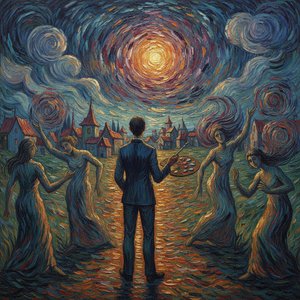
Beyond the Light: Capturing Emotion Through the Expressive Soul of Post-Impressionism
Explore the profound emotional depth of Post-Impressionism. Discover how masters like Van Gogh and Cézanne moved beyond light to capture raw feeling through color and texture. A journey into art history for the true connoisseur.

Beyond the Light: Discovering the Soul and Emotional Depth of Post-Impressionism
Embark on a cultural journey through Post-Impressionism. Discover the profound emotional depth of masters like Van Gogh and Cézanne, exploring how they moved beyond light to capture the very soul of human experience through vibrant color and symbolic form.
Entdecken Sie Kunstwerke, die nach Themen, Stilen und Merkmalen sortiert sind.

