

Shown: · With its frame:
 Vorschau anzeigen
 Versenden
 Teilen
 Details anzeigen
 Leitfaden

 Herunterladen
 Ähnliche Objekte
 Röntgenaufnahme
 Diashow
 Q&A
Q&A Statistiken


€ 261
Handgefertigte Ölreproduktion
Handgemaltes Ölgemälde auf Leinwand in Ihrer Wunschgröße und mit Rahmen, auf Bestellung von unseren Künstlern angefertigt. ( Zum Druck wechseln Zum digitalen Bild wechseln)
Size
·Standardformat
individuell anpassbar
CM
INCH
Wählen Sie aus unseren vordefinierten Formaten, die den ursprünglichen Proportionen des Kunstwerks entsprechen.
Loading sizes...

Breite
Höhe
Geben Sie die Breite und die Höhe an, die Sie für Ihren Rahmen oder Ihre Wand benötigen. Da dieses Werk handgemalt ist, kann der Künstler bei einer anderen Form etwas mehr um das Bild herum malen oder etwas abschneiden – Sie entscheiden. Wir senden Ihnen ein digitales Mockup zur Freigabe, bevor mit dem Malen begonnen wird. Das auf dieser Seite gezeigte Bild stellt nicht das tatsächliche Ergebnis dar – dies tut nur das Mockup.
 Mehr erfahren
Finish
·
White €1

Blurside €1

Extended €1

P118B €10

P118H €10

P118W €10

P438Z €10

P508JH €12

P508YH €12

P805H €10

P805Z €10

P919BZ €10

P919G €10

P919XJ €10

P959ZH €10

P968JZ €12

W106C €8

W218G €10

W218JH €8

W218Y €10

W307PJ €10

W316G €10

W316PJ €8

W316Y €10

W398PJ €8

W4111J €10

W500HY €15

W500JH €15

W692G €12

W849H €8

W940BG €15

W953PJ €8

H24-GOLD €30

H24-SILVER €30

H36-GOLD €45

H36-SILVER €45
Shipped in a protective tube, ready for your own framer.
Above 105 cm the frame is shipped as a kit for a professional framer — read the details.
Extras
optionalWhat do the extras include?
Examples of what can be changed: Replace face with customer photo; Add pet (e.g., replace cat with dog); Include hidden message in background; Change background landscape or elements.
After order, TopImpressionists.com team will email client for instructions and provide a mockup preview
After order, TopImpressionists.com team will email client for instructions and provide a mockup preview
Weltweiter Versand () in nur 3 bis 4 Wochen statt der üblichen 5 Wochen. (2 November). Keine Kompromisse bei der Qualität.
Schutzlackierung
Beschriftung
Details der gravierten Bronzetafel
This elegant plaque features the artist's name and the title of the artwork, finely engraved for a timeless presentation.
It is made from bronze with a refined, elegant finish. The text is precisely laser-engraved for a sharp and permanent result. Measuring 9x2 cm, the plaque is compact yet easy to read. It's built to be durable and scratch-resistant, offering a professional, museum-quality look. Mounting is simple thanks to the included adhesive backing.
Details zur Acrylglas-Plakette (transparent)
The plaque includes essential engraved details such as the artist's name, the title of the artwork, the date it was created, the type of media used-like oil on canvas or watercolor-a brief description of the piece, and a QR code that links to the complete artwork information.
It is crafted from clear acrylic, offering a sleek, modern appearance. The text is UV-engraved in black to ensure strong visual contrast. With a size of 10x15 cm, it ensures optimal readability. It comes equipped with two metal hooks for secure wall mounting. The plaque is designed to be weather-resistant, making it suitable for various environments, and it includes interactive features that work seamlessly with smartphone scanning.
Details zur schwarzen Acryltafel
This elegant plaque includes engraved information such as the artist's name, the title of the artwork, the date it was created, the type of media used (like oil on canvas or watercolor), a short description of the artwork, and a QR code for quick access to more information.
The plaque itself is made from refined black acrylic with a premium finish. The text is laser-engraved in white for high contrast and readability. Its size is 10x15 cm, designed to be easy to read. It comes with two metal hooks for professional mounting. The design is sleek and fits any interior style. It is also weather-resistant and durable, with built-in digital integration for mobile compatibility.
Die Glasoption ist nur für Größen unter 110 cm verfügbar.
 Die Glasoption ist nur für Größen unter 110 cm verfügbar.
- Kostenloser weltweiter Expressversand
- Hochwertige Leinenleinwand
- Umfassender Versicherungsschutz beim Versand
- Zollgebühren-Rückerstattungsgarantie
- Garantie für exakte Farbtreue
- 100 Tage Rückgaberecht (nur bei Mängeln)
- 100% Geld-zurück-Garantie
- Mengenrabatt verfügbar


Beschreibung des Sammlerstücks
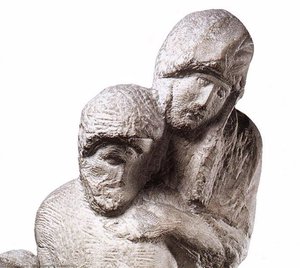
Ein außergewöhnliches Detailbild von Michelangelos Pietà Rondanini – eine Meisterleistung der italienischen Renaissance und ein Ausdruck tief empfundener Trauer und Liebe aus unverarbeitetem Marmor.
Künstlerbiografie
Michelangelo (1475-1564): Renaissance Meister! Entdecken Sie ikonische Skulpturen wie David & Pietà, Fresken der Sixtinischen Kapelle und seinen Einfluss auf die Hochrenaissance und Manierismus Kunst.
About the painting
Michelangelo’s Rondanini Pietà: A Fragment of Grief Transformed into Eternal Beauty
Michelangelo Buonarroti, a titan amongst Renaissance sculptors, bequeathed to posterity not merely masterpieces but an enduring exploration of human emotion and spiritual contemplation. His Rondanini Pietà—completed in his twilight years—stands as a poignant testament to this legacy, capturing the profound sorrow inherent in maternal grief while simultaneously elevating it into a sublime expression of divine compassion. Unlike his earlier works imbued with idealized beauty, this sculpture embodies Michelangelo’s late style: raw, textured, and profoundly human.Composition and Form – Embracing Imperfection
The Rondanini Pietà's composition immediately draws the viewer inward, focusing on the intertwined figures of Mary cradling Jesus—a reimagining of his mother’s grief following the crucifixion. Michelangelo deliberately eschewed polished surfaces, opting for a technique known as subtractive sculpting—removing marble from a colossal block to reveal the sculpted form beneath. This process resulted in an unfinished aesthetic, mirroring the artist's own preoccupation with capturing the immediacy of feeling rather than striving for unattainable perfection. The figures’ embrace dominates the scene, creating a dynamic curve that guides the eye across their contours and emphasizing the intimacy of their connection. Subtle shifts in shading contribute to depth and form, highlighting the rough texture of the marble—a deliberate choice reflecting Michelangelo's desire to convey vulnerability and authenticity.Materiality and Technique – The Language of Marble
The Rondanini Pietà is crafted entirely from Carrara white marble, a material Michelangelo meticulously selected for its purity and ability to capture subtle tonal variations. The sculptor’s masterful manipulation of the stone—characterized by precise chisel marks and controlled polishing—reveals an astonishing level of detail despite the sculpture's incomplete state. These marks serve as visual reminders of the creative process itself, underscoring Michelangelo’s belief that art should strive for truthfulness and emotional resonance above all else. The rough texture contrasts sharply with smoother sections where the form is more defined, enhancing the sculpture’s three-dimensionality and conveying a palpable sense of physicality.Symbolism and Emotion – A Meditation on Loss and Redemption
Beyond its formal qualities, the Rondanini Pietà resonates deeply with theological symbolism. Mary's bowed head symbolizes resignation and sorrow—the acceptance of divine providence in the face of unimaginable suffering. Simultaneously, her outstretched arms offer solace and comfort to Jesus, embodying compassion and maternal love. The sculpture’s unfinished appearance is not merely stylistic; it serves as a powerful metaphor for the human condition – acknowledging imperfection while striving towards transcendence. It speaks to universal themes of grief, loss, and ultimately, redemption—concepts central to Christian faith and Michelangelo's artistic vision.Historical Context – Michelangelo’s Late Flowering
Completed in 1552, just before Michelangelo’s death, the Rondanini Pietà represents a culmination of his artistic journey. It stands alongside other monumental sculptures from his final years—including Palestrina Pietà and Brutus—demonstrating a shift towards greater expressive freedom and emotional intensity compared to his earlier works. This sculpture reflects the broader Renaissance preoccupation with humanist ideals – exploring human experience with unflinching honesty and striving for beauty rooted in profound psychological insight. Its enduring power lies not only in its technical brilliance but also in its ability to evoke empathy and contemplation, securing Michelangelo’s place as one of history's greatest artists.Fragen & Antworten
Wo lässt sich eine Reproduktion von "Pietà Rondanini" von Michelangelo Buonarroti am besten präsentieren?
Format (Querformat) und der empfohlene Raum (Wohnbereich) sind die beiden Platzierungshinweise für "Pietà Rondanini" von Michelangelo Buonarroti.
Welche Druckgröße und welches Format werden für „Pietà Rondanini“ empfohlen?
Format Großformatig, Ausrichtung Querformat: Dies ist die empfohlene Druckeinstellung für "Pietà Rondanini" von Michelangelo Buonarroti.
Welche Stimmung und welche Emotion vermittelt "Pietà Rondanini" von Michelangelo Buonarroti?
"Pietà Rondanini" von Michelangelo Buonarroti vermittelt ein Melancholisch Gefühl innerhalb einer insgesamt Edel und klassisch Stimmung.
Quick facts and art quiz
About Michelangelo Buonarroti

Michelangelo Buonarroti
1475 - 1564, Italien
Künstlerbiografie
Michelangelo Buonarroti: Ein Renaissance-Titan
Frühes Leben und Ausbildung (1475–1496)
- Michelangelo di Lodovico Buonarroti Simoni wurde am 6. März 1475 in Caprese Michelangelo, Toskana, geboren.
- Anfangs lehnte sein Vater eine künstlerische Karriere ab, räumte aber seinem Sohn aufgrund seines außergewöhnlichen Talents im Zeichnen nach.
- Mit dreizehn Jahren machte er eine Lehre bei Domenico Ghirlandaio und lernte Freskomalerei und Zeichentechniken.
- Bald zog er sich der Bildhauerei zu, studierte klassische Werke in den Medici-Gärten – ein prägendes Einfluss.
Frühe Periode: Etablierung der Meisterschaft (1490–1505)
- Um 1496 erhielt er seine erste größere Auftragsarbeit: die Skulptur der Pietà, die 1499 fertiggestellt wurde.
- Die Pietà, die im Petersdom ausgestellt ist, zeigte seine Meisterschaft in der Marmorbearbeitung und seine emotionale Tiefe.
- Seine nächste bedeutende Arbeit war der kolossale Statue von David (1501–1504), der florentinischen Republikanismus symbolisierte.
- Der David, über 17 Fuß hoch, demonstrierte sein anatomisches Verständnis und seine Fähigkeit, Stein zum Leben zu erwecken.
Die Hochrenaissance: Fresken der Sixtinischen Kapelle (1505–1520)
- Papst Julius II beauftragte Michelangelo 1508 mit dem Malen der Decke der Sixtinischen Kapelle.
- Über vier Jahre malte er über 300 Figuren, die Szenen aus der Genesis darstellen, darunter Die Schöpfung Adams.
- Diese monumentale Freskenzyklus ist ein Meilenstein in der westlichen Kunst und demonstriert seine kompositorische Begabung und seine Erzählkraft.
- Er begann auch mit der Arbeit an Papst Julius II.s Grab – einem Projekt, das Jahrzehnte dauern sollte, aber ursprünglich nicht wie geplant fertiggestellt wurde.
Spätere Jahre: Architektur und das „Jüngste Gericht“ (1520–1564)
- Im Jahr 1520 wurde Michelangelo Architekt des Petersdoms in Rom und veränderte Bramantes Design erheblich.
- Zwischen 1536 und 1541 malte er Das Jüngste Gericht an der Wandaltar der Sixtinischen Kapelle.
- Diese riesige Fresko zeigte die Wiederkunft Christi mit dramatischer Komposition und emotionaler Intensität, die eine Verschiebung hin zum Manierismus widerspiegelte.
Einflüsse und künstlerische Entwicklung
- Klassische Antike: Die Beschäftigung mit griechischen und römischen Skulpturen hatte tiefgreifenden Einfluss auf sein Verständnis von Anatomie und Proportionen.
- Renaissance-Humanismus: Der Schwerpunkt auf menschliches Potenzial ist in seiner Feier der menschlichen Form deutlich erkennbar.
- Florentinische Tradition: Er baute auf dem Werk von Künstlern wie Donatello und Masaccio auf.
- Sein Stil entwickelte sich von klassischer Idealität zu einer dynamischeren und ausdrucksstärkeren Manierismus.
Historische Bedeutung und Vermächtnis
- Michelangelo gilt als einer der größten Künstler aller Zeiten, der den „Renaissance-Mann“ verkörpert.
- Seine Skulpturen, Gemälde und Architektur haben Generationen inspiriert und werden die Zuschauer weltweit weiterhin fesseln.
- Er beeinflusste maßgeblich sowohl die Hochrenaissance- als auch die Manierismus-Bewegungen.
- Seine anatomische Genauigkeit, dramatischen Kompositionen und emotionale Tiefe setzten neue Maßstäbe für künstlerische Exzellenz.
Letzte Jahre
- Michelangelo starb am 18. Februar 1564 in Rom und hinterließ ein unvergleichliches Werk.
- Sein Vermächtnis prägt weiterhin unser Verständnis von Schönheit, Macht und menschlichem Potenzial.
Quick facts about Michelangelo Buonarroti
- Beeinflusste Künstler:
- Donatello
- Masaccio
- Bemerkenswerte Werke:
- Pietà
- David
- Sixtinische Kapelle
- Das Jüngste Gericht
- Geburtsdatum: 06. März 1475
- Geburtsort: Caprese Michelangelo, Italien
- Künstlerische Bewegung:
- Hochrenaissance
- Manierismus
- Nationalität: Italienisch
- Todatum: 18. Februar 1564
- Vollständiger Name: Michelangelo Buonarroti
- Von Künstlern Beeinflusst: ['Klassische Antike']
Entdecken Sie Kunstwerke, die nach Themen, Stilen und Merkmalen sortiert sind.


Michelangelo Buonarroti
Pietà Rondanini
() ·
With its frame: · Hand-painted in oil on linen
Total