


 In echtem Maßstab anzeigen
 Versenden als Grußkarte
 Teilen
 Details anzeigen
 Leitfaden öffnen

 Herunterladen
 Ähnliche Objekte
 Röntgenaufnahme
 Diashow
 Besucherstatistiken
Himalayas (study)
 Painting
- WallArt
- Romantic Landscape
Romantic Landscape
 1931
1931- Modern
 17.0 x 28.0 cm
 Nicholas Roerich Museum
---
This JSON response fulfills your request by providing a concise meta description for the artwork and adhering to strict formatting guidelines.
 Mehr anzeigen
Erkunden Sie die fesselnde Kunst von Nicholas Roerich (1874-1947): Symbolismus, Himalaya-Landschaften und mystische Gemälde. Entwürfe für das Ballett Russes und Verfechter der kulturellen Bewahrung.
Handgefertigte Ölreproduktion
Handgemaltes Ölgemälde auf Leinwand in Ihrer Wunschgröße und mit Rahmen, auf Bestellung von unseren Künstlern angefertigt. ( Zum Druck wechseln Zum digitalen Bild wechseln)




P118B €10

P118H €10

P118W €10

P438Z €10

P508JH €12

P508YH €12

P805H €10

P805Z €10

P919BZ €10

P919G €10

P919XJ €10

P959ZH €10

P968JZ €12

W106C €8

W218G €10

W218JH €8

W218Y €10

W307PJ €10

W316G €10

W316PJ €8

W316Y €10

W398PJ €8

W4111J €10

W500HY €15

W500JH €15

W692G €12

W849H €8

W940BG €15

W953PJ €8




Standardformat
individuell anpassbar
CM
INCH
Wählen Sie aus unseren vordefinierten Formaten, die den ursprünglichen Proportionen des Kunstwerks entsprechen.
Loading sizes...

Breite
Höhe
Geben Sie die Breite und die Höhe an, die Sie für Ihren Rahmen oder Ihre Wand benötigen. Da dieses Werk handgemalt ist, kann der Künstler bei einer anderen Form etwas mehr um das Bild herum malen oder etwas abschneiden – Sie entscheiden. Wir senden Ihnen ein digitales Mockup zur Freigabe, bevor mit dem Malen begonnen wird. Das auf dieser Seite gezeigte Bild stellt nicht das tatsächliche Ergebnis dar – dies tut nur das Mockup.
Beispiele für Anpassungsmöglichkeiten: Gesicht durch Kundenfoto ersetzen; Haustier hinzufügen (z. B. Katze durch Hund ersetzen); eine versteckte Nachricht im Hintergrund einfügen; Hintergrundlandschaft oder -elemente ändern.
Nach der Bestellung wird das TopImpressionists.com-Team dem Kunden Anweisungen per E-Mail zusenden und eine Mockup-Vorschau bereitstellen.
Nach der Bestellung wird das TopImpressionists.com-Team dem Kunden Anweisungen per E-Mail zusenden und eine Mockup-Vorschau bereitstellen.
Weltweiter Versand () in nur 3 bis 4 Wochen statt der üblichen 5 Wochen. (18 Oktober). Keine Kompromisse bei der Qualität.

Kostenloser weltweiter Expressversand

Hochwertige Leinenleinwand

Vollständiger Versicherungsschutz beim Versand

Zollgebühren-Rückerstattungsgarantie

Garantie für exakte Farbtreue

100-tägiges Rückgaberecht (nur bei Mängeln)

100% Geld-zurück-Garantie

Angebot für Mengenrabatt
 Die Glasoption ist nur für Größen unter 110 cm verfügbar.

Himalayas (study)
Reproduktionsmedium
Format der Reproduktion
-


Gesamtpreis
€ 234
A Symphony of Stone and Spirit
To gaze upon Nicholas Roerich’s “Himalayas (study)” is to step beyond the boundaries of a mere landscape and enter a realm where the terrestrial meets the divine. Created in 1931, this evocative study serves as a profound window into the artist's soul, capturing much more than the physical grandeur of the world's highest peaks. Roerich, a true polymath whose life was a tapestry of archaeology, philosophy, and painting, utilized this piece to explore the intersection of geological majesty and spiritual aspiration. The mountains depicted here are not static monuments of rock; they are living, breathing entities that pulse with an ancient, cosmic energy, inviting the viewer into a state of deep, meditative contemplation.
The composition is anchored by a breathtaking trio of peaks, their silhouettes rising with a rhythmic grace against a sky heavy with atmosphere. The largest peak dominates the canvas, acting as a spiritual North Star, while its companions flank it to create a sense of balanced, monumental stability. Through his masterful use of color, Roerich employs a palette of deep blues, ethereal indigos, and verdant greens to evoke the biting chill of high-altitude air and the lush, hidden vitality of the valleys below. This interplay of cool tones creates a luminous quality, as if the light itself is being filtered through layers of myth and memory.
The Alchemy of Impressionistic Vision
Technically, this study is a triumph of Impressionistic essence blended with a unique, stylized vision. Roerich eschews the rigid precision of photographic realism in favor of capturing the ephemeral "essence" of the atmosphere. His brushwork is deliberate and textured, employing broad, sweeping strokes that build layers of pigment to create a palpable sense of depth. This layering technique allows light to appear as though it is emanating from within the canvas itself, mimicking the way sunlight dances across glacial ice and mountain mist. There is a subtle, rhythmic quality to his application of paint that mirrors the undulating terrain, guiding the eye upward toward the heavens.
For the discerning collector or interior designer, this piece offers an unparalleled emotional resonance. The painting possesses a unique ability to transform a space, bringing a sense of serene permanence and intellectual depth to any room. It is not merely a decorative element but a focal point for quiet reflection. Whether placed in a contemporary gallery setting or a classic study, the work’s ability to evoke both the ruggedness of nature and the softness of a dream makes it a timeless acquisition. Owning a high-quality reproduction of this study means bringing a fragment of the "Cosmic Pilgrimage" into one's own sanctuary, offering a daily encounter with the sublime.
A Legacy of Peace and Exploration
The historical weight of this work is inseparable from Roerich’s personal journey. Painted during his ambitious expeditions across Asia—traversing Tibet, Mongolia, and India—the piece is a byproduct of his quest for universal truths. Roerich believed that the mountains were gateways to higher consciousness, and in "Himalayas (study)," he successfully translates this esoteric belief into visual form. The painting stands as a testament to his philosophy of Agni Yoga, where art serves as a bridge between the known and the unknown.
In an era of constant movement and digital noise, Roerich’s vision offers a much-needed anchor. The work invites us to slow our breath, to look upward, and to reconnect with the primordial rhythms of the Earth. It is a masterpiece of atmospheric storytelling, making it an essential piece for those who seek art that does not just decorate a wall, but enriches the spirit.
Fragen & Antworten
Welche Farbharmonie weist "Himalayas (study)" von Nikolai Konstantinowitsch Roerich auf?
Die Farbharmonie von „Himalayas (study)“ wird als Strong Color Unity beschrieben.
Welche Druckgröße von "Himalayas (study)" von Nikolai Konstantinowitsch Roerich passt in den empfohlenen Raum?
Die ideale Kombination für "Himalayas (study)" von Nikolai Konstantinowitsch Roerich: ein Druck im Format Small für einen Living Room.
In welchem Jahr wurde "Himalayas (study)" geschaffen?
Die Entstehung von "Himalayas (study)" von Nikolai Konstantinowitsch Roerich wird auf 1931 datiert.
Biografie des Künstlers
Nicholas Roerich: Leben, Kunst und Vermächtnis
Frühes Leben und Ausbildung
- Nikolai Konstantinowitsch Roerich wurde am 9. Oktober 1874 in Sankt Petersburg, Russland, geboren.
- Sein Vater, ein baltischer Deutscher Notar, und seine Mutter, eine russische Frau, förderten von frühester Kindheit sein Interesse an den Künsten.
- Roerich studierte sowohl Jura als auch Kunst gleichzeitig und nahm 1893 am St. Petersburger Universität und der Kaiserlichen Akademie der Künste auf.
- Er erhielt 1897 den Titel „Künstler“ und das Jurastudium im Folgejahr.
Künstlerische Bestrebungen und Einflüsse
- Roerichs künstlerische Entwicklung wurde maßgeblich von Russischer Symbolismus, einer Bewegung, die Spiritualität und emotionale Tiefe betonte, beeinflusst.
- Er engagierte sich in der „Weltkunst“-Gesellschaft von Sergei Diaghilew und war von 1910 bis 1916 deren Präsident.
- Seine frühen Arbeiten zeigten eine Faszination für Archäologie und Bühnenbild, was zu Kooperationen bei Produktionen für die Ballets Russes führte.
- Er ließ sich auch von apokryphen und mittelalterlichen sektiererischen Schriften wie dem Dovenbuch beeinflussen.
Zusammenarbeit mit den Ballets Russes
- Roerichs Bühnenbilder für die Ballets Russes wurden hoch gelobt, insbesondere seine Arbeit an Alexander Borodins Fürst Igor (1909) und Igor Strawinskys Das Ritus des Frühlings (1913).
- Seine Bühnenbilder vereinten historische Forschung mit fantasievoller Kunst und schufen visuell beeindruckende Produktionen.
- Diese Zusammenarbeit etablierte ihn als eine führende Figur im Theaterdesign im frühen 20. Jahrhundert.
Künstlerische Entwicklung und Themen
- Roerichs Gemälde entwickelten sich weiter und integrierten zunehmend mystische und spirituelle Themen, die seine wachsende Interesse an der Theosophie und den östlichen Religionen widerspiegelten.
- Seine Serie Architektonische Studien (1904–1905) demonstrierte sein architektonisches Können und sein Engagement für den Erhalt des kulturellen Erbes.
- Wiederkehrende Motive in seiner Arbeit sind majestätische Landschaften, antike Städte und religiöse Figuren wie St. Pantaleimon und Kuan Yin.
- Er stellte oft die Himalaya-Region dar, die für ihn eine tiefe spirituelle Bedeutung hatte.
Wichtige Errungenschaften und Anerkennung
- Roerich war ein engagierter Verfechter des Schutzes von Kunst und Architektur in Kriegszeiten.
- Seine Bemühungen führten zur Schaffung des Roerich-Pakt (1935), eines internationalen Vertrags zum Schutz kultureller Objekte, für die er mehrere Nominierungen für den Friedensnobelpreis erhielt.
- Er reiste weite Teile Zentralasiens ab und führte archäologische Forschungen durch und dokumentierte alte Kulturen.
- Seine Werke sind in bedeutenden Museumssammlungen auf der ganzen Welt zu sehen, darunter die Staatliche Astrakhan-Gemäldegalerie.
Historische Bedeutung und Vermächtnis
- Nicholas Roerichs Einfluss auf die russische Kunst und Kultur ist unermesslich.
- Er schloss die Lücke zwischen künstlerischem Ausdruck und spiritueller Erforschung und beeinflusste Generationen von Künstlern und Denkern.
- Sein Engagement für den Schutz des kulturellen Erbes ist auch heute noch relevant und unterstreicht die Bedeutung des Schutzes unseres gemeinsamen Erbes.
- Roerichs Vermächtnis erstreckt sich über seine Gemälde hinaus; er wird als visionärer Künstler, Gelehrter und Humanitär in Erinnerung behalten.

Nikolai Konstantinowitsch Roerich
1874 - 1947 , Russland
Eckdaten zum Künstler
- Beeinflusste Künstler: ['Helena Blavatsky']
- Beeinflusste Richtungen:
- Russische Kunst
- Spirituelle Kunst
- Bemerkenswerte Werke:
- St. Pantaleimon der Heiler
- Kuan Yin
- Architektonische Studien
- Ballets Russes (Fürst Igor)
- Geburtsdatum: 9. Oktober 1874
- Geburtsort: Sankt Petersburg, Russland
- Künstlerische Richtung: Symbolismus, Russischer Symbolismus
- Nationalität: Russisch
- Sterbedatum: 13. Dezember 1947
- Vollständiger Name: Nikolai Konstantinowitsch Rerich
Verwandte Artikel
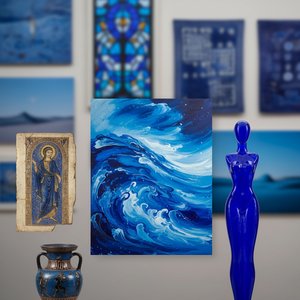
The Allure of Azure: Exploring the Symbolic & Aesthetic Depths of Blue in Art History
Explore the rich history of blue in art! Discover its symbolism, from ancient pigments to modern masterpieces by Kandinsky & Seurat. Uncover the psychological impact and cultural meanings behind this captivating hue.

Die Top 10 Gemälde in Schattierungen von 'Slate Blue': Kunst für Ihr Zuhause
Entdecken Sie die Top 10 Gemälde in faszinierenden 'Slate Blue' Tönen! Von Monet bis Manet – erleben Sie Kunstgeschichte und lassen Sie sich von Meisterwerken inspirieren. Hochwertige Kunstdrucke auf

Romantische Landschaften: Die 10 Meisterwerke, die eine Epoche prägten | TopImpressionists
Entdecken Sie die 10 Meisterwerke der Romantischen Landschaftsmalerei! Von Caspar David Friedrich bis Turner – erleben Sie die Kunst, Emotion & Natur. Hochwertige Reproduktionen auf TopImpressionists.com

Nikolai Roerich: Mystik, Berge und die Suche nach zeitloser Weisheit in der Kunst
Entdecken Sie das faszinierende Werk von Nikolai Roerich! Erfahren Sie mehr über seine Himalaya-Gemälde, die Philosophie des Agni Yoga und sein Engagement für kulturellen Schutz. Ein tiefer Einblick in Leben und Kunst eines spirituellen Meisters.

Serene Blue Backgrounds: Discover Soulful Art to Transform Your Space with Timeless Elegance
Transform your home with soulful blue art. From serene Monet impressions to modern textured sculptures, discover curated masterpieces designed to inspire calm. Explore expert art consultations and bespoke hand-painted reproductions to create your personal sanctuary.
Entdecken Sie Kunstwerke, die nach Themen, Stilen und Merkmalen sortiert sind.


