

 Vorschau anzeigen
 Versenden
 Teilen
 Details anzeigen
 Leitfaden

 Herunterladen
 Ähnliche Objekte
 Röntgenaufnahme
 Diashow
 Fragen & Antworten
 Statistiken
Still Life mit einer Suppentruhe

- 65.0 x 815.0 cm


Paul Cézannes Meisterwerk 'Still Life mit einer Suppentruhe' (1884). Entdecken Sie die innovative Post-Impressionismus-Malerei und die Farbgebung dieses ikonischen Kunstwerks im Musée d’Orsay.
 Weiterlesen
Erkunden Sie die revolutionäre Kunst von Paul Cézanne (1839–1906), einem Postimpressionisten, der Impressionismus und Kubismus miteinander verband. Entdecken Sie seine geometrischen Formen, seine einzigartigen Pinselstriche, Stilllebenmalereien und seinen bleibenden Einfluss auf die moderne Kunst. #Cézanne #PostImpressionismus
Giclée / Kunstdruck
Giclée- oder Leinwanddruck in Museumsqualität mit schneller Produktion und flexiblen Veredelungsoptionen. ( Handgemalte Reproduktion bestellen Zum digitalen Bild wechseln)




P118B €10

P118H €10

P118W €10

P438Z €10

P508JH €12

P508YH €12

P805H €10

P805Z €10

P919BZ €10

P919G €10

P919XJ €10

P959ZH €10

P968JZ €12

W106C €8

W218G €10

W218JH €8

W218Y €10

W307PJ €10

W316G €10

W316PJ €8

W316Y €10

W398PJ €8

W4111J €10

W500HY €15

W500JH €15

W692G €12

W849H €8

W940BG €15

W953PJ €8




Standardformat
individuell anpassbar
CM
INCH
Wählen Sie aus unseren vordefinierten Formaten, die den ursprünglichen Proportionen des Kunstwerks entsprechen.
Loading sizes...

Breite
Höhe
Geben Sie die benötigte Breite und Höhe an, damit der Druck perfekt in Ihren Rahmen oder an Ihre Wand passt. Ein Druck kann nur beschnitten, aber niemals größer als das Originalbild angefertigt werden; daher verliert ein Format mit anderen Proportionen einen Teil des Bildes. Wir senden Ihnen ein digitales Mockup zur Freigabe, bevor wir den Druck ausführen. Das auf dieser Seite gezeigte Bild zeigt nicht den tatsächlichen Beschnitt – dies ist nur im Mockup ersichtlich.
Weltweiter Versand () innerhalb von 2 Wochen statt der üblichen 4/5 Wochen. (5 November)

Kostenloser weltweiter Expressversand

Hochwertige Leinenleinwand

Umfassender Versicherungsschutz beim Versand

Zollgebühren-Rückerstattungsgarantie

Garantie für exakte Farbtreue

100 Tage Rückgaberecht (nur bei Mängeln)

100% Geld-zurück-Garantie

Mengenrabatt verfügbar
 Die Glasoption ist nur für Größen unter 110 cm verfügbar.

Still Life mit einer Suppentruhe
Giclée / Kunstdruck
Format der Reproduktion
-


Endpreis
€ 63
Paul Cézanne’s Still Life with Soup Tureen: A Window into Post-Impressionist Vision
Paul Cézanne's Still Life with Soup Tureen, painted in 1884 and now residing within the hallowed halls of the Musée d'Orsay in Paris, is far more than a simple arrangement of fruit and tableware. It’s a pivotal moment in art history—a declaration of independence from the constraints of academic tradition and a bold step toward the radical innovations that would define modern painting. This work isn’t merely depicting objects; it’s exploring their essence, their underlying structure, and their relationship to space and light with an unprecedented intensity.
Cézanne's approach during this period was revolutionary. He moved away from the fleeting impressions of Impressionism—the capturing of a momentary effect of light—and instead focused on distilling the essential forms of his subjects. The soup tureen, a commonplace object, becomes a vehicle for investigating geometry and volume. Notice how Cézanne doesn’t render the tureen as a smoothly polished surface reflecting light; rather, he breaks it down into planes, suggesting its three-dimensionality through carefully placed brushstrokes. This deliberate simplification of form anticipates Cubism by years, demonstrating his profound influence on the movement that would follow.
The Composition: A Symphony of Color and Form
The painting’s composition is deceptively simple yet remarkably dynamic. The central focus is undeniably the basket overflowing with apples—a vibrant cluster of crimson, yellow, and green that commands attention. These aren't idealized, perfect fruits; they possess a palpable sense of ripeness and texture, rendered through Cézanne’s confident brushwork. The oranges scattered around the table contribute to this richness, their warm hues contrasting beautifully with the cooler tones of the bowl and bottle. The placement of these elements—the basket dominating the center, the bowl and bottle anchoring the sides—creates a balanced yet subtly unsettling arrangement, as if the objects are poised on the brink of movement.
The inclusion of the bowl, partially obscured by shadow, hints at a hidden narrative – perhaps a suggestion of nourishment, domesticity, or even melancholy. The bottle, positioned to the right, adds another layer of visual interest, its form echoing the curves of the tureen and contributing to the overall sense of balance. Even the background—a muted wall with a glimpse of a framed picture—is treated with Cézanne’s characteristic simplification, serving primarily as a backdrop to emphasize the foreground elements.
A Post-Impressionist Masterpiece: Technique and Influence
Cézanne's technique is instantly recognizable. He employs bold, expressive brushstrokes – not blended smoothly like an Impressionist—but applied with deliberate force and direction. These strokes aren’t meant to mimic reality; they are used to build up form, create texture, and convey the artist’s subjective experience of the subject. The use of color is equally significant. Cézanne doesn't adhere to naturalistic hues but manipulates them to achieve a desired effect—intensifying colors, juxtaposing complementary tones, and creating a sense of depth through subtle variations in shade.
The influence of Cézanne’s work extends far beyond his own lifetime. Vincent van Gogh, deeply inspired by Cézanne's exploration of color and form, incorporated similar techniques into his own still life paintings, notably those created during his time in Paris. Similarly, Pablo Picasso acknowledged Cézanne as a key figure in the development of Cubism, recognizing his pioneering approach to representing three-dimensional space on a two-dimensional surface. Cézanne’s legacy lies not just in his individual masterpieces but also in his profound impact on subsequent generations of artists.
Owning a Piece of Art History: Reproductions by TopImpressionists
At TopImpressionists, we are dedicated to preserving and celebrating the beauty of iconic artworks like Cézanne’s Still Life with Soup Tureen. Our skilled artisans meticulously recreate this masterpiece using traditional oil painting techniques, ensuring that every detail—from the vibrant colors to the expressive brushstrokes—is faithfully reproduced. When you choose a TopImpressionists reproduction, you're not simply acquiring an image; you're bringing home a tangible piece of art history.
These reproductions offer a unique opportunity to experience the emotional impact and artistic brilliance of Cézanne’s work in your own space. Whether displayed in a grand salon or a cozy corner, this painting will undoubtedly become a focal point, sparking conversation and inspiring contemplation. Explore our collection today and discover the perfect way to add a touch of Post-Impressionist elegance to your home.
Fragen & Antworten
Was für ein Kunstwerk ist "Still Life mit einer Suppentruhe"?
"Still Life mit einer Suppentruhe" von Paul Cézanne wird als Wandkunst klassifiziert. Die Kategorie beschreibt die Art des Kunstwerks, um das es sich beim Original handelt.
Wie fügt sich „Still Life mit einer Suppentruhe“ in die Themen und den Stil von Paul Cézanne ein?
Innerhalb des Gesamtwerks von Paul Cézanne steht „Still Life mit einer Suppentruhe“ im Stil der Post-Impressionism und greift die Themen impressionism, gauguin, seurat, color theory, bridge to cubism, exploration of form, spatial innovation, modernity auf.
Für welche Verwendung wird "Still Life mit einer Suppentruhe" von Paul Cézanne empfohlen?
Eine Reproduktion von "Still Life mit einer Suppentruhe" von Paul Cézanne wird für Statement-Piece empfohlen. Dieser Vorschlag ergibt sich aus dem Motiv, der Stimmung und den Farben des Werkes.
Ähnliche Kunstwerke


Künstlerbiografie
frühes Leben und Einflüsse
Paul Cézanne, ein französischer Post-Impressionist-Maler, wurde am 19. Januar 1839 in Aix-en-Provence, Frankreich, geboren. Sein frühes Leben war geprägt von einer starken Verbindung zu seiner Familie’s Bankgeschäft, das ihm finanzielle Sicherheit verschaffte. Dies ermöglichte es ihm, sich ohne finanziellen Druck auf seine künstlerischen Bestrebungen zu konzentrieren. Les Nabis, Neo-Impressionismus und Symbolismus beeinflussten Cézannes frühe Arbeit, die sich durch seinen Schwerpunkt auf geometrische Formen und eine reduzierte Farbpalette auszeichnete. Sein Interesse an den Werken von Paul Gauguin und Georges Seurat festigte seinen Post-Impressionismusstil.Künstlerischer Stil und Techniken
Cézannes innovative Verwendung von Farbflächen und kleinen, sich wiederholenden Pinselstrichen schuf komplexe Felder, die seine intensive Beschäftigung mit den Motiven widerspiegelten. Sein oft explorativer Ansatz in der Kunst führte zur Entwicklung einer neuen bildlichen Sprache, die die zugrunde liegende Struktur von Objekten in einer Komposition betonte.- Schlüsselmerkmale:
- Geometrische Formen und Facetten
- Reduzierte Farbpalette
- Betonung der konstruktiven Essenz der physischen Welt
- Mehrere Perspektiven und Simultaneität
- Einflussreiche Werke:
- The Pond at Jas de Bouffan (1880)
- Portrait of Emile Zola (1866)
- Wald (1892)
- Museen mit Cézannes Werken:
- Musée Marmottan Monet in Paris, Frankreich
- The Museum of Fine Arts in Houston, Vereinigte Staaten
Vermächtnis und Einfluss
Cézannes bahnbrechende Arbeit im Post-Impressionismus ebnete den Weg für verschiedene Avantgarde-Bewegungen, darunter Kubismus, Fauvismus und Surrealismus. Sein Einfluss ist in den Werken von Pablo Picasso, Henri Matisse und Georges Braque zu sehen. Cézannes Vermächtnis inspiriert weiterhin Künstler und Kunstinteressierte gleichermaßen und festigt seinen Platz als eine zentrale Figur in der Geschichte der modernen Kunst.- Verwandte Kunstbewegungen:
- Betrachten Sie Cézannes Werke:

Paul Cézanne
1839 - 1906 , Frankreich
Kurzinfos
- Beeinflusste Künstler:
- Paul Gauguin
- Georges Seurat
- Bemerkenswerte Werke:
- Der Teich in Jas de Bouffan
- Porträt von Émile Zola
- Wald
- Mont Sainte-Victoire
- Geburtsdatum: 19. Januar 1839
- Geburtsort: Aix-en-Provence, Frankreich
- Künstlerische Bewegung: Postimpressionismus
- Nationalität: Französisch
- Sterbedatum: 1906
- Vollständiger Name: Paul Cézanne
- Von Ihm Beeinflusste Künstler:
- Pablo Picasso
- Henri Matisse
- Georges Braque
Ähnliche Artikel
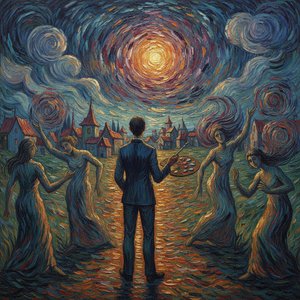
Beyond the Light: Capturing Emotion Through the Expressive Soul of Post-Impressionism
Explore the profound emotional depth of Post-Impressionism. Discover how masters like Van Gogh and Cézanne moved beyond light to capture raw feeling through color and texture. A journey into art history for the true connoisseur.
Entdecken Sie Kunstwerke, die nach Themen, Stilen und Merkmalen sortiert sind.


