


 In echtem Maßstab anzeigen
 Versenden als Grußkarte
 Teilen
 Details anzeigen
 Leitfaden öffnen

 Herunterladen
 Ähnliche Objekte
 Röntgenaufnahme
 Diashow
 Besucherstatistiken
The Arc Valley


Paul Cézanne’s watercolor "The Arc Valley" captures a tranquil mountainous landscape in the Impressionist style, showcasing his revolutionary vision and offering a beautiful opportunity to own a piece of art history.
 Mehr anzeigen
Erkunden Sie die revolutionäre Kunst von Paul Cézanne (1839–1906), einem Postimpressionisten, der Impressionismus und Kubismus miteinander verband. Entdecken Sie seine geometrischen Formen, seine einzigartigen Pinselstriche, Stilllebenmalereien und seinen bleibenden Einfluss auf die moderne Kunst. #Cézanne #PostImpressionismus
Giclée / Kunstdruck
Giclée- oder Leinwanddruck in Museumsqualität mit schneller Produktion und flexiblen Veredelungsoptionen. ( Handgemalte Reproduktion kaufen Zum digitalen Bild wechseln)




P118B $10

P118H $10

P118W $10

P438Z $10

P508JH $12

P508YH $12

P805H $10

P805Z $10

P919BZ $10

P919G $10

P919XJ $10

P959ZH $10

P968JZ $12

W106C $8

W218G $10

W218JH $8

W218Y $10

W307PJ $10

W316G $10

W316PJ $8

W316Y $10

W398PJ $8

W4111J $10

W500HY $15

W500JH $15

W692G $12

W849H $8

W940BG $15

W953PJ $8




Standardformat
individuell anpassbar
CM
INCH
Wählen Sie aus unseren vordefinierten Formaten, die den ursprünglichen Proportionen des Kunstwerks entsprechen.
Loading sizes...

Breite
Höhe
Sie können Ihre eigenen Maße eingeben, um ein bestimmtes Format oder einen speziellen Platz einzupassen. Wenn das von Ihnen gewählte Format nicht den Proportionen des Originalbildes entspricht, werden wir das Kunstwerk entweder beschneiden oder das Bild mit einem gespiegelten oder einfarbigen Rand erweitern. Ein digitaler Entwurf wird Ihnen zur Genehmigung zugesandt, bevor die Produktion beginnt.
Bitte beachten Sie, dass die Vorschau auf dem Bildschirm nicht den tatsächlichen Zuschnitt oder die Erweiterung widerspiegelt. Nur der Entwurf zeigt die endgültige Komposition präzise an.
Obwohl Sondermaße verfügbar sind, empfehlen wir die Auswahl eines Maßes aus der vordefinierten Liste, um die ursprünglichen Proportionen zu bewahren.
Weltweiter Versand () innerhalb von 2 Wochen statt der üblichen 4/5 Wochen. (25 September)

Kostenloser weltweiter Expressversand

Hochwertige Leinenleinwand

Vollständiger Versicherungsschutz beim Versand

Zollgebühren-Rückerstattungsgarantie

Garantie für exakte Farbtreue

100-tägiges Rückgaberecht (nur bei Mängeln)

100% Geld-zurück-Garantie

Angebot für Mengenrabatt
 Die Glasoption ist nur für Größen unter 110 cm verfügbar.

The Arc Valley
Giclée / Kunstdruck
Format der Reproduktion
-


Gesamtpreis
$ 69
A Moment Frozen in Time: Cézanne’s ‘The Arc Valley’
Paul Cézanne's “The Arc Valley,” painted in 1888, is more than just a depiction of the Provençal landscape; it’s a profound meditation on perception and the very nature of seeing. This watercolor captures a pivotal moment in Cézanne’s artistic evolution, marking his decisive shift away from Impressionistic fleeting impressions towards a rigorously constructed, almost geometric representation of reality. The scene unfolds within the Arc Valley near Aix-en-Provence, a region deeply resonant with Cézanne's life and artistic inspiration – a place he returned to repeatedly, seeking solace and subject matter for his increasingly radical explorations.
- Subject Matter: A quintessential Provençal landscape featuring rolling hills, a meandering river, and the distinctive silhouette of the Arc Valley’s namesake rock formation.
- Composition: Cézanne masterfully employs a pyramidal composition, a technique he would later refine in his still lifes, creating a sense of stability and monumental presence within the scene. The placement of figures – individuals enjoying the tranquility of the valley – adds a human element to this otherwise austere landscape.
The Language of Watercolor: Technique and Style
Cézanne’s mastery lies in his innovative use of watercolor, transforming it from a medium typically associated with delicate washes into a tool for constructing form. Notice the deliberate layering of color – thin glazes build up depth and volume, while broader strokes define the contours of the mountains and trees. The artist's meticulous attention to detail is evident in the rendering of textures: the rough bark of the trees, the smooth surface of the river stones, and the undulating grass of the hillside. This technique anticipates the formal concerns of Cubism, where objects are broken down into their constituent parts and reassembled on a flat plane.
The color palette is restrained yet evocative, dominated by earthy tones – ochres, browns, greens, and blues – that reflect the natural hues of the landscape. Cézanne’s use of light and shadow creates a strong sense of depth and atmosphere, drawing the viewer into the heart of the valley.
Historical Context and Artistic Significance
"The Arc Valley" was created during a period of intense artistic experimentation in France. Impressionism, with its focus on capturing fleeting moments of light and color, was beginning to wane, while new movements – Post-Impressionism and Proto-Cubism – were emerging. Cézanne’s work challenged the conventions of traditional landscape painting, paving the way for future generations of artists who sought to redefine our understanding of space and form. His influence can be seen in the works of Picasso, Braque, and countless others who followed.
Painted in 1888, a year before his death, this piece represents a crucial step in Cézanne’s artistic journey – a bold declaration of independence from established artistic norms and a commitment to exploring the fundamental principles of art itself. It is a testament to his unwavering belief that art should not merely imitate nature but rather reveal its underlying structure.
Emotional Impact and Collector's Value
"The Arc Valley" possesses a quiet, contemplative beauty that invites viewers to pause and reflect. The scene evokes a sense of serenity and timelessness, transporting us to the heart of the Provençal countryside. This watercolor is not simply a beautiful landscape; it’s a profound statement about art's ability to capture both the external world and our internal experience. As a significant work by one of the most influential artists of the 20th century, “The Arc Valley” represents a valuable addition to any discerning collection.
Ähnliche Kunstwerke


Biografie des Künstlers
frühes Leben und Einflüsse
Paul Cézanne, ein französischer Post-Impressionist-Maler, wurde am 19. Januar 1839 in Aix-en-Provence, Frankreich, geboren. Sein frühes Leben war geprägt von einer starken Verbindung zu seiner Familie’s Bankgeschäft, das ihm finanzielle Sicherheit verschaffte. Dies ermöglichte es ihm, sich ohne finanziellen Druck auf seine künstlerischen Bestrebungen zu konzentrieren. Les Nabis, Neo-Impressionismus und Symbolismus beeinflussten Cézannes frühe Arbeit, die sich durch seinen Schwerpunkt auf geometrische Formen und eine reduzierte Farbpalette auszeichnete. Sein Interesse an den Werken von Paul Gauguin und Georges Seurat festigte seinen Post-Impressionismusstil.Künstlerischer Stil und Techniken
Cézannes innovative Verwendung von Farbflächen und kleinen, sich wiederholenden Pinselstrichen schuf komplexe Felder, die seine intensive Beschäftigung mit den Motiven widerspiegelten. Sein oft explorativer Ansatz in der Kunst führte zur Entwicklung einer neuen bildlichen Sprache, die die zugrunde liegende Struktur von Objekten in einer Komposition betonte.- Schlüsselmerkmale:
- Geometrische Formen und Facetten
- Reduzierte Farbpalette
- Betonung der konstruktiven Essenz der physischen Welt
- Mehrere Perspektiven und Simultaneität
- Einflussreiche Werke:
- The Pond at Jas de Bouffan (1880)
- Portrait of Emile Zola (1866)
- Wald (1892)
- Museen mit Cézannes Werken:
- Musée Marmottan Monet in Paris, Frankreich
- The Museum of Fine Arts in Houston, Vereinigte Staaten
Vermächtnis und Einfluss
Cézannes bahnbrechende Arbeit im Post-Impressionismus ebnete den Weg für verschiedene Avantgarde-Bewegungen, darunter Kubismus, Fauvismus und Surrealismus. Sein Einfluss ist in den Werken von Pablo Picasso, Henri Matisse und Georges Braque zu sehen. Cézannes Vermächtnis inspiriert weiterhin Künstler und Kunstinteressierte gleichermaßen und festigt seinen Platz als eine zentrale Figur in der Geschichte der modernen Kunst.- Verwandte Kunstbewegungen:
- Betrachten Sie Cézannes Werke:

Paul Cézanne
1839 - 1906 , Frankreich
Eckdaten zum Künstler
- Beeinflusste Künstler:
- Paul Gauguin
- Georges Seurat
- Bemerkenswerte Werke:
- Der Teich in Jas de Bouffan
- Porträt von Émile Zola
- Wald
- Mont Sainte-Victoire
- Geburtsdatum: 19. Januar 1839
- Geburtsort: Aix-en-Provence, Frankreich
- Künstlerische Bewegung: Postimpressionismus
- Nationalität: Französisch
- Sterbedatum: 1906
- Vollständiger Name: Paul Cézanne
- Von Ihm Beeinflusste Künstler:
- Pablo Picasso
- Henri Matisse
- Georges Braque
Verwandte Artikel

The Beauty of Impermanence: Capturing Decay through Impressionist Eyes
Explore the profound beauty of impermanence through Impressionist and Post-Impressionist eyes. Discover how masters like Monet and Van Gogh captured fleeting light and the poetic essence of nature's transitions in our deep dive into art history and emotional landscapes.
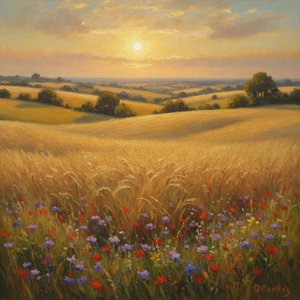
Golden Fields & Sun-Drenched Meadows: Capturing the Soul of Impressionist Landscapes
Immerse yourself in the luminous world of Impressionist landscapes. Discover how masters like Monet and Gauguin captured ephemeral light through plein air painting, and learn to bring the soul of sun-drenched meadows into your home with exquisite, hand-painted oil reproductions.

Beyond the Light: Capturing Raw Emotion and Subjective Vision in Post-Impressionist Landscapes
Explore the profound emotional depth of Post-Impressionist landscapes. Discover how masters like Van Gogh moved beyond light to capture raw human feeling through vibrant color and expressive texture in this expert art history retrospective.

Capturing Light: The Ethereal Beauty and Timeless Legacy of Watercolor Landscapes
Embark on a visual journey through the ethereal beauty of watercolor landscapes. Discover how Impressionist masters captured light and emotion, and learn to bring this timeless, luminous elegance into your home with expert art curation and hand-painted reproductions.

Capturing the Soul: The Most Emotionally Moving Impressionist and Post-Impressionist Masterpieces
Discover the profound emotional depth of Impressionist and Post-Impressionist masterpieces. Explore how legends like Monet, Van Gogh, and Gauguin captured light and soul through evocative landscapes and vibrant brushwork for a timeless connection to art history.
Entdecken Sie Kunstwerke, die nach Themen, Stilen und Merkmalen sortiert sind.


