


 In echtem Maßstab anzeigen
 Versenden als Grußkarte
 Teilen
 Details anzeigen
 Leitfaden öffnen

 Herunterladen
 Ähnliche Objekte
 Röntgenaufnahme
 Diashow
 Besucherstatistiken
Trees by the Water


Paul Cézanne’s Proto-Cubist watercolor ‘Trees by the Water,’ capturing tranquil lakeside serenity and monumental forms, exemplifies a revolutionary shift toward geometric abstraction—explore this iconic landscape masterpiece at WikiArt.org.
 Mehr anzeigen
Erkunden Sie die revolutionäre Kunst von Paul Cézanne (1839–1906), einem Postimpressionisten, der Impressionismus und Kubismus miteinander verband. Entdecken Sie seine geometrischen Formen, seine einzigartigen Pinselstriche, Stilllebenmalereien und seinen bleibenden Einfluss auf die moderne Kunst. #Cézanne #PostImpressionismus
Giclée / Kunstdruck
Giclée- oder Leinwanddruck in Museumsqualität mit schneller Produktion und flexiblen Veredelungsoptionen. ( Handgemalte Reproduktion kaufen Zum digitalen Bild wechseln)




P118B €10

P118H €10

P118W €10

P438Z €10

P508JH €12

P508YH €12

P805H €10

P805Z €10

P919BZ €10

P919G €10

P919XJ €10

P959ZH €10

P968JZ €12

W106C €8

W218G €10

W218JH €8

W218Y €10

W307PJ €10

W316G €10

W316PJ €8

W316Y €10

W398PJ €8

W4111J €10

W500HY €15

W500JH €15

W692G €12

W849H €8

W940BG €15

W953PJ €8




Standardformat
individuell anpassbar
CM
INCH
Wählen Sie aus unseren vordefinierten Formaten, die den ursprünglichen Proportionen des Kunstwerks entsprechen.
Loading sizes...

Breite
Höhe
Geben Sie die Breite und die Höhe an, die Sie benötigen, damit der Druck perfekt in Ihren Rahmen oder an Ihre Wand passt. Ein Druck kann nur beschnitten werden und niemals größer als das Originalbild gemacht werden; daher verliert ein Format mit einer anderen Proportion einen Teil des Bildes. Wir senden Ihnen ein digitales Mockup zur Freigabe, bevor wir den Druck ausführen. Das auf dieser Seite gezeigte Bild zeigt nicht den tatsächlichen Beschnitt – dies ist nur im Mockup ersichtlich.
Weltweiter Versand () innerhalb von 2 Wochen statt der üblichen 4/5 Wochen. (23 Oktober)

Kostenloser weltweiter Expressversand

Hochwertige Leinenleinwand

Vollständiger Versicherungsschutz beim Versand

Zollgebühren-Rückerstattungsgarantie

Garantie für exakte Farbtreue

100-tägiges Rückgaberecht (nur bei Mängeln)

100% Geld-zurück-Garantie

Angebot für Mengenrabatt
 Die Glasoption ist nur für Größen unter 110 cm verfügbar.

Trees by the Water
Giclée / Kunstdruck
Format der Reproduktion
-


Gesamtpreis
€ 61
A Pioneer of Fragmented Vision: Exploring Cézanne’s “Trees by the Water”
Paul Cézanne, born in Aix-en-Provence in 1839, represents a watershed moment in artistic history—a defiant rejection of Impressionism's fleeting optical sensations and an audacious embrace of Cubist principles. His journey wasn’t one of immediate acclaim; rather, it was a protracted process of experimentation and intellectual wrestling with the very nature of representation itself, culminating in a legacy that irrevocably reshaped modern art. Unlike his contemporaries who sought to capture the ephemeral beauty of a single instant, Cézanne relentlessly pursued an enduring vision—a distillation of observed reality into fundamental geometric forms. This dedication would earn him scorn from many critics of his time but cemented his place as one of the most influential artists of the late nineteenth century.- Subject Matter: Cézanne’s “Trees by the Water” depicts a tranquil lakeside scene dominated by towering trees—a motif recurrent throughout his oeuvre. These aren't idealized representations; instead, they are rendered with meticulous attention to detail, capturing the textures and contours of bark, foliage, and branches.
- Style: The painting firmly establishes Cézanne’s distinctive style – Proto-Cubism. While retaining Impressionistic color palettes—primarily muted greens and blues—he abandons traditional perspective and linear recession. Instead, Cézanne employs a technique known as “Analytical Cubism,” where forms are broken down into interlocking planes that simultaneously exist in multiple viewpoints.
- Technique: Cézanne’s masterful use of watercolor is remarkable. He builds up layers of pigment with delicate brushstrokes, creating a palpable sense of depth and luminosity despite the absence of conventional shading. The artist's deliberate manipulation of color—particularly the subtle gradations between hues—contributes significantly to the painting’s atmospheric quality.
Historical Context: Challenging Artistic Conventions
Cézanne emerged during a period of profound artistic upheaval, reacting against the dominant Impressionist aesthetic championed by Monet and Renoir. These artists prioritized capturing light and color as perceived by the eye—a method Cézanne considered insufficient to convey the essence of his subject matter. He argued passionately for a more truthful representation of reality, asserting that “the painter must see what he paints.” This conviction fueled his relentless pursuit of geometric abstraction, aligning him with the burgeoning intellectual currents of the time – notably Nietzsche’s philosophy of perspectivism and Bergson's concept of duration—which questioned the Cartesian framework underpinning Western thought.Symbolism & Emotional Resonance
Beyond its formal innovations, “Trees by the Water” possesses a subtle symbolic depth. The trees themselves represent permanence and resilience – enduring symbols of strength and stability amidst the transient beauty of nature. Cézanne’s deliberate simplification of form isn't merely stylistic; it aims to evoke a feeling of contemplative stillness—a yearning for connection with the natural world. The painting invites viewers to engage in an active process of interpretation, prompting them to consider how Cézanne’s vision transcends mere visual representation and speaks to fundamental questions about perception and experience.A Legacy Enduring Through Reproduction
Today, “Trees by the Water” stands as a testament to Cézanne's unwavering commitment to artistic experimentation and his profound influence on subsequent generations of artists. TopImpressionists.com offers exceptional hand-painted reproductions that faithfully capture the painting’s luminous color palette and intricate textural detail—allowing art lovers everywhere to experience Cézanne’s groundbreaking vision firsthand. Explore our curated collection and discover the beauty of original artwork, reimagined for contemporary spaces.Fragen & Antworten
Sind die Farben von "Trees by the Water" von Paul Cézanne gesättigt oder gedämpft?
Die Farben von "Trees by the Water" von Paul Cézanne weisen eine Subtle Color Sättigung auf. Die Sättigung beschreibt, wie lebhaft oder gedämpft die Farben sind.
Für welchen Raum wird "Trees by the Water" von Paul Cézanne empfohlen?
Der empfohlene Raum für "Trees by the Water" von Paul Cézanne ist ein Living Room. Dieser Vorschlag kann natürlich an Ihr Interieur angepasst werden.
Inwiefern lässt sich der Stil von "Trees by the Water" mit der Epoche seines Schöpfers in Verbindung bringen?
In "Trees by the Water" von Paul Cézanne trifft die Cubism-Strömung auf die Ära der – 19. Jahrhundert.
Ähnliche Kunstwerke


Biografie des Künstlers
frühes Leben und Einflüsse
Paul Cézanne, ein französischer Post-Impressionist-Maler, wurde am 19. Januar 1839 in Aix-en-Provence, Frankreich, geboren. Sein frühes Leben war geprägt von einer starken Verbindung zu seiner Familie’s Bankgeschäft, das ihm finanzielle Sicherheit verschaffte. Dies ermöglichte es ihm, sich ohne finanziellen Druck auf seine künstlerischen Bestrebungen zu konzentrieren. Les Nabis, Neo-Impressionismus und Symbolismus beeinflussten Cézannes frühe Arbeit, die sich durch seinen Schwerpunkt auf geometrische Formen und eine reduzierte Farbpalette auszeichnete. Sein Interesse an den Werken von Paul Gauguin und Georges Seurat festigte seinen Post-Impressionismusstil.Künstlerischer Stil und Techniken
Cézannes innovative Verwendung von Farbflächen und kleinen, sich wiederholenden Pinselstrichen schuf komplexe Felder, die seine intensive Beschäftigung mit den Motiven widerspiegelten. Sein oft explorativer Ansatz in der Kunst führte zur Entwicklung einer neuen bildlichen Sprache, die die zugrunde liegende Struktur von Objekten in einer Komposition betonte.- Schlüsselmerkmale:
- Geometrische Formen und Facetten
- Reduzierte Farbpalette
- Betonung der konstruktiven Essenz der physischen Welt
- Mehrere Perspektiven und Simultaneität
- Einflussreiche Werke:
- The Pond at Jas de Bouffan (1880)
- Portrait of Emile Zola (1866)
- Wald (1892)
- Museen mit Cézannes Werken:
- Musée Marmottan Monet in Paris, Frankreich
- The Museum of Fine Arts in Houston, Vereinigte Staaten
Vermächtnis und Einfluss
Cézannes bahnbrechende Arbeit im Post-Impressionismus ebnete den Weg für verschiedene Avantgarde-Bewegungen, darunter Kubismus, Fauvismus und Surrealismus. Sein Einfluss ist in den Werken von Pablo Picasso, Henri Matisse und Georges Braque zu sehen. Cézannes Vermächtnis inspiriert weiterhin Künstler und Kunstinteressierte gleichermaßen und festigt seinen Platz als eine zentrale Figur in der Geschichte der modernen Kunst.- Verwandte Kunstbewegungen:
- Betrachten Sie Cézannes Werke:

Paul Cézanne
1839 - 1906 , Frankreich
Eckdaten zum Künstler
- Beeinflusste Künstler:
- Paul Gauguin
- Georges Seurat
- Bemerkenswerte Werke:
- Der Teich in Jas de Bouffan
- Porträt von Émile Zola
- Wald
- Mont Sainte-Victoire
- Geburtsdatum: 19. Januar 1839
- Geburtsort: Aix-en-Provence, Frankreich
- Künstlerische Bewegung: Postimpressionismus
- Nationalität: Französisch
- Sterbedatum: 1906
- Vollständiger Name: Paul Cézanne
- Von Ihm Beeinflusste Künstler:
- Pablo Picasso
- Henri Matisse
- Georges Braque
Verwandte Artikel

The Beauty of Impermanence: Capturing Decay through Impressionist Eyes
Explore the profound beauty of impermanence through Impressionist and Post-Impressionist eyes. Discover how masters like Monet and Van Gogh captured fleeting light and the poetic essence of nature's transitions in our deep dive into art history and emotional landscapes.

Capturing the Soul: The Most Emotionally Moving Impressionist and Post-Impressionist Masterpieces
Discover the profound emotional depth of Impressionist and Post-Impressionist masterpieces. Explore how legends like Monet, Van Gogh, and Gauguin captured light and soul through evocative landscapes and vibrant brushwork for a timeless connection to art history.
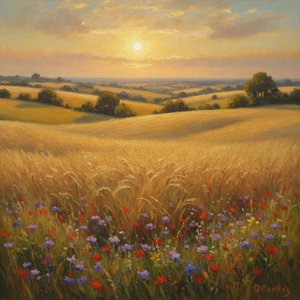
Golden Fields & Sun-Drenched Meadows: Capturing the Soul of Impressionist Landscapes
Immerse yourself in the luminous world of Impressionist landscapes. Discover how masters like Monet and Gauguin captured ephemeral light through plein air painting, and learn to bring the soul of sun-drenched meadows into your home with exquisite, hand-painted oil reproductions.

Capturing Light: The Ethereal Beauty and Timeless Legacy of Watercolor Landscapes
Embark on a visual journey through the ethereal beauty of watercolor landscapes. Discover how Impressionist masters captured light and emotion, and learn to bring this timeless, luminous elegance into your home with expert art curation and hand-painted reproductions.

Fragmented Beauty: Exploring the Soul and Geometric Depth of Cubist Landscapes
Embark on a cultural journey through the soul of Cubist landscapes. Discover how masters like Braque and Rivera redefined nature through geometric beauty, fragmented forms, and profound abstraction in this expert art-history exploration.
Entdecken Sie Kunstwerke, die nach Themen, Stilen und Merkmalen sortiert sind.


