Sammlerstück-Beschreibung
Colorful Architecture – A Dreamscape of Geometric Forms
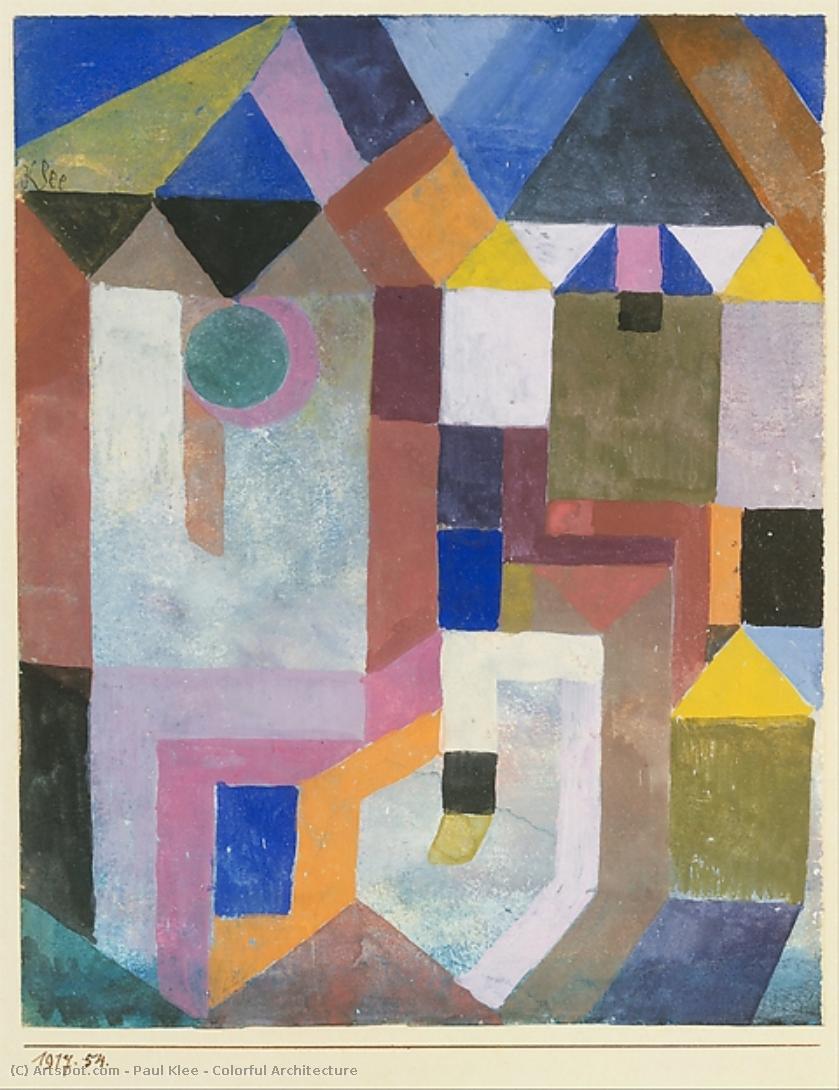
Paul Klee’s 1917 watercolor, “Colorful Architecture,” isn't merely an observation of a place; it’s a profound meditation—a dreamscape meticulously constructed from geometric forms that pulse with the anxieties and aspirations inherent in a world grappling with the tumultuous realities of World War I. Painted during this period of intense upheaval, while Klee served as a clerk at Gersthofen near Augsburg, he transcended simple representation, distilling urban experience into its most elemental components: color, shape, and a subtle suggestion of spatial depth. This artwork stands as a cornerstone of early 20th-century modernism, deeply indebted to the burgeoning movements of Cubism and Expressionism, yet undeniably Klee’s own—characterized by an exquisite balance between structure and whimsical spontaneity. He wasn't striving for photographic accuracy; rather, he sought to capture the underlying essence of the cityscape, its emotional resonance conveyed through a deliberately abstracted visual vocabulary. The relatively modest scale of the piece—just 26 x 20 cm—belies the expansive world it embodies, testament to Klee’s mastery of implication and suggestion.
Wartime Reflections and Seeds of Bauhaus Influence
The context surrounding “Colorful Architecture” is crucial to unlocking its significance. Klee's wartime service provided a necessary distance from the horrors unfolding across Europe, fueling his creative impulse. Painting *en plein air*—outdoors—became an indispensable refuge where he channeled his anxieties and observations into artistic expression. This palpable longing for tranquility, perhaps even defiant resistance against prevailing darkness, permeates the entire composition. The layering of watercolors, visible brushstrokes, and careful delineation of planes generate an ethereal quality, as if the city itself is shimmering with fragile hope. Notably, though painted before his formal affiliation with the Bauhaus school, the foundational principles of that influential institution—geometric abstraction, form exploration, and color theory—are already subtly foreshadowed here. Klee’s pioneering approach to visual language anticipates the Bauhaus curriculum and its enduring legacy in shaping modern art education. He wasn't replicating reality; he was interrogating it, distilling its core into a harmonious arrangement of shapes and hues.
Beyond Brick and Mortar: Symbolism and Emotional Resonance
The artwork’s allure extends far beyond its formal characteristics; it invites contemplation on deeper symbolic levels. The inclusion of a verdant moon alongside its mauve crescent—a deliberate departure from realistic depiction—introduces elements of fantasy and dreamlike quality that disrupt any purely architectural reading. These celestial anomalies serve as potent metaphors, hinting at realms beyond the tangible and resonating with unspoken emotions. “Colorful Architecture” embodies a captivating duality: a sense of order imposed by rigid geometry juxtaposed against the playful ambiguity created by vibrant colors and abstracted forms. It’s akin to musical composition—each element contributing to a unified whole that communicates on an intuitive level. Klee himself frequently articulated this belief, stating, “I want to express what I see, but not how I see it.”
A Versatile Masterpiece for Contemporary Spaces
For collectors and interior designers alike, “Colorful Architecture” represents an opportunity to acquire a piece of artistic history—a work by an artist whose influence continues to reverberate today. Its diminutive size lends itself beautifully to smaller interiors, injecting a touch of sophisticated abstraction without overwhelming the surrounding décor. A high-quality reproduction would serve as a striking focal point, sparking conversation and prompting viewers to consider the complexities of human experience within a deceptively simple visual framework. The artwork’s harmonious blend of color and form complements both mid-century modern and contemporary aesthetics equally well—a testament to Klee's enduring genius and his ability to distill profound ideas into an unforgettable image.


 Vorschau anzeigen
 Handgemalte Reproduktion bestellen
 Versenden
 Teilen
 Details anzeigen

 Herunterladen
 Ähnliche Objekte
 Röntgenaufnahme
 Diashow


 Weiterlesen






































 Die Glasoption ist nur für Größen unter 110 cm verfügbar.



