

 Vorschau anzeigen
 Versenden
 Teilen
 Details anzeigen
 Leitfaden

 Herunterladen
 Ähnliche Objekte
 Röntgenaufnahme
 Diashow
 Q&A
Q&A Statistiken
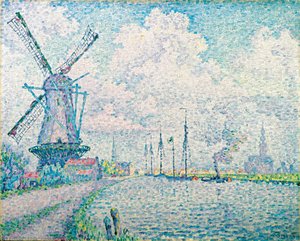
Dutch Mill at Edam

- 73.0 x 92.0 cm


A serene Neo-Impressionist view of a windmill and tranquil boats by Paul Signac captures the luminous essence of 1898 through masterful Pointillism, inviting you to bring this peaceful Dutch scene into your collection.
 Weiterlesen
Entdecken Sie Paul Signac (1863-1935), den Neo-Impressionisten! Erleben Sie seine Pointillismus-Technik, Küstenlandschaften & Einfluss auf Fauvismus. Kunstwerke bei TopImpressionists!
Giclée / Kunstdruck
Giclée- oder Leinwanddruck in Museumsqualität mit schneller Produktion und flexiblen Veredelungsoptionen. ( Handgemalte Reproduktion bestellen Zum digitalen Bild wechseln)




P118B €10

P118H €10

P118W €10

P438Z €10

P508JH €12

P508YH €12

P805H €10

P805Z €10

P919BZ €10

P919G €10

P919XJ €10

P959ZH €10

P968JZ €12

W106C €8

W218G €10

W218JH €8

W218Y €10

W307PJ €10

W316G €10

W316PJ €8

W316Y €10

W398PJ €8

W4111J €10

W500HY €15

W500JH €15

W692G €12

W849H €8

W940BG €15

W953PJ €8




Standardformat
individuell anpassbar
CM
INCH
Wählen Sie aus unseren vordefinierten Formaten, die den ursprünglichen Proportionen des Kunstwerks entsprechen.
Loading sizes...

Breite
Höhe
Geben Sie die benötigte Breite und Höhe an, damit der Druck perfekt in Ihren Rahmen oder an Ihre Wand passt. Ein Druck kann nur beschnitten, aber niemals größer als das Originalbild angefertigt werden; daher verliert ein Format mit anderen Proportionen einen Teil des Bildes. Wir senden Ihnen ein digitales Mockup zur Freigabe, bevor wir den Druck ausführen. Das auf dieser Seite gezeigte Bild zeigt nicht den tatsächlichen Beschnitt – dies ist nur im Mockup ersichtlich.
Weltweiter Versand () innerhalb von 2 Wochen statt der üblichen 4/5 Wochen. (31 Oktober)

Kostenloser weltweiter Expressversand

Hochwertige Leinenleinwand

Umfassender Versicherungsschutz beim Versand

Zollgebühren-Rückerstattungsgarantie

Garantie für exakte Farbtreue

100 Tage Rückgaberecht (nur bei Mängeln)

100% Geld-zurück-Garantie

Mengenrabatt verfügbar
 Die Glasoption ist nur für Größen unter 110 cm verfügbar.

Dutch Mill at Edam
Giclée / Kunstdruck
Format der Reproduktion
-


Endpreis
€ 61
A Symphony of Light and Color in Edam
In the quietude of the late nineteenth century, few landscapes capture the essence of tranquil maritime life as poignantly as Paul Signac’s Dutch Mill at Edam. Created in 1898, this masterpiece serves as a window into a world where time seems to slow, anchored by the majestic presence of a windmill that stands as a sentinel over the shimmering waters. The scene is far more than a mere depiction of a Dutch landscape; it is a meticulously orchestrated dance of light and atmosphere. As the eye wanders across the canvas, one encounters a serene arrangement of boats drifting upon the water, their forms softly integrated into the surrounding environment. A few solitary figures are scattered throughout the composition, adding a touch of human narrative to the vastness of the scene, suggesting a moment of quiet reflection or the rhythmic, peaceful labor of life by the canal.
The true soul of this painting lies in Signac’s mastery of Neo-Impressionism. Moving beyond the spontaneous brushstrokes of his predecessors, Signac employed the rigorous technique of Pointillism to achieve a scientific yet deeply emotional harmony. Rather than blending pigments on a palette, he applied tiny, distinct dots of pure, unadulterated color directly onto the canvas. This method relies on the viewer's eye to perform the final act of creation, optically mixing the vibrant hues to produce a luminosity that feels almost alive. In Dutch Mill at Edam, this technique allows the sunlight to appear as if it is vibrating against the sails of the mill and dancing upon the ripples of the water, creating a sense of depth and brilliance that traditional blending could never achieve.
A Timeless Addition to the Sophisticated Interior
For the discerning collector or interior designer, this reproduction offers much more than visual beauty; it provides an emotional anchor for a room. The painting’s palette—a sophisticated blend of soft blues, earthy tones, and luminous highlights—possesses a unique ability to evoke feelings of peace and stability. It is a piece that invites contemplation, making it an ideal centerpiece for a study, a quiet reading nook, or a grand living space where one wishes to introduce a sense of historical depth and classical elegance.
Integrating such a high-quality hand-painted reproduction into a modern decor scheme allows for a striking contrast between contemporary minimalism and the rich, textured heritage of the Post-Impressionist era. The structural rhythm of the windmill and the rhythmic application of color dots provide a sophisticated texture that complements both neutral palettes and more eclectic, colorful environments. To own this work is to possess a fragment of art history—a tribute to the scientific beauty of light and the enduring charm of the Dutch landscape, rendered with the precision and passion of a true master.
Fragen & Antworten
Was stellt "Dutch Mill at Edam" von Paul Signac dar und welche Stimmung vermittelt es?
"Dutch Mill at Edam" von Paul Signac verbindet windmill, boats, water, people, sails, sky mit einer Serene Atmosphäre.
Welche Atmosphäre verleiht "Dutch Mill at Edam" von Paul Signac einem Raum?
Mit seiner Serene Stimmung wird „Dutch Mill at Edam“ für ein Living Room empfohlen.
Wie intensiv sind die Farben von "Dutch Mill at Edam" von Paul Signac?
Die Farben in "Dutch Mill at Edam" von Paul Signac besitzen eine Balanced Intensität.
Ähnliche Kunstwerke




Künstlerbiografie
Frühe Jahre und Ausbildung
Paul Victor Jules Signac, ein französischer Neo-Impressionistischer Maler, wurde am 11. November 1863 in Paris geboren. Ursprünglich absolvierte er eine Ausbildung zum Architekten, entschied sich aber im Alter von 18 Jahren für die Malerei. Dieser Entschluss wurde durch eine Ausstellung der Werke von Claude Monet beeinflusst.Künstlerischer Stil und Einflüsse
Signacs Stil zeichnete sich durch die Verwendung kleiner Punkte reiner Farbe aus, die er nebeneinander stellte, um ein Gefühl für Tiefe und Licht zu erzeugen. Diese Technik, bekannt als Pointillismus, wurde in Zusammenarbeit mit Georges Seurat entwickelt. Signacs Arbeit wurde auch von seinen Reisen entlang der europäischen Küste beeinflusst, wo er die Schönheit von Hafenstädten in Aquarellen festhielt.Wichtige Werke und Verbindungen
* Boulevard de Clichy (1886): Ein postimpressionistisches Werk, das Signacs akribischen Stil zeigt. * Der rote Bojen, Saint-Tropez (1895): Ein lebhaftes marines Gemälde mit einer rot-orangenen Boje vor blauem Hintergrund. * Gründungsmitglied der Société des Artistes Indépendants, die jährliche Ausstellungen organisierte, die Trends in der frühen 20. Jahrhundert Kunst prägten.Vermächtnis und Einfluss
Signacs Arbeit hatte einen tiefgreifenden Einfluss auf die Entwicklung des Fauvismus und beeinflusste Künstler wie Henri Matisse und André Derain. Als Präsident der Société des Artistes Indépendants unterstützte Signac jüngere Künstler und stellte kontroverse Werke von den Fauves und Kubisten aus.- Erleben Sie Paul Signacs „Boulevard de Clichy 1886“ – eine ruhige Pointillist-Winterszene in Paris. Bewundern Sie seine kühle Farbpalette und zeitlose Schönheit. Hochwertige Reproduktionen erhältlich.
- Entdecken Sie Paul Signacs „Der Kiefernbaum in Saint-Tropez“, ein lebendiger Neo-Impressionistischer Meisterwerk! Erkunden Sie Pointillismus, mediterrane Schönheit und zeitlose Anziehungskraft. Perfekt für Kunstliebhaber und Sammler.
- Entdecken Sie Paul Signacs 'Frühstück (Die Speisekammer)' – ein lebendiger Neo-Impressionistischer Meisterwerk! Erkunden Sie Pointillismus, Belle Époque Charme und zeitlose Schönheit. Perfekt für Kunstsammler.
- Erleben Sie Signacs 'Der Leuchtturm, Saint-Tropez'! Dieses lebendige Postimpressionistenwerk fängt die Schönheit der französischen Küste mit dem schimmernden Licht und den Farben des Pointillismus ein.
- Entdecken Sie Gustav Klimts 'Schloss Kammer am Attersee'! Eine friedliche Symbolistische Landschaft mit leuchtenden Farben und geometrischen Mustern. Besorgen Sie sich heute eine handgemalte Ölmalerei Reproduktion!
Wichtige Daten
* 11. November 1863: Geburt in Paris * 1884: Mitbegründung der Société des Artistes Indépendants * 15. August 1935: Verstarb im Alter von 71 Jahren. Erleben Sie das künstlerische Genie von Paul Signac durch seine fesselnden Werke, die auf TopImpressionists.com erkundet werden können.
Paul Signac
1863 - 1935 , Frankreich
Kurzinfos
- Beeinflusste Künstler:
- Henri Matisse
- André Derain
- Bemerkenswerte Werke:
- Boulevard de Clichy (1886)
- Der rote Boje, Saint-Tropez
- Frühstück (Die Speisekammer)
- Einflussreiche Kunstrichtung: Fauvismus
- Geburtsdatum: 11. November 1863
- Geburtsort: Paris, Frankreich
- Künstlerische Bewegung: Neo-Impressionismus
- Nationalität: Französisch
- Sterbedatum: 15. August 1935
- Vollständiger Name: Paul Signac
Ähnliche Artikel

Golden Light & Dutch Skies: The Timeless Magic of Dutch Golden Age Landscapes
Discover the breathtaking beauty of Dutch Golden Age landscapes. Explore the mastery of light, chiaroscuro, and 17th-century realism through an expert art history lens, celebrating the enduring legacy of the Dutch Masters for discerning collectors and art lovers.

Mastering Light & Shadow: A Journey Through the Dutch Golden Age's Luminous Legacy
Embark on a cultural journey through the Dutch Golden Age. Explore the masterful interplay of light and shadow in 17th-century masterpieces, from Rembrandt to Vermeer, and discover how this era of profound realism continues to inspire fine art collectors today.
Entdecken Sie Kunstwerke, die nach Themen, Stilen und Merkmalen sortiert sind.


