
![Paisagem [landscape] — Pedro Weingärtner](/media/artworks/images-full/cf/4a/cf4a1f98af8d5aefdcb632c23c267a42.jpg)
 Vorschau anzeigen
 Versenden
 Teilen
 Details anzeigen
 Leitfaden

 Herunterladen
 Ähnliche Objekte
 Röntgenaufnahme
 Diashow
 Q&A
Q&A Statistiken
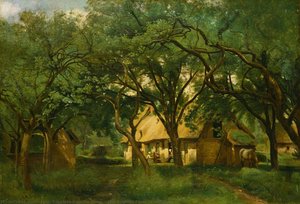
Paisagem [Landscape]

- 51.0 x 101.0 cm


A serene forest landscape featuring sunlit trees and quiet figures by Pedro Weingärtner, capturing a peaceful moment from 1900 that invites you to bring this piece of Brazilian realism into your collection.
 Weiterlesen
Pedro Weingärtner (1853-1929) war ein bedeutender brasilianischer Maler. Bekannt für seine realistischen Landschaften, mythologischen Szenen und Gaucho-Gemälde spiegelt sein Werk europäische Einflüsse und die brasilianische Identität wider.
Giclée / Kunstdruck
Giclée- oder Leinwanddruck in Museumsqualität mit schneller Produktion und flexiblen Veredelungsoptionen. ( Handgemalte Reproduktion bestellen Zum digitalen Bild wechseln)




P118B €10

P118H €10

P118W €10

P438Z €10

P508JH €12

P508YH €12

P805H €10

P805Z €10

P919BZ €10

P919G €10

P919XJ €10

P959ZH €10

P968JZ €12

W106C €8

W218G €10

W218JH €8

W218Y €10

W307PJ €10

W316G €10

W316PJ €8

W316Y €10

W398PJ €8

W4111J €10

W500HY €15

W500JH €15

W692G €12

W849H €8

W940BG €15

W953PJ €8




Standardformat
individuell anpassbar
CM
INCH
Wählen Sie aus unseren vordefinierten Formaten, die den ursprünglichen Proportionen des Kunstwerks entsprechen.
Loading sizes...

Breite
Höhe
Geben Sie die benötigte Breite und Höhe an, damit der Druck perfekt in Ihren Rahmen oder an Ihre Wand passt. Ein Druck kann nur beschnitten, aber niemals größer als das Originalbild angefertigt werden; daher verliert ein Format mit anderen Proportionen einen Teil des Bildes. Wir senden Ihnen ein digitales Mockup zur Freigabe, bevor wir den Druck ausführen. Das auf dieser Seite gezeigte Bild zeigt nicht den tatsächlichen Beschnitt – dies ist nur im Mockup ersichtlich.
Weltweiter Versand () innerhalb von 2 Wochen statt der üblichen 4/5 Wochen. (3 November)

Kostenloser weltweiter Expressversand

Hochwertige Leinenleinwand

Umfassender Versicherungsschutz beim Versand

Zollgebühren-Rückerstattungsgarantie

Garantie für exakte Farbtreue

100 Tage Rückgaberecht (nur bei Mängeln)

100% Geld-zurück-Garantie

Mengenrabatt verfügbar
 Die Glasoption ist nur für Größen unter 110 cm verfügbar.
![Paisagem [Landscape]](/static/images/topimpressionists/artworks/painting.a1e74a1cb7dc.png)
Paisagem [Landscape]
Giclée / Kunstdruck
Format der Reproduktion
-


Endpreis
€ 61
A Serene Encounter with Nature
In the quietude of Paisagem [Landscape], created in 1900 by the master Pedro Weingärtner, we are invited into a world where time seems to decelerate. This evocative work captures a sun-drenched moment within a lush forest, where light filters through a dense canopy to illuminate a tranquil clearing. At the heart of this composition sits a modest building, nestled harmoniously among the trees, serving as a silent witness to the passage of time. The scene is not merely a depiction of flora and architecture, but a carefully orchestrated stage where nature and humanity exist in a delicate, peaceful equilibrium. Scattered throughout the landscape are benches, inviting the viewer to mentally step into the frame and find a place of rest amidst the verdant surroundings.
The presence of two solitary figures—one positioned near the left periphery and another closer to the right—infuses the stillness with a gentle pulse of life. These figures do not dominate the landscape; rather, they are integrated into its rhythm, suggesting a profound connection between the human spirit and the natural world. Their placement creates a subtle narrative tension, a sense of shared experience within a vast, breathing ecosystem. For the collector or interior designer, this painting offers more than just visual beauty; it provides a window into a state of mindfulness, making it an ideal centerpiece for spaces dedicated to reflection, study, or quiet relaxation.
The Mastery of Light and Realism
Technically, Paisagem stands as a testament to Weingärtner’s rigorous academic training in the prestigious academies of Germany and France. His ability to manipulate light is nothing short of extraordinary; he employs a technique that allows sunlight to appear almost tactile, as it dances across the leaves and settles upon the forest floor. This mastery of chiaroscuro—the interplay of light and shadow—creates a sense of three-dimensional depth that draws the eye deep into the woodland thicket. The brushwork, while precise enough to maintain the integrity of the realistic style, possesses a soft, atmospheric quality that evokes the romanticism characteristic of his most celebrated works.
The color palette is a sophisticated arrangement of earthy greens, deep browns, and luminous golds, all working in concert to establish a warm, inviting atmosphere. This careful selection of tones ensures that the painting remains timeless, capable of complementing a wide variety of interior aesthetics, from classical traditionalism to more contemporary, organic modernism. To possess a reproduction of this work is to bring a piece of late 19th-century European academic excellence into a modern home, offering an enduring sense of prestige and tranquility.
A Legacy of Brazilian Impressionism
To understand the emotional weight of this landscape, one must consider the historical context of Pedro Weingärtner’s life. As a pioneer who bridged the gap between the rugged landscapes of his native Brazil and the refined academic traditions of Europe, his work carries a unique cultural duality. Paisagem embodies this synthesis—the structural discipline of the German school blended with a romantic sensibility that celebrates the ephemeral beauty of a single moment in time. It is a piece that speaks to the universal human desire for sanctuary.
For those seeking to curate an art collection that inspires peace and intellectual curiosity, this landscape serves as a foundational element. It does not shout for attention; instead, it whispers of ancient forests, quiet afternoons, and the eternal beauty of the natural world. Whether placed in a grand salon or a private library, the painting acts as an emotional anchor, grounding the surrounding space with its profound sense of serenity and historical depth.
Fragen & Antworten
Was stellt "Paisagem [Landscape]" dar und welche Atmosphäre vermittelt es?
"Paisagem [Landscape]" zeigt trees, forest, building, people, benches, landscape, daylight, und die eingefangene Stimmung ist Serene.
Gibt es einen Leitfaden für "Paisagem [Landscape]" von Pedro Weingärtner?
Der Leitfaden zu „Paisagem [Landscape]“ ist die Leitfaden-Seite des Kunstwerks – ein druckbares Infoblatt, das das Werk mit Bildunterschrift, Urhebervermerk und einer Identifikationstabelle (Künstler, Daten, Medium, Originalgröße, Sammlung) darstellt.
Für welches Format wird die Platzierung von „Paisagem [Landscape]“ im Format Panoramic empfohlen?
Das Format Panoramic von "Paisagem [Landscape]" von Pedro Weingärtner wird für ein Living Room empfohlen. Format und Raumgestaltung leiten gemeinsam die Platzierung einer Reproduktion.
Ähnliche Kunstwerke




Künstlerbiografie
Early Life and Artistic Beginnings
Pedro Weingärtner Weingaertner, a name now synonymous with Brazilian academic painting, was born on July 26, 1853, in Porto Alegre, the vibrant capital of Rio Grande do Sul. His origins were deeply rooted in German immigrant heritage – his father, Inácio Weingärtner, and mother, Angélica Schäfer, had both arrived in Brazil seeking new opportunities. This dual background profoundly shaped his artistic sensibility, blending European traditions with a distinctly Brazilian perspective. Early influences began to take root through his brother, Inácio Junior, who pursued a career as a lithographer, introducing young Pedro to the world of graphic arts and fostering an appreciation for meticulous detail and precise execution. While the exact details surrounding his earliest artistic training remain somewhat shrouded in anecdotal accounts, it’s believed that he received informal guidance from Delfim da Câmara, another local painter, further nurturing his nascent talent. At the age of 24, recognizing a profound calling, Weingärtner embarked on a transformative journey – a solitary voyage to Europe, fueled by an unwavering desire to hone his skills within established artistic institutions.Formal Training in Europe
Driven by ambition and a thirst for knowledge, Weingärtner’s formal artistic education commenced in 1878 at the Großherzoglich Badische Kunstschule (Grand Ducal Baden Art School) in Karlsruhe, Germany. This institution, renowned for its rigorous curriculum and emphasis on classical techniques, provided him with a solid foundation in drawing, painting, and composition. Under the tutelage of esteemed masters such as Ferdinand Keller, Theodor Poeckh, and Ernst Hildebrand, Weingärtner diligently absorbed the principles of academic art – mastering anatomical accuracy, perspective, and the skillful rendering of light and shadow. His studies extended further to Berlin in 1880, where he enrolled at the local academy under the guidance of Keller once more. This period marked a crucial stage in his artistic development, allowing him to refine his technical abilities and broaden his exposure to diverse artistic styles. In 1882, seeking new inspiration and opportunities, Weingärtner traveled to France, immersing himself in the vibrant art scene of Paris. He enrolled at the Académie Julian, benefiting from the instruction of Tony Robert-Fleury and William-Adolphe Bouguereau – two prominent figures in the French academic tradition. These experiences exposed him to a wider range of artistic approaches, enriching his own style and expanding his creative horizons.Artistic Style and Themes
Weingärtner’s artistic oeuvre is characterized by a compelling synthesis of realism and romanticism, creating works that resonate with both historical accuracy and emotional depth. His subjects frequently encompassed mythological scenes – a testament to his academic training and enduring fascination with the classical world – alongside evocative landscapes capturing the diverse beauty of Brazil's varied terrain. Equally significant were his genre paintings, particularly those depicting the gaucho—a quintessential figure from Rio Grande do Sul’s rural heritage. These works served as a poignant exploration of Brazilian identity, celebrating the traditions, customs, and spirit of this iconic folk type. While adhering to the conventions of academicism, Weingärtner's style possessed a distinctive quality – a subtle blend of meticulous detail with expressive brushwork that imbued his paintings with a palpable sense of life and atmosphere. His compositions often featured dramatic lighting, rich color palettes, and carefully rendered figures, creating visually arresting images that captivated viewers.Legacy and Collections
Pedro Weingärtner Weingaertner’s legacy is preserved through a collection of significant artworks housed in prominent museums and private collections across Brazil and beyond. The Museu de Arte do Rio Grande do Sul Ado Malagoli in Porto Alegre proudly displays several of his masterpieces, offering visitors an intimate glimpse into the artist's creative vision. Similarly, the Sérgio Sahione Fadel Private Collection Museum in Rio de Janeiro showcases a carefully curated selection of his paintings, highlighting their artistic merit and historical importance. His work is also found within notable collections internationally, including the Colección Andrés Blaisten in Mexico, alongside other esteemed Latin American artists. These institutions serve as vital repositories of Weingärtner’s artistic legacy, ensuring that his contributions to Brazilian art continue to be appreciated and studied for generations to come.Conclusion
Pedro Weingärtner Weingaertner's life and work stand as a compelling testament to the fusion of European influences and Brazilian identity within the realm of 19th-century art. From his humble beginnings in Porto Alegre to his international acclaim, he navigated a path marked by dedication, artistic exploration, and a profound connection to his homeland. Through his paintings—mythological narratives, breathtaking landscapes, and poignant depictions of gaucho life—Weingärtner left an indelible mark on the Brazilian art scene, inspiring countless artists and enriching the cultural landscape of Brazil. His legacy continues to resonate today, inviting viewers to engage with the beauty, complexity, and enduring spirit of this remarkable artist.
Pedro Weingärtner
1853 - 1929 , Brasilien
Kurzinfos
- Artistic Movement Or Style: Akademische Malerei
- Artists Or Movements Influenced By This Artist:
- Tony Robert-Fleury
- William-Adolphe Bouguereau
- Artists Who Influenced This Artist:
- Ferdinand Keller
- Theodor Poeckh
- Ernst Hildebrand
- Date Of Birth: 26. Juli 1853
- Date Of Death: 26. Dezember 1929
- Full Name: Pedro Weingärtner Weingaertner
- Nationality: Brasilianer
- Notable Artworks:
- Mythologische Szenen
- Landschaften
- Genrebilder (Gauchos)
- Place Of Birth: Porto Alegre, Brasilien
Ähnliche Artikel

Romantische Landschaften: Die 10 Meisterwerke, die eine Epoche prägten | TopImpressionists
Entdecken Sie die 10 Meisterwerke der Romantischen Landschaftsmalerei! Von Caspar David Friedrich bis Turner – erleben Sie die Kunst, Emotion & Natur. Hochwertige Reproduktionen auf TopImpressionists.com

Evocations of Place: A Historical Journey Through Landscape Art
Explore the rich history of landscape art with TopImpressionists. Discover renowned artists, movements like Impressionism & Romanticism, and expert guidance for collecting timeless pieces. Find your perfect serene escape today!

Nature’s Sanctuary: Curating Enchanting Forest Artworks to Transform Your Home into a Serene Woodland Retreat
Transform your home into a serene woodland retreat with enchanting forest artworks. Discover museum-quality oil reproductions and custom landscape commissions designed to bring the peaceful beauty of nature indoors.
Serene Visions: Exploring Themes of Tranquility in Art History & Contemporary Practice
Explore the history of serene landscape art & discover artists who evoke tranquility. Find the perfect calming artwork for your home with expert guidance from TopImpressionists.

Die 25 besten Kunstwerke von John Constable: Meisterwerke der englischen Landschaft
Entdecken Sie die 25 besten Werke von John Constable. Erleben Sie englische Romantik auf TopImpressionists.com. Jetzt Meisterwerke online entdecken!