


 In echtem Maßstab anzeigen
 Versenden als Grußkarte
 Teilen
 Details anzeigen
 Leitfaden öffnen

 Herunterladen
 Ähnliche Objekte
 Röntgenaufnahme
 Diashow
 Besucherstatistiken
Still life


A vibrant Baroque masterpiece by Peter Binoit featuring a lush arrangement of fruits, flowers, and fine porcelain that captures the exquisite detail of 1618 German still life painting, perfect for your private collection.
 Mehr anzeigen
Peter Binoit (c. 1590-1632) war ein deutscher Barockmaler, bekannt für außergewöhnliche Blumenbilder und präzise Tierdarstellungen im Stil von 'Pronkstillevens'. Entdecken Sie seine Meisterwerke und die Bedeutung seiner Kunstgeschichte!
Giclée / Kunstdruck
Giclée- oder Leinwanddruck in Museumsqualität mit schneller Produktion und flexiblen Veredelungsoptionen. ( Handgemalte Reproduktion kaufen Zum digitalen Bild wechseln)




P118B €10

P118H €10

P118W €10

P438Z €10

P508JH €12

P508YH €12

P805H €10

P805Z €10

P919BZ €10

P919G €10

P919XJ €10

P959ZH €10

P968JZ €12

W106C €8

W218G €10

W218JH €8

W218Y €10

W307PJ €10

W316G €10

W316PJ €8

W316Y €10

W398PJ €8

W4111J €10

W500HY €15

W500JH €15

W692G €12

W849H €8

W940BG €15

W953PJ €8




Standardformat
individuell anpassbar
CM
INCH
Wählen Sie aus unseren vordefinierten Formaten, die den ursprünglichen Proportionen des Kunstwerks entsprechen.
Loading sizes...

Breite
Höhe
Geben Sie die Breite und die Höhe an, die Sie benötigen, damit der Druck perfekt in Ihren Rahmen oder an Ihre Wand passt. Ein Druck kann nur beschnitten werden und niemals größer als das Originalbild gemacht werden; daher verliert ein Format mit einer anderen Proportion einen Teil des Bildes. Wir senden Ihnen ein digitales Mockup zur Freigabe, bevor wir den Druck ausführen. Das auf dieser Seite gezeigte Bild zeigt nicht den tatsächlichen Beschnitt – dies ist nur im Mockup ersichtlich.
Weltweiter Versand () innerhalb von 2 Wochen statt der üblichen 4/5 Wochen. (23 Oktober)

Kostenloser weltweiter Expressversand

Hochwertige Leinenleinwand

Vollständiger Versicherungsschutz beim Versand

Zollgebühren-Rückerstattungsgarantie

Garantie für exakte Farbtreue

100-tägiges Rückgaberecht (nur bei Mängeln)

100% Geld-zurück-Garantie

Angebot für Mengenrabatt
 Die Glasoption ist nur für Größen unter 110 cm verfügbar.

Still life
Giclée / Kunstdruck
Format der Reproduktion
-


Gesamtpreis
€ 61
A Symphony of Abundance: The Baroque Mastery of Peter Binoit
In the quiet, meticulous world of seventeenth-century German Baroque painting, few artists captured the fleeting essence of life with as much delicate precision as Peter Binoit. His 1618 masterpiece, a breathtaking still life executed on copper, serves as a window into an era defined by both scientific curiosity and profound spiritual reflection. As one observes this composition, one is immediately drawn into a lush, sensory experience where the boundaries between reality and art dissolve. The painting presents a sumptuous arrangement of nature’s finest offerings: ripe apples, sun-kissed oranges, deep purple plums, and succulent cherries, all nestled within a bountiful bowl. This is not merely a display of food, but a carefully choreographed dance of color, texture, and light that speaks to the very heart of the pronkstillevens tradition.
The technique employed by Binoit is nothing short of extraordinary. By utilizing a copper support, the artist achieved a luminous, jewel-like clarity that oil on canvas often struggles to replicate. This smooth, non-porous surface allowed his brush to glide with unparalleled precision, capturing the translucent skin of a grape, the velvety fuzz of a peach, and the reflective glint of a blue and white Chinese porcelain bowl. The interplay of light—a hallmark of the Baroque period—creates a sense of three-dimensional volume, making each piece of fruit appear almost tactile, as if one could reach out and pluck a cherry from the arrangement. His ability to render the subtle gradients of shadow and the sharp highlights on glassware demonstrates a level of virtuosity that continues to captivate collectors and connoisseurs today.
Symbolism and the Vanitas Tradition
Beyond its surface beauty, Binoit’s work is steeped in the complex symbolic language of the seventeenth century. To the contemporary viewer, this arrangement might appear as a simple celebration of harvest, yet to a person of the 1600s, every element carried a weight of meaning. The presence of insects amidst the ripening fruit serves as a poignant memento mori—a gentle reminder of the inevable passage of time and the transient nature of earthly delights. As the fruit matures, it moves toward decay, mirroring the human condition. This tension between the vibrant, life-affirming colors of the flowers and the subtle presence of mortality creates an emotional depth that elevates the painting from a mere decorative object to a profound philosophical meditation.
For the modern interior designer or art enthusiast, this piece offers a unique opportunity to introduce a sense of historical grandeur and intellectual depth into a space. A high-quality reproduction of this work does more than decorate a wall; it anchors a room with a sense of timelessness and quiet sophistication. Whether placed in a sunlit breakfast nook to highlight its vibrant tones or in a formal study to complement its scholarly undertones, Binoit’s still life invites contemplation. It is an invitation to slow down, to appreciate the intricate details of the natural world, and to find beauty in the ephemeral moments of existence.
Fragen & Antworten
Wie hell ist "Still life" insgesamt?
Die wahrgenommene Helligkeit von "Still life" von Peter Binoit beträgt shadow. Sie lässt sich optimal an das Licht des vorgesehenen Raumes anpassen.
Welche Farbsättigung weist "Still life" von Peter Binoit auf?
Die Farbpalette von "Still life" weist eine Sättigung von Balanced Soft auf.
Ist "Still life" von Peter Binoit gemeinfrei, und warum?
Der Urheberrechtsstatus von "Still life" – gemeinfrei – das Urheberrecht ist abgelaufen – ergibt sich aus dem Todesjahr des Künstlers im Jahr 1632.
Biografie des Künstlers
Peter Binoit: Ein stiller Meister des barocken Stilllebens
Peter Binoit (ca. 1590 – 1632) war ein deutscher Barockmaler, der in den prägenden Jahren des siebzehnten Jahrhunderts aus Köln hervorging und die visuelle Kunstlandschaft Frankfurts und der umliegenden Region nachhaltig prägte. Vor allem bekannt für seine akribischen Darstellungen von Blumenarrangements und Jagdszenen – oft als „Pronkstillevens“ bezeichnet – spiegelt Binoort's Œuvre eine tiefe Sensibilität für Details und eine meisterhafte Beherrschung der Technik wider, die ihn von vielen seiner Zeitgenossen abhebt. Während biografische Informationen spärlich bleiben, deutet die wissenschaftliche Forschung darauf hin, dass er um 1590 in Köln geboren wurde, wenngleich präzise Geburtsurkunden schwer zu finden sind.- Frühes Leben & Ausbildung: Über Binoits formative Jahre ist wenig bekannt, außer der Bestätigung, dass er unter Johann Georg Schäffer ausgebildet wurde, einem prominenten Frankfurter Maler, der die stilistischen Innovationen der Barockära vorantrieb. Schäffer vermittelte Binoit eine Hingabe an die Beobachtung und die Wertschätzung für das Festhalten flüchtiger Momente mit bemerkenswerter Genauigkeit – Prinzipien, die seine künstlerische Praxis während seiner gesamten Karriere charakterisieren sollten.
- Wirksamkeit in Frankfurt & Köln (1613-1631): Binoit etablierte sich als ansässiger Künstler in Frankfurt, wo er Beziehungen zu einflussreichen Mäzenen pflegte und aktiv am lebendigen künstlerischen Milieu der Stadt teilnahm. Gleichzeitig nahm er Aufträge in Köln an, was seine Vielseitigkeit unter Beweis stellte und es ihm ermöglichte, seinen Stil an verschiedene Kontexte anzupassen. In dieser Zeit schuf er zahlreiche Stillleben, die exquisite Blumenkompositionen neben Darstellungen von Jagdwild präsentierten – ein stilistisches Markenzeichen, das eng mit den vorherrschenden Trends der Barockkunst korrespondiert.
Stilistische Merkmale & Einflüsse
Binoits künstlerische Vision war tief in den Traditionen der deutschen Renaissance-Malerei verwurzelt, doch er nahm die expressive Dynamik und das dramatische Chiaroscuro an, wie sie von Barockmeistern wie Rubens und Rembrandt bevorzugt wurden. Seine akribische Liebe zum Detail – erkennbar in der Darstellung von Texturen, Farben und subtilen Nuancen des Lates – ist besonders bemerkenswert. Er setzte geschickt „Pronkstillevens“ ein, eine Technik, die die kompositorische Komplexität betont und illusionistische Perspektivelemente nutzt, um die visuelle Wirkung zu steigern. Der Einfluss von Caravaggios dramatischem Einsatz des Tenebrismus lässt sich in Binoits Kompositionen erkennen und trägt zu deren atmosphärischer Tiefe und emotionalen Resonanz bei.- Blumenstillleben: Binoit brillierte in der Darstellung von Blumen mit unvergleichlichem Realismus – er fing ihre zarten Blütenblätter, leuchtenden Farben und subtilen Formvariationen ein. Seine Blumenmalereien enthalten häufig symbolische Referenzen, die die humanistischen Ideale von Schönheit und Kontemplation widerspiegeln.
- <Stillleben mit Wild: Neben botanischen Motiven schuf Binoit fesselnde Darstellungen von Jagdwild – oft mit Vögeln oder Hirschen –, die mit akribischer anatomischer Präzision ausgeführt und mit einem spürbaren Gefühl von Bewegung durchdrungen sind. Diese Werke demonstrieren seine Fähigkeit, wissenschaftliche Beobachtung und künstlerische Emotion gleichzeitig zu vermitteln.
Bedeutende Werke & Anerkennung
Zwei erhaltene Gemälde, die Binoits Monogramm und Datum tragen – eines mit Tulpen und das andere mit Iris –, befinden sich im Hessischen Landesmuseum Darmstadt und bieten wertvolle Einblicke in seinen künstlerischen Stil und seine kompositorischen Vorlieben. Darüber hinaus wird ein monumentales Stillleben mit toten Vögeln – ein Korb voller Gefieder – im Schloss Skokloster in der schwedischen Provinz Uppland aufbewahrt; seine detaillierte Darstellung von Vogelarten exemplifiziert Binoits Engagement für wissenschaftliche Genauigkeit neben ästhetischer Exzellenz. Fragmente seines Werkes befinden sich im St Peter's College und werden als wichtige Stücke der britischen Landschaftskunst anerkannt.Vermächtnis & Historische Bedeutung
Peter Binoits Beitrag zur Barockmalerei liegt nicht nur in der reinen Schönheit seiner Kunstwerke, sondern auch in ihrer Verkörperung humanistischer Ideale – insbesondere dem Streben nach Wissen und der Wertschätzung der Pracht der Natur. Seine akribische Technik, kombiniert mit seinen stilistischen Innovationen wie den „Pronkstillevens“, etablierte ihn als eine zentrale Figur innerhalb der Frankfurter Künstlergemeinschaft und festigte seinen Ruf als einer der bedeutendsten Stilllebenmaler Deutschlands seiner Ära. Trotz der Kürze seiner Karriere inspiriert Binoits Vermächtnis weiterhin die Bewunderung für seine unerschütterliche Hingabe an künstlerische Exzellenz und sein tiefes Verständnis der visuellen Repräsentation.
Peter Binoit
1632 , Deutschland
Eckdaten zum Künstler
- Artistic Movement Or Style: Barock
- Artists Who Influenced This Artist:
- Rubens
- Schäffer
- Date Of Birth: c. 1590
- Date Of Death: 1632
- Full Name: Peter Binoit
- Nationality: Deutsch
- Notable Artworks:
- Tulpen Gemälde
- Jagd Gemälde
- Place Of Birth: Köln, Deutschland
Verwandte Artikel

Nature's Bounty: The Art History of Fruit Arrangement Masterpieces and the Baroque Still Life Tradition
Explore the profound beauty of fruit arrangement masterpieces. From Dutch Golden Age opulence to Baroque chiaroscuro, discover the art history, symbolism, and timeless elegance of classical still life paintings for the discerning collector.
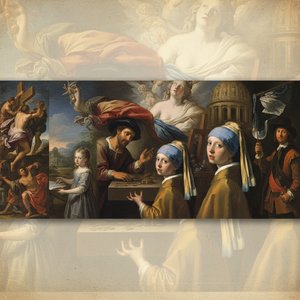
Barock Meisterwerke: Die 10 prägendsten Kunstwerke für Ihr Zuhause |
Entdecken Sie die 10 prägendsten Meisterwerke des Barock! Caravaggio, Rembrandt & Co. – Erfahren Sie die Geschichten hinter ikonischen Gemälde und finden Sie hochwertige Kunst Reproduktionen für Ihr Zuhause auf .

The Bountiful Still Life: Symbolism & Artistic Representation of Fruit Across Art History
Explore the rich history of still life painting & the symbolism of fruit across art movements. Discover masterpieces from Caravaggio to Cézanne with TopImpressionists – expert guidance & museum-quality reproductions.

The Enduring Appeal of Still Life: A Historical & Contemporary Exploration
Explore the rich history & symbolism of still life painting with TopImpressionists. Discover masterpieces from the Dutch Golden Age, learn about vanitas art, and find expert guidance for collecting timeless artworks.

Silent Narratives: Exploring the Enduring Appeal of Still Life Painting Across Centuries
Explore the rich history of still life painting with TopImpressionists. Discover Dutch Masters, decode vanitas symbolism & learn about collecting timeless art. Expert insights and museum-quality reproductions.