


 In echtem Maßstab anzeigen
 Versenden als Grußkarte
 Teilen
 Details anzeigen
 Leitfaden öffnen

 Herunterladen
 Ähnliche Objekte
 Röntgenaufnahme
 Diashow
 Besucherstatistiken
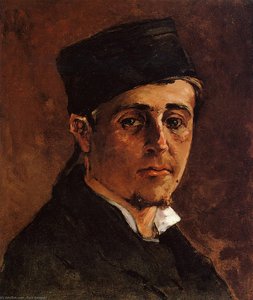
Self Portrait
 Acrylic On Canvas
- WallArt
- British Impressionism
 1920
1920 74.0 x 59.0 cm
 Fitzwilliam-Museum
Philip Wilson Steer's "The President Woodrow Wilson House" captures a contemplative man in a suit, showcasing his signature Impressionistic style and masterful use of light & shadow. Explore this evocative portrait.
 Mehr anzeigen
Entdecken Sie Philip Wilson Steer (1860-1942), Schlüsselfigur des britischen Impressionismus! Erleben Sie seine lichtdurchfluteten Landschafts- & Seestück-Werke, inspiriert von Manet & Whistler. Jetzt in Tate & Uffizien!
Handgefertigte Ölreproduktion
Handgemaltes Ölgemälde auf Leinwand in Ihrer Wunschgröße und mit Rahmen, auf Bestellung von unseren Künstlern angefertigt. ( Zum Druck wechseln Zum digitalen Bild wechseln)




P118B €10

P118H €10

P118W €10

P438Z €10

P508JH €12

P508YH €12

P805H €10

P805Z €10

P919BZ €10

P919G €10

P919XJ €10

P959ZH €10

P968JZ €12

W106C €8

W218G €10

W218JH €8

W218Y €10

W307PJ €10

W316G €10

W316PJ €8

W316Y €10

W398PJ €8

W4111J €10

W500HY €15

W500JH €15

W692G €12

W849H €8

W940BG €15

W953PJ €8




Standardformat
individuell anpassbar
CM
INCH
Wählen Sie aus unseren vordefinierten Formaten, die den ursprünglichen Proportionen des Kunstwerks entsprechen.
Loading sizes...

Breite
Höhe
Sie können Ihre eigenen Maße eingeben, um einen bestimmten Rahmen oder Platz auszufüllen. Wenn die gewählte Größe nicht den Proportionen des Originalbildes entspricht, werden wir das Kunstwerk entweder beschneiden oder das Gemälde durch zusätzliche, handgemalte Elemente erweitern. Ein digitales Mockup wird Ihnen zur Genehmigung zugesandt, bevor die Produktion beginnt.
Bitte beachten Sie, dass die Bildschirmvorschau nicht die tatsächliche Beschneidung oder Erweiterung widerspiegelt. Nur das Mockup zeigt die endgültige Komposition exakt an.
Obwohl Sondermaße verfügbar sind, empfehlen wir, eine Größe aus der vordefinierten Liste zu wählen, um die ursprünglichen Proportionen beizubehalten.
Beispiele für Anpassungsmöglichkeiten: Gesicht durch Kundenfoto ersetzen; Haustier hinzufügen (z. B. Katze durch Hund ersetzen); eine versteckte Nachricht im Hintergrund einfügen; Hintergrundlandschaft oder -elemente ändern.
Nach der Bestellung wird das TopImpressionists.com-Team dem Kunden Anweisungen per E-Mail zusenden und eine Mockup-Vorschau bereitstellen.
Nach der Bestellung wird das TopImpressionists.com-Team dem Kunden Anweisungen per E-Mail zusenden und eine Mockup-Vorschau bereitstellen.
Weltweiter Versand () in nur 3 bis 4 Wochen statt der üblichen 5 Wochen. (7 Oktober). Keine Kompromisse bei der Qualität.

Kostenloser weltweiter Expressversand

Hochwertige Leinenleinwand

Vollständiger Versicherungsschutz beim Versand

Zollgebühren-Rückerstattungsgarantie

Garantie für exakte Farbtreue

100-tägiges Rückgaberecht (nur bei Mängeln)

100% Geld-zurück-Garantie

Angebot für Mengenrabatt
 Die Glasoption ist nur für Größen unter 110 cm verfügbar.

Self Portrait
Reproduktionsmedium
Format der Reproduktion
-


Gesamtpreis
€ 231
A Portrait of Quiet Intensity: Philip Wilson Steer’s “The President Woodrow Wilson House”
Philip Wilson Steer's "The President Woodrow Wilson House," painted in 1920, isn’t merely a depiction of a building; it’s a carefully constructed tableau brimming with subtle symbolism and imbued with the melancholic beauty characteristic of the artist. This oil-on-canvas work, measuring 74 x 59 cm, transports us to a moment suspended between formality and introspection – a visual poem reflecting on leadership, memory, and the quiet dignity of American history. Steer, a pivotal figure in British Impressionism, masterfully employs a muted palette dominated by greys, blues, and browns, creating an atmosphere of subdued light and contemplative stillness. The composition itself is deliberately restrained, focusing intently on the imposing façade of the Wilson House in Washington D.C., rendered with a remarkable sensitivity to texture and light.
The Impressionist’s Lens: Technique and Style
Steer's approach aligns closely with the tenets of Impressionism, yet he transcends simple replication. He doesn’t strive for photographic accuracy but rather captures an *impression* – a fleeting moment imbued with feeling. Notice how he utilizes broken brushstrokes to suggest the play of light on the stone walls and the subtle shifts in shadow. The artist's layering technique is particularly evident in the rendering of the building’s surface, where individual strokes coalesce to create a sense of depth and volume. Steer was deeply influenced by John Constable and J.M.W. Turner, artists known for their atmospheric landscapes and masterful use of light and color. This influence is palpable in Steer's ability to evoke a specific mood through his manipulation of tone and texture – a feeling of quiet contemplation and perhaps even a touch of wistful nostalgia.
Symbolism Within the Frame: Leadership and Reflection
The choice of subject matter—the Wilson House—is rich in symbolic potential. Woodrow Wilson, the 28th President of the United States, was a complex figure – lauded for his leadership during World War I but also criticized for his handling of racial issues at home. Steer’s painting doesn't offer a straightforward portrait of Wilson himself, instead focusing on the building that housed him and, by extension, representing the weight of responsibility and the enduring legacy of power. The muted colors and the solitary nature of the scene suggest a reflection on leadership itself – its burdens, its triumphs, and its inevitable passage of time. The composition’s stillness invites viewers to contemplate the unseen narratives contained within those walls.
A Legacy of Light: Steer's Influence and Artistic Context
Philip Wilson Steer was a significant figure in British art, bridging the gap between Impressionism and a more traditional English style. His work gained recognition during his time as a painting tutor at the Slade School of Fine Art, where he profoundly influenced generations of young artists. His exploration of coastal scenes, particularly those along the Suffolk coast, cemented his reputation for capturing the ethereal beauty of the British landscape. “The President Woodrow Wilson House” stands as a testament to Steer’s ability to imbue seemingly simple subjects with profound emotional resonance. It's a poignant reminder that even in grand architectural settings, moments of quiet contemplation and subtle symbolism can hold immense artistic value. Reproductions of this piece offer a captivating glimpse into the artist’s world and invite viewers to engage with the complexities of American history through the lens of Impressionist artistry.
Fragen & Antworten
Welcher Phase der Karriere von Philip Wilson Steer ist „Self Portrait“ (1920) zuzuordnen?
Die Datierung auf 1920 ordnet „Self Portrait“ der Late Period von Philip Wilson Steers künstlerischer Entwicklung zu.
In welchem Alter schuf Philip Wilson Steer „Self Portrait"?
Als "Self Portrait" im Jahr 1920 entstand, war Philip Wilson Steer – geboren 1860 – 60 Jahre alt.
Welche Technik und welcher Stil charakterisieren "Self Portrait" von Philip Wilson Steer?
"Self Portrait" ist in Acrylic On Canvas im Stil der British Impressionism-Epoche gefertigt.
Welche Stimmung vermittelt "Self Portrait" von Philip Wilson Steer innerhalb der British Impressionism?
Die Reflective Emotion von „Self Portrait“ begleitet seinen British Impressionism-Stil.
In welchem Jahr wurde "Self Portrait" von Philip Wilson Steer geschaffen?
"Self Portrait" von Philip Wilson Steer entstand im Jahr 1920.
Welchem Künstler wird "Self Portrait" zugeschrieben?
Der Künstler hinter „Self Portrait“ ist Philip Wilson Steer. Das Werk ist unter dem Namen von Philip Wilson Steer katalogisiert.
Welcher künstlerischen Strömung ist "Self Portrait" von Philip Wilson Steer zuzuordnen?
„Self Portrait“ ist ein Werk der British Impressionism. Die Stilrichtung gibt die künstlerische Tradition an, der das Werk angehört.
Ähnliche Kunstwerke


Biografie des Künstlers
Frühes Leben und künstlerische Prägung
Philip Wilson Steer, geboren am 28. Dezember 1860 in Birkenhead, England, entsprang einer Familie, die tief in der Kunst verwurzelt war – sein Vater übte das Porträtmalen aus und unterrichtete zudem diese Disziplin. Diese frühe familiäre Umgebung prägte Steers künstlerische Sensibilität entscheidend. Ein Umzug nach Whitchurch bei Monmouth im Alter von drei Jahren führte ihn in die Nähe der britischen Landschaft, eine Verbindung, die sein gesamtes Schaffen durchziehen sollte. Seine formale Ausbildung begann an der Hereford Cathedral School, wo er eine solide Grundlage erhielt, bevor er sich voll und ganz seinen künstlerischen Ambitionen widmete. Er vertiefte seine Fähigkeiten an der Gloucester School of Art und den South Kensington Drawing Schools, doch erst seine Zeit in Paris zwischen 1880 und 1884 erwies sich als wahrer Wendepunkt. An der Académie Julian und später unter Alexandre Cabanel an der École des Beaux-Arts begegnete er einer Welt voller neuer Ideen und maltechnischer Ansätze.Der Einfluss des Impressionismus und die Entwicklung eines individuellen Stils
Paris wurde zum Schmelztiegel für Steers künstlerische Entwicklung. Er war tief beeindruckt von den Werken von Édouard Manet und James McNeill Whistler, deren innovative Techniken zur Darstellung von Licht, Farbe und Atmosphäre er aufnahm. Diese Begegnungen entfachten seine Leidenschaft für den Impressionismus, doch Steer begnügte sich nie mit bloßer Nachahmung. Er verband diese französischen Einflüsse gekonnt mit seiner eigenen englischen Sensibilität und schuf so einen Stil, der einzigartig war. Seine Gemälde zeichnen sich durch eine bemerkenswerte Fähigkeit aus, flüchtige Momente einzufangen – das Spiel des Sonnenlichts auf dem Wasser, die vergängliche Qualität der Küstenluft. Er verwendete lockere Pinselstriche und lebendige Farben nicht nur zur Darstellung von Szenen, sondern um Emotionen hervorzurufen und ein intensives Gefühl der Unmittelbarkeit zu erzeugen. Wiederkehrende Motive in seinem Werk sind Strand- und Meeransichten, oft in silbernem, durchscheinendem Licht getaucht, die seine Meisterschaft in der Darstellung der Frische und Leuchtkraft dieser Umgebungen demonstrieren. Werke wie The Music Room, aus seiner frühen Schaffensperiode, zeigen bereits sein aufkeimendes Talent für Komposition und Lichtgestaltung, während Gemälde wie Girls Running: Walberswick Pier die Energie und Lebendigkeit einer Küstenstadt in Suffolk einfangen.Engagement für moderne Kunst und der Einfluss von Etaples
Steer war nicht nur ein Maler, sondern auch ein aktiver Gestalter des künstlerischen Lebens Großbritanniens. Er spielte eine Schlüsselrolle bei der Gründung des New English Art Club, einer Organisation, die sich der Förderung moderner künstlerischer Ausdrucksformen widmete – ein mutiger Schritt zu einer Zeit, in der traditionelle Geschmäcker noch vorherrschten. Durch diese Plattform und regelmäßige Ausstellungen in der Royal Academy, darunter seine Teilnahme an der bahnbrechenden London Impressionist Exhibition von 1889, trug er dazu bei, neue Ideen einzuführen und konventionelle Normen herauszufordern. Seine Zeit in der Künstlerkolonie Etaples im Jahr 1887 beeinflusste seine Arbeit nachhaltig. Diese lebendige Gemeinschaft bot ein anregendes Umfeld für Experimente und Zusammenarbeit und verfeinerte seine Fähigkeit, Licht und Atmosphäre mit zunehmender Nuance und Präzision einzufangen. Steer ließ sich von einer Vielzahl von Meistern inspirieren – John Constable, J.M.W. Turner und sogar François Boucher –, doch er filterte diese Einflüsse stets durch seine eigene unverwechselbare Perspektive.Vermächtnis, Anerkennung und bleibender Einfluss
Philip Wilson Steer malte unermüdlich weiter, bis gesundheitliche Probleme ihn 1940 zum Aufhören zwangen. Er verstarb zwei Jahre später im Alter von 81 Jahren. Seine Leistungen wurden zu seinen Lebzeiten vielfach gewürdigt, was in der Verleihung des Order of Merit gipfelte. Heute befinden sich seine Werke in renommierten Sammlungen auf der ganzen Welt, darunter die Tate Gallery und sogar die Uffizien – ein Beweis für sein internationales Ansehen. Über seine Gemälde hinaus erstreckt sich Steers Vermächtnis durch seine lange Tätigkeit als Dozent an der Slade School of Art. Er beeinflusste über viele Jahre hinweg Generationen junger Künstler tiefgreifend, indem er ihnen nicht nur technische Fähigkeiten vermittelte, sondern auch eine tiefe Wertschätzung für Beobachtungsgabe und künstlerische Integrität einflößte. Sein Beitrag zur Entwicklung und Akzeptanz des Impressionismus in Großbritannien ist unbestreitbar und festigt seine Position als bedeutende Figur der britischen Kunstgeschichte – ein Maler, der erfolgreich die Kluft zwischen Tradition und Moderne überbrückte und einen bleibenden Eindruck auf die Landschaft der britischen Kunst hinterließ. Bemerkenswerte Werke wie Convalescent, mit seinen reichen Texturen und dem eindringlichen Blick, und The Teme at Ludlow, das eine friedliche Schönheit und meisterhafte Pinseltechnik hervorhebt, fesseln auch heute noch die Betrachter und zeugen von der zeitlosen Qualität seiner künstlerischen Vision.
Philip Wilson Steer
1860 - 1942 , Vereinigtes Königreich
Eckdaten zum Künstler
- Beeinflusste Künstler: ['Britischer Impressionismus']
- Bemerkenswerte Werke:
- The Music Room
- Girls Running
- Convalescent
- The Teme at Ludlow
- Mother and Daughter
- Einflüsse:
- Manet
- Whistler
- Constable
- Turner
- Boucher
- Geburtsdatum: 28. Dezember 1860
- Geburtsort: Birkenhead, Vereinigtes Königreich
- Künstlerische Bewegung: Impressionismus
- Nationalität: Britisch
- Sterbedatum: 18. März 1942
- Vollständiger Name: Philip Wilson Steer
Verwandte Artikel

Beyond the Light: Discovering the Soul and Emotional Depth of Post-Impressionism
Embark on a cultural journey through Post-Impressionism. Discover the profound emotional depth of masters like Van Gogh and Cézanne, exploring how they moved beyond light to capture the very soul of human experience through vibrant color and symbolic form.

Capturing the Light: A Journey Through the Ethereal Magic of Impressionism and Post-Impressionism
Embark on a cultural journey through the luminous world of Impressionism. Discover the profound beauty of Monet, Van Gogh, and Cézanne through expert art history insights and explore how to bring these timeless masterpieces into your home with museum-quality hand-painted reproductions.
Entdecken Sie Kunstwerke, die nach Themen, Stilen und Merkmalen sortiert sind.


