


 Vorschau anzeigen
 Versenden
 Teilen
 Details anzeigen
 Leitfaden

 Herunterladen
 Ähnliche Objekte
 Röntgenaufnahme
 Diashow
 Statistiken
Child at Table
 Oil
Oil- WallArt
- Post-Impressionism
 1893
1893- 19th Century
 25.0 x 26.0 cm
A peaceful moment of childhood captured in Pierre Bonnard's intimate Post-Impressionist style features a baby at a dining table, inviting you to bring this serene 1893 masterpiece into your private collection.
 Weiterlesen
Entdecken Sie Pierre Bonnard (1867-1947), den französischen Postimpressionisten! Seine intimen Häuslichkeitsszenen & lebendigen Farben machen ihn einzigartig. Erfahren Sie mehr über sein Werk!
Giclée / Kunstdruck
Giclée- oder Leinwanddruck in Museumsqualität mit schneller Produktion und flexiblen Veredelungsoptionen. ( Handgemalte Reproduktion bestellen Zum digitalen Bild wechseln)




P118B €10

P118H €10

P118W €10

P438Z €10

P508JH €12

P508YH €12

P805H €10

P805Z €10

P919BZ €10

P919G €10

P919XJ €10

P959ZH €10

P968JZ €12

W106C €8

W218G €10

W218JH €8

W218Y €10

W307PJ €10

W316G €10

W316PJ €8

W316Y €10

W398PJ €8

W4111J €10

W500HY €15

W500JH €15

W692G €12

W849H €8

W940BG €15

W953PJ €8




Standardformat
individuell anpassbar
CM
INCH
Wählen Sie aus unseren vordefinierten Formaten, die den ursprünglichen Proportionen des Kunstwerks entsprechen.
Loading sizes...

Breite
Höhe
Geben Sie die benötigte Breite und Höhe an, damit der Druck perfekt in Ihren Rahmen oder an Ihre Wand passt. Ein Druck kann nur beschnitten, aber niemals größer als das Originalbild angefertigt werden; daher verliert ein Format mit anderen Proportionen einen Teil des Bildes. Wir senden Ihnen ein digitales Mockup zur Freigabe, bevor wir den Druck ausführen. Das auf dieser Seite gezeigte Bild zeigt nicht den tatsächlichen Beschnitt – dies ist nur im Mockup ersichtlich.
Weltweiter Versand () innerhalb von 2 Wochen statt der üblichen 4/5 Wochen. (26 Oktober)

Kostenloser weltweiter Expressversand

Hochwertige Leinenleinwand

Umfassender Versicherungsschutz beim Versand

Zollgebühren-Rückerstattungsgarantie

Garantie für exakte Farbtreue

100 Tage Rückgaberecht (nur bei Mängeln)

100% Geld-zurück-Garantie

Mengenrabatt verfügbar
 Die Glasoption ist nur für Größen unter 110 cm verfügbar.

Child at Table
Giclée / Kunstdruck
Format der Reproduktion
-


Endpreis
€ 61
A Quiet Moment Captured in Light
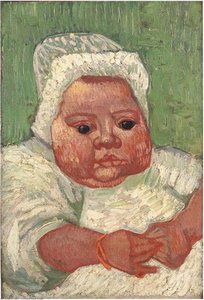
In the delicate brushstrokes of Pierre Bonnard’s 1893 masterpiece, Child at Table, we are invited into a sanctuary of domestic tranquility. This intimate portrait transcends a mere depiction of a meal; it serves as a window into the profound beauty found within the mundane. The scene centers on a young child seated at a table, eyes cast downward in a moment of quiet contemplation or perhaps simple hunger. Surrounded by the soft presence of others, the infant becomes the focal point of a larger, harmonious domestic universe. Bonnard, a master of the Intimist style, utilizes this small-scale composition to evoke a sense of warmth and stillness that resonates deeply with anyone who finds poetry in the everyday rhythms of home life.
The painting is a testament to the artist's early mastery of light and atmosphere. Though created during his formative years, the work already hints at the vibrant, almost luminous color palette that would later define his career. The interplay of light across the tabletop, the subtle textures of the bowl, and the soft contours of the child’s form create a tactile experience for the viewer. There is a rhythmic quality to the composition, where the placement of the apple and the surrounding figures guides the eye in a gentle loop, mirroring the cyclical, peaceful nature of a family meal. For the collector or interior designer, this piece offers a sophisticated touch of nostalgia, bringing a sense of calm, historical elegance to any curated space.
The Art of Intimism and Emotional Resonance
To understand Child at Table, one must look toward the movement that Bonnard helped pioneer. As a member of the Nabis group, Bonnard moved away from the rigid structures of academic realism, opting instead to capture the emotional essence of a scene through color and suggestion. In this work, the technique is not about sharp, photographic precision, but about the "feeling" of the light. The soft edges and blended tones suggest a memory being revisited—a fleeting moment of childhood innocence preserved forever in oil. This approach allows the viewer to project their own emotions onto the canvas, making the artwork feel deeply personal and universally relatable.
For those seeking to adorn a living space with art that inspires reflection, this reproduction offers more than just visual appeal; it provides an emotional anchor. The painting’s ability to evoke peace makes it an ideal centerpiece for bedrooms, libraries, or quiet sitting rooms where a sense of serenity is desired. It stands as a tribute to the beauty of the unseen moments—the quiet breaths between actions that constitute a life well-lived. Owning a piece of Bonnard’s legacy is an invitation to slow down and appreciate the luminous, tender details of our own existence.
Fragen & Antworten
Ist "Child at Table" insgesamt eher hell oder eher dunkel?
Die aufgezeichneten Werte für "Child at Table" von Pierre Bonnard sind: shadow Helligkeit, Soft Shadow Luminanz.
Ist die Abbildung von "Child at Table" von Pierre Bonnard gemeinfrei?
"Child at Table" von Pierre Bonnard ist gemeinfrei – das Urheberrecht ist abgelaufen. Dieser Status bestimmt, wie das Bild des Werkes vervielfältigt werden darf.
Wo lässt sich eine Reproduktion von "Child at Table" von Pierre Bonnard am besten präsentieren?
Mit seinem Square-Format wird eine Reproduktion von „Child at Table“ für ein Dining Room empfohlen.
Ähnliche Kunstwerke




Künstlerbiografie
Frühe Jahre und Karriere
Pierre Bonnard wurde am 3. Oktober 1867 in Fontenay-aux-Roses, im Département Hauts-de-Seine, geboren. Er entstammte einer wohlhabenden Familie; sein Vater war ein hoher Beamter im französischen Kriegsministerium. Bonnard zeigte früh künstlerisches Talent und besuchte zunächst das Lycée Louis-le-Grand und später das Lycée Charlemagne in Vanves. Obwohl er von seinem Vater dazu gedrängt wurde, eine Karriere im Staatsdienst anzutreten, entschied sich Bonnard für die Kunst. Er studierte Jura, um seinen Vater zufriedenzustellen, begann aber gleichzeitig mit dem Studium an der Académie Julian und der École des Beaux-Arts, wo er Freundschaften mit anderen Künstlern wie Édouard Vuillard schloss.Die Nabi-Bewegung und Postimpressionismus
Um 1891 lernte Bonnard Toulouse-Lautrec kennen und begann, seine Werke auf Ausstellungen zu zeigen. Er engagierte sich auch in der Zeitschrift *La Revue Blanche*, für die er Frontispizien entwarf. Bonnard war ein Gründungsmitglied der Nabi-Bewegung (*Les Nabis*), einer Gruppe von Künstlern, die sich gegen den Impressionismus wandten und nach neuen Ausdrucksformen suchten. Die frühen Werke Bonnards zeigen den Einfluss japanischer Holzschnitte und Paul Gauguins. Er entwickelte einen eigenen Stil, der durch eine Vereinfachung der Formen und eine Verwendung flacher Farbflächen gekennzeichnet ist.Intimität und häusliche Szenen
Bonnard bevorzugte es, aus dem Gedächtnis zu malen und nutzte Skizzen als Referenzmaterial. Dies verlieh seinen Bildern eine traumartige Qualität. Er widmete sich vor allem intimen häuslichen Szenen, oft mit seiner Frau Marthe de Meligny als Modell. Diese Darstellung des Alltäglichen und Intimen brachte ihm den Beinamen "Intimisten" ein. Bonnard konzentrierte sich auf die Wiedergabe von Lichtstimmungen und Farbkombinationen, wobei er die Perspektive oft vernachlässigte.Spätere Jahre und künstlerische Entwicklung
In den 1910er Jahren zog Bonnard nach Vernonnet in der Normandie, wo er das Haus "La Roulotte" kaufte. Hier schuf er zahlreiche Gemälde, inspiriert von der Landschaft und dem Garten. Er pflegte eine enge Freundschaft zu Claude Monet, der ebenfalls in Giverny lebte. Bonnards Farbpalette wurde zunehmend intensiver und leuchtender. Nach Monets Tod zog Bonnard nach Le Cannet an der Côte d'Azur, wo er bis zu seinem Tod am 23. Januar 1947 lebte. Er vollendete sein letztes Gemälde, *Die Mandeltraube in Blüte*, nur wenige Tage vor seinem Ableben.Bedeutung und Vermächtnis
Pierre Bonnard gilt als einer der bedeutendsten französischen Maler des frühen 20. Jahrhunderts. Sein Werk zeichnet sich durch eine einzigartige Sensibilität für Farbe und Licht aus. Er trug maßgeblich zur Entwicklung des Postimpressionismus bei und beeinflusste nachfolgende Künstlergenerationen. Bonnards Gemälde sind heute in zahlreichen renommierten Museen weltweit zu sehen, darunter das Musée Marmottan Monet in Paris und das Art Institute of Chicago.
Pierre Bonnard
1867 - 1947 , Frankreich
Kurzinfos
- Beeinflusste Künstler/Bewegungen: ['Intimismus']
- Bemerkenswerte Werke:
- Frau in kariertem Kleid (1890)
- Die Mandeltraube in Blüte
- Einflussreiche Künstler:
- Paul Gauguin
- Hokusai
- Geburtsdatum: 03. Oktober 1867
- Geburtsort: Fontenay-aux-Roses, Frankreich
- Künstlerische Bewegung: Postimpressionismus, Nabi
- Nationalität: Französisch
- Sterbedatum: 23. Januar 1947
- Vollständiger Name: Pierre Bonnard
Ähnliche Artikel

Beyond the Light: Discovering the Soul and Emotional Depth of Post-Impressionism
Embark on a cultural journey through Post-Impressionism. Discover the profound emotional depth of masters like Van Gogh and Cézanne, exploring how they moved beyond light to capture the very soul of human experience through vibrant color and symbolic form.
Entdecken Sie Kunstwerke, die nach Themen, Stilen und Merkmalen sortiert sind.


