


 Vorschau anzeigen
 Versenden
 Teilen
 Details anzeigen
 Leitfaden

 Herunterladen
 Ähnliche Objekte
 Röntgenaufnahme
 Diashow
 Q&A
Q&A Statistiken
Grass and Insects


Discover 'Grass and Insects,' a stunning painting by Shin Saimdang (1504-1551). This Joseon Dynasty masterpiece showcases vibrant flora & fauna, reflecting Korean art's beauty & cultural heritage.
 Weiterlesen
Entdecken Sie Shin Saimdang (1504-1551), eine Pionierin der koreanischen Kunst des Joseonzeitzeitalters! Erforschen Sie ihre außergewöhnlichen Gemälde von Natur, Kalligraphie und Poesie – ein Vermächtnis von Schönheit und Weisheit.
Handgefertigte Ölreproduktion
Handgemaltes Ölgemälde auf Leinwand in Ihrer Wunschgröße und mit Rahmen, auf Bestellung von unseren Künstlern angefertigt. ( Zum Druck wechseln Zum digitalen Bild wechseln)




P118B €10

P118H €10

P118W €10

P438Z €10

P508JH €12

P508YH €12

P805H €10

P805Z €10

P919BZ €10

P919G €10

P919XJ €10

P959ZH €10

P968JZ €12

W106C €8

W218G €10

W218JH €8

W218Y €10

W307PJ €10

W316G €10

W316PJ €8

W316Y €10

W398PJ €8

W4111J €10

W500HY €15

W500JH €15

W692G €12

W849H €8

W940BG €15

W953PJ €8




Standardformat
individuell anpassbar
CM
INCH
Wählen Sie aus unseren vordefinierten Formaten, die den ursprünglichen Proportionen des Kunstwerks entsprechen.
Loading sizes...

Breite
Höhe
Geben Sie die Breite und die Höhe an, die Sie für Ihren Rahmen oder Ihre Wand benötigen. Da dieses Werk handgemalt ist, kann der Künstler bei einer anderen Form etwas mehr um das Bild herum malen oder etwas abschneiden – Sie entscheiden. Wir senden Ihnen ein digitales Mockup zur Freigabe, bevor mit dem Malen begonnen wird. Das auf dieser Seite gezeigte Bild stellt nicht das tatsächliche Ergebnis dar – dies tut nur das Mockup.
Beispiele für Anpassungsmöglichkeiten: Gesicht durch Kundenfoto ersetzen; Haustier hinzufügen (z. B. Katze durch Hund ersetzen); eine versteckte Nachricht im Hintergrund einfügen; Hintergrundlandschaft oder -elemente ändern.
Nach der Bestellung wird das TopImpressionists.com-Team dem Kunden Anweisungen per E-Mail zusenden und eine Mockup-Vorschau bereitstellen.
Nach der Bestellung wird das TopImpressionists.com-Team dem Kunden Anweisungen per E-Mail zusenden und eine Mockup-Vorschau bereitstellen.
Weltweiter Versand () in nur 3 bis 4 Wochen statt der üblichen 5 Wochen. (28 Oktober). Keine Kompromisse bei der Qualität.

Kostenloser weltweiter Expressversand

Hochwertige Leinenleinwand

Umfassender Versicherungsschutz beim Versand

Zollgebühren-Rückerstattungsgarantie

Garantie für exakte Farbtreue

100 Tage Rückgaberecht (nur bei Mängeln)

100% Geld-zurück-Garantie

Mengenrabatt verfügbar
 Die Glasoption ist nur für Größen unter 110 cm verfügbar.

Grass and Insects
Art der Reproduktion
Format der Reproduktion
-


Endpreis
€ 237
Shin Saimdang’s “Grass and Insects”: A Window into Joseon Life
“Grass and Insects,” a captivating panel from Shin Saimdang’s renowned ten-panel folding screen, offers a remarkably intimate glimpse into the world of 16th-century Korea. More than just a beautiful depiction of nature, this artwork embodies the artistic sensibilities, philosophical leanings, and profound life experiences of one of Joseon Dynasty's most celebrated female figures – Shin Saimdang herself. The piece, currently housed within the National Museum of Korea in Seoul, is not merely a painting; it’s a carefully constructed microcosm reflecting her world, her values, and her enduring legacy.
At first glance, “Grass and Insects” presents a vibrant tapestry of meticulously rendered flora and fauna. Delicate grasses sway gently, interspersed with the intricate details of wildflowers – poppies bursting with crimson, hibiscus radiating warmth, and day lilies unfolding their pristine petals. Beneath this verdant canopy, a diverse array of insects buzz and crawl: long-headed grasshoppers leap, mantises stalk their prey, dung beetles diligently roll their spheres, and dragonflies shimmer in the light. However, to reduce it simply to a naturalistic study would be a profound oversight. Shin Saimdang’s genius lies not just in her technical skill but in the subtle symbolism woven throughout the composition.
The Art of Balance: Technique and Style
Executed with the characteristic grace and precision of Korean painting, “Grass and Insects” exemplifies the meticulous brushwork and vibrant color palettes favored during the Joseon period. The artist’s use of *sumi* ink on paper creates a remarkable depth and luminosity, capturing the textures of the leaves, the shimmer of the insects' wings, and the delicate veins of the flowers. The composition is carefully balanced, employing principles of asymmetry to create visual harmony. Notice how the dense clusters of grasses are counterbalanced by the more open spaces filled with wildflowers – a deliberate arrangement that mirrors the complexities of life itself.
Crucially, the painting’s style aligns closely with the *hyobokja* (harmony landscape) tradition, prevalent during Shin Saimdang's era. This approach prioritized capturing the essence of nature rather than creating an exact representation. The artist skillfully uses layering and atmospheric perspective to suggest depth and distance, drawing the viewer into this miniature world. The painting’s overall effect is one of serene beauty and quiet contemplation – a testament to Shin Saimdang’s mastery of her craft.
A Portrait of a Woman: Symbolism and Context
Beyond its aesthetic qualities, “Grass and Insects” offers invaluable insights into the life and worldview of Shin Saimdang. The inclusion of specific plants and insects carries symbolic weight, reflecting her deep understanding of Confucian philosophy and her appreciation for the natural world. Watermelons, often associated with prosperity and abundance, are prominently featured, while mice – traditionally symbols of diligence and thrift – add a touch of rustic charm. The presence of dragonflies, known for their fleeting beauty, may allude to the transient nature of life and the importance of cherishing each moment.
Furthermore, the painting’s origins as part of a ten-panel folding screen provide crucial context. These screens were traditionally used in scholarly households to display calligraphy, paintings, and poems – serving as both decorative objects and intellectual forums. The inclusion of O Sechang's critique on the tenth panel highlights the importance of artistic judgment and the role of art criticism within Joseon society. It also underscores Shin Saimdang’s position as a respected artist and intellectual figure.
A Legacy of Beauty: Emotional Resonance
“Grass and Insects” transcends its status as a mere artwork; it is a poignant reflection on life, beauty, and the enduring spirit of a remarkable woman. The painting's delicate details invite viewers to pause, observe, and contemplate the interconnectedness of all things. The vibrant colors evoke feelings of joy and tranquility, while the intricate patterns stimulate the imagination. It’s a piece that speaks to our innate appreciation for nature and our longing for harmony – qualities deeply valued by Shin Saimdang throughout her life.
Today, “Grass and Insects” stands as a powerful symbol of Korean artistic heritage and a testament to the extraordinary achievements of Shin Saimdang. Reproductions of this captivating artwork offer a beautiful way to bring a touch of Joseon elegance into any space, reminding us of the enduring power of art to inspire, uplift, and connect us to the past.
Fragen & Antworten
Kann ich eine Ölreproduktion von "Grass and Insects" bestellen?
"Grass and Insects" ist als eine handgemalte Ölreproduktion auf Leinenleinwand erhältlich. Die Bestellung kann auf der Seite Handgemalte Ölreproduktion in verschiedenen Größen vorgenommen werden.
Kann ich "Grass and Insects" als Vollbild-Diashow ansehen?
Das Diaporama zu „Grass and Insects“ finden Sie auf der Diashow-Seite des Kunstwerks.
Welche Atmosphäre verleiht "Grass and Insects" von Shin Saimdang einem Raum?
"Grass and Insects" von Shin Saimdang strahlt eine Calm Atmosphäre aus und wird für ein Living Room empfohlen. Die Stimmung beschreibt das Gefühl, das das Werk in den umgebenden Raum bringt.
Künstlerbiografie
Eine wegweisende Künstlerin der Joseon-Dynastie in Korea
Shin Saimdang, eine vielseitige Künstlerin aus Südkorea, lebte während der Joseon-Zeit und hinterließ eine unauslöschliche Spur in der koreanischen Kunstgeschichte. Geboren am 29. Oktober 1504 in Gangneung, Provinz Gangwon, war sie nicht nur Malerin, sondern auch Schriftstellerin, Kalligraphin und Dichterin.Frühes Leben und künstlerische Anfänge
Die künstlerischen Talente von Shin Saimdang zeigten sich bereits in jungen Jahren. Schon im Alter von sieben Jahren imitierte sie den Malstil von An Gyeon, einem weiteren bedeutenden koreanischen Künstler. Ihr Geburtsort, Ojukheon, der auch das Haus ihrer mütterlichen Familie ist, ist bis heute wunderbar erhalten geblieben.Künstlerische Beiträge und Stil
Die Gemälde von Shin Saimdang, die durch feine Pinselstriche und lebendige Farben bestechen, sind Teil eines zehnteiligen Faltbildschirms. Ihre Werke, wie etwa Gräser und Insekten, zeigen eine Vielfalt an Motiven, darunter Wassermelonen, Auberginen, Mohnblumen, Hibiskus und verschiedene Insekten. Diese Gemälde können im Nationalmuseum Korea (Seoul, Südkorea) bewundert werden, wo sie nach wie vor Kunstliebhaber inspirieren.- Betrachten Sie die Kunstwerke von Shin Saimdang auf TopImpressionists: https://TopImpressionists.com/@/shin-saimdang
- Erkunden Sie die Sammlung des Nationalmuseums Korea: /de/art/show/national-museum-of-korea-seoul/
- Entdecken Sie mehr über die Kunstbewegung der Joseon-Dynastie: die Kunstbewegung der Joseon-Dynastie
Vermächtnis und Wirkung
Das Vermächtnis von Shin Saimdang reicht weit über ihr künstlerisches Schaffen hinaus, da sie auch als Mutter von Yi I bekannt ist, einem angesehenen Gelehrten und Politiker der Joseon-Dynastie. Ihr Leben und ihr Werk dienen als Inspiration für viele und verkörpern die Essenz der koreanischen Kunst während der Joseon-Ära. Wichtige Kunstwerke von Shin Saimdang:- Gräser und Insekten (Nationalmuseum Korea, Seoul, Südkorea)
- Weitere bedeutende Werke mit feinen Pinselstrichen und klaren, lebendigen Farben, Teil eines zehnteiligen Faltbildschirms.
- An Gyeon, ein weiterer prominenter koreanischer Maler der frühen Joseon-Zeit.

Shin Saimdang
1504 - 1551 , Südkorea
Kurzinfos
- Artistic Movement Or Style: Joseon Dynastie Kunst
- Artists Who Influenced This Artist: ['An Gyeon']
- Date Of Birth: October 29, 1504
- Date Of Death: June 20, 1551
- Full Name: Shin Saimdang
- Nationality: Korean
- Notable Artworks: ['Grass and Insects']
- Place Of Birth: Gangneung, Südkorea
Ähnliche Artikel
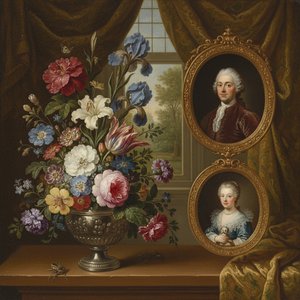
Jan van Kessel the Elder: A Baroque Master of Floral Still Life & Miniature Portraiture
Discover the exquisite detail of Jan van Kessel the Elder's Baroque floral still lifes & captivating miniatures. Explore his artistic legacy, scientific precision, and lasting influence on 17th-century Flemish painting.

Yi Eungro: Bridging East & West in the Landscape of Korean Modernism
Explore the captivating world of Yi Eungro (Lee Ungno), a pivotal figure in Korean modernism. Discover his unique fusion of Eastern and Western artistic traditions, abstract masterpieces, and lasting legacy. A must-read for discerning art collectors.
Entdecken Sie Kunstwerke, die nach Themen, Stilen und Merkmalen sortiert sind.
