


 Vorschau anzeigen
 Versenden
 Teilen
 Details anzeigen
 Leitfaden

 Herunterladen
 Ähnliche Objekte
 Röntgenaufnahme
 Diashow
 Statistiken
Grass and Insects


Experience Shin Saimdang's 'Grass and Insects,' a stunning 16th-century Korean painting of nature’s beauty. Admire the intricate details & vibrant colors in this masterpiece from the National Museum of Korea.
 Weiterlesen
Entdecken Sie Shin Saimdang (1504-1551), eine Pionierin der koreanischen Kunst des Joseonzeitzeitalters! Erforschen Sie ihre außergewöhnlichen Gemälde von Natur, Kalligraphie und Poesie – ein Vermächtnis von Schönheit und Weisheit.
Giclée / Kunstdruck
Giclée- oder Leinwanddruck in Museumsqualität mit schneller Produktion und flexiblen Veredelungsoptionen. ( Handgemalte Reproduktion bestellen Zum digitalen Bild wechseln)




P118B €10

P118H €10

P118W €10

P438Z €10

P508JH €12

P508YH €12

P805H €10

P805Z €10

P919BZ €10

P919G €10

P919XJ €10

P959ZH €10

P968JZ €12

W106C €8

W218G €10

W218JH €8

W218Y €10

W307PJ €10

W316G €10

W316PJ €8

W316Y €10

W398PJ €8

W4111J €10

W500HY €15

W500JH €15

W692G €12

W849H €8

W940BG €15

W953PJ €8




Standardformat
individuell anpassbar
CM
INCH
Wählen Sie aus unseren vordefinierten Formaten, die den ursprünglichen Proportionen des Kunstwerks entsprechen.
Loading sizes...

Breite
Höhe
Geben Sie die benötigte Breite und Höhe an, damit der Druck perfekt in Ihren Rahmen oder an Ihre Wand passt. Ein Druck kann nur beschnitten, aber niemals größer als das Originalbild angefertigt werden; daher verliert ein Format mit anderen Proportionen einen Teil des Bildes. Wir senden Ihnen ein digitales Mockup zur Freigabe, bevor wir den Druck ausführen. Das auf dieser Seite gezeigte Bild zeigt nicht den tatsächlichen Beschnitt – dies ist nur im Mockup ersichtlich.
Weltweiter Versand () innerhalb von 2 Wochen statt der üblichen 4/5 Wochen. (28 Oktober)

Kostenloser weltweiter Expressversand

Hochwertige Leinenleinwand

Umfassender Versicherungsschutz beim Versand

Zollgebühren-Rückerstattungsgarantie

Garantie für exakte Farbtreue

100 Tage Rückgaberecht (nur bei Mängeln)

100% Geld-zurück-Garantie

Mengenrabatt verfügbar
 Die Glasoption ist nur für Größen unter 110 cm verfügbar.

Grass and Insects
Giclée / Kunstdruck
Format der Reproduktion
-


Endpreis
€ 61
A Symphony of Nature: Unveiling Shin Saimdang's "Grass and Insects"
Within the hallowed halls of the National Museum of Korea resides a treasure that transcends mere artistry – Shin Saimdang’s “Grass and Insects,” a captivating folding screen painting from 1504. More than just a depiction of flora and fauna, this work offers a poignant glimpse into the life, intellect, and artistic sensibilities of one of Korea's most remarkable women: Shin Saimdang, a pioneering figure who defied societal constraints to become a celebrated poet, calligrapher, painter, and mother.
The painting itself is a testament to Saimdang’s meticulous observation and refined technique. Executed in vibrant colors on paper, it embodies the essence of the mid-Joseon period. Delicate brushstrokes dance across the surface, capturing the subtle nuances of light and shadow, creating an illusion of depth and movement within the seemingly simple composition. The arrangement is carefully considered; a profusion of natural elements – watermelons plump with ripeness, vibrant poppies bursting with color, delicate hibiscus blossoms, and a myriad of insects – are interwoven amongst lush grasses, forming a miniature world teeming with life. Notice particularly the meticulous detail in rendering each individual leaf, petal, and insect wing, showcasing Saimdang’s mastery of her craft.
A Legacy Forged in Ink and Paper
Shin Saimdang's story is inextricably linked to her family history and the tumultuous political landscape of the Joseon Dynasty. Born into a noble lineage – her father, Shin Myeong-hwa, was a Confucian scholar who served under King Jungjong – she received an unusually comprehensive education for a woman of her time. Her upbringing fostered not only artistic talent but also a deep understanding of philosophy, literature, and history. This intellectual foundation profoundly shaped her work, imbuing it with layers of meaning and symbolism.
The painting’s creation coincided with a period of significant social change and political intrigue within the Joseon court. Saimdang's husband, Lee Won-su, was a man of modest means, leading to considerable hardship for their family. This backdrop of personal struggle likely informed her artistic choices – the abundance of natural imagery could be interpreted as a celebration of resilience and beauty amidst adversity, mirroring the enduring spirit of nature itself.
Symbolism Woven into the Landscape
Beyond its aesthetic appeal, “Grass and Insects” is rich in symbolic meaning. The inclusion of various insects – from delicate butterflies to industrious dung beetles – speaks to the interconnectedness of life and the cyclical rhythms of nature. The presence of watermelons and eggplants, staples of Korean cuisine, suggests a connection to daily life and the comforts of home. Even the meticulous rendering of individual leaves and grasses can be seen as an allegory for the complexities of human relationships and the passage of time.
Furthermore, the painting’s placement within a folding screen – a traditional format used for displaying important works – elevates its significance. The eight-panel design allowed for a panoramic view of the scene, inviting contemplation and offering multiple perspectives on the depicted world. The tenth panel, featuring a critique by O Sechang, a renowned calligrapher and art critic, underscores the importance of artistic judgment and the ongoing dialogue surrounding Saimdang’s work.
A Timeless Masterpiece: Capturing the Essence of Joseon
“Grass and Insects” is more than just a beautiful painting; it's a window into the soul of a remarkable woman and a vibrant era. It embodies the artistic spirit, intellectual curiosity, and profound empathy that defined Shin Saimdang’s life. Today, this exquisite work continues to captivate viewers with its delicate beauty, intricate detail, and enduring symbolism – a testament to the legacy of one of Korea's most celebrated artists.
Fragen & Antworten
Welcher künstlerischen Strömung ist "Grass and Insects" von Shin Saimdang zuzuordnen?
"Grass and Insects" von Shin Saimdang lässt sich der Strömung des Joseon Dynasty Art zuordnen. Diese Stilrichtung bildet den künstlerischen Kontext des Werkes.
Was für ein Kunstwerk ist "Grass and Insects"?
"Grass and Insects" ist ein Werk der Gattung WallArt.
Welcher Strömung und welcher Epoche ist "Grass and Insects" von Shin Saimdang zuzuordnen?
"Grass and Insects" von Shin Saimdang lässt sich der Strömung des Joseon Dynasty Art innerhalb der Renaissance-Ära seines Schöpfers zuordnen.
Künstlerbiografie
Eine wegweisende Künstlerin der Joseon-Dynastie in Korea
Shin Saimdang, eine vielseitige Künstlerin aus Südkorea, lebte während der Joseon-Zeit und hinterließ eine unauslöschliche Spur in der koreanischen Kunstgeschichte. Geboren am 29. Oktober 1504 in Gangneung, Provinz Gangwon, war sie nicht nur Malerin, sondern auch Schriftstellerin, Kalligraphin und Dichterin.Frühes Leben und künstlerische Anfänge
Die künstlerischen Talente von Shin Saimdang zeigten sich bereits in jungen Jahren. Schon im Alter von sieben Jahren imitierte sie den Malstil von An Gyeon, einem weiteren bedeutenden koreanischen Künstler. Ihr Geburtsort, Ojukheon, der auch das Haus ihrer mütterlichen Familie ist, ist bis heute wunderbar erhalten geblieben.Künstlerische Beiträge und Stil
Die Gemälde von Shin Saimdang, die durch feine Pinselstriche und lebendige Farben bestechen, sind Teil eines zehnteiligen Faltbildschirms. Ihre Werke, wie etwa Gräser und Insekten, zeigen eine Vielfalt an Motiven, darunter Wassermelonen, Auberginen, Mohnblumen, Hibiskus und verschiedene Insekten. Diese Gemälde können im Nationalmuseum Korea (Seoul, Südkorea) bewundert werden, wo sie nach wie vor Kunstliebhaber inspirieren.- Betrachten Sie die Kunstwerke von Shin Saimdang auf TopImpressionists: https://TopImpressionists.com/@/shin-saimdang
- Erkunden Sie die Sammlung des Nationalmuseums Korea: /de/art/show/national-museum-of-korea-seoul/
- Entdecken Sie mehr über die Kunstbewegung der Joseon-Dynastie: die Kunstbewegung der Joseon-Dynastie
Vermächtnis und Wirkung
Das Vermächtnis von Shin Saimdang reicht weit über ihr künstlerisches Schaffen hinaus, da sie auch als Mutter von Yi I bekannt ist, einem angesehenen Gelehrten und Politiker der Joseon-Dynastie. Ihr Leben und ihr Werk dienen als Inspiration für viele und verkörpern die Essenz der koreanischen Kunst während der Joseon-Ära. Wichtige Kunstwerke von Shin Saimdang:- Gräser und Insekten (Nationalmuseum Korea, Seoul, Südkorea)
- Weitere bedeutende Werke mit feinen Pinselstrichen und klaren, lebendigen Farben, Teil eines zehnteiligen Faltbildschirms.
- An Gyeon, ein weiterer prominenter koreanischer Maler der frühen Joseon-Zeit.

Shin Saimdang
1504 - 1551 , Südkorea
Kurzinfos
- Artistic Movement Or Style: Joseon Dynastie Kunst
- Artists Who Influenced This Artist: ['An Gyeon']
- Date Of Birth: October 29, 1504
- Date Of Death: June 20, 1551
- Full Name: Shin Saimdang
- Nationality: Korean
- Notable Artworks: ['Grass and Insects']
- Place Of Birth: Gangneung, Südkorea
Ähnliche Artikel
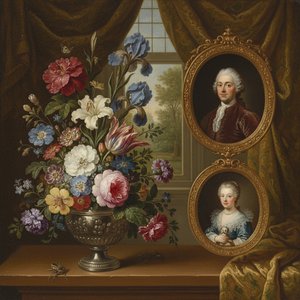
Jan van Kessel the Elder: A Baroque Master of Floral Still Life & Miniature Portraiture
Discover the exquisite detail of Jan van Kessel the Elder's Baroque floral still lifes & captivating miniatures. Explore his artistic legacy, scientific precision, and lasting influence on 17th-century Flemish painting.

Yi Eungro: Bridging East & West in the Landscape of Korean Modernism
Explore the captivating world of Yi Eungro (Lee Ungno), a pivotal figure in Korean modernism. Discover his unique fusion of Eastern and Western artistic traditions, abstract masterpieces, and lasting legacy. A must-read for discerning art collectors.
Entdecken Sie Kunstwerke, die nach Themen, Stilen und Merkmalen sortiert sind.
