


 In echtem Maßstab anzeigen
 Versenden als Grußkarte
 Teilen
 Details anzeigen
 Leitfaden

 Herunterladen
 Ähnliche Objekte
 Röntgenaufnahme
 Diashow
 Besucherstatistiken
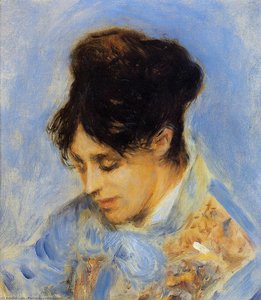
Portrait von Claude Renoir Gemälde


Ein beeindruckendes Ölgemälde von Pierre-Auguste Renoir zeigt seinen Sohn Claude Renoir bei künstlerischer Tätigkeit – ein Meisterwerk des Impressionismus und eine Hommage an Familie und Kunst!
 Mehr anzeigen
Erkunden Sie die lebendige Welt von Pierre-Auguste Renoir (1841–1919), einem führenden Impressionistenmaler, der für seine leuchtenden Porträts, Szenen des Pariser Lebens und weibliche Schönheit bekannt ist. Entdecken Sie sein Erbe und die künstlerischen Beiträge seiner Familie.
Handgefertigte Ölreproduktion
Handgemaltes Ölgemälde auf Leinwand in Ihrer Wunschgröße und mit Rahmen, auf Bestellung von unseren Künstlern angefertigt. ( Zum Druck wechseln Zum digitalen Bild wechseln)




P118B $10

P118H $10

P118W $10

P438Z $10

P508JH $12

P508YH $12

P805H $10

P805Z $10

P919BZ $10

P919G $10

P919XJ $10

P959ZH $10

P968JZ $12

W106C $8

W218G $10

W218JH $8

W218Y $10

W307PJ $10

W316G $10

W316PJ $8

W316Y $10

W398PJ $8

W4111J $10

W500HY $15

W500JH $15

W692G $12

W849H $8

W940BG $15

W953PJ $8




Standardformat
individuell anpassbar
CM
INCH
Wählen Sie aus unseren vordefinierten Formaten, die den ursprünglichen Proportionen des Kunstwerks entsprechen.
Loading sizes...

Breite
Höhe
Sie können Ihre eigenen Maße eingeben, um einen bestimmten Rahmen oder Platz auszufüllen. Wenn die gewählte Größe nicht den Proportionen des Originalbildes entspricht, werden wir das Kunstwerk entweder beschneiden oder das Gemälde durch zusätzliche, handgemalte Elemente erweitern. Ein digitales Mockup wird Ihnen zur Genehmigung zugesandt, bevor die Produktion beginnt.
Bitte beachten Sie, dass die Bildschirmvorschau nicht die tatsächliche Beschneidung oder Erweiterung widerspiegelt. Nur das Mockup zeigt die endgültige Komposition exakt an.
Obwohl Sondermaße verfügbar sind, empfehlen wir, eine Größe aus der vordefinierten Liste zu wählen, um die ursprünglichen Proportionen beizubehalten.
Beispiele für Anpassungsmöglichkeiten: Gesicht durch Kundenfoto ersetzen; Haustier hinzufügen (z. B. Katze durch Hund ersetzen); eine versteckte Nachricht im Hintergrund einfügen; Hintergrundlandschaft oder -elemente ändern.
Nach der Bestellung wird das TopImpressionists.com-Team dem Kunden Anweisungen per E-Mail zusenden und eine Mockup-Vorschau bereitstellen.
Nach der Bestellung wird das TopImpressionists.com-Team dem Kunden Anweisungen per E-Mail zusenden und eine Mockup-Vorschau bereitstellen.
Weltweiter Versand () in nur 3 bis 4 Wochen statt der üblichen 5 Wochen. (23 September). Keine Kompromisse bei der Qualität.

Kostenloser weltweiter Expressversand

Hochwertige Leinenleinwand

Vollständiger Versicherungsschutz beim Versand

Zollgebühren-Rückerstattungsgarantie

Garantie für exakte Farbtreue

100-tägiges Rückgaberecht (nur bei Mängeln)

100% Geld-zurück-Garantie

Angebot für Mengenrabatt
 Die Glasoption ist nur für Größen unter 110 cm verfügbar.

Portrait von Claude Renoir Gemälde
Reproduktionsmedium
Format der Reproduktion
-


Gesamtpreis
$ 269
Portrait of Claude Renoir Painting
The Portrait of Claude Renoir Painting, created by the renowned French artist Pierre-Auguste Renoir in 1907, stands as a luminous testament to Impressionist artistry—a captivating glimpse into the domestic sphere and familial bonds of one of France’s most celebrated painters. More than just an image, it's a carefully constructed tableau brimming with subtle nuances that speak volumes about Renoir’s artistic vision and his profound connection to his son’s formative years.The Artistic Setting: A Moment Frozen in Light
Renoir meticulously captured a tranquil afternoon scene within his Parisian studio. The composition centers around Claude Renoir, seated at a table draped in linen, illuminated by diffused sunlight filtering through the window—a characteristic element of Impressionist painting that prioritizes capturing fleeting atmospheric effects. Two vases adorned with delicate flowers grace the tabletop, positioned strategically to introduce splashes of color and visual interest into the scene. Their placement isn’t merely decorative; it subtly directs the viewer's gaze towards Claude and reinforces the sense of serenity. Beside them rests a cup, hinting at refreshment and contemplation—a quiet gesture mirroring the artist’s own inner state.Technique and Impressionistic Brilliance
Renoir’s masterful brushwork is immediately apparent upon observation. Loose, flowing strokes dominate the canvas, eschewing precise lines in favor of capturing the ephemeral quality of light and color. The pigment itself appears to shimmer—a technique perfected by Renoir during his Impressionist period—creating an illusion of depth and vibrancy that transcends mere representation. Notice how Renoir blends hues seamlessly, layering colors upon colors to achieve a velvety texture and imbue the painting with warmth. This deliberate disregard for academic conventions exemplifies Renoir’s commitment to portraying reality as perceived by the senses—a cornerstone of Impressionist philosophy.Historical Context: Family Portrait in an Era of Change
This portrait reflects the broader artistic trends of its time, marking a significant shift away from formal portraits that emphasized idealized beauty and aristocratic grandeur. The Impressionists sought to depict everyday life with honesty and spontaneity, rejecting the conventions of Salon art. Renoir’s decision to portray his son amidst creative activity speaks to the burgeoning interest in portraying familial relationships—a trend gaining momentum during the Belle Époque. It's a poignant reminder that even within the realm of artistic innovation, artists often drew inspiration from their personal lives and experiences.Symbolism and Emotional Resonance
Beyond its technical brilliance, the Portrait of Claude Renoir Painting resonates with profound emotional depth. The quiet intimacy of the scene—Claude absorbed in his artistic pursuits—suggests a celebration of creativity and familial affection. Renoir’s masterful use of color contributes to this emotive impact, conveying feelings of warmth, tranquility, and perhaps even nostalgia. It invites viewers to contemplate not only the beauty of the artwork itself but also the enduring legacy of Impressionist art as a reflection of human experience.- Artist: Pierre-Auguste Renoir
- Year: 1907
- Medium: Oil on Canvas
- Dimensions: Unknown
- Location: Musée d’Orsay, Paris
Ähnliche Kunstwerke




Biografie des Künstlers
frühes Leben und Karriere
pierre-auguste renoir, ein prägender französischer Künstler, wurde am 25. Februar 1841 in Limoges, Frankreich, geboren. Er spielte eine entscheidende Rolle bei der Gestaltung des Impressionismus und war bekannt für sein lebendiges Licht und seine gesättigten Farben. Renoirs Werk feierte Schönheit, insbesondere weibliche Sinnlichkeit, und platzierte ihn in einer Linie von Künstlern, die von Rubens bis Watteau reicht.Künstlerisches Erbe
Renoirs Vermächtnis erstreckte sich über seine Leinwand hinaus, da er der Patriarche einer Familie war, in der Kunst in verschiedenen Formen blühte. Seine Kinder, pierre renoir (1885–1952), Filmemacher jean renoir (1894–1979) und Keramikkünstler claude renoir (1901–1969), leisteten alle bedeutende Beiträge in ihren jeweiligen Bereichen. Sein Enkel, Filmemacher claude renoir (1913–1993), vertiefte das künstlerische Erbe der Familie weiter.Bekannte Werke und Museen
* Dance at Bougival, ein bemerkenswertes Gemälde von Renoir, zeigt seine Meisterschaft beim Festhalten der Essenz des Impressionismus. * Das Musée des Collettes, das sich in Cagnes-sur-Mer, Frankreich, befindet, ist ein Muss für Kunstliebhaber. Dieses Museum, das einst das Zuhause von Pierre-Auguste Renoir war, dient als Zeugnis seines Lebens und Werks und beherbergt fünfzehn seiner Gemälde. * Das Musée Maurice Denis, ein weiteres verstecktes Juwel in Frankreich, präsentiert eine beeindruckende Sammlung französischer Postimpressionistischer Gemälde aus dem späten 19. und frühen 20. Jahrhundert.Renoirs Kunst mit TopImpressionists entdecken
- Entdecken Sie den Charme des Musée des Collettes (Frankreich) und seiner Impressionistenkunst bei TopImpressionists: [https://TopImpressionists.com/@@/a@d3aupf](https://TopImpressionists.com/@@/a@d3aupf)
- Erkunden Sie die Wunder des Musée Maurice Denis (Frankreich) mit TopImpressionists: /de/art/show/art-d3aue3-de/
- Ansehen Sie sich Renoirs Gemälde, einschließlich Dance at Bougival, bei TopImpressionists: [https://TopImpressionists.com/@/pierre-auguste renoir](https://TopImpressionists.com/@/pierre-auguste%20renoir)

Pierre-Auguste Renoir
1841 - 1919 , Frankreich
Eckdaten zum Künstler
- Beeinflusste Künstler:
- Rubens
- Watteau
- Bemerkenswerte Werke:
- Tanz im Moulin de la Galette
- Bootsfahrt-Mittagessen
- Nach dem Bad
- Tanz in Bougival
- Geburtsdatum: 25. Februar 1841
- Geburtsort: Limoges, Frankreich
- Künstlerischer Stil: Impressionismus
- Nationalität: Französisch
- Todatum: 3. Dezember 1919
- Vollständiger Name: Pierre-Auguste Renoir
- Von Künstlern Beeinflusst:
- Camille Pissarro
- Édouard Manet
Verwandte Artikel

Impressionismus: Die 10 Meisterwerke, die eine Kunstbewegung prägten | TopImpressionists
Entdecken Sie die 10 Meisterwerke des Impressionismus! Von Monet bis Renoir – erfahren Sie die Geschichten hinter ikonischen Gemälden, Techniken & Farben. Hochwertige Reproduktionen auf TopImpressionists.com.

Pierre-Auguste Renoir: Die 25 Meisterwerke des Impressionismus für Ihr Zuhause | TopImpressionists
Entdecken Sie die 25 schönsten Meisterwerke von Pierre-Auguste Renoir! Tauchen Sie ein in die Welt des Impressionismus, erleben Sie berühmte Gemälde wie 'Bal au moulin de la Galette' und finden Sie hochwertige Kunstdrucke für Ihr Zuhause. Jetzt auf TopImpressionists.com!

Claude Monet: Die 25 Meisterwerke des Impressionismus für Ihr Zuhause | TopImpressionists
Entdecken Sie die 25 Meisterwerke von Claude Monet! Tauchen Sie ein in die Welt des Impressionismus, erleben Sie Seerosen, Sonnenaufgänge & Kathedralen. Hochwertige Reproduktionen für Ihr Zuhause – exklusiv auf TopImpressionists.com.

Impressionismus Meisterwerke: Die Top 10 Kunstwerke für Ihr Zuhause | TopImpressionists
Entdecken Sie die Top 10 Meisterwerke des Impressionismus! Von Monet bis Renoir – erfahren Sie die Geschichten hinter berühmten Gemälden, Techniken & Farben. Hochwertige Kunstdrucke auf TopImpressionists.com.

The Luminous World of Pierre-Auguste Renoir: An Exploration of Impressionism's Sensuous Embrace
Explore the captivating world of Pierre-Auguste Renoir! Discover his life, iconic Impressionist masterpieces & enduring legacy with our expert guide. High-quality reproductions available.
Entdecken Sie Kunstwerke, die nach Themen, Stilen und Merkmalen sortiert sind.


