

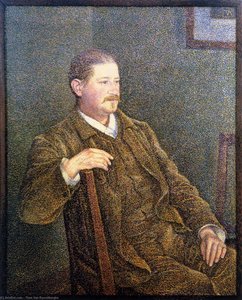
![Self Portrait With Pipe [sketch] — Theo Van Rysselberghe](/media/artworks/images-full/9e/7b/9e7bce3a3cf712911704726cb84ae06e.jpg)
 In echtem Maßstab anzeigen
 Versenden als Grußkarte
 Teilen
 Details anzeigen
 Leitfaden

 Herunterladen
 Ähnliche Objekte
 Röntgenaufnahme
 Diashow
 Besucherstatistiken
Self Portrait with Pipe [sketch]


Explore Théo van Rysselberghe's evocative Self Portrait with Pipe (1880), a seminal Neo-Impressionist masterpiece capturing light and introspection—a cornerstone of Belgian art history.
 Mehr anzeigen
Theo van Rysselberghe: Belgischer Neo-Impressionist! Entdecken Sie lebendige Landschaften, Porträts & marokkanische Szenen. Ein Schlüsselakteur der Les XX.
Handgefertigte Ölreproduktion
Handgemaltes Ölgemälde auf Leinwand in Ihrer Wunschgröße und mit Rahmen, auf Bestellung von unseren Künstlern angefertigt. ( Zum Druck wechseln Zum digitalen Bild wechseln)




P118B $10

P118H $10

P118W $10

P438Z $10

P508JH $12

P508YH $12

P805H $10

P805Z $10

P919BZ $10

P919G $10

P919XJ $10

P959ZH $10

P968JZ $12

W106C $8

W218G $10

W218JH $8

W218Y $10

W307PJ $10

W316G $10

W316PJ $8

W316Y $10

W398PJ $8

W4111J $10

W500HY $15

W500JH $15

W692G $12

W849H $8

W940BG $15

W953PJ $8




Standardformat
individuell anpassbar
CM
INCH
Wählen Sie aus unseren vordefinierten Formaten, die den ursprünglichen Proportionen des Kunstwerks entsprechen.
Loading sizes...

Breite
Höhe
Sie können Ihre eigenen Maße eingeben, um einen bestimmten Rahmen oder Platz auszufüllen. Wenn die gewählte Größe nicht den Proportionen des Originalbildes entspricht, werden wir das Kunstwerk entweder beschneiden oder das Gemälde durch zusätzliche, handgemalte Elemente erweitern. Ein digitales Mockup wird Ihnen zur Genehmigung zugesandt, bevor die Produktion beginnt.
Bitte beachten Sie, dass die Bildschirmvorschau nicht die tatsächliche Beschneidung oder Erweiterung widerspiegelt. Nur das Mockup zeigt die endgültige Komposition exakt an.
Obwohl Sondermaße verfügbar sind, empfehlen wir, eine Größe aus der vordefinierten Liste zu wählen, um die ursprünglichen Proportionen beizubehalten.
Beispiele für Anpassungsmöglichkeiten: Gesicht durch Kundenfoto ersetzen; Haustier hinzufügen (z. B. Katze durch Hund ersetzen); eine versteckte Nachricht im Hintergrund einfügen; Hintergrundlandschaft oder -elemente ändern.
Nach der Bestellung wird das TopImpressionists.com-Team dem Kunden Anweisungen per E-Mail zusenden und eine Mockup-Vorschau bereitstellen.
Nach der Bestellung wird das TopImpressionists.com-Team dem Kunden Anweisungen per E-Mail zusenden und eine Mockup-Vorschau bereitstellen.
Weltweiter Versand () in nur 3 bis 4 Wochen statt der üblichen 5 Wochen. (23 September). Keine Kompromisse bei der Qualität.

Kostenloser weltweiter Expressversand

Hochwertige Leinenleinwand

Vollständiger Versicherungsschutz beim Versand

Zollgebühren-Rückerstattungsgarantie

Garantie für exakte Farbtreue

100-tägiges Rückgaberecht (nur bei Mängeln)

100% Geld-zurück-Garantie

Angebot für Mengenrabatt
 Die Glasoption ist nur für Größen unter 110 cm verfügbar.

Self Portrait with Pipe [sketch]
Reproduktionsmedium
Format der Reproduktion
-


Gesamtpreis
$ 269
A Quiet Contemplation Captured in Light
In the intimate stillness of 1880, Theo van Rysselberghe captured more than just his own likeness; he captured a moment of profound psychological depth. In his Self Portrait with Pipe [sketch], the artist presents us with an earnest, unblinking gaze that bridges the gap between the canvas and the observer. Seated indoors, the subject is enveloped in an atmosphere of quiet introspection, where every detail—from the subtle texture of his attire to the steady presence of his pipe—serves to deepen the narrative of a man lost in thought. This is not merely a study of a face, but an invitation into the artist's inner sanctum, offering a window into the contemplative soul that would later define much of the Neo-Impressionist movement.
The technical mastery displayed in this early work hints at the revolutionary path van Rysselberghe was destined to tread. While his later fame rests upon the scientific precision of pointillism, this piece showcases a remarkable command of oil on canvas and a burgeoning sensitivity to light. The artist utilizes a meticulous approach reminiscent of the cloisonné technique, applying layers that create a rich, textural landscape of shadow and luminosity. Through a subdued palette, he achieves a sense of serene melancholy, using harmonious tones to build a composition that feels both physically grounded and spiritually ethereal. For the discerning collector or interior designer, this painting offers a sophisticated anchor for any space, providing a focal point that commands attention through subtlety rather than spectacle.
Symbolism and the Spirit of an Era
Beyond the visual surface, the artwork is steeped in the intellectual currents of late 19th-century Belgium. The inclusion of the pipe is far from incidental; it acts as a potent symbol of philosophical engagement, solitude, and the slow, deliberate passage of time. It represents the intellectual pursuit that characterized the era's burgeoning interest in psychology and self-awareness. As the viewer meets the artist's direct gaze, the pipe becomes a companion in thought, suggesting that the act of looking is itself an act of deep reflection.
Historically, this work emerges from a period of intense artistic experimentation. As van Rysselberghe moved away from the fleeting impressions of his predecessors toward a more structured exploration of color theory, this sketch stands as a vital precursor to his mature style. It embodies the tension between traditional realism and the scientific advancements in optical research that were beginning to reshape the art world. To possess a reproduction of this piece is to hold a fragment of art history—a moment where the weight of tradition meets the dawn of modern perception, making it an exquisite addition to any curated collection seeking both historical gravity and timeless emotional resonance.
Ähnliche Kunstwerke



Biografie des Künstlers
Frühes Leben und Ausbildung
Theo van Rysselberghe, eine bedeutende Figur in der europäischen Kunstszene des frühen 20. Jahrhunderts, wurde am 23. November 1862 in Gent, Belgien, in einer französischsprachigen bürgerlichen Familie geboren. Er begann seine künstlerische Laufbahn unter der Anleitung von Theo Canneel an der Akademie von Gent und studierte später ab 1879 an der Académie Royale des Beaux-Arts in Brüssel.Künstlerische Entwicklung und Einflüsse
Van Rysselberghes frühe Arbeiten, wie beispielsweise *Selbstbildnis mit Pfeife (1880)*, waren durch düstere Farben gekennzeichnet und spiegelten die belgische Realitätstradition jener Zeit wider. Sein *Kind in einer offenen Stelle des Waldes (1880)* markierte jedoch eine Abkehr von diesem Stil und einen frühen Schritt hin zum Impressionismus. Seine anschließenden Reisen nach Marokko (1882-1888) beeinflussten seine Arbeit maßgeblich, wie man an *Arabischer Strassenpflasterer (1882)*, *Arabischer Junge (1882)* und *Ruhender Wächter (1883)* erkennen kann.Gründung der Les XX und bedeutende Werke
Als Mitbegründer des belgischen Künstlerkreises Les XX am 28. Oktober 1883 spielte van Rysselberghe eine entscheidende Rolle in der europäischen Kunstszene. Seine *Arabische Phantasia (1884)*, ein großes, exotisches Gemälde, ist sein bekanntestes Werk aus dieser Zeit und zeugt von seiner Besessenheit vom Licht.- Wichtige Werke:
- *Spanische Frau (1881) *
- *Sevillanische Frau (1882)*
- *Abraham Sicsu, Dolmetscher in Tanger (1884)*
Wirken und Museumsbestände
Van Rysselberghes Vermächtnis ist in verschiedenen Museumsbeständen zu finden, darunter im Museum voor Schone Kunsten (Gent, Belgien), das mehrere seiner Werke beherbergt, wie beispielsweise *Eine Lesende* und *Selbstbildnis mit Pfeife [Skizze]*. Sein Einfluss auf die Entwicklung des Neo-Impressionismus in Europa ist unbestreitbar.- Museumsbestände:
- Musée du Luxembourg (Frankreich) - mit *Pointe-Saint-Pierre, Saint-Tropez*
- Theo van Rysselberghes Sammlung auf TopImpressionists
Schlussfolgerung
Theo van Rysselberghe, ein belgischer neoimpressionistischer Maler, hat seine bleibenden Spuren in der europäischen Kunstszene hinterlassen. Seine künstlerische Entwicklung, beeinflusst von seinen Reisen und Interaktionen mit anderen Künstlern, führte zu einem einzigartigen Stil, der das Publikum weiterhin in seinen Bann zieht. Entdecken Sie weitere seiner Werke und seines Vermächtnisses auf TopImpressionists.
Theo van Rysselberghe
1862 - 1926 , Belgien
Eckdaten zum Künstler
- Beeinflusste Künstler: ['Georges Seurat']
- Bemerkenswerte Werke:
- Regenbogen
- Arabischer Straßenkömmler
- Arabischer Junge
- Ruhender Wächter
- Geburtsdatum: 23. November 1862
- Geburtsort: Gent, Belgien
- Künstlerische Bewegung: Neo-Impressionismus
- Nationalität: Belgisch
- Sterbedatum: 13. Dezember 1926
- Vollständiger Name: Theo van Rysselberghe
Verwandte Artikel

Timeless Impressionism: Bringing the Soul of Monet and Van Gogh into Your Cultural Space
Discover the soul of Impressionism. Explore how the luminous light of Monet and the emotional depth of Van Gogh can transform your home with premium, hand-painted oil reproductions designed for the discerning art lover.

Capturing the Light: A Journey Through the Ethereal Magic of Impressionism and Post-Impressionism
Embark on a cultural journey through the luminous world of Impressionism. Discover the profound beauty of Monet, Van Gogh, and Cézanne through expert art history insights and explore how to bring these timeless masterpieces into your home with museum-quality hand-painted reproductions.
Entdecken Sie Kunstwerke, die nach Themen, Stilen und Merkmalen sortiert sind.


