


 In echtem Maßstab anzeigen
 Versenden als Grußkarte
 Teilen
 Details anzeigen
 Leitfaden öffnen

 Herunterladen
 Ähnliche Objekte
 Röntgenaufnahme
 Diashow
 Besucherstatistiken
Die Schachspieler
 Öl auf Tafel
- Wandkunst
- Zeitgenössischer Realismus
 1876
1876- 19. Jahrhundert
 30.0 x 43.0 cm
 Metropolitan Museum of Art
Eine meisterhafte Darstellung des amerikanischen Realismus: Thomas Eakins fängt in diesem Ölgemälde von 1876 die stille Intensität dreier Männer bei einer Schachpartie ein und lädt Sie zur Erkundung dieser zeitlosen Szene ein.
 Mehr anzeigen
Entdecken Sie Thomas Eakins (1844-1916), den amerikanischen Realisten! Beeindruckende Porträts, dynamische Darstellungen & ein Meister der Anatomie. Jetzt auf TopImpressionists!
Giclée / Kunstdruck
Giclée- oder Leinwanddruck in Museumsqualität mit schneller Produktion und flexiblen Veredelungsoptionen. ( Handgemalte Reproduktion kaufen Zum digitalen Bild wechseln)




P118B €10

P118H €10

P118W €10

P438Z €10

P508JH €12

P508YH €12

P805H €10

P805Z €10

P919BZ €10

P919G €10

P919XJ €10

P959ZH €10

P968JZ €12

W106C €8

W218G €10

W218JH €8

W218Y €10

W307PJ €10

W316G €10

W316PJ €8

W316Y €10

W398PJ €8

W4111J €10

W500HY €15

W500JH €15

W692G €12

W849H €8

W940BG €15

W953PJ €8




Standardformat
individuell anpassbar
CM
INCH
Wählen Sie aus unseren vordefinierten Formaten, die den ursprünglichen Proportionen des Kunstwerks entsprechen.
Loading sizes...

Breite
Höhe
Sie können Ihre eigenen Maße eingeben, um ein bestimmtes Format oder einen speziellen Platz einzupassen. Wenn das von Ihnen gewählte Format nicht den Proportionen des Originalbildes entspricht, werden wir das Kunstwerk entweder beschneiden oder das Bild mit einem gespiegelten oder einfarbigen Rand erweitern. Ein digitaler Entwurf wird Ihnen zur Genehmigung zugesandt, bevor die Produktion beginnt.
Bitte beachten Sie, dass die Vorschau auf dem Bildschirm nicht den tatsächlichen Zuschnitt oder die Erweiterung widerspiegelt. Nur der Entwurf zeigt die endgültige Komposition präzise an.
Obwohl Sondermaße verfügbar sind, empfehlen wir die Auswahl eines Maßes aus der vordefinierten Liste, um die ursprünglichen Proportionen zu bewahren.
Weltweiter Versand () innerhalb von 2 Wochen statt der üblichen 4/5 Wochen. (3 Oktober)

Kostenloser weltweiter Expressversand

Hochwertige Leinenleinwand

Vollständiger Versicherungsschutz beim Versand

Zollgebühren-Rückerstattungsgarantie

Garantie für exakte Farbtreue

100-tägiges Rückgaberecht (nur bei Mängeln)

100% Geld-zurück-Garantie

Angebot für Mengenrabatt
 Die Glasoption ist nur für Größen unter 110 cm verfügbar.

Die Schachspieler
Giclée / Kunstdruck
Format der Reproduktion
-


Gesamtpreis
€ 59
A Portrait of Domestic Life and Artistic Influence: Examining Thomas Eakins’s ‘The Chess Players’
Thomas Eakins (1844-1916) stands as an unparalleled figure in American art—a painter who relentlessly pursued realism, dissecting the human condition with a meticulous gaze that simultaneously captivated and challenged his contemporaries. Unlike the romantic landscapes prevalent during his era, Eakins focused on capturing the everyday realities of Philadelphia’s intellectual circles: doctors, rowers, artists, and their families – subjects rendered with an astonishing level of anatomical accuracy and psychological depth.
‘The Chess Players,’ completed in 1876, exemplifies this distinctive approach. This striking oil on wood panel depicts a seemingly simple scene—three men engaged in a chess game within the elegantly furnished parlor of a Philadelphia home. However, beneath its surface lies a complex tapestry of observation and artistic consideration. Eakins’s father is present, watching intently as two friends strategize, subtly acknowledging his influence on the young artist himself.
Style and Technique: Academic Precision Meets Impressionistic Observation
Eakins's stylistic choices reflect the prevailing academic tradition championed by Jean-Léon Gérôme, whose portrait hung prominently above the mantelpiece—a deliberate homage to Gérôme’s unwavering commitment to anatomical correctness and meticulous detail. Yet, Eakins transcends mere replication; he employs a technique that blends academic precision with subtle impressionistic nuances. The artist painstakingly renders the textures of fabric, wood, and skin, capturing light and shadow with remarkable subtlety. This careful construction contributes to an atmosphere of quiet contemplation and understated drama.
Historical Context: Philadelphia’s Intellectual Landscape
The painting emerged during a period of significant intellectual ferment in Philadelphia—a city renowned for its medical schools and burgeoning artistic community. Eakins's depiction captures the spirit of this era, reflecting the fascination with observation and scientific inquiry that characterized the Victorian age. The inclusion of Gérôme’s portrait underscores the importance of artistic precedent and the influence of European academic art on American painters.
Symbolism: Beyond the Game – Fatherhood and Artistic Legacy
More than just a depiction of a chess game, ‘The Chess Players’ speaks to broader themes of familial bonds and artistic inheritance. The Latin inscription on the chess table— “Benjamin Eakins’s son painted this”—serves as a poignant reminder of Eakins's personal connection to his father and the formative role he played in shaping his artistic vision. The stillness of the room, punctuated by the rhythmic ticking of the clock, reinforces the sense of timelessness and invites viewers to contemplate the enduring power of observation and representation.
Emotional Impact: A Moment Frozen in Time
'The Chess Players' transcends its formal elements to evoke a profound emotional resonance. The painting captures a fleeting moment of human interaction—a quiet exchange between father and son amidst intellectual pursuits—that speaks to universal themes of connection, contemplation, and the pursuit of knowledge. Its understated elegance and masterful execution continue to inspire admiration and offer a glimpse into the soul of an artist deeply attuned to his surroundings.
Fragen & Antworten
Wie viele Personen sehen "Die Schachspieler"?
Statistiken zu "Die Schachspieler" von Thomas Eakins finden Sie auf der Statistiken-Seite des Kunstwerks: monatliche Aufrufe des Kunstwerks, Aufrufe der Werke des Künstlers sowie eine Aufschlüsselung der jüngsten Besucher nach Land und Sprache.
Welches Format hat "Die Schachspieler" von Thomas Eakins?
Das Format von „Die Schachspieler“ ist Querformat. Dies ist hilfreich bei der Planung, wo eine Reproduktion platziert werden soll.
In welcher Größe wird empfohlen, "Die Schachspieler" zu drucken?
Für "Die Schachspieler" wird ein Druckformat von Klein empfohlen. Weitere Größen sind im gleichen Seitenverhältnis verfügbar.
In welchem Jahr wurde "Die Schachspieler" geschaffen?
"Die Schachspieler" stammt aus dem Jahr 1876. Dieses Datum ordnet das Werk in die Schaffensperiode von Thomas Eakins sowie in dessen Epoche ein.
Wie alt war Thomas Eakins, als „Die Schachspieler“ geschaffen wurde?
Thomas Eakins war 32 Jahre alt, als Die Schachspieler im Jahr 1876 geschaffen wurde. Das Alter berechnet sich aus dem Geburtsjahr des Künstlers, 1844.
Wer hat "Die Schachspieler" erschaffen?
"Die Schachspieler" wird Thomas Eakins zugeschrieben.
Welche Technik wurde für "Die Schachspieler" verwendet und wann wurde es geschaffen?
Das Medium von "Die Schachspieler" von Thomas Eakins ist Öl auf Tafel, und das Werk wird auf 1876 datiert.
Biografie des Künstlers
Ein Leben der Realitätsdarstellung
Thomas Cowperthwait Eakins, ein amerikanischer Realist, Fotograf, Bildhauer und Kunstpädagoge, hat bleibende Spuren in der amerikanischen Kunstgeschichte hinterlassen. Geboren am 25. Juli 1844 in Philadelphia, Pennsylvania, war Eakins' Leben ein Beweis für sein unerschütterliches Engagement, die Essenz der Realität einzufangen.Frühes Leben und Ausbildung
Eakins’ frühes Leben war geprägt von seinem ausgeprägten Interesse am Zeichnen und den Wissenschaften. Er besuchte die Central High School und studierte später an der Pennsylvania Academy of the Fine Arts, wo er seine Fähigkeiten in Zeichnung und Anatomie verfeinerte. Seine Zeit in Europa, insbesondere unter der Anleitung von Jean-Léon Gérôme in Paris, beeinflusste seinen künstlerischen Ansatz maßgeblich.Ein Schaffen geprägt vom Realismus
Eakins’ Werk zeichnet sich durch einen unerschütterlichen Realismus aus, ein Merkmal, das ihn von seinen Zeitgenossen unterschied. Seine Porträts, deren Anzahl sich auf mehrere hundert beläuft, bieten einen ergreifenden Einblick in das intellektuelle und soziale Leben Philadelphias im späten 19. und frühen 20. Jahrhundert. Bemerkenswerte Werke sind Max Schmitt in einem Einzahlschiff, das nicht nur Eakins’ Meisterschaft im Erfassen von Bewegung demonstriert, sondern auch sein tiefes Interesse an der menschlichen Form widerspiegelt.Lehre und Kontroversen
Eakins' Wirken als Dozent an der Pennsylvania Academy of the Fine Arts war sowohl von Einfluss als auch von Kontroversen geprägt. Sein Ansatz in der Lehre, der die Bedeutung des Studiums der menschlichen Form aus dem Leben betonte, führte oft zu Spannungen mit seinen Kollegen. In Verbindung mit persönlichen Skandalen verkürzte dies seinen Erfolg und schädigte seinen Ruf während seines Lebens.Vermächtnis
Trotz der Herausforderungen, denen er sich stellen musste, wird Eakins heute als „der stärkste, tiefgründigste Realist in der amerikanischen Kunst des neunzehnten und frühen zwanzigsten Jahrhunderts“ gefeiert. Seine Werke sind in verschiedenen Museen zu finden, darunter das Metropolitan Museum of Art, das mehrere seiner bemerkenswerten Werke beherbergt.- Der Champion Single Sculls (Max Schmitt in einem Einzahlschiff) - ein bahnbrechendes Werk, das Eakins’ frühe Meisterschaft im Erfassen von Bewegung demonstriert.
- Thomas Eakins – Entdecken Sie die umfangreiche Sammlung von Eakins' Werken auf TopImpressionists, die einen tiefen Einblick in seine künstlerische Entwicklung und seinen Stil bietet.
- Wikipedia: Thomas Eakins – Tauchen Sie ein in den umfassenden Wikipedia-Eintrag über Eakins, der sein Leben, Einflüsse und die Auswirkungen seiner Arbeit auf die amerikanische Kunstgeschichte detailliert beschreibt.

Thomas Eakins
1844 - 1916 , Vereinigte Staaten von Amerika
Eckdaten zum Künstler
- Beeinflusste Künstler: ['Jean-Léon Gérôme']
- Bemerkenswerte Werke:
- Max Schmitt in einem Einzahlschiff
- Die Großklinik
- Geburtsdatum: 25. Juli 1844
- Geburtsort: Philadelphia, USA
- Künstlerische Richtung: Realismus
- Nationalität: Amerikanisch
- Todatum: 25. Juni 1916
- Vollständiger Name: Thomas Cowperthwait Eakins
Verwandte Artikel

The Timeless Charm of Oil on Board: Reimagining Texture and Light through the Impressionist Lens
Discover the profound intimacy of oil on panel. Explore how Impressionist masters used rigid supports to capture light, texture, and impasto depth through exquisite, handmade oil reproductions for discerning collectors.

The Unvarnished Truth: A Cultural Journey Through the Soul of American Realism
Explore the profound beauty of American Realism. From the Ashcan School's urban grit to intimate portraits, discover how artists captured the authentic soul of a nation through unvarnished truth and masterful observation.
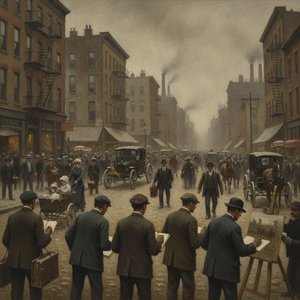
The Ashcan School: Capturing the Raw, Unfiltered Soul of Urban Life through American Realism
Discover the raw beauty of the Ashcan School. Explore how masters like Bellows and Henri captured the gritty, vibrant soul of early 20th-century New York through profound American Realism and evocative urban landscapes.
Entdecken Sie Kunstwerke, die nach Themen, Stilen und Merkmalen sortiert sind.


