


 Vorschau anzeigen
 Versenden
 Teilen
 Details anzeigen
 Leitfaden

 Herunterladen
 Ähnliche Objekte
 Röntgenaufnahme
 Diashow
 Statistiken
The Recitation


Explore 'The Recitation' by Thomas Wilmer Dewing – a melancholic Impressionist painting of two women in a serene landscape. Discover its layered texture & evocative mood.
 Weiterlesen
Entdecken Sie Thomas Wilmer Dewings (1851-1938) ätherische Tonalismus-Gemälde. Bekannt für stimmungsvolle Porträts adliger Frauen & traumhafte Szenen, ein Schlüsselfigur des amerikanischen Aestheticismus.
Erwerben Sie ein hochauflösendes, optimiertes digitales Bild, das der Online-Vorschau weit überlegen ist.
Jede Datei wird von unseren hauseigenen Spezialisten mit modernsten Werkzeugen und fachmännischer manueller Retusche sorgfältig vorbereitet. Wir stellen sicher, dass jedes Bild eine außergewöhnliche Klarheit, präzise Farbgenauigkeit und feinste Details aufweist.
Die endgültige Datei wird innerhalb von 72 Stunden per E-Mail zugestellt und ist für den sofortigen Einsatz in professionellen, redaktionellen und Druckumgebungen optimiert. Es handelt sich um dieselbe Qualität, der führende Designstudios, Verlage und Galerien vertrauen.
Digitales Kunstwerk
Laden Sie eine hochauflösende Datei für die persönliche Präsentation, den Druck und kreative Projekte herunter. ( Zum Druck wechseln Handgemalte Reproduktion bestellen)
In jeder Bestellung digitaler Bilder enthalten
Professionelle digitale Bereitstellung, garantiert
Wenn Sie sich für TopImpressionists.com entscheiden, erhalten Sie nicht nur ein Bild – Sie erhalten ein professionell aufbereitetes digitales Kunstwerk, das mit höchster Präzision erstellt und durch eine Zufriedenheitsgarantie abgesichert wird. Hier ist alles, was automatisch mit Ihrer Bestellung geliefert wird:

Schnelle E-Mail-Zustellung
Ihre hochauflösende digitale Bilddatei wird Ihnen innerhalb von 72 Stunden nach der Bestellung per E-Mail zugestellt – bereit zur sofortigen Verwendung.

KI-optimierte digitale Datei
Ihre Kunstwerke werden professionell mithilfe fortschrittlicher KI-Tools und manueller Bearbeitung optimiert, um maximale Detailtreue, Klarheit und Farbgenauigkeit zu gewährleisten.

Kostenloser lebenslanger Neudruckservice
Datei versehentlich gelöscht oder verloren? Keine Sorge – wir senden sie Ihnen jederzeit kostenlos erneut zu.

Keine Einfuhrgebühren – jemals
Genießen Sie Ihr Kunstwerk sofort ohne Zollgebühren, Einfuhrabgaben oder Versandkosten – digitale Downloads sind immer steuerfrei.

Garantierte Farbtreue
Wir garantieren, dass Ihr digitales Bild mithilfe professioneller Werkzeuge und Farbmanagement die Originalfarben so präzise wie möglich wiedergibt.

100-Tage-Zufriedenheitsgarantie
Sollten Sie mit Ihrem digitalen Bild nicht zufrieden sein, werden wir es überarbeiten oder 100% innerhalb von 100 Tagen erstatten – ohne Wenn und Aber.

100% Geld-zurück-Garantie
Nicht zufrieden? Erhalten Sie innerhalb von 100 Tagen nach Erhalt Ihrer digitalen Datei eine vollständige Rückerstattung – ohne Wenn und Aber.

Rabatte bei Großbestellungen
3 Bilder kaufen, 10% sparen – 5 Bilder kaufen, 15% sparen – Ab 10 Bildern 20% sparen. Ideal für kreative Projekte, Galerien und Agenturen.
A Symphony of Silence: The Essence of The Recitation
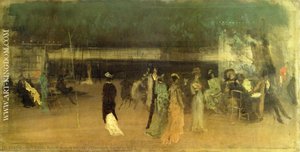
In the quietude of Thomas Wilmer Dewing’s 1891 masterpiece, The Recitation, viewers are invited into a world where time seems to suspend itself. This quintessential example of Tonalist painting transcends a mere depiction of two women in an outdoor setting; it is a profound exploration of mood and atmosphere. The scene unfolds with a gentle, melancholic grace, presenting a woman dressed in black seated prominently in the foreground, while another figure stands slightly behind her, her gaze lost toward the distant horizon. There is a palpable sense of stillness here, an invitation to step away from the clamor of the modern world and enter a space of pure, uninterrupted contemplation.
The emotional weight of the piece is carried by Dewing’s masterful use of color and light. The palette is dominated by a harmonious range of muted greens—from delicate pale celadon to deeper, more somber olive shades. These tones do not merely decorate the landscape; they breathe life into the atmosphere, imbuing the environment with a serenity that is tinged with a subtle, haunting melancholy. The lighting is soft and diffused, casting a gentle glow across the figures without the intrusion of harsh shadows, which further enhances the dreamlike, ethereal quality of the moment.
Technique and the Tonalist Vision
To behold The Recitation is to witness the meticulous skill of an artist deeply rooted in the English Aesthetic tradition. Dewing employs a technique characterized by the layering of thin glazes of oil paint onto the canvas, a process that builds a rich texture and an incredible sense of depth. His brushwork, while appearing loose and expressive, serves a deliberate purpose: to capture the fleeting nuances of light and shadow that define the Tonalist style. This approach allows for a soft, organic blurring of shapes, where lines are not sharply delineated but rather emerge from the atmospheric haze.
This painterly method creates an illusionistic depth that feels remarkably immersive. The texture appears layered and complex, inviting the eye to wander through the lush greenery and settle upon the subtle gradations of color. For the collector or interior designer, this technique offers a sophisticated visual richness; the painting does not demand attention through jarring contrasts but rather commands it through a steady, captivating presence that complements a refined and tranquil interior space.
Symbolism and the Human Experience
Beyond its aesthetic beauty, The Recitation serves as a poignant meditation on solitude and the inner life. The posture of the seated woman—calm, yet deeply absorbed in her own thoughts—suggests a deliberate retreat from external distractions. There is a beautiful tension in the composition between the two figures; the distance between them can be interpreted as a symbol of emotional separation or perhaps an unfulfilled longing. As one figure gazes toward the unreachable horizon, the painting touches upon themes of introspection and the human desire to connect with something beyond the immediate present.
This work stands as a testament to the power of art to capture the intangible. It is a piece that speaks to the soul, offering a sense of peace and a reminder of the beauty found in quiet moments of reflection. Whether viewed as a historical triumph of the American Tonalist movement or as a timeless portrait of human emotion, The Recitation remains an evocative masterpiece, perfect for those who seek to surround themselves with art that inspires deep thought and emotional resonance.
Fragen & Antworten
Für welche Verwendung und welchen Raum wird "The Recitation" von Thomas Wilmer Dewing empfohlen?
Empfohlene Verwendung (Accent) und Raum (Living Room) sind die zwei Empfehlungen für "The Recitation" von Thomas Wilmer Dewing.
Für welches Format wird die Platzierung von „The Recitation“ im Format Panoramic empfohlen?
Format (Panoramic) und der empfohlene Raum (Living Room) sind die beiden Platzierungshinweise für "The Recitation" von Thomas Wilmer Dewing.
Welches Format hat "The Recitation"?
"The Recitation" von Thomas Wilmer Dewing hat ein Panoramic-Format. Das Format beschreibt die Proportionen der Komposition.
Ähnliche Kunstwerke



Biografie des Künstlers
Frühes Leben und Ausbildung
Thomas Wilmer Dewing, ein amerikanischer Maler, wurde am 4. Mai 1851 in Boston, Massachusetts, geboren. Sein künstlerischer Werdegang begann mit einer lithografischen Lehre, die ihn später an die renommierte Académie Julian in Paris führte, wo er ab 1887 unter Gustave Boulanger und Jules Lefebvre studierte.Künstlerischer Stil und Werke
Dewings künstlerischer Stil ist durch seine Tonalistenmalerei gekennzeichnet, einem Genre, das tief in der englischen Ästhetik verwurzelt ist. Seine bevorzugten Sujets waren aristokratische Frauen, oft dargestellt in stimmungsvollen, traumähnlichen Umgebungen, die Musikinstrumente spielten oder sich introspektiven Tätigkeiten widmeten.- Woman in Black: Portrait of Maria Oakey Dewing (1887), ein ergreifendes Gemälde auf Holztafel, zeigt seine Frau, eine ebenso talentierte Malerin mit umfangreicher formaler Kunstausbildung.
- Lady in Gold (1912), heute im Brooklyn Museum, veranschaulicht seine Meisterschaft darin, das Wesen seiner Sujets einzufangen.
Lehre und Verbindungen
Dewing war Gründungsmitglied der "Ten American Painters" im Jahr 1898 und lehrte an der Art Students League of New York. Seine Zugehörigkeit zur Society of Landscape Painters, gegründet 1899, festigte seine Position innerhalb der Tonalistenbewegung weiter.Leben und Spätwerk
Nach 1920 ging Dewings künstlerische Produktivität zurück. Er verstarb am 5. November 1938 in New York City und hinterließ ein Vermächtnis fesselnder, ätherischer Porträts, die Kunstliebhaber weiterhin faszinieren.- Wichtige Werke und Sammlungen, die bei TopImpressionists reproduziert werden können:
- The White Dress
- Woman in Black: Portrait of Maria Oakey Dewing
- Lady in Gold
Zusätzliche Informationen
Dewings Eltern, Paul und Sophronia Durant Dewing, heirateten 1834. Sein Vater war zu dieser Zeit Betreiber einer Papiermühle. Nach dem Tod seines Vaters arbeitete Dewing als Lithograph unter Dominique Fabronius. Er studierte an der Académie Julian in Paris bei Gustave-Rudolphe Boulanger und Jules-Joseph Lefèbvre.
Dewings Werke befinden sich in bedeutenden Sammlungen, darunter im Freer Gallery of Art des Smithsonian Instituts. Bekannte Sammler waren John Gellatly und Charles Lang Freer.

Thomas Wilmer Dewing
1851 - 1938 , Vereinigte Staaten von Amerika
Auf einen Blick
- Bemerkenswerte Werke:
- Woman in Black
- Lady in Gold
- The White Dress
- Einflüsse:
- Gustave Boulanger
- Jules Lefebvre
- Geburtsdatum: 4. Mai 1851
- Geburtsort: Boston, USA
- Künstlerische Richtung: Tonalismus, Ästhetizismus
- Nationalität: Amerikanisch
- Sterbedatum: 5. November 1938
- Vollständiger Name: Thomas Wilmer Dewing