Vorschau anzeigen
 Versenden
 Teilen
 Details anzeigen
 Leitfaden

 Herunterladen
 Ähnliche Objekte
 Röntgenaufnahme
 Diashow
 Q&A
Q&A Statistiken
Mercure et les Grâces
 Acryl auf Leinwand
- Wandkunst
- Venetian Renaissance
 1576
1576- Renaissance
 146.0 x 155.0 cm
 Palazzo Ducale
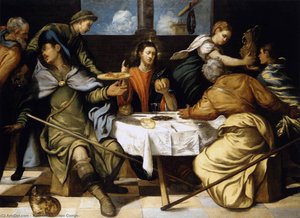
Ein Meisterwerk von Tintoretto zeigt Merkur und die drei Grazie – eine beeindruckende Darstellung der griechischen Mythologie im Palazzo Ducale von Venedig.
 Weiterlesen
Entdecken Sie Tintoretto (Jacopo Comin), einen Meister der venezianischen Renaissance, der für seine dramatischen Kompositionen, kräftige Pinselstriche ('Il Furioso') und innovative Verwendung von Licht und Perspektive bekannt ist. Erkunden Sie ikonische Werke und sein Erbe in der italienischen Kunst.
Giclée / Kunstdruck
Giclée- oder Leinwanddruck in Museumsqualität mit schneller Produktion und flexiblen Veredelungsoptionen. ( Handgemalte Reproduktion bestellen Zum digitalen Bild wechseln)




P118B €10

P118H €10

P118W €10

P438Z €10

P508JH €12

P508YH €12

P805H €10

P805Z €10

P919BZ €10

P919G €10

P919XJ €10

P959ZH €10

P968JZ €12

W106C €8

W218G €10

W218JH €8

W218Y €10

W307PJ €10

W316G €10

W316PJ €8

W316Y €10

W398PJ €8

W4111J €10

W500HY €15

W500JH €15

W692G €12

W849H €8

W940BG €15

W953PJ €8




Standardformat
individuell anpassbar
CM
INCH
Wählen Sie aus unseren vordefinierten Formaten, die den ursprünglichen Proportionen des Kunstwerks entsprechen.
Loading sizes...

Breite
Höhe
Geben Sie die benötigte Breite und Höhe an, damit der Druck perfekt in Ihren Rahmen oder an Ihre Wand passt. Ein Druck kann nur beschnitten, aber niemals größer als das Originalbild angefertigt werden; daher verliert ein Format mit anderen Proportionen einen Teil des Bildes. Wir senden Ihnen ein digitales Mockup zur Freigabe, bevor wir den Druck ausführen. Das auf dieser Seite gezeigte Bild zeigt nicht den tatsächlichen Beschnitt – dies ist nur im Mockup ersichtlich.
Weltweiter Versand () innerhalb von 2 Wochen statt der üblichen 4/5 Wochen. (30 Oktober)

Kostenloser weltweiter Expressversand

Hochwertige Leinenleinwand

Umfassender Versicherungsschutz beim Versand

Zollgebühren-Rückerstattungsgarantie

Garantie für exakte Farbtreue

100 Tage Rückgaberecht (nur bei Mängeln)

100% Geld-zurück-Garantie

Mengenrabatt verfügbar
 Die Glasoption ist nur für Größen unter 110 cm verfügbar.

Mercure et les Grâces
Giclée / Kunstdruck
Format der Reproduktion
-


Endpreis
€ 61
Tintoretto’s Mercury and the Graces: A Symphony of Light and Myth
Jacopo Tintoretto’s Mercure et les Grâces stands as a cornerstone of Venetian Renaissance art—a painting that transcends mere depiction to embody an entire worldview. Completed in 1576 and housed within the opulent Palazzo Ducale in Venice, Italy, this monumental oil on canvas isn’t simply a visual spectacle; it's a carefully orchestrated dialogue between pagan mythology and Christian piety.
Composition and Symbolism: A Dance of Divine Influence
At first glance, the painting presents a serene tableau featuring Mercury—the Roman messenger god—surrounded by three radiant Graces. These goddesses embody beauty, charm, and grace, their poses conveying an effortless elegance that captivates the eye. Each Grace performs distinct actions: one delicately holds a mirror reflecting divine light, another offers a handkerchief symbolizing purity, while the third seems lost in contemplation – hinting at deeper philosophical questions about human existence.
Beyond the central figures lie additional characters—men and women strategically positioned throughout the scene—contributing to an atmosphere of dynamism and narrative complexity. Tintoretto’s masterful use of chiaroscuro—the dramatic interplay between light and shadow—creates a palpable sense of depth, pulling viewers into this ethereal realm. The luminous glow emanating from Mercury illuminates the Graces' forms, emphasizing their ethereal beauty and reinforcing the painting’s overarching theme: the triumph of divine grace over earthly concerns.
Artistic Significance: Tintoretto’s Furious Technique
Tintoretto was renowned for his revolutionary approach to painting—a technique he termed “Il Furioso,” characterized by rapid brushwork, bold color palettes, and an unparalleled ability to capture movement. Mercure et les Grâces exemplifies this style perfectly. The artist’s brushstrokes dart across the canvas with astonishing speed, conveying a sense of energy and immediacy that distinguishes Tintoretto from his contemporaries.
Furthermore, Tintoretto's innovative use of perspective—particularly atmospheric perspective—creates an illusion of depth that transports viewers to the palazzo’s interior. The artist skillfully renders textures and contours, capturing the subtle nuances of light and shadow with breathtaking precision. This meticulous attention to detail underscores Tintoretto’s commitment to realism while simultaneously elevating the painting to a level of artistic grandeur.
Historical Context: Venetian Renaissance at Its Zenith
Tintoretto flourished during the Venetian Renaissance—a period marked by unprecedented artistic innovation and cultural vibrancy. Venice, as a maritime republic, served as a hub for trade and intellectual exchange, fostering an environment conducive to artistic experimentation. Mercure et les Grâces reflects the humanist ideals of the era—celebrating beauty, intellect, and human potential—while simultaneously acknowledging the influence of Christian faith.
The painting’s placement within the Palazzo Ducale—Venice's seat of power—further underscores its significance as a symbol of Venetian prestige and artistic achievement. It stands alongside other masterpieces by Tintoretto and Titian, forming a testament to Venice’s enduring legacy as one of Europe’s most influential cultural centers.
Conclusion: An Enduring Legacy
Tintoretto's Mercure et les Grâces remains an unforgettable artwork—a captivating fusion of mythological grandeur and artistic virtuosity. Its luminous colors, dynamic composition, and Tintoretto’s masterful technique continue to inspire admiration and awe centuries after its creation. For those seeking a glimpse into the splendor of Venetian Renaissance art, reproductions of this iconic masterpiece offer a profound connection to one of history's greatest artistic treasures.
Fragen & Antworten
Wie lassen sich die Farben von "Mercure et les Grâces" von Tintoretto (Jacopo Comin) mit dessen emotionaler Wirkung in Verbindung bringen?
"Mercure et les Grâces" von Tintoretto (Jacopo Comin) vereint eine Erdig Farbpalette mit einem Romantisch Ton.
Was stellt "Mercure et les Grâces" von Tintoretto (Jacopo Comin) dar und welche Stimmung vermittelt es?
"Mercure et les Grâces" von Tintoretto (Jacopo Comin) verbindet mythology, graces, tintoretto, venice, renaissance, light, composition mit einer Edel und klassisch Atmosphäre.
Wie lässt sich "Mercure et les Grâces" von Tintoretto (Jacopo Comin) in der Inneneinrichtung verwenden?
"Mercure et les Grâces" wird für Statement-Piece empfohlen; der ideale Ort dafür ist ein Wohnbereich.
Künstlerbiografie
Jacopo Tintoretto (1518–1594)
Frühes Leben und Ausbildung
- Geboren Jacopo Robusti in Venedig um Ende September oder Anfang Oktober 1518.
- Sein Vater, Battista Robusti, war Färber – daher der Spitzname „Tintoretto“ („kleiner Färber“).
- Details seiner formellen Ausbildung sind spärlich; Berichte deuten auf ein kurzes und erfolgloses Lehrverhältnis mit Tizian hin.
- Er lernte wahrscheinlich autodidaktisch, indem er sich durch Sektionen und Zeichnungen aus Gips- und Reliefskulpturen mit Anatomie beschäftigte.
Künstlerische Entwicklung & Stil
- Tintorettos Stil ist durch dramatische Kompositionen, energiegeladene Figuren und eine mutige Verwendung der Perspektive gekennzeichnet.
- Seine frühen Werke zeigen eine Mischung aus Einflüssen, darunter Tizian, Michelangelo und andere venezianische Meister.
- Er entwickelte eine besondere Technik mit schnellem Pinselstrich und innovativen Lichteffekten – wodurch er den Spitznamen „Il Furioso“ („der Wütende“) erhielt.
- Seine Arbeit entwickelte sich hin zu immer dynamischeren und emotional aufgeladenen Szenen, oft mit komplexen räumlichen Anordnungen.
Wichtige Werke & Leistungen
- Das Wunder des Heiligen Markus, der Sklaven befreit (1548): Ein kraftvolles Beispiel für seine dramatische Komposition und Perspektivkünste.
- Arbeiten an der Scuola Grande di San Rocco, Venedig: Dazu gehören „Die Unbefleckte Empfängnis“ und zahlreiche andere Gemälde, die seine Meisterschaft in Erzählung und Maßstab demonstrieren.
- Das letzte Abendmahl (1592–1594): Ein monumentales Werk, das seinen innovativen Ansatz für ein traditionelles Thema demonstriert.
- Zahlreiche religiöse und historische Gemälde für venezianische Kirchen und Paläste.
Einflüsse & Vermächtnis
- Er wurde von Tizians Farbgebung und Michelangelos dynamischer Figurentechnik beeinflusst.
- Tintorettos Werk schloss die Lücke zwischen der Renaissance und dem Barock, indem es spätere Künstler mit seinen dramatischen Kompositionen und ausdrucksstarken Pinselstrichen beeinflusste.
- Seine innovative Verwendung von Licht und Schatten warnt vor Techniken, die von Caravaggio und anderen Barockmeistern verwendet wurden.
- Er hinterließ ein umfangreiches Werk, das bis heute inspiriert und fesselt.
Historische Bedeutung
- Tintoretto war einer der drei großen venezianischen Maler des 16. Jahrhunderts, neben Tizian und Paolo Veronese.
- Er spielte eine entscheidende Rolle bei der Gestaltung der künstlerischen Landschaft Venedigs im späten Renaisanz.
- Sein Werk spiegelt den religiösen Eifer und die politischen Spannungen seiner Zeit wider.
- Tintorettos Vermächtnis als Meister der dramatischen Komposition und des ausdrucksstarken Gemäldes hält an, wodurch er seinen Platz als einer der wichtigsten Künstler der Geschichte festigt.

Tintoretto (Jacopo Comin)
1518 - 1594 , Italien
Kurzinfos
- Beeinflusste Künstler:
- Tizian
- Michelangelo
- Bemerkenswerte Werke:
- Das Wunder des Hl. Markus
- Die Himmelfahrt Mariä
- Letzte Abendmahl (San Giorgio)
- Susanna und die Älteren
- Geburtsdatum: September/Oktober 1518
- Geburtsort: Venedig, Italien
- Künstlerische Richtung: Manierismus, Venezianische Schule
- Nationalität: Venezianisch
- Todatum: 31. Mai 1594
- Vollständiger Name: Jacopo Tintoretto
- Von Künstlern Beeinflusst:
- Bonifazio Veronese
- Paris Bordone
Ähnliche Artikel

Meister des Dramas: Die 25 größten Kunstwerke von Jacopo Tintoretto
Entdecke die 25 Meisterwerke von Tintoretto und seine dramatische Lichtführung. Erlebe die Renaissance auf TopImpressionists.com.

Guido Reni: Meister des Barockklassizismus und die Perfektion künstlerischer Vollendung
Entdecken Sie Guido Renis Meisterwerke und die faszinierende Welt des Barockklassizismus. Expertenanalyse seiner Technik, Ikonografie & seines Einflusses auf die Kunstgeschichte. Jetzt lesen!

Baroque Classicism: Reconciling Drama & Order in 17th-Century Art
Explore the captivating world of Baroque Classicism! Discover its history, key artists like Caravaggio & Rubens, and defining characteristics. Expert insights & high-quality reproductions at TopImpressionists.

Die 10 Meisterwerke des Neoklassizismus: Kunst für Ihr Zuhause |
Entdecken Sie die 10 Meisterwerke des Neoklassizismus! Von David bis Canova – erleben Sie Kunstgeschichte, elegante Ästhetik & zeitlose Schönheit. Hochwertige Reproduktionen auf .

Echoes of Olympus: Mythological Narratives in Western Art Through the Ages
Explore the captivating history of mythological narratives in Western art! From ancient Greece to modern masterpieces, discover iconic artworks & symbolism. Expert analysis and high-quality reproductions at TopImpressionists.
Entdecken Sie Kunstwerke, die nach Themen, Stilen und Merkmalen sortiert sind.