Vorschau anzeigen
 Versenden
 Teilen
 Details anzeigen
 Leitfaden

 Herunterladen
 Ähnliche Objekte
 Röntgenaufnahme
 Diashow
 Statistiken
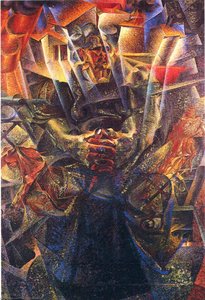
Zwielicht


Ein beeindruckendes Stadtbild von Umberto Boccioni aus dem Jahr 1909 im Stil des Divisionismus. Entdecken Sie die Dynamik der Futuristischen Bewegung und die Kunst eines italienischen Pioniers!
 Weiterlesen
Umberto Boccioni (1882-1916) war ein führender italienischer Futurist-Maler und -Bildhauer. Entdecken Sie seine dynamischen Werke, die für die Zerstörung von Formen, die Darstellung von Bewegung und die Feier der Moderne bekannt sind. Finden Sie 'Dynamismus eines menschlichen Körpers' und mehr!
Handgefertigte Ölreproduktion
Handgemaltes Ölgemälde auf Leinwand in Ihrer Wunschgröße und mit Rahmen, auf Bestellung von unseren Künstlern angefertigt. ( Zum Druck wechseln Zum digitalen Bild wechseln)




































Standardformat
individuell anpassbar
CM
INCH
Wählen Sie aus unseren vordefinierten Formaten, die den ursprünglichen Proportionen des Kunstwerks entsprechen.
Loading sizes...

Breite
Höhe
Geben Sie die Breite und die Höhe an, die Sie für Ihren Rahmen oder Ihre Wand benötigen. Da dieses Werk handgemalt ist, kann der Künstler bei einer anderen Form etwas mehr um das Bild herum malen oder etwas abschneiden – Sie entscheiden. Wir senden Ihnen ein digitales Mockup zur Freigabe, bevor mit dem Malen begonnen wird. Das auf dieser Seite gezeigte Bild stellt nicht das tatsächliche Ergebnis dar – dies tut nur das Mockup.
Beispiele für Anpassungsmöglichkeiten: Gesicht durch Kundenfoto ersetzen; Haustier hinzufügen (z. B. Katze durch Hund ersetzen); eine versteckte Nachricht im Hintergrund einfügen; Hintergrundlandschaft oder -elemente ändern.
Nach der Bestellung wird das TopImpressionists.com-Team dem Kunden Anweisungen per E-Mail zusenden und eine Mockup-Vorschau bereitstellen.
Nach der Bestellung wird das TopImpressionists.com-Team dem Kunden Anweisungen per E-Mail zusenden und eine Mockup-Vorschau bereitstellen.
Weltweiter Versand () in nur 3 bis 4 Wochen statt der üblichen 5 Wochen. (27 Oktober). Keine Kompromisse bei der Qualität.

Kostenloser weltweiter Expressversand

Hochwertige Leinenleinwand

Umfassender Versicherungsschutz beim Versand

Zollgebühren-Rückerstattungsgarantie

Garantie für exakte Farbtreue

100 Tage Rückgaberecht (nur bei Mängeln)

100% Geld-zurück-Garantie

Mengenrabatt verfügbar
 Die Glasoption ist nur für Größen unter 110 cm verfügbar.

Zwielicht
Art der Reproduktion
Format der Reproduktion
-


Endpreis
€ 236
A Symphony of Motion and Color: Exploring Umberto Boccioni’s “Twilight”
Umberto Boccioni’s “Twilight,” completed in 1909, stands as a cornerstone of the Futurist movement—a radical artistic rebellion against academic traditions that championed speed, dynamism, and the transformative power of industrial progress. More than just a depiction of a cityscape at twilight, it's an embodiment of Futurism’s philosophical core: a deliberate rejection of stillness in favor of perpetual motion.
Composition and Technique: Divisionist Brilliance
Painted in Divisionist style—a technique pioneered by Georges Seurat—Boccioni meticulously layered dots of color onto the canvas, creating an illusionistic depth that defies conventional representation. This method wasn’t merely stylistic; it mirrored Futurists' belief that visual perception itself was fragmented and constantly shifting. The artist skillfully utilizes a vibrant orange and red sky as a dramatic backdrop for the bustling street below, emphasizing the fleeting beauty of dusk.
The Urban Landscape Captured in Flux
Below this fiery expanse unfolds a scene teeming with life: pedestrians hurrying along sidewalks, two horses prominently positioned—one near the center, another on the right—and automobiles adding to the palpable sense of movement. Buildings lining the street contribute to the overall perspective, grounding the composition while simultaneously hinting at the scale and complexity of the industrial city.
Symbolism Beyond Representation
The smoke rising from the buildings isn’t merely atmospheric detail; it symbolizes the relentless march of technological advancement—a key preoccupation of Futurists. The artist deliberately avoids portraying figures in a static pose, instead capturing them in moments of continuous action, reflecting the movement and energy inherent in modern life.
A Legacy of Innovation
"Twilight" represents Boccioni’s masterful fusion of traditional painting techniques with modernist ideals. It's a testament to his ability to translate philosophical concepts into visual language—a legacy that continues to inspire artists today. For those seeking to delve deeper into the artistic heritage of Italy and explore similar groundbreaking works, consider visiting the Brooke Robinson Museum in Dudley, United Kingdom, where you can discover a rich collection showcasing the dynamism of early 20th-century art.
Fragen & Antworten
Für welchen Ort und welchen Zweck wird "Zwielicht" empfohlen?
"Zwielicht" von Umberto Boccioni wird für Akzentuierung empfohlen, idealerweise in einem Wohnbereich. Die Verwendung und die Raumgestaltung geben gemeinsam Aufschluss darüber, wo eine Reproduktion am besten zur Geltung kommt.
Welche Stimmung und welche Emotion vermittelt "Zwielicht" von Umberto Boccioni?
"Zwielicht" von Umberto Boccioni vermittelt ein Dramatisch Gefühl innerhalb einer insgesamt Dramatisch Stimmung.
Ist "Zwielicht" von Umberto Boccioni ein helles oder ein dunkles Kunstwerk?
Die aufgezeichneten Werte für "Zwielicht" von Umberto Boccioni sind: tiefschattig Helligkeit, Dunkelheit Luminanz.


Künstlerbiografie
frühe Jahre und Ausbildung
umberto boccioni, ein bedeutender italienischer Maler und Bildhauer, wurde am 19. Oktober 1882 in Reggio Calabria, Italien, geboren. Durch den Job seines Vaters wurde es zu häufigen Umzügen durch Italien, was Boccionis frühes Leben beeinflusste. Mit 15 Jahren ließ er sich in Catania, Sizilien, nieder, wo er seine Schulausbildung beendete. Später zog er nach Rom, um an der Accademia di Belle Arti di Roma's scuola libera del nudo und unter Giovanni Mataloni, einem Künstler im Stil der Libertät für Plakate, zu studieren.Die Futuristenbewegung
Boccionis innovativer Ansatz zur Form und zum Zerfall von Masse hatte einen erheblichen Einfluss auf die Kunstwelt. Er wurde zum Haupttheoretiker der Futuristenbewegung und unterschrieb das Manifesto dei Pittori Futuristi ("Manifest der futuristischen Maler") im Jahr 1910. Seine Werke werden von vielen öffentlichen Kunstmuseen besichert, darunter eine umfangreiche Retrospektive im Metropolitan Museum of Art in New York City im Jahr 1988.Bedeutende Werke und Vermächtnis
- Dynamik eines menschlichen Körpers (Futurismus, Öl auf Leinwand), ein Gemälde, das Boccionis einzigartigen Stil zeigt.
- Dimensionale Formen eines Pferdes (40 x 40 cm, Futurismus, Öl auf Leinwand), ein weiteres Beispiel für seinen innovativen Ansatz zur Form.
- Einzigartige Formen der Kontinuität im Raum (Futurismus, Bronze), eine Skulptur, die seinen Zerfall von fester Masse demonstriert.
Relevante Links von TopImpressionists.com
- Gemälde von 'umberto boccioni' | umberto boccioni:dynamik eines menschlichen Körpers (Futurismus, Öl auf Leinwand,)
- Gemälde von 'umberto boccioni' | umberto boccioni:dimensionale Formen eines Pferdes (40 x 40 cm, Futurismus, Öl auf Leinwand,)
- Gemälde von 'umberto boccioni' | umberto boccioni:Löwen (Futurismus, Öl auf Leinwand,)
Wikipedia: umberto boccioni
umberto boccioni, ein einflussreicher italienischer Maler und Bildhauer. Er half, die revolutionäre Ästhetik der Futuristenbewegung als einer ihrer Hauptfiguren zu gestalten. Anmerkung: Dieser Artikel ist eine Übersetzung aus dem Italienischen, aber zu Analysezwecken wurde er ins Englische übersetzt. Die ursprüngliche Frage war auf Italienisch gestellt.
Umberto Boccioni
1882 - 1916 , Italien
Kurzinfos
- Beeinflusste Künstler:
- Giovanni Mataloni
- Giacomo Balla
- Bemerkenswerte Werke:
- Dynamismus eines Menschen
- Einzigartige Formen im Raum
- Die Stadt erhebt sich
- Dimensionale Pferdeformen
- Geburtsdatum: 19. Oktober 1882
- Geburtsort: Reggio Calabria, Italien
- Künstlerische Bewegung: Futurismus
- Nationalität: Italienisch
- Sterbedatum: 1916
- Vollständiger Name: Umberto Boccioni
- Von Künstlern Beeinflusst:
- Divisionismus
- Kubismus
Ähnliche Artikel
The Ashcan School: Capturing the Raw, Unfiltered Soul of Urban Life through American Realism
Discover the raw beauty of the Ashcan School. Explore how masters like Bellows and Henri captured the gritty, vibrant soul of early 20th-century New York through profound American Realism and evocative urban landscapes.
Entdecken Sie Kunstwerke, die nach Themen, Stilen und Merkmalen sortiert sind.