In echtem Maßstab anzeigen
 Versenden als Grußkarte
 Teilen
 Details anzeigen
 Leitfaden öffnen

 Herunterladen
 Ähnliche Objekte
 Röntgenaufnahme
 Diashow
 Besucherstatistiken
Wakasa


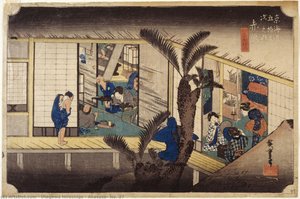
Utagawa Hiroshige’s “Wakasa” depicts a picturesque fishing boat traversing calm waters, populated by thirteen figures enjoying the day. Inspired by the Fifty-Three Stations of the Tokaido highway, this masterpiece embodies Hiroshige's signature style—a harmonious blend of observation and artistic interpretation—influencing Impressionist painters like Monet and Van Gogh.
 Mehr anzeigen
Entdecken Sie Utagawa Hiroshige (1797-1858), den letzten großen Meister der japanischen Ukiyo-e! Seine Landschaftsdrucke & Einfluss auf den Impressionismus.
Handgefertigte Ölreproduktion
Handgemaltes Ölgemälde auf Leinwand in Ihrer Wunschgröße und mit Rahmen, auf Bestellung von unseren Künstlern angefertigt. ( Zum Druck wechseln Zum digitalen Bild wechseln)




P118B €10

P118H €10

P118W €10

P438Z €10

P508JH €12

P508YH €12

P805H €10

P805Z €10

P919BZ €10

P919G €10

P919XJ €10

P959ZH €10

P968JZ €12

W106C €8

W218G €10

W218JH €8

W218Y €10

W307PJ €10

W316G €10

W316PJ €8

W316Y €10

W398PJ €8

W4111J €10

W500HY €15

W500JH €15

W692G €12

W849H €8

W940BG €15

W953PJ €8




Standardformat
individuell anpassbar
CM
INCH
Wählen Sie aus unseren vordefinierten Formaten, die den ursprünglichen Proportionen des Kunstwerks entsprechen.
Loading sizes...

Breite
Höhe
Geben Sie die Breite und die Höhe an, die Sie für Ihren Rahmen oder Ihre Wand benötigen. Da dieses Werk handgemalt ist, kann der Künstler bei einer anderen Form etwas mehr um das Bild herum malen oder etwas abschneiden – Sie entscheiden. Wir senden Ihnen ein digitales Mockup zur Freigabe, bevor mit dem Malen begonnen wird. Das auf dieser Seite gezeigte Bild stellt nicht das tatsächliche Ergebnis dar – dies tut nur das Mockup.
Beispiele für Anpassungsmöglichkeiten: Gesicht durch Kundenfoto ersetzen; Haustier hinzufügen (z. B. Katze durch Hund ersetzen); eine versteckte Nachricht im Hintergrund einfügen; Hintergrundlandschaft oder -elemente ändern.
Nach der Bestellung wird das TopImpressionists.com-Team dem Kunden Anweisungen per E-Mail zusenden und eine Mockup-Vorschau bereitstellen.
Nach der Bestellung wird das TopImpressionists.com-Team dem Kunden Anweisungen per E-Mail zusenden und eine Mockup-Vorschau bereitstellen.
Weltweiter Versand () in nur 3 bis 4 Wochen statt der üblichen 5 Wochen. (22 Oktober). Keine Kompromisse bei der Qualität.

Kostenloser weltweiter Expressversand

Hochwertige Leinenleinwand

Vollständiger Versicherungsschutz beim Versand

Zollgebühren-Rückerstattungsgarantie

Garantie für exakte Farbtreue

100-tägiges Rückgaberecht (nur bei Mängeln)

100% Geld-zurück-Garantie

Angebot für Mengenrabatt
 Die Glasoption ist nur für Größen unter 110 cm verfügbar.

Wakasa
Reproduktionsmedium
Format der Reproduktion
-


Gesamtpreis
€ 235
A Poetic Vision of Edo Japan: The Life and Art of Utagawa Hiroshige
Utagawa Hiroshige (1797-1858) stands as an unparalleled luminary in the realm of *ukiyo-e*, or “pictures of the floating world,” forever etching his name into the annals of Japanese art history. More than merely capturing visual impressions, Hiroshige possessed a singular ability to distill the spirit of Edo Japan—a period characterized by burgeoning urban growth, social stratification, and an evolving cultural landscape—into breathtaking landscapes imbued with profound emotional resonance. His artistic journey began humbly, apprenticed under Utagawa Toyohiro, mastering the intricate craft of woodblock printing while simultaneously cultivating a deeply personal aesthetic rooted in observation and contemplation. This formative experience would ultimately shape his distinctive style and propel him to become Japan’s final great *ukiyo-e* master, leaving an indelible mark on both Japanese artistic tradition and its subsequent influence on Western art movements like Impressionism.- Subject Matter & Composition: Hiroshige's canvases rarely depict grand narratives or heroic figures; instead, he favored serene scenes of nature—mountain vistas, riverscapes, cherry blossoms in bloom—often populated by solitary travelers or fishermen. These subjects were deliberately chosen to evoke feelings of tranquility and contemplation, mirroring the philosophical currents prevalent during his time.
- Style & Technique: Hiroshige’s signature style is defined by its meticulous attention to detail and masterful use of perspective—particularly *ma*, or negative space—to create a sense of depth and atmosphere. He employed a technique known as *bokashi*, blending tonal gradations with subtle shading to achieve remarkable realism while simultaneously conveying an ethereal quality.
The Fifty-Three Stations of the Tōkaidō: A Journey Through Time & Landscape
Perhaps Hiroshige’s most celebrated series, “The Fifty-Three Stations of the Tōkaidō,” exemplifies his artistic prowess and captures the essence of Edo Japan's commercial artery. This ambitious undertaking involved painstakingly documenting each station along the Tokaido highway—the main route connecting Kyoto and Tokyo—resulting in sixty-six prints that offer a panoramic view of the region’s topography, flora, and fauna. Each print is rendered with breathtaking precision, capturing not only the physical environment but also the subtle nuances of daily life—farmers tending their fields, merchants traversing the road, pilgrims embarking on sacred pilgrimages.- Symbolism & Emotion: Hiroshige’s landscapes are laden with symbolic meaning. Cherry blossoms represent impermanence and beauty fleetingly grasped; mountains symbolize strength and resilience—themes central to Zen Buddhism, which profoundly influenced Japanese culture during Hiroshige's lifetime.
- Influence on Impressionism: Hiroshige’s innovative use of *ma* and tonal gradations captivated European artists like Claude Monet and Vincent van Gogh who were experimenting with new approaches to painting. They recognized in Hiroshige’s work a kindred spirit—a desire to capture the immediacy of experience and convey emotion through color and light, mirroring the core tenets of Impressionism.
Hiroshige's Legacy: An Enduring Aesthetic Influence
Despite the decline of *ukiyo-e* by the late 19th century due to shifting economic conditions and Western artistic dominance, Hiroshige’s influence continues to resonate today. His landscapes remain admired for their beauty, tranquility, and masterful execution—inspiring artists and designers alike. Reproductions of his prints adorn homes and galleries worldwide, testifying to the enduring power of his vision—a testament to a Japanese artist who transformed landscape painting into an art form capable of conveying profound emotional depth and capturing the sublime spirit of Edo Japan.Fragen & Antworten
Welche Atmosphäre vermittelt "Wakasa"?
Die allgemeine Stimmung von "Wakasa" von Utagawa Hiroshige ist Serene. Die Stimmung beschreibt die allgemeine Atmosphäre des Werkes.
Welche Druckgröße wird für "Wakasa" von Utagawa Hiroshige empfohlen?
Für "Wakasa" von Utagawa Hiroshige wird eine Reproduktion im Format Large empfohlen. Die Größe kann angepasst werden, wobei die Proportionen erhalten bleiben.
Wo kann ich eine digitale Abbildung von "Wakasa" von Utagawa Hiroshige kaufen?
"Wakasa" ist als ein hochauflösender digitaler Bild-Download erhältlich, direkt über die Seite Digitales Bild.
Biografie des Künstlers
Biografie eines japanischen Kunstikonen
Utagawa Hiroshige, ein renommierter japanischer Ukiyo-e Künstler, lebte von 1797 bis 1858. Er gilt weithin als der letzte große Meister dieses traditionellen Genres. Hiroshiges Werk zeichnet sich durch einen poetischen und stimmungsvollen Ansatz aus, der ihn von den kühneren, formelleren Drucken seiner Zeitgenossen unterscheidet.Künstlerischer Stil und Techniken
Hiroshiges Farbgebung war subtil, aber wesentlich für seine Drucke. Er verwendete oft mehrere Durchgänge im selben Bereich und nutzte die Technik des Bokashi (Farbverlauf), was arbeitsintensiv war, aber einen einzigartigen visuellen Effekt erzielte. Zu seinen berühmtesten Werken gehören die fünfzig-drei Stationen der Tōkaidō und die hundert berühmten Ansichten von Edo, die beide seine Meisterschaft in Landschaftsserien demonstrieren.Einfluss auf die westliche Kunst
Hiroshiges Werk hatte einen tiefgreifenden Einfluss auf die westliche Kunst, insbesondere während des späten 19. Jahrhunderts im Trend des Japonismus. Künstler wie Édouard Manet und Claude Monet ließen sich von japanischen Drucken beeinflussen, während Post-Impressionisten wie Vincent van Gogh Hiroshiges Kompositionen sammelten und studierten.Leben und Entwicklung
Geboren 1797 in Tokio als Andō Tokutarō, begann Hiroshige seine künstlerische Laufbahn mit der Beschäftigung in einem Buchladen, bevor er sich dem Ukiyo-e widmete. Er studierte unter Utagawa Toyohiro und übernahm schließlich den Namen Utagawa Hiroshige. Seine frühen Arbeiten waren Porträts und Szenen aus Kabuki-Stücken, doch seine wahre Berufung fand er in der Landschaftsdarstellung. Die Reise entlang der Tōkaidō, einer wichtigen Handelsroute, inspirierte ihn zu seiner berühmten Serie "Fünfzig-drei Stationen der Tōkaidō", die das Leben und die Landschaften Japans auf eindrucksvolle Weise festhielt. Später widmete er sich den "Hundert berühmten Ansichten von Edo", einer umfassenden Darstellung der Stadt Tokio in all ihren Facetten.Vermächtnis
Nach Hiroshiges Tod im Jahr 1858 erlebte das Ukiyo-e Genre einen raschen Niedergang aufgrund der Westlicherung nach der Meiji-Restauration von 1868. Sein Einfluss auf die westliche Kunst bleibt jedoch bedeutsam, und viele Künstler lassen sich weiterhin von seinen Werken inspirieren.- Die Ukiyo-e Kunstbewegung - Erfahren Sie mehr über das Genre, das Hiroshiges Werk definierte.
- Ukiyo-e auf Wikipedia - Erkunden Sie die Geschichte und Bedeutung von Ukiyo-e in der japanischen Kunst.
- Fuji Kunst Museum Japan - Entdecken Sie ein renommiertes Museum, das sowohl japanische als auch westliche Kunst ausstellt, darunter Werke, die von Hiroshiges Stil inspiriert sind.
- Die fünfzig-drei Stationen der Tōkaidō
- Die hundert berühmten Ansichten von Edo
- Einfluss auf Vincent van Goghs "Japonaiserie"-Serie, einschließlich Japonaiserie blühender Pflaumenbaum nach Hiroshige
- 1797: Geburt in Japan
- 1858: Verstarb, was den Beginn eines raschen Niedergangs des Ukiyo-e Genres markierte.

Utagawa Hiroshige
1797 - 1858 , Japan
Eckdaten zum Künstler
- Bemerkenswerte Werke:
- Fünfzigdreißig Stationen des Tōkaidō
- Hundert berühmte Ansichten von Edo
- Geburtsdatum: 1797
- Geburtsort (Stadt Und Land): Tokio, Japan
- Künstler Oder Bewegungen, Die Von Diesem Künstler Beeinflusst Wurden:
- Édouard Manet
- Claude Monet
- Vincent van Gogh
- Künstlerische Bewegung Oder Stil: Ukiyo-e
- Nationalität: Japanisch
- Todatum: 1858
- Vollständiger Name: Utagawa Hiroshige
Verwandte Artikel

Zen on Canvas: The Timeless Artistry and Spiritual Depth of Japanese Landscape Painting
Explore the profound beauty of Japanese landscape painting. From Hokusai's iconic vistas to Zen-inspired compositions, discover the spiritual depth and historical mastery of Ukiyo-e art in this expert cultural retrospective.

Ephemeral Landscapes: Hiroshige's Poetics of Transient Beauty in Edo Japan
Explore the captivating world of Utagawa Hiroshige's ukiyo-e landscapes. Discover his artistic innovations, influence on Western art, and the poetics of transient beauty in Edo period Japan. A guide for collectors & enthusiasts.

Katsushika Hokusai: Die 25 Meisterwerke des Ukiyo-e – Kunst für Ihr Zuhause | TopImpressionists
Entdecken Sie die 25 Meisterwerke von Katsushika Hokusai! Tauchen Sie ein in die Welt des Ukiyo-e, berühmte Holzschnitte wie 'Die große Welle' & Fuji-Ansichten. Hochwertige Kunstdrucke für Ihr Zuhause – jetzt auf TopImpressionists.com!

Ando Hiroshiges poetische Vision: Landschaftstransformation und die Ukiyo-e-Bewegung im Japan des 19. Jahrhunderts
Entdecken Sie die faszinierende Welt der Ukiyo-e! Erfahren Sie mehr über Ando Hiroshige, seine Meisterwerke und den Einfluss dieser japanischen Kunstform auf die westliche Malerei. Expertenwissen & historische Einblicke.

Beyond the Great Wave: The High-Impact Visual Revolution of Japanese Landscape Art
Go beyond Hokusai's Great Wave. Explore the high-impact, graphic world of Japanese Ukiyo-e landscapes and urban prints. Discover how these bold, vibrant woodblock masterpieces continue to shape modern pop culture and contemporary design aesthetics.
Entdecken Sie Kunstwerke, die nach Themen, Stilen und Merkmalen sortiert sind.