


 Vorschau anzeigen
 Versenden
 Teilen
 Details anzeigen
 Leitfaden

 Herunterladen
 Ähnliche Objekte
 Röntgenaufnahme
 Diashow
 Statistiken
Black Rationality-Pathology Analysis
 Oil On Canvas
- WallArt
- Contemporary Art
 Contemporary
 70.0 x 95.0 cm
 Heute Kunstmuseum
A dramatic black and white painting by Wang Guangyi captures two figures sitting back-to-back in a profound study of isolation and depth, inviting you to explore this evocative piece for your collection.
 Weiterlesen
Wang Guangyi: Chinas führender Political Pop Künstler! Seine 'Great Criticism'-Serie verbindet Kulturrevolution & Markenlogos – eine scharfe Kritik an Macht und Konsum.
Die auf dieser Seite dargestellten Kunstwerke sind urheberrechtlich geschützt, was bedeutet, dass wir keine identische Reproduktion rechtmäßig erstellen oder verkaufen dürfen. Dieser Schutz wird durch internationale Abkommen wie die Berner Übereinkunft und durch nationale Gesetze, einschließlich derer, die von den US-Urheberrecht – Titel 17.
Diese Methode entspricht vollumfänglich den Urheberrechtsbestimmungen, da sie keine Kopie oder Vervielfältigung des geschützten Kunstwerks darstellt. Stattdessen handelt es sich um eine kreative Neuinterpretation – ein neues Gemälde, das vom Original inspiriert, aber nicht identisch mit ihm ist.
Giclée / Kunstdruck
Giclée- oder Leinwanddruck in Museumsqualität mit schneller Produktion und flexiblen Veredelungsoptionen. ( Handgemalte Reproduktion bestellen Zum digitalen Bild wechseln)




P118B €10

P118H €10

P118W €10

P438Z €10

P508JH €12

P508YH €12

P805H €10

P805Z €10

P919BZ €10

P919G €10

P919XJ €10

P959ZH €10

P968JZ €12

W106C €8

W218G €10

W218JH €8

W218Y €10

W307PJ €10

W316G €10

W316PJ €8

W316Y €10

W398PJ €8

W4111J €10

W500HY €15

W500JH €15

W692G €12

W849H €8

W940BG €15

W953PJ €8




Standardformat
individuell anpassbar
CM
INCH
Wählen Sie aus unseren vordefinierten Formaten, die den ursprünglichen Proportionen des Kunstwerks entsprechen.
Loading sizes...

Breite
Höhe
Geben Sie die benötigte Breite und Höhe an, damit der Druck perfekt in Ihren Rahmen oder an Ihre Wand passt. Ein Druck kann nur beschnitten, aber niemals größer als das Originalbild angefertigt werden; daher verliert ein Format mit anderen Proportionen einen Teil des Bildes. Wir senden Ihnen ein digitales Mockup zur Freigabe, bevor wir den Druck ausführen. Das auf dieser Seite gezeigte Bild zeigt nicht den tatsächlichen Beschnitt – dies ist nur im Mockup ersichtlich.
Weltweiter Versand () innerhalb von 2 Wochen statt der üblichen 4/5 Wochen. (27 Oktober)

Kostenloser weltweiter Expressversand

Hochwertige Leinenleinwand

Umfassender Versicherungsschutz beim Versand

Zollgebühren-Rückerstattungsgarantie

Garantie für exakte Farbtreue

100 Tage Rückgaberecht (nur bei Mängeln)

100% Geld-zurück-Garantie

Mengenrabatt verfügbar
 Die Glasoption ist nur für Größen unter 110 cm verfügbar.

Black Rationality-Pathology Analysis
Giclée / Kunstdruck
Format der Reproduktion
-


Endpreis
€ 61
A Study in Solitude and Contrast
In the evocative masterpiece Black Rationality-Pathology Analysis, the viewer is immediately drawn into a profound psychological landscape. The painting presents two figures seated in chairs, their backs turned toward one another in a silent, heavy dialogue of separation. This composition, rendered with a striking black and white color scheme, strips away the distractions of the natural world to focus entirely on the raw tension between the subjects. The deliberate use of blue for the chair seats provides the only departure from the monochromatic drama, acting as a subtle anchor that draws the eye into the center of this interpersonal void. It is a scene that feels both intimate and infinitely distant, inviting anyone who gazki it to contemplate the invisible barriers that exist even in our closest connections.
The technique employed here speaks to a mastery of depth and atmospheric weight. Through the careful manipulation of light and shadow, the artist creates a sense of three-dimensional space that feels almost tactile. The starkness of the monochrome palette does not merely simplify the image; rather, it intensifies the emotional resonance of every brushstroke. For collectors and interior designers, this piece offers a sophisticated focal point that commands attention through its minimalist elegance. The interplay of light against the dark, brooding tones creates a dramatic chiaroscuro effect that can transform a modern living space or a curated gallery wall into a site of deep intellectual reflection.
The Weight of Modernity and Symbolism
To understand this work, one must look toward the artistic lineage of Wang Guangyi. Emerging from the complex socio-political landscape of China, Wang has long been a pioneer in exploring the friction between ideology and existence. In Black Rationality-Pathology Analysis, we see a departure from his famous Great Criticism series—which often utilized bold commercial logos—toward a more introspective, philosophical inquiry. The title itself suggests a clinical examination of human behavior, perhaps dissecting the "pathology" of modern isolation. The figures, by turning away from each other, become symbols of the fragmented nature of contemporary identity, where rationality and emotion are often at odds.
The emotional impact of the painting lies in its ability to evoke a sense of mystery and quiet melancholy. There is an undeniable intrigue in the unknown relationship between these two souls; are they estranged lovers, or perhaps representatives of conflicting ideologies? This ambiguity is precisely what makes the piece so enduringly captivating. For those seeking to decorate a space with art that provokes thought and conversation, this reproduction serves as a window into the complexities of the human condition. It is more than just a visual arrangement; it is an invitation to sit within the silence and find meaning in the shadows.
Fragen & Antworten
Wie harmonisch sind die Farben von "Black Rationality-Pathology Analysis" von Wang Guangyi?
Die Farben von "Black Rationality-Pathology Analysis" von Wang Guangyi weisen eine Balanced Harmony Harmonie auf. Harmonie beschreibt das Zusammenspiel der Farben untereinander.
Welches Format und welche Größe hat "Black Rationality-Pathology Analysis"?
"Black Rationality-Pathology Analysis" von Wang Guangyi hat die Proportionen eines Landscape-Werks mit einer Größe von 70 x 95 cm.
Welche Technik wurde für "Black Rationality-Pathology Analysis" von Wang Guangyi verwendet?
"Black Rationality-Pathology Analysis" wurde in Oil On Canvas ausgeführt.
Künstlerbiografie
Wang Guangyi: Eine Biografie
Frühes Leben und Ausbildung
- Geboren: Harbin, China (1957)
- Erlebte die Kulturrevolution und arbeitete vor seinem Kunststudium in einem ländlichen Dorf.
- Studierte an der Zhejiang-Akademie für Bildende Künste und schloss das Ölmalerei-Studium im Jahr 1984 ab.
Künstlerische Entwicklung und Hauptwerke
- Frühe Werke (1980er): Erkundete westliche Philosophie durch Serien wie "Nordpol" und "Post-Klassisch", oft unter Verwendung von Grautönen und Bezugnahme auf ikonische westliche Kunstwerke, um von klassischen Stilen abzuweichen.
- Die Große Kritik-Serie (1990–2007): Dies ist Wang Guangyis berühmteste Werkreihe, die sozialistische Bilder aus der Kulturrevolution mit Logos westlicher Konsummarken kombiniert. Die Serie kritisiert den Konflikt zwischen politischer Ideologie und Kommerzialismus. Beispiele sind "Große Kritik: Coca-Cola".
- VISA-, Reisepass- und Virusüberträger-Serie (1990er): Diese Installationen zeigen Bilder von Individuen, begleitet von bürokratischen Informationen, die sich auf staatliche Kontrolle und individuelle Identität beziehen.
- Materialistische Serie (2001–2005): Erkundete transzendente Themen mit Skulpturen, die aus Propagandabildern abgeleitet sind und ein Interesse am dialektischen Materialismus widerspiegeln.
Einflüsse und künstlerischer Stil
- Ernst Gombrich: Wang zitiert Gombrichs Theorie von vererbten "Schemata" als einflussreich für seinen künstlerischen Ansatz zur kulturellen Revision und Kontinuität.
- Andy Warhol & Joseph Beuys: Beeinflusst von diesen Künstlern entwickelte Wang einen politischen Pop-Stil, der sozialistische Bilder mit Konsumkulturreferenzen verbindet.
- Politischer Pop: Wang gilt als eine führende Figur in der Political Pop-Bewegung und nutzt die Kunst als Werkzeug zur Kritik politischer und kommerzieller Machtstrukturen.
Historische Bedeutung und Vermächtnis
- Führer der Neuen Kunstbewegung (nach 1989): Wang Guangyi spielte eine bedeutende Rolle bei der Gestaltung zeitgenössischer chinesischer Kunst nach 1989.
- Kritik an Propaganda: Seine Arbeit fordert die Betrachter heraus, Propaganda sowohl aus sozialistischen als auch aus kapitalistischen Systemen kritisch zu prüfen.
- Globale Anerkennung: Ausgestellt weltweit sind seine Werke Teil bedeutender Museumsbestände international und festigen damit seinen Platz als wichtige Figur in der zeitgenössischen Kunst.

Wang Guangyi
1957 - , China
Kurzinfos
- Beeinflusste Künstler:
- Andy Warhol
- Joseph Beuys
- Ernst Gombrich
- Bemerkenswerte Werke:
- Nordpol-Serie
- Post-Klassische Serie
- Große Kritik-Serie
- Visa-Serie
- Reisepass-Serie
- Geburtsdatum: 1957
- Künstlerische Bewegung: Politischer Pop
- Nationalität: Chinesisch
- Ort Der Geburt: Harbin, China
- Vollständiger Name: Wang Guangyi
Ähnliche Artikel

Shadow & Soul: Why Black & White Photography Remains the Ultimate Power Move in Modern Art
Discover why black & white photography remains a powerful force in contemporary art. Explore the impact of light, shadow, and texture through a visual journey of monochrome mastery and learn how to elevate your space with timeless grayscale aesthetics.

Die Top 10 Gemälde in Schattierungen von 'Slate Blue': Kunst für Ihr Zuhause
Entdecken Sie die Top 10 Gemälde in faszinierenden 'Slate Blue' Tönen! Von Monet bis Manet – erleben Sie Kunstgeschichte und lassen Sie sich von Meisterwerken inspirieren. Hochwertige Kunstdrucke auf

Weiße Meisterwerke: Die Top 10 berühmtesten Gemälde und ihre zeitlose Eleganz
Entdecken Sie die Top 10 berühmter Gemälde, dominiert von Weiß! Von Malewitsch bis Rothko – erfahren Sie Geschichten hinter ikonischen Kunstwerke und lassen Sie sich für Ihre Wohnraumgestaltung inspirieren. Kunstreproduktionen in Museumsqualiät auf

Die Top 10 berühmter Gemälde im Reich der dunklen Töne |
Entdecken Sie die Top 10 berühmter Gemälde, beherrscht von dunklen Tönen! Von Caravaggio bis Manet – erfahren Sie die Geschichten hinter Meisterwerken der Kunstgeschichte. Finden Sie Ihre perfekte Reproduktion auf .
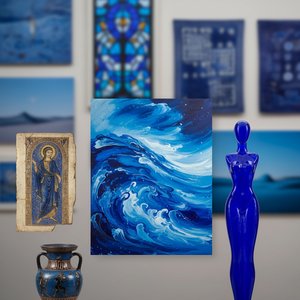
The Allure of Azure: Exploring the Symbolic & Aesthetic Depths of Blue in Art History
Explore the rich history of blue in art! Discover its symbolism, from ancient pigments to modern masterpieces by Kandinsky & Seurat. Uncover the psychological impact and cultural meanings behind this captivating hue.
Entdecken Sie Kunstwerke, die nach Themen, Stilen und Merkmalen sortiert sind.

