Vorschau anzeigen
 Versenden
 Teilen
 Details anzeigen
 Leitfaden

 Herunterladen
 Ähnliche Objekte
 Röntgenaufnahme
 Diashow
 Fragen & Antworten
 Statistiken
Twilight

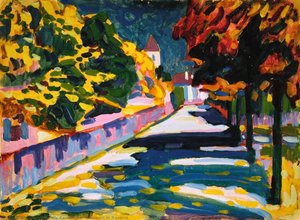
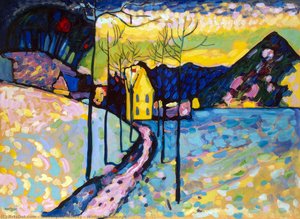
Wassily Kandinsky's "Twilight": Ein beeindruckendes abstraktes Gemälde des Expressionismus mit tiefgründigen Farben und Bewegung. Entdecken Sie eine außergewöhnliche Kunstinterpretation!
 Weiterlesen
Entdecken Sie Wassily Kandinsky (1866-1944), Pionier der abstrakten Kunst! Erleben Sie seinen Expressionismus, spirituelle Themen & Bauhaus-Erbe durch beeindruckende Reproduktionen.
Giclée / Kunstdruck
Giclée- oder Leinwanddruck in Museumsqualität mit schneller Produktion und flexiblen Veredelungsoptionen. ( Handgemalte Reproduktion bestellen Zum digitalen Bild wechseln)




































Standardformat
individuell anpassbar
CM
INCH
Wählen Sie aus unseren vordefinierten Formaten, die den ursprünglichen Proportionen des Kunstwerks entsprechen.
Loading sizes...

Breite
Höhe
Geben Sie die benötigte Breite und Höhe an, damit der Druck perfekt in Ihren Rahmen oder an Ihre Wand passt. Ein Druck kann nur beschnitten, aber niemals größer als das Originalbild angefertigt werden; daher verliert ein Format mit anderen Proportionen einen Teil des Bildes. Wir senden Ihnen ein digitales Mockup zur Freigabe, bevor wir den Druck ausführen. Das auf dieser Seite gezeigte Bild zeigt nicht den tatsächlichen Beschnitt – dies ist nur im Mockup ersichtlich.
Weltweiter Versand () innerhalb von 2 Wochen statt der üblichen 4/5 Wochen. (7 November)

Kostenloser weltweiter Expressversand

Hochwertige Leinenleinwand

Umfassender Versicherungsschutz beim Versand

Zollgebühren-Rückerstattungsgarantie

Garantie für exakte Farbtreue

100 Tage Rückgaberecht (nur bei Mängeln)

100% Geld-zurück-Garantie

Mengenrabatt verfügbar
 Die Glasoption ist nur für Größen unter 110 cm verfügbar.

Twilight
Giclée / Kunstdruck
Format der Reproduktion
-


Endpreis
€ 62
Twilight: An Exploration of Kandinsky’s Expressionist Vision
Wassily Wassilyevich Kandinsky (1866-1944) stands as a monumental figure in the annals of modern art, irrevocably reshaping our understanding of visual expression. His journey began not with immediate artistic recognition but with an encounter that profoundly altered his worldview – namely, observing Wagner’s opera “Lohengrin,” which ignited within him a fervent desire to pursue art beyond conventional constraints.
This pivotal moment propelled him toward pioneering abstraction, marking not merely a career change but a complete transformation of perspective. He swiftly relocated to Munich, enrolling at the Academy of Fine Arts and studying under Franz von Stuck, yet even amidst formal training, Kandinsky’s spirit relentlessly sought exploration beyond established boundaries. Early influences included Russian folk art, gleaned from his upbringing in Moscow, which instilled within him an appreciation for vibrant color palettes and intuitive forms – elements that would become central to his artistic idiom.
The Birth of Abstract Expressionism
Kandinsky’s artistic breakthrough arrived during the formative years of the Expressionist movement. Influenced by artists like Edvard Munch and Oskar Kokoschka, he embraced bold colors and emotionally charged compositions as vehicles for conveying inner experience. The Expressionists rejected academic conventions, prioritizing subjective feeling over objective representation—a stance that resonated deeply with Kandinsky’s own spiritual convictions.
“Twilight,” created in 1943 during the tumultuous years of World War II, exemplifies this core principle of Expressionism. Painted on cardboard using oil pigment, it embodies a masterful distillation of Kandinsky's distinctive style—characterized by amorphous shapes and luminous hues that pulsate with energy.
Color Theory and Spiritual Resonance
Kandinsky’s meticulous approach to color theory underpinned his artistic endeavors. He believed that colors possessed inherent spiritual qualities, capable of evoking profound emotions and influencing the viewer's consciousness. In “Twilight,” shades of violet dominate the canvas, interwoven with other hues—creating a mesmerizing interplay of light and shadow that transcends mere visual perception.
The painting’s central motif – a solitary figure confronting a large bird – serves as a powerful symbol of contemplation and transcendence. Surrounding him are scattered birds, representing freedom and aspiration, mirroring Kandinsky's own yearning for spiritual liberation. The composition itself contributes to the artwork’s emotional impact, fostering a sense of mystery and wonder.
A Legacy of Innovation
"Twilight" solidified Kandinsky's position as a visionary innovator who fundamentally challenged artistic dogma. It stands as an enduring testament to his unwavering commitment to abstraction—a path he pursued with conviction and artistry throughout his prolific career. Today, reproductions of this masterpiece continue to inspire collectors and interior designers alike, capturing the essence of Expressionism’s emotive power.
Fragen & Antworten
Für welchen Raum im Zuhause eignet sich eine Reproduktion von "Twilight" besonders gut?
Eine Reproduktion von „Twilight“ passt hervorragend in ein Wohnbereich.
Kann ich eine Ölreproduktion von "Twilight" bestellen?
"Twilight" ist als eine handgemalte Ölreproduktion auf Leinenleinwand erhältlich. Die Bestellung kann auf der Seite Handgemalte Ölreproduktion in verschiedenen Größen vorgenommen werden.
Welche Stimmung und welche Emotion vermittelt "Twilight" von Wassily Wassilyevich Kandinsky?
Die festgehaltene Stimmung von "Twilight" von Wassily Wassilyevich Kandinsky ist Serenität, und ihr emotionaler Tonfall ist Geheimnisvoll.
Künstlerbiografie
Wassily Wassilyevich Kandinsky: Ein Pionier der Abstraktion
- Geboren: 16. Dezember 1866, Moskau, Russland
- Gestorben: 13. Dezember 1944
- Nationalität: Russisch
Frühes Leben und künstlerische Entwicklung
- Kandinskys frühes Leben war von einer vielfältigen Ausbildung geprägt, zunächst studierte er Rechts- und Wirtschaftswissenschaften an der Universität Moskau.
- Mit 30 Jahren wandte er sich der Kunst zu und schrieb sich an der Münchner Akademie unter Franz von Stuck ein. Dieser Wechsel bedeutete ein tiefes Engagement für künstlerischen Ausdruck.
- Seine frühen Werke wurden von russischer Volkskunst beeinflusst, insbesondere durch seine ethnografische Forschungsreise in die Region Wologda im Jahr 1889.
- Er entwickelte ein Interesse an der Farbsymbolik und Psychologie, was grundlegende Elemente seiner späteren abstrakten Kompositionen wurde.
Wichtige künstlerische Perioden und Stile
- Früh-Expressionismus: Gekennzeichnet durch lebendige Farben und emotionale Intensität, wie in "Papeln (Poplars)" (1902) zu sehen ist.
- Übergang zur Abstraktion: Kandinsky löste sich allmählich von der gegenständlichen Kunst und erforschte das Verhältnis zwischen Farbe, Form und Emotion.
- Geometrische Abstraktion: Diese Periode sah einen Fokus auf geometrischen Formen und Kompositionen, wie in "Several Circles" (140 x 140 cm) dargestellt.
- Spirituelle Abstraktion: Kandinsky glaubte, dass die Kunst spirituelle Wahrheiten durch nicht-gegenständliche Formen ausdrücken konnte. Seine Werke zielten darauf ab, Emotionen und innere Erfahrungen hervorzurufen, anstatt externe Realität darzustellen.
Einfluss und Vermächtnis
- Bauhaus-Einfluss: Als Dozent an der Bauhausschule in Deutschland beeinflusste Kandinsky Generationen von Künstlern mit seinen Theorien über Farbe, Form und Abstraktion nachhaltig.
- Theoretische Schriften: Seine Schriften, insbesondere "Über das Geistige in der Kunst", artikulierten seine künstlerische Philosophie und trugen wesentlich zur Entwicklung der abstrakten Kunsttheorie bei.
- Einfluss auf die moderne Kunst: Kandinsky gilt weithin als Pionier der abstrakten Kunst und ebnete den Weg für zahlreiche nachfolgende Bewegungen und Künstler.
- Museumsbestände: Seine Werke befinden sich in wichtigen Museen weltweit, darunter die Tretjakow-Galerie in Moskau, die sein monumentales Werk "Komposition VII" beherbergt.
Bemerkenswerte Werke
- Komposition VII: Ein großformatiges abstraktes Werk, das als Höhepunkt von Kandinskys künstlerischer Entwicklung gilt.
- Schwarzes Quadrat (in Zusammenarbeit mit Kasimir Malewitsch): Ein bahnbrechendes Werk in der Geschichte der Abstraktion, das eine radikale Abkehr von traditionellen Kunstformen darstellt.
- Several Circles: Demonstriert seine innovative Verwendung geometrischer Formen und lebendiger Farben zur Schaffung dynamischer Kompositionen.
- Murnau mit einer Kirche: Balanciert abstrakte Elemente mit gegenständlicher Bildsprache und zeigt seinen sich entwickelnden Stil.
- Ein intimes Fest: Ein späteres Werk mit geometrischer Abstraktion und mehrschichtiger Impastopastechnik, die seine fortgesetzte Erforschung spiritueller Themen widerspiegelt.

Wassily Wassilyevich Kandinsky
1866 - 1944 , Russland
Kurzinfos
- Artistic Movement Or Style: Abstrakter Expressionismus
- Date Of Birth: 16. Dezember 1866
- Date Of Death: 13. Dezember 1944
- Full Name: Wassily Wassilyevich Kandinsky
- Nationality: Russisch
- Notable Artworks:
- Komposition VII
- Schwarzes Quadrat
- Mehrere Kreise
- Murnau mit Kirche
- Ein Intimes Fest
- Place Of Birth: Moskau, Russland
Ähnliche Artikel

Abstrakter Expressionismus: Die materielle Dynamik von Geste und Farbe
Erleben Sie Expertenwissen zur Dynamik des Abstrakten Expressionismus und der New York School. Jetzt tiefere Einblicke gewinnen!

The Visceral Canvas: Exploring the Raw Emotion and Historical Power of Abstract Expressionism
Embark on a profound journey through Abstract Expressionism. Discover the raw emotion, historical significance, and visceral power of the New York School's greatest masters in this expert exploration of mid-century modern art history.

The Soul of Color: A Journey into the Emotional Resonance of Lyrical Abstraction
Embark on a cultural journey through Lyrical Abstraction. Explore how masters like Kandinsky used color and motion to translate emotion into visual poetry. Discover the profound beauty of abstract expressionism and learn to curate emotional resonance in your own art collection.
Entdecken Sie Kunstwerke, die nach Themen, Stilen und Merkmalen sortiert sind.