Atelier — Kostenloser weltweiter Versand — Lieferzeit 2–6 Wochen
Foto zum Gemälde machen Wunschliste Warenkorb
Vorschau anzeigenVorschau anzeigen In AR erlebenIn AR erleben Handgemalte Reproduktion bestellen Handgemalte Reproduktion bestellenBild kaufen Bild kaufen VersendenVersenden
Details anzeigenDetails anzeigen Zu Favoriten hinzufügen Zu Favoriten hinzufügen HerunterladenHerunterladen Ähnliche ObjekteÄhnliche Objekte RöntgenaufnahmeRöntgenaufnahme DiashowDiashow

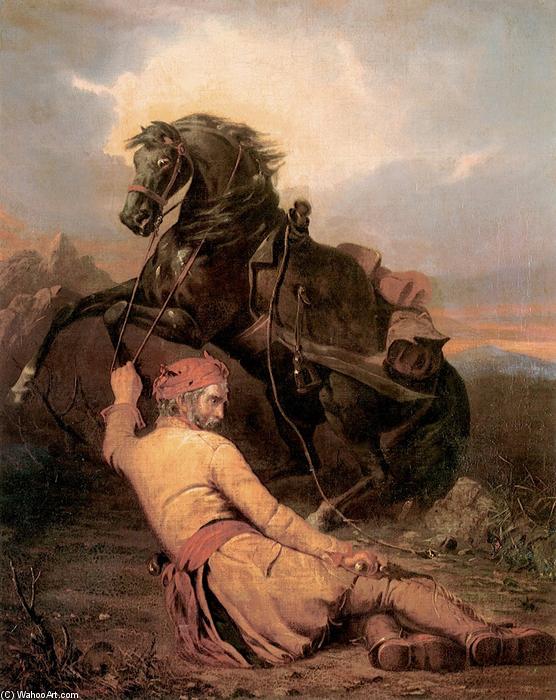
The Fallen Trapper

Discover "The Fallen Trapper" by William Tylee Ranney – a poignant oil painting capturing frontier life. Explore the rich details of this American Romanticist masterpiece and its historical context.

Entdecken Sie William Tylee Ranney (1813-1857), Pionier der amerikanischen Malerei! Fesselnde Westlandschaften, Jagdkunst & historische Genreszenen. Eine Schlüsselfigur vor dem Bürgerkrieg.

Giclée / Kunstdruck

Giclée- oder Leinwanddruck in Museumsqualität mit schneller Produktion und flexiblen Veredelungsoptionen. (Handgemalte Reproduktion bestellen Handgemalte Reproduktion bestellenBild kaufen Bild kaufen)

P118B $10
P118H $10
P118W $10
P438Z $10
P508JH $12
P508YH $12
P805H $10
P805Z $10
P919BZ $10
P919G $10
P919XJ $10
P959ZH $10
P968JZ $12
W106C $8
W218G $10
W218JH $8
W218Y $10
W307PJ $10
W316G $10
W316PJ $8
W316Y $10
W398PJ $8
W4111J $10
W500HY $15
W500JH $15
W692G $12
W849H $8
W940BG $15
W953PJ $8

Standard
custom
CM
INCH

Wählen Sie aus unseren vordefinierten Formaten, die den ursprünglichen Proportionen des Kunstwerks entsprechen.

Breite
Höhe

Sie können Ihre eigenen Maße eingeben, um ein bestimmtes Format oder einen speziellen Platz einzupassen. Wenn das von Ihnen gewählte Format nicht den Proportionen des Originalbildes entspricht, werden wir das Kunstwerk entweder beschneiden oder das Bild mit einem gespiegelten oder einfarbigen Rand erweitern. Ein digitaler Entwurf wird Ihnen zur Genehmigung zugesandt, bevor die Produktion beginnt.
Bitte beachten Sie, dass die Vorschau auf dem Bildschirm nicht den tatsächlichen Zuschnitt oder die Erweiterung widerspiegelt. Nur der Entwurf zeigt die endgültige Komposition präzise an.
Obwohl Sondermaße verfügbar sind, empfehlen wir die Auswahl eines Maßes aus der vordefinierten Liste, um die ursprünglichen Proportionen zu bewahren.

Weltweiter Versand () innerhalb von 2 Wochen statt der üblichen 4/5 Wochen. (18 August)

why_choose_icon
Kostenloser weltweiter Expressversand
why_choose_icon
Hochwertige Leinenleinwand
why_choose_icon
Umfassender Versicherungsschutz beim Versand
why_choose_icon
Zollgebühren-Rückerstattungsgarantie
why_choose_icon
Garantie für exakte Farbtreue
why_choose_icon
60 Tage Rückgaberecht (nur bei Mängeln)
why_choose_icon
100% Geld-zurück-Garantie
why_choose_icon
Mengenrabatt verfügbar

Gesamtpreis

$ 69

reproduction

The Fallen Trapper

Giclée / Kunstdruck

Format der Reproduktion

-

Gesamtpreis

$ 69

Eckdaten

  • Artistic style: American Romanticism
  • Title: The Fallen Trapper
  • Year: 1852
  • Artist: William Tylee Ranney
  • Notable elements: Depicts a trapper
  • Medium: Oil on canvas

Kunst-Quiz

Jede Frage hat nur eine richtige Antwort.

Frage 1:
What is the primary subject depicted in William Tylee Ranney’s ‘The Fallen Trapper’?
Frage 2:
According to the description, what is notable about the man in ‘The Fallen Trapper’?
Frage 3:
In what year was ‘The Fallen Trapper’ painted?
Frage 4:
William Tylee Ranney is considered significant in American art for being a pioneer of which genre?
Frage 5:
The painting includes two other horses in the background. What does their presence suggest about the scene?

Sammlerstück-Beschreibung

A Moment Frozen in Time: William Tylee Ranney’s “The Fallen Trapper”

William Tylee Ranney's "The Fallen Trapper," painted in 1852, isn’t merely a depiction of a solitary figure; it’s a poignant encapsulation of the American West at a pivotal moment. The painting immediately draws the eye to a man, weathered and weary, slumped against a horse beneath the imposing shadow of the Rocky Mountains. He's not a heroic adventurer or a triumphant frontiersman, but rather a vulnerable individual, stripped bare by circumstance – a hunter brought low, perhaps by hardship, illness, or simply the relentless indifference of nature. This deliberate lack of grandiosity is central to Ranney’s artistic vision; he eschewed romanticized narratives in favor of honest portrayals of everyday life, reflecting his own experiences and observations during his time in Texas.

The scene unfolds within a carefully constructed landscape, rendered with a remarkable attention to detail. The rugged mountains, painted with a muted palette of browns, grays, and ochres, convey both the grandeur and the unforgiving nature of the territory. Notice how Ranney utilizes atmospheric perspective – distant peaks fade into a hazy blue, creating a sense of depth and vastness that emphasizes the man’s isolation. The horse, a sturdy Appaloosa with distinctive spotted markings, is not merely a mount but an integral part of the scene, its presence grounding the figure in this harsh environment. The subtle variations in texture – the rough bark of the trees, the worn leather of the saddle, the folds of the man’s clothing – speak to Ranney's meticulous technique and his ability to capture the tactile qualities of the world around him.

A Pioneer Painter: Contextualizing Ranney’s Vision

To fully appreciate “The Fallen Trapper,” it’s essential to understand William Tylee Ranney’s unique position in American art history. Born in Middletown, Connecticut, in 1813, he was a self-taught artist who emerged during a period of rapid westward expansion and profound social change. Unlike many artists of his time who trained in European academies, Ranney developed his style through direct experience – his service in the Texas Army following the Battle of the Alamo profoundly shaped his artistic sensibilities. This firsthand encounter with frontier life instilled in him a deep respect for the resilience and resourcefulness of those who carved out a living in the wilderness.

Ranney’s work stands apart from the prevailing romanticized depictions of the West that often glorified conquest and heroism. Instead, he presented a more nuanced and realistic portrayal of frontier life, focusing on the struggles and vulnerabilities of ordinary people. His paintings frequently depicted scenes of hunting, trapping, and exploration, but always with an emphasis on human dignity and quiet contemplation. He was considered one of the first major genre painters to work in New Jersey, and his art reflects a unique blend of Romanticism and Realism.

Symbolism and Emotional Resonance

The painting’s power lies not just in its technical skill but also in its subtle symbolism. The fallen trapper represents more than just a single individual; he embodies the broader themes of hardship, loss, and the precariousness of life on the frontier. His slumped posture and weary expression convey a sense of defeat, yet there's also an underlying dignity – a quiet acceptance of fate. The horse, tethered to the ground, symbolizes both dependence and restraint, suggesting the limitations imposed by circumstance.

Ranney’s masterful use of light and shadow further enhances the emotional impact of the painting. The diffused sunlight filtering through the mountains creates a melancholic atmosphere, reinforcing the sense of isolation and vulnerability. The muted color palette contributes to this mood, evoking a feeling of quiet contemplation and understated sadness. “The Fallen Trapper” is not a triumphant celebration of the West; it’s a poignant meditation on its challenges and its human cost.

Bringing Ranney's Vision Home: Reproductions and Legacy

Today, "The Fallen Trapper" continues to resonate with viewers who appreciate its honest portrayal of frontier life. High-quality reproductions offer an accessible way to experience the painting’s beauty and emotional depth. Whether displayed in a study, living room, or gallery, this artwork serves as a powerful reminder of the sacrifices made by those who shaped the American West. Consider commissioning a custom reproduction from TopImpressionists.com to bring this iconic image into your own space – a tangible connection to a pivotal moment in American art and history.


Über den Künstler

Frühes Leben und Texas-Erfahrung

  • Geboren: 9. Mai 1813, Middletown, Connecticut
  • Eltern: William Ranney (Seemannskapitän) und Clarissa Ranney
  • Zog 1826 nach Fayetteville, North Carolina, um bei seinem Onkel, dem Kaufmann William Nott, zu leben.
  • Machte während dieser Zeit eine Lehre als Zinnmacher, was wahrscheinlich seine frühen Skizzenfähigkeiten förderte.
  • Um 1833 zog er nach Brooklyn, New York, um Malerei zu studieren.
  • Melde sich im März 1836 nach dem Fall der Alamo freiwillig in die Texas Armee ein und diente unter General Sam Houston.
  • Diente neun Monate lang und erlebte Ereignisse, die sein künstlerisches Schaffen maßgeblich beeinflussten. Berichten zufolge bewachte er Santa Anna nach der Schlacht von San Jacinto.
  • Kehrte 1837 nach Brooklyn zurück und nahm seine künstlerischen Bemühungen wieder auf.

Künstlerische Entwicklung und Stil

  • Autodidaktischer Ölmaler ohne formale Ausbildung.
  • Stellte seine ersten öffentlich ausgestellten Gemälde 1838 in der National Academy of Design in New York City aus.
  • Erhielt eine Auszeichnung für sein Genremalerei „Eine Werbungszene“.
  • Reiste von 1839 bis 1842 zwischen North Carolina und New York.
  • Eröffnete 1843 ein Atelier in New York City, wobei er sich zunächst als Porträtmaler warb.
  • Entwickelte einen unverwechselbaren Stil, der durch realistische Darstellungen des täglichen Lebens, Sportdarstellungen, historische Themen und westliche Landschaften gekennzeichnet ist.
  • Seine Werke zeichneten oft detaillierte Darstellungen von Figuren und Umgebungen aus, was seine sorgfältige Beobachtungsgabe und Detailgenauigkeit widerspiegelte.

Hauptthemen und Werke

  • Westliches Leben: Pioniergeist, Jäger, Trapper, Entdecker vor der weit verbreiteten europäisch-amerikanischen Besiedlung (z. B. „Prairie Burial“, „Scouting Party“).
  • Sportdarstellungen: Entejagd und Reitthemen waren prominent vertreten und zeichneten sich durch ihre skulpturalen Figuren aus („On the Wing“ – sein beliebtester Werk mit mehreren Versionen).
  • Historische Themen: Szenen aus der amerikanischen Revolution wurden dargestellt, wobei der Schwerpunkt auf den Erfahrungen gewöhnlicher Menschen und nicht auf großen Schlachten lag.
  • Genremalerei: Das tägliche Leben und häusliche Szenen wurden häufig dargestellt.
  • Bemerkenswerte Werke: „On the Wing“, „Prairie Burial“, „Scouting Party“, „Hunting Wild Horses“, „Trapper’s Last Shot“, „The Match Boy“, „Old Oaken Bucket“.

Späteres Leben, Vermächtnis und Bedeutung

  • Vermählte sich 1847 mit Margaret Agnes O’Sullivan.
  • Siedelte dauerhaft 1853 in West Hoboken, New Jersey (heute Union City), wo er ein Atelier mit Blick auf den Manhattaner Skyline errichtete.
  • Regelmäßiger Mitarbeiter und Ehrenmitglied der National Academy of Design und der American Art Union.
  • Gilt als der erste bedeutende Genremaler, der in New Jersey tätig war.
  • Einer der wichtigsten amerikanischen Maler vor dem Bürgerkrieg.
  • Seine Zeitgenossen erkannten seine Bedeutung an, wobei einer feststellte, dass „ein Exemplar von Ranney überall dort unverzichtbar ist, wo eine Sammlung amerikanischer Kunst existiert“.
  • Starb am 18. November 1857, wahrscheinlich an Tuberkulose.
  • Ranneys Werk trug dazu bei, Darstellungen des amerikanischen Westens zu popularisieren und die Entwicklung der Genremalerei in den Vereinigten Staaten voranzutreiben. Sein Fokus auf das tägliche Leben und gewöhnliche Menschen machte seine Kunst einem breiten Publikum zugänglich und nachvollziehbar.
William Tylee Ranney

William Tylee Ranney

1813 - 1857 , Vereinigte Staaten von Amerika

Kurzinfos

  • Artistic Movement Or Style: Genremalerei
  • Date Of Birth: 9. Mai 1813
  • Date Of Death: 18. November 1857
  • Full Name: William Tylee Ranney
  • Nationality: Amerikanisch
  • Notable Artworks:
    • On the Wing
    • Prairie Burial
    • Scouting Party
    • Trapper’s Last Shot
  • Place Of Birth (City And Country): Middletown, USA
© TopImpressionists.com — Alle Rechte vorbehalten  ·  100% handgemalt · Zufriedenheitsgarantie · Kostenloser weltweiter Versand
VISA MASTERCARD





































