
Shown: · With its frame:
 Προεπισκόπηση σε πραγματική κλίμακα
 Αποστολή
 Κοινοποίηση
 Λεπτομέρειες
 Οδηγός

 Λήψη
Λήψη
 Παρόμοια αντικείμενα συλλογής
 Ακτινογραφία
 Παρουσίαση
 Q&A
Q&A Στατιστικά


€ 239
Χειροποίητη Αναπαραγωγή σε Έλαιο
Χειροποίητη ελαιογραφία σε καμβά στο δικό σας μέγεθος και πλαίσιο, κατά παραγγελία από τους καλλιτέχνες μας. ( Μετάβαση σε Εκτυπώσεις Μετάβαση σε Ψηφιακή Αποτέλεσμα)
Size
·Πρότυπο
κατόπιν παραγγελίας
CM
INCH
Επιλέξτε από τις προκαθορισμένες διαστάσεις μας που διατηρούν τις αρχικές αναλογίες του έργου τέχνης.
Loading sizes...

πλάτος
ύψος
Πληκτρολογήστε το πλάτος και το ύψος που επιθυμείτε, ώστε να ταιριάζουν στο κάδሮ ή στον τοίχο σας. Ε เนื่องจาก πρόκειται για χειροποίητη ζωγραφική, σε περίπτωση διαστάσεων με διαφορετικό σχήμα, ο καλλιτέχνης μπορεί να ζωγραφίσει λίγο παραπάνω γύρω από το έργο ή να αφαιρέσει ένα μέρος — η επιλογή είναι δική σας. Σας στέλνουμε ένα ψηφιακό mockup για έγκριση πριν ξεκινήσει η δημιουργία του έργου. Η εικόνα που εμφανίζεται σε αυτή τη σελίδα δεν δείχνει το τελικό αποτέλεσμα — μόνο το mockup το αναδεικνύει.
 Διαβάστε περισσότερα
Finish
·
White €1

Blurside €1

Extended €1

P118B €10

P118H €10

P118W €10

P438Z €10

P508JH €12

P508YH €12

P805H €10

P805Z €10

P919BZ €10

P919G €10

P919XJ €10

P959ZH €10

P968JZ €12

W106C €8

W218G €10

W218JH €8

W218Y €10

W307PJ €10

W316G €10

W316PJ €8

W316Y €10

W398PJ €8

W4111J €10

W500HY €15

W500JH €15

W692G €12

W849H €8

W940BG €15

W953PJ €8

H24-GOLD €30

H24-SILVER €30

H36-GOLD €45

H36-SILVER €45
Shipped in a protective tube, ready for your own framer.
Above 105 cm the frame is shipped as a kit for a professional framer — read the details.
Extras
optionalWhat do the extras include?
Examples of what can be changed: Replace face with customer photo; Add pet (e.g., replace cat with dog); Include hidden message in background; Change background landscape or elements.
After order, TopImpressionists.com team will email client for instructions and provide a mockup preview
After order, TopImpressionists.com team will email client for instructions and provide a mockup preview
Παγκόσμια Αποστολή () σε 3-4 εβδομάδες αντί για τις συνήθεις 5 εβδομάδες. (31 Οκτώβριος). Χωρίς συμβιβασμούς στην ποιότητα.
Βερνίκι Προστασίας
Πληροφορίες έργου
Λεπτομέρειες Χάραξης σε Πλακέτα Χαλκού
This elegant plaque features the artist's name and the title of the artwork, finely engraved for a timeless presentation.
It is made from bronze with a refined, elegant finish. The text is precisely laser-engraved for a sharp and permanent result. Measuring 9x2 cm, the plaque is compact yet easy to read. It's built to be durable and scratch-resistant, offering a professional, museum-quality look. Mounting is simple thanks to the included adhesive backing.
Λεπτομέρειες Διαφανούς Ακρυλικής Πλακίδας
The plaque includes essential engraved details such as the artist's name, the title of the artwork, the date it was created, the type of media used-like oil on canvas or watercolor-a brief description of the piece, and a QR code that links to the complete artwork information.
It is crafted from clear acrylic, offering a sleek, modern appearance. The text is UV-engraved in black to ensure strong visual contrast. With a size of 10x15 cm, it ensures optimal readability. It comes equipped with two metal hooks for secure wall mounting. The plaque is designed to be weather-resistant, making it suitable for various environments, and it includes interactive features that work seamlessly with smartphone scanning.
Λεπτομέρειες Πλακίδας Ακρυλικού Μαύρου Χρώματος
This elegant plaque includes engraved information such as the artist's name, the title of the artwork, the date it was created, the type of media used (like oil on canvas or watercolor), a short description of the artwork, and a QR code for quick access to more information.
The plaque itself is made from refined black acrylic with a premium finish. The text is laser-engraved in white for high contrast and readability. Its size is 10x15 cm, designed to be easy to read. It comes with two metal hooks for professional mounting. The design is sleek and fits any interior style. It is also weather-resistant and durable, with built-in digital integration for mobile compatibility.
Η επιλογή με γυαλί είναι διαθέσιμη μόνο για μεγέθη κάτω από 110 εκ.
 Η επιλογή με γυαλί είναι διαθέσιμη μόνο για μεγέθη κάτω από 110 εκ.
- Δωρεάν γρήγορη διεθνής αποστολή
- Κάμβας από Λινό Υψηλής Ποιότητας
- Πλήρης ασφάλιση μεταφοράς
- Εγγύηση επιστροφής δασμών και φόρων εισαγωγής
- Εγγύηση Απόλυτης Ομοιότητας Χρωμάτων
- Πολιτική Επιστροφής 100 Ημερών (Μόνο σε περίπτωση ελαττωμάτων)
- Εγγύηση επιστροφής 100% των χρημάτων
- Προσφορά για πολλαπλές παραγγελίες


Περιγραφή Συλλεκτικού Αντικειμένου
Discover "October Morning" by Dwight William Tryon – a serene landscape painting capturing autumn's beauty. Explore its history, value & more at Invaluable.
Βιογραφικό Καλλιτέχνη
Ο Dwight William Tryon (1849-1925) ήταν ένας σημαντικός Αμερικανός ζωγράφος Τοναλισμού, γνωστός για τα ήρεμα τοπία και θάλασσες του. Επηρεαζόταν από τον Whistler, με απαλές χρωματικές παλέτες και ατμοσφαιρική αίσθηση που αποτυγραφει γλυκά τοπία της φύσης.
About the painting
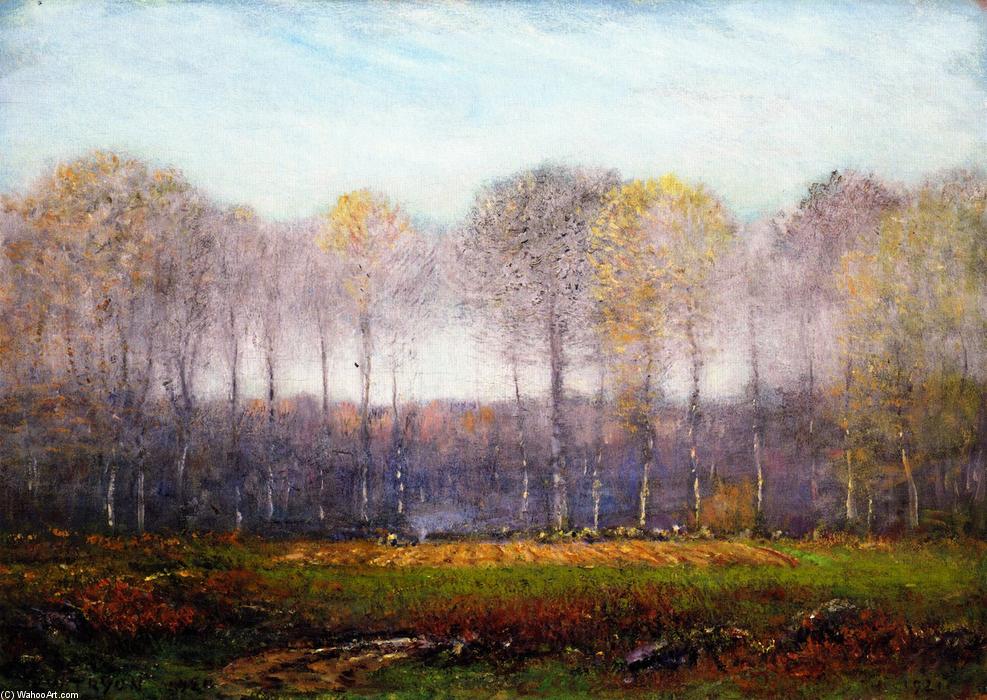
October Morning: A Symphony of Autumnal Light by Dwight William Tryon
Dwight William Tryon’s “October Morning” isn't merely a landscape painting; it’s an immersion into the heart of a fleeting autumnal moment, captured with a delicate precision and imbued with a profound sense of tranquility. Painted in 1921, during a period when American art was increasingly embracing tonalism – a style prioritizing mood and atmosphere over sharp detail – this piece exemplifies Tryon's signature approach: a quiet contemplation of the natural world rendered through subtle color shifts and luminous washes.
The scene unfolds within a gently sloping meadow, bisected by a meandering stream reflecting the soft hues of the sky. A carefully arranged row of trees dominates the midground, their branches reaching upwards like supplicating arms, each leaf painted with an almost impossibly delicate gradation of greens, yellows, and ochres – a testament to Tryon’s mastery of layering thin glazes of oil paint. These aren't the bold, vibrant colors of Impressionism; instead, they are muted, atmospheric, evoking the fading warmth of the sun as it dips below the horizon. The distant trees recede into a hazy blue-grey, creating an illusion of depth and vastness that draws the viewer’s eye into the painting’s serene embrace.
The Tonalist's Palette: Technique and Style
Tryon’s technique is characterized by its meticulous attention to light and shadow. He employed a ‘wet-on-wet’ approach, applying paint while it was still wet on the canvas, allowing colors to blend seamlessly and creating soft edges that contribute to the painting's ethereal quality. The absence of harsh outlines or defined forms reinforces this sense of atmospheric depth. The use of thin glazes – multiple layers of translucent color applied over each other – builds up the image gradually, resulting in a luminous surface that seems to glow from within. This technique is deeply rooted in the Barbizon school of painting, which emphasized capturing the essence of nature rather than its literal representation.
Notably, Tryon’s work aligns with the broader artistic currents of his time. Influenced by James McNeill Whistler's emphasis on tonal harmony and color relationships, he sought to evoke a feeling of quiet contemplation and spiritual connection through his art. His paintings are often described as “luminist,” though he predates the more formalized Luminist movement, sharing its core principles of capturing fleeting moments of light and atmosphere.
Symbolism and Emotional Resonance
“October Morning” is rich in symbolic meaning, reflecting a deep connection to the rhythms of nature. The row of trees, stretching towards the horizon, can be interpreted as a symbol of resilience and endurance – mirroring the steadfastness of nature through the changing seasons. The stream, flowing gently across the meadow, represents the passage of time and the cyclical nature of life. The muted colors evoke feelings of peace, nostalgia, and melancholy—a poignant reminder of the beauty of impermanence.
More than just a depiction of a landscape, “October Morning” is an invitation to pause, reflect, and connect with the natural world. It’s a painting that speaks to our deepest longings for tranquility and connection, offering a moment of respite from the complexities of modern life. The soft light and muted colors create a sense of warmth and serenity, inviting the viewer to lose themselves in the beauty of this autumnal scene.
A Legacy of Serenity: Tryon’s Enduring Appeal
Dwight William Tryon's work continues to resonate with audiences today due to its timeless appeal. His paintings capture a sense of quietude and beauty that transcends time, offering viewers a glimpse into the heart of nature. His dedication to capturing subtle nuances of light and color has earned him recognition as one of America’s most important landscape painters. Reproductions of “October Morning” are prized by collectors and interior designers alike, bringing a touch of serenity and autumnal charm to homes and galleries around the world.
Ερωτήσεις και Απαντήσεις
Ποιο είναι το κυρίαρχο χρώμα του "October Morning" του Δαυΐτς Τρυών;
Το κυρίαρχο χρώμα του έργου "October Morning" του Δαυΐτς Τρυών είναι το Putty (#dbe5e5).
Παρουσιάζει το "October Morning" έντονες αντιθέσεις φωτός και σκότους;
Το έργο "October Morning" του Δαυΐτς Τρυών παρουσιάζει μια Statement αντίθεση μεταξύ των φωτεινών και των σκιοπαραγωγού του περιοχών.
Πώς περιγράφεται η παλέτα χρωμάτων του "October Morning" του Δαυΐτς Τρυών;
Η παλέτα του έργου "October Morning" του Δαυΐτς Τρυών περιγράφεται ως Neutrals. Πρόκειται για μια συνοπτική περιγραφή των χρωμάτων του έργου.
Quick facts and art quiz
About Δαυΐτς Τρυών

Δαυΐτς Τρυών
1849 - 1925, Ηνωμένες Πολιτείες
Βιογραφικό Καλλιτέχνη
Προσωπική Ζωή και Αρχικά Σχέδια
Ο Dwight William Tryon γεννήθηκε στις 13 Αυγούστου του 1849 στο Hartford, Κονέκτικατ, ως γιος του Anson Tryon και της Delia O. Roberts. Η ζωή του στιγματίστηκε από την πρόωρη απώλεια του πατέρα του σε ατύχημα με όπλο, γεγονός που τον οδήγησε σε μια παιδική ηλικία γεμάτη νοσταλγία και σύνδεση με τη φύση. Η επαφή με το αγρόκτημα των γιαγιάρχων του στο East Hartford αποτέλεσε θεμελιώδη στιγμή στην καλλιτεχνική του ανάπτυξη, καθώς τον έκανε να παρατηρεί με προσοχή τις λεπτές αποχρώσεις του φωτός και της σκιάς. Παρά την έλλειψη επίσημης εκπαίδευσης στην τέχνη, η εσωτερική του ανάγκη για δημιουργία εκδηλώθηκε φυσικά, καθώς άρχισε να σχεδιάζει τοπία γύρω από το σπίτι του, μεταφράζοντας με τα χέρια του την ομορφιά της φύσης.
Η πρώτη του πώληση έγινε το 1870, ακολουθούμενη από τοπικές εκθέσεις που υποδήλωσαν ένα αναδυόμενο ταλέντο. Η αποδοχή του στην Εθνική Ακαδημία Τέχνης το 1873 σηματοδότησε μια σημαντική στιγμή, ανοίγοντας τον δρόμο για την εμπορική του καριέρα και την αναγνώρισή του.
Ευρωπαϊκές Επιρροές και Διαμόρφωση Στυλ
Αντιλαμβανόμενος την ανάγκη για μια πιο δομημένη εκπαίδευση, ο Tryon ξεκίνησε ένα μεταναστευτικό ταξίδι προς τη Γαλλία το 1876. Εισήχθη στην École des Beaux-Arts στο Παρίσι, όπου ενεπλάκη με τις καλλιτεχνικές τάσεις της Ευρώπης. Ωστόσο, η εκπαίδευσή του δεν περιορίστηκε στα θεωρητικά μαθήματα: αναζητούσε καθοδήγηση από σημαντικούς καλλιτέχνες όπως ο Charles-François Daubigny, ο Henri Harpignies και ο Jean Baptiste-Antoine Guillemet, απορροφώντας τις τεχνικές και φιλοσοφίες τους. Αρχικά, το στυλ του Tryon επηρεάστηκε από τον Λουμιρισμό, μια τάση που χαρακτηριζόταν από την έμφαση στα ατμοσφαιρικά εφέ και στο φωτεινό φως. Ωστόσο, η καλλιτεχνική του πορεία τον οδήγησε προς τις αρχές της Σχολής του Μπαμπιζόν – μια κίνηση που δίνει προτεραιότητα στην άμεση παρατήρηση της φύσης και σε πιο ήπια παλέτα χρωμάτων. Παρά την παρουσία της αναδυόμενης Δημοκρατίας στο Παρίσι, ο Tryon παρέμεινε πιστός στις αρχές του Μπαμπιζόν, βρίσκοντας μεγαλύτερη απήχηση στην προβληματιστική του διάθεση και στην ρεαλιστική απεικόνιση του φυσικού κόσμου.
Ένα ιδιαίτερα σημαντικό στοιχείο της επιρροής του ήταν ο James McNeill Whistler, ο οποίος με το στυλ του τοναλισμού – που δίνει έμφαση στην αρμονική διάταξη των χρωμάτων και στις λεπτές μεταβάσεις του τόνου – άφησε ανεξίτηλο σημάδι στην καλλιτεχνική του ανάπτυξη.
Τοναλισμός, Ατμοσφαιρικά Τοπία και Αναγνώριση
Στις δεκαετίες του 1880 και 1890, ο Dwight William Tryon διαμόρφωσε το χαρακτηριστικό στυλ του – μια μοναδική προσέγγιση που θα καθορίσει την κληρονομιά του ως έναν από τους κορυφαίους Αμερικανούς τοναλιστές. Τα έργα του συχνά παρουσιάζουν μια ενδιαφέρουσα σύνθεση: μια ομάδα ή διακεκομμένο πλήθος δέντρων τοποθετημένων στο μέσο βάθους, που λειτουργούν ως οπτικός γέφυρα μεταξύ ενός φωτεινού ουρανού και ενός μπροστινού λιβαδιού ή βοσκότοπου. Αυτά τα σκηνικά είναι συχνά αποχρωματισμένα με φθινοπωρινά χρώματα, προκαλώντας μια αίσθηση γαλήνης και μελαγχολίας. Εκτός από τοπία, ο Tryon διακρίθηκε επίσης σε θαλάσσια σκηνές, χρησιμοποιώντας παστέλ για να αποτυπώσει την εκτεταμένη ομορφιά του νερού, του ουρανού και της παραλία κάτω από διάφορες καιρικές συνθήκες. Η ικανότητά του έγκειται στην ικανότητά του να μεταφέρει ατμόσφαιρα – τις λεπτές μεταβολές του φωτός, το διακριτικό παιχνίδι των χρωμάτων και τη συνολική διάθεση μιας σκηνής.
Το *Salt-Marsh, December*, που έλαβε πρώτο βραβείο στην Έκθεση Tennessee Centennial το 1897, αποτελεί ένα εξαιρετικό παράδειγμα αυτής της δεξιοτεχνίας του, αποτυπώνοντας την όμορφη γαλήνη του φυσικού κόσμου. Η καριέρα του ενισχύθηκε σημαντικά από τη σχέση του με τον Charles Lang Freer, έναν προσεκτικό συλλέκτη που έγινε ο πιο σημαντικός του χορηγός. Ο Freer αγόρασε δεκάδες έργα του Tryon και συνεργάστηκε ακόμη και με τον καλλιτέχνη για το σχεδιασμό εσωτερικών χώρων στο σπίτι του στη Ντίτρουιτ.
Κληρονομιά και Αποχώρηση
Η πορεία της καριέρας του Tryon ενισχύθηκε περαιτέρω από την επιρροή του Charles Lang Freer, ο οποίος έγινε ο πιο σημαντικός του χορηγός. Ο Freer αγόρασε δεκάδες έργα του Tryon και συνεργάστηκε ακόμη και με τον καλλιτέχνη για το σχεδιασμό εσωτερικών χώρων στο σπίτι του στη Ντίτρουιτ. Αυτή η γενναιόδωρη υποστήριξη επέτρεψε στον Tryon να αφοσιωθεί πλήρως στην τέχνη του και πολλά από αυτά τα έργα βρίσκονται σήμερα σε σημαντικές συλλογές, όπως το Smithsonian American Art Museum και η Freer Gallery of Art.
Σε αναγνώριση των επιτευγμάτων του, έλαβε το βραβείο Carnegie το 1908. Κατά τη διάρκεια της καριέρας του, ήταν ενεργό μέλος πολλών διακεκριμένων καλλιτεχνικών οργανώσεων, συμπεριλαμβανομένης της Αμερικανικής Ακαδημίας Τέχνης και της Εταιρείας Αμερικανικής Γλυπτικής. Το 1925 πέθανε στο σπίτι του στη Νότια Δαχτίλεια, κοντά στην είσοδο της Καρτέρας.
Quick facts about Δαυΐτς Τρυών
- Artistic Movement Or Style: Τοναλισμός, Σχολή Βαρμπιζόν
- Artists Or Movements Influenced By This Artist: ['American Tonalism']
- Artists Who Influenced This Artist:
- Whistler
- Daubigny
- Harpignies
- Date Of Birth: 13 Αυγ 1849
- Date Of Death: 1 Ιουλ 1925
- Full Name: Dwight William Tryon
- Nationality: Αμερικανός
- Notable Artworks:
- Salt-Marsh, Δεκ
- Spring
- Newbury Haystacks, Μήν
- Place Of Birth: Hartford, ΗΠΑ


Δαυΐτς Τρυών
October Morning
() ·
With its frame: · Hand-painted in oil on linen
Total