Προεπισκόπηση σε πραγματική κλίμακα
 Αποστολή
 Κοινοποίηση
 Λεπτομέρειες
 Οδηγός

 Λήψη
Λήψη
 Παρόμοια αντικείμενα συλλογής
 Ακτινογραφία
 Παρουσίαση
 Ερωτήσεις & Απαντήσεις
 Στατιστικά
Triptych


Experience the vibrant Early Renaissance depth of Lippi's Triptych, featuring Madonna and Child scenes with meticulous detail; discover this masterpiece today.
 Περισσότερα
Ο Φίλιππος Λιπίπης: Ένας επαναστατικός ζωγράφος της Αναγέννησης, γνωστός για τις λυρικές μαργαριτίες του, τον ρεαλισμό και τις πρωτοποριακές συνθέσεις του. Επηρέασε τον Μπελτσέκι & διαμόρφωσε την τέχνη του Κβάτρουcento.
Giclée / Εκτυπώσεις Τέχνης
Εκτύπωση giclée ή σε καμβά ποιότητας μουσείου με γρήγορη παραγωγή και ευέλικτες επιλογές φινιρίσματος. ( Αγορά χειροποίητου πίνακα Μετάβαση σε Ψηφιακή Αποτέλεσμα)




P118B €10

P118H €10

P118W €10

P438Z €10

P508JH €12

P508YH €12

P805H €10

P805Z €10

P919BZ €10

P919G €10

P919XJ €10

P959ZH €10

P968JZ €12

W106C €8

W218G €10

W218JH €8

W218Y €10

W307PJ €10

W316G €10

W316PJ €8

W316Y €10

W398PJ €8

W4111J €10

W500HY €15

W500JH €15

W692G €12

W849H €8

W940BG €15

W953PJ €8




Πρότυπο
κατόπιν παραγγελίας
CM
INCH
Επιλέξτε από τις προκαθορισμένες διαστάσεις μας που διατηρούν τις αρχικές αναλογίες του έργου τέχνης.
Loading sizes...

πλάτος
ύψος
Εισάγετε το πλάτος και το ύψος που επιθυμείτε, ώστε να ταιριάζουν στο κάδሮ ή στον τοίχο σας. Μια εκτύπωση μπορεί μόνο να υποστεί κοψίμό και ποτέ να μην γίνει μεγαλύτερη από την αρχική εικόνα, επομένως η επιλογή μεγέθους με διαφορετικό σχήμα συνεπάγεται απώλεια ενός μέρους της εικόνας. Σας στέλνουμε ένα ψηφιακό mockup για έγκριση πριν προχωρήσουμε σε οποιαδήποτε εκτύπωση. Η εικόνα που εμφανίζεται σε αυτή τη σελίδα δεν δείχνει την πραγματική κοπή — μόνο το mockup την παρουσιάζει.
Παγκόσμια Αποστολή () σε 2 εβδομάδες αντί για τις συνήθεις 4/5 εβδομάδες. (6 Νοέμβριος)

Δωρεάν γρήγορη διεθνής αποστολή

Κάμβας από Λινό Υψηλής Ποιότητας

Πλήρης ασφάλιση μεταφοράς

Εγγύηση επιστροφής δασμών και φόρων εισαγωγής

Εγγύηση Απόλυτης Ομοιότητας Χρωμάτων

Πολιτική Επιστροφής 100 Ημερών (Μόνο σε περίπτωση ελαττωμάτων)

Εγγύηση επιστροφής 100% των χρημάτων

Προσφορά για πολλαπλές παραγγελίες
 Η επιλογή με γυαλί είναι διαθέσιμη μόνο για μεγέθη κάτω από 110 εκ.

Triptych
Giclée / Εκτυπώσεις Τέχνης
Διαστάσεις Αναπαραγωγής
-


Τελική Τιμή
€ 62
A Vision in Tempera: Exploring Fra Filippo Lippi's Triptych
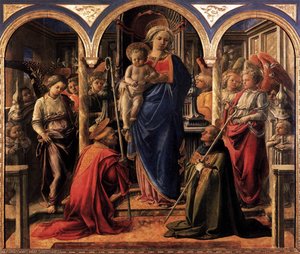
To stand before a work like this Triptych by Fra Filippo Lippi is to step directly into the luminous heart of the Early Renaissance. Dating from 1437, this piece transcends mere decoration; it is a profound meditation on faith, humanity, and divine mystery, rendered with an exquisite delicacy that speaks volumes of its creator's genius. The very structure—the three distinct yet harmoniously connected panels—invites the viewer into a narrative journey, guiding the eye from one sacred moment to the next.
Lippi, a master whose life was as complex as his art, captured the burgeoning spirit of humanism within deeply religious iconography. His ability to imbue monumental subjects with such palpable tenderness is what makes this triptych so enduringly captivating. The meticulous application of tempera paint allows for a jewel-like vibrancy in the colors, while the underlying structure speaks to an emerging mastery of perspective, giving weight and believable depth to every figure.
Composition and Sacred Narrative
The genius of the composition lies in its tripartite division, each panel serving as a self-contained yet related devotional scene. In the central focus, we encounter the Madonna and Child, a timeless tableau where Mary’s serene blue cloak speaks of purity, cradling the vibrant life symbolized by the infant Jesus robed in red. Flanking this core mystery are supporting figures—on the left, perhaps a bishop or cardinal holding scripture, grounding the scene in scholarly tradition; and on the right, another saintly figure contemplating sacred texts.
The architectural elements visible in the background, reminiscent of grand Gothic cathedrals, serve not only as setting but as symbolic anchors to the enduring Church. These scenes are richly framed by elaborate gold borders, which do more than simply adorn; they elevate the depicted moments to an almost ethereal plane of opulence and sanctity.
Technique and Material Brilliance
The choice of tempera medium is crucial to appreciating this artwork's technical brilliance. This egg-based paint allowed Lippi unparalleled control, enabling him to achieve those breathtakingly fine details—the folds in the drapery, the delicate rendering of halos, the subtle expressions on the faces.
When considering a reproduction of such a piece for your home or collection, understanding this technique is key. The luminosity achieved by tempera is unlike oil paint; it possesses a matte, jewel-toned richness that speaks to centuries of careful craftsmanship. It is a testament to the artist's hand, where every brushstroke feels deliberate and imbued with purpose.
Symbolism and Emotional Resonance
Beyond the narrative, the triptych pulses with deep symbolism. The interplay between the rich blues, the passionate reds, and the solemn greens creates a visual vocabulary of divinity, humanity, and sacrifice. It is an artwork that does not merely depict holiness; it evokes the *feeling* of reverence. For the modern collector or designer, this piece offers more than just aesthetic beauty; it offers a focal point for contemplation—a quiet corner imbued with historical weight and spiritual depth.
To bring such a masterpiece into your space is to invite a dialogue between Renaissance artistry and contemporary life. It suggests an appreciation for enduring narratives, meticulous skill, and the profound beauty found at the intersection of art and faith.
Ερωτήσεις και Απαντήσεις
Μπορώ να εξετάσω το "Triptych" με περισσότερες λεπτομέρειες;
Η σελίδα Ακτινογραφική εξέταση του έργου "Triptych" του Φίλιππος Λιπίππης αποτελεί έναν διαδραστικό προβολέα που σας επιτρέπει να περιηγείστε σε έντεκα οπτικά επίπεδα της εικόνας του έργου, συμπεριλαμβανομένης μιας προβολής σε στυλ ακτινογραφίας.
Σε ποια περίοδο της καριέρας του/της Φίλιππος Λιπίππης ανήκει το "Triptych";
Το έργο "Triptych" ανήκει στην περίοδο Early Renaissance της καριέρας του Φίλιππος Λιπίππης. Αυτή η ταξινόμηση συνδέει το έργο με την εξέλιξη του καλλιτέχνη.
Ποια απόχρωση κυριαρχεί στο "Triptych";
Η κυρίαρχη απόχρωση του έργου "Triptych" του Φίλιππος Λιπίππης είναι το Golden Yellow Range. Η απόχρωση αποτελεί τον θεμελιώδη τόνο της παλέτας.
Βιογραφικό Καλλιτέχνη
Ένας Φλογερός Χειριστής του Χρώματος: Η Ζωή και η Τέχνη του Φιλιππού Λίπι
Ο Φιλιππος Λίππιος, γνωστός ως Fra Filippo Lippi, ήταν μια φιγούρα που συνδύαζε την καλλιτεχνική ευφυΐα με μια ζωή γεμάτη σκανδάλια και ασυνήθιστες επιλογές. Γεννήθηκε στη Φλωρεντία το 1406 από οικογένεια κρέατος, και τα πρώτα του χρόνια χαρακτηρίζονταν από απώλειες: άφησε τον κόσμο σε ηλικία δύο ετών, ανατέθηκε στην φροντίδα της θείας του, Μόνα Λαπατσιά. Αυτή η σχέση τον οδήγησε, στα επτά του χρόνια, στο μοναστήρι των Καμελιτικών μοναχών – ένα μονοπάτι που διαμόρφωσε όχι μόνο την καλλιτεχνική του ανάπτυξη αλλά και καθόρισε τις πολυπλοκότητες του χαρακτήρα του. Στο εσωτερικό αυτών των κλειστοφοβικών τοίχων, ο νεαρός Φιλιππος άρχισε την εκπαίδευσή του και, κυρίως, ανακάλυψε την αγάπη του για τη ζωγραφική. Η επιρροή αυτού του περιβάλλοντος είναι εμφανής σε μεγάλο μέρος της δουλειάς του: μια λεπτή ισορροπία μεταξύ πνευματικής αφοσίωσης και μιας αυξανόμενης ανθρωπιστικής ευαισθησίας.Από Θρησκευτικές Απαρχές στην Καινοτόμο Τέχνη
Η είσοδος του Φιλιππού στον Καμελιτικό τάξη το 1420 δεν ήταν απλώς ένα περιστασιακό γεγονός, αλλά φαίνεται να πυροδότησε μέσα του μια έντονη καλλιτεχνική δίψα. Έλαβε τις θρησκευτικές του βουρκιά στα δεξαμενόπετρα των 16 ετών και κηρύχθηκε ιερέας περίπου το 1425, παραμένοντας στην εκκλησία μέχρι το 1432. Κατά τη διάρκεια αυτής της περιόδου, ο ιστορικός τέχνης Γκιοργκό Βασάρι αναφέρει πώς ο Λίππιος εντυπωσιάστηκε από τα επαναστατικά φρεσκό του Μασατσίου στην Εκκλησία του Σάντα Μαρία ντελ Κάρμιν – μια συνάντηση που απέδειξε ότι ήταν καθοριστική. Ο αντίκτυπος του ρεαλισμού και της καινοτόμου χρήσης του φωτός από τον Μασατσίο είναι εμφανής στα πρώιμα έργα του Λίππι, όπως η *Ταργκούνια Μαδόννα*, όπου μια νέα ρευστότητα αρχίζει να αναδύεται. Ωστόσο, ο Λίππιος δεν ήταν απλώς ένας μιμητής: γρήγορα ανέπτυξε το δικό του μοναδικό στυλ, χαρακτηριζόμενο από λυρική χάρη, λεπτομερή χρώματα και μια διακριτική συναισθηματική βάθος που τον ξεχώριζε από τους συνομήλικους του. Άρχισε να ενισχύει τα θρησκευτικά έργα με μια αίσθηση οικειότητας και ανθρώπινης σύνδεσης, απομακρυνόμενος από την πιο άκαμπτη μορφή της προηγούμενης θρησκευτικής τέχνης.Ένας Μέγας Σχεδιαστής και Ένας Αμφιλεγόμενος Χαρακτήρας
Η καλλιτεχνική πορεία του Λίππι άνθησε στη Φλωρεντία, όπου έλαβε παραγγελίες από σημαντικές οικογένειες όπως οι Μεδίκες. Έργα όπως η *Ευαγγελισμός* και τα *Έξι Άγιοι* αποδεικνύουν την ικανότητά του να δημιουργεί περίπλοκα έργα με συμβολική σημασία και κομψή λεπτομέρεια. Η *Καθόλωση της Παναγίας*, ολοκληρωμένη το 1441 για τις αδελφές της εκκλησίας του Σάντα Άμπροτζιο, αξίζει ιδιαίτερης αναφοράς: περιλαμβάνει μια μισή φιγούρα που πολλοί πιστεύουν ότι είναι αυτοπροσωπογραφία του ίδιου του Λίππι – μια τολμηρή δήλωση καλλιτεχνικής ταυτότητας σε ένα θρησκευτικό πλαίσιο. Αλλά η ζωή του δεν ήταν ήρεμη. Συχνά βρέθηκε παγιδευμένος σε οικονομικές δυσκολίες, νομικά προβλήματα και κατηγορίες για πλαστογραφία. Η πιο σκανδαλώδης στιγμή αφορούσε την απαγωγή της Λούκρετσια Μπουτί, μιας μοναχικής γυναίκας από το μοναστήρι του Πράτο, με την οποία τελικά παντρεύτηκε μετά από χρόνια σκανταλίων και αντιπαραθέσεων. Αυτή η πράξη, αν και σοκαριστική για την εποχή της, μιλάει για το επαναστατικό πνεύμα του Λίππι και την προθυμία του να αψηφήσει τους κοινωνικούς κανόνες στην αναζήτηση προσωπικής ευτυχίας.Ένας Καλλιτέχνης με Μοναδικό Στυλ και Εξαιρετική Τεχνική
Ο Λίππιος ξεχώριζε για την ικανότητά του να συνδυάζει τις παραδόσεις της θρησκευτικής τέχνης με τις ανθρωπιστικές επιρροές. Η δουλειά του χαρακτηρίζεται από μια ιδιαίτερη χάρη, λεπτομέρεια και εκθαμβωτικά χρώματα. Ενώ οι περισσότεροι καλλιτέχνες της εποχής επικεντρώνονταν στην ακριβή αναπαράσταση των μορφών και στη χρήση της γεωμετρίας για τη δημιουργία ισορροπημένων έργων, ο Λίππιος έδινε προτεραιότητα στην έκφραση των συναισθημάτων και στην ατμόσφαιρα. Τα έργα του είναι γεμάτα ζωντάνια και ρεαλισμό, με ιδιαίτερη έμφαση στις λεπτομέρειες της υφής και των χρωμάτων. Η ικανότητά του να δημιουργεί φωτεινές και ατμοσφαιρικές σκηνές ήταν εξαιρετική, και οι μαθητές του, όπως ο Σάντρο Μποτισέλλι και ο Φραντσέσκο ντε Πεσέλο, έμαθαν από αυτόν.Ένα Αιώνιο Κληρονομημένο
Παρά την αναταραχή της ζωής του, ο Φιλιππος Λίππιος άφησε ανεξίτηλο σημάδι στην τέχνη της Αναγέννησης. Ήταν ένας πολύ επιθυμητός καλλιτέχνης και η εργαστήριό του έγινε χώρος αναπαραγωγής για μελλοντικούς μάστερς. Μεταξύ των πιο διακεκριμένων μαθητών του ήταν ο Σάντρο Μποτισέλλι και ο Φραντσέσκο ντε Πεσέλο, οι οποίοι και κατέκτησαν σημαντική αναγνώριση στον δικό τους τομέα. Η επιρροή του Λίππι είναι εμφανής στην λυρική ομορφιά και την συναισθηματική έκφραση που χαρακτηρίζει μεγάλο μέρος της φλωρεντιανικής ζωγραφικής κατά τη διάρκεια της μεταγενέστερης Αναγέννησης. Έβαλε τις βάσεις για μια νέα γενιά καλλιτεχνών να εξερευνήσουν τις δυνατότητες του ανθρώπινου σώματος και του πνεύματος. Η ικανότητά του να συνδυάζει την θρησκευτική πίστη με τον κόσμο, σε συνδυασμό με τις καινοτόμες του συνθέσεις και την εξαιρετική τεχνική του, εδραίωσαν τη θέση του ως ένας από τους πιο σημαντικούς και συναρπαστικούς ανθρώπους της ιταλικής Αναγέννησης. Πέθανε στο Σπολέτο το 1469, αφήνοντας πίσω του ένα κληρονομημένο που συνεχίζει να εμπνέει θαυμασμό και θαυμασμό για αιώνες. *Η τέχνη του είναι μια μαρτυρία της δύνα
Φίλιππος Λιπίππης
1406 - 1469 , Ιταλία
Γρήγορα στοιχεία
- Artistic Movement Or Style: Πρώιμη Αναγέννηση
- Artists Or Movements Influenced By This Artist: ['Σανδρο Μποτicelli']
- Artists Who Influenced This Artist: ['Μασάτσιος']
- Date Of Birth: 1406
- Date Of Death: 1469
- Full Name: Filippo di Tommaso Lippi
- Nationality: Ιταλός
- Notable Artworks:
- Η Ενανία
- Η Ακολουθία της Ευαγγελίας
- Το Βασίλειο της Θεοτόκου
- Place Of Birth: Φλωρεντία, Ιταλία
Σχετικά άρθρα

Divine Love: A Curated Guide to the Most Iconic Madonna and Child Masterpieces in Art History
Embark on a sophisticated journey through art history with our curated guide to the most iconic Madonna and Child masterpieces. Discover the profound beauty, theological depth, and enduring legacy of these sacred Renaissance treasures.

Filippino Lippi: Renaissance Innovation Bridging Faith & Humanism
Explore the captivating world of Filippino Lippi, a Renaissance master bridging faith & humanism through innovative art. Discover his key works, influences, and lasting legacy with TopImpressionists.

Fra Angelico: Τα 25 Κορυφαία Έργα Τέχνης για Διακόσμηση & Έμπνευση | TopImpressionists.gr
Ανακαλύψτε τα 25 κορυφαία έργα τέχνης του Fra Angelico! Εξερευνήστε την Αναγέννηση, τη βυζαντινή τέχνη & τις θρησκευτικές ιστορίες μέσα από τους πίνακές του. Υψηλής ποιότητας αναπαραγωγές για διακόσμηση σπιτιού στην TopImpressionists.com.

Ραφαήλ: Τα 25 Κορυφαία Έργα Τέχνης για Διακόσμηση με Στυλ | TopImpressionists.gr
Ανακαλύψτε τα 25 κορυφαία έργα τέχνης του Ραφαήλ! Εξερευνήστε την Αναγέννηση, τις τεχνικές και την ιστορία των πιο διάσημων πινάκων. Βρείτε εκτυπώσεις υψηλής ποιότητας για να διακοσμήσετε τον χώρο σας με στυλ. TopImpressionists.com – Η τέχνη γίνεται προσβάσιμη.

Filippo Lippi: Bridging Renaissance Devotion & Artistic Innovation
Explore the life & revolutionary art of Filippo Lippi, a pivotal Renaissance painter. Discover his masterpieces, influence on Botticelli, and investment potential. Expert analysis at TopImpressionists.
Εξερευνήστε έργα τέχνης ταξινομημένα ανά θέμα, στυλ και χαρακτηριστικά.